Whip Mast Height on the Sand
A whip mast that looks tall enough beside a parked ATV may sit too low once it is mounted, or dip when the tires settle into soft sand. California’s rule is simple to state but worth checking before a dune ride: the mast and safety flag must extend at least eight feet from the ground. Here’s how to interpret that requirement and check your setup.
What California’s eight-foot whip rule means
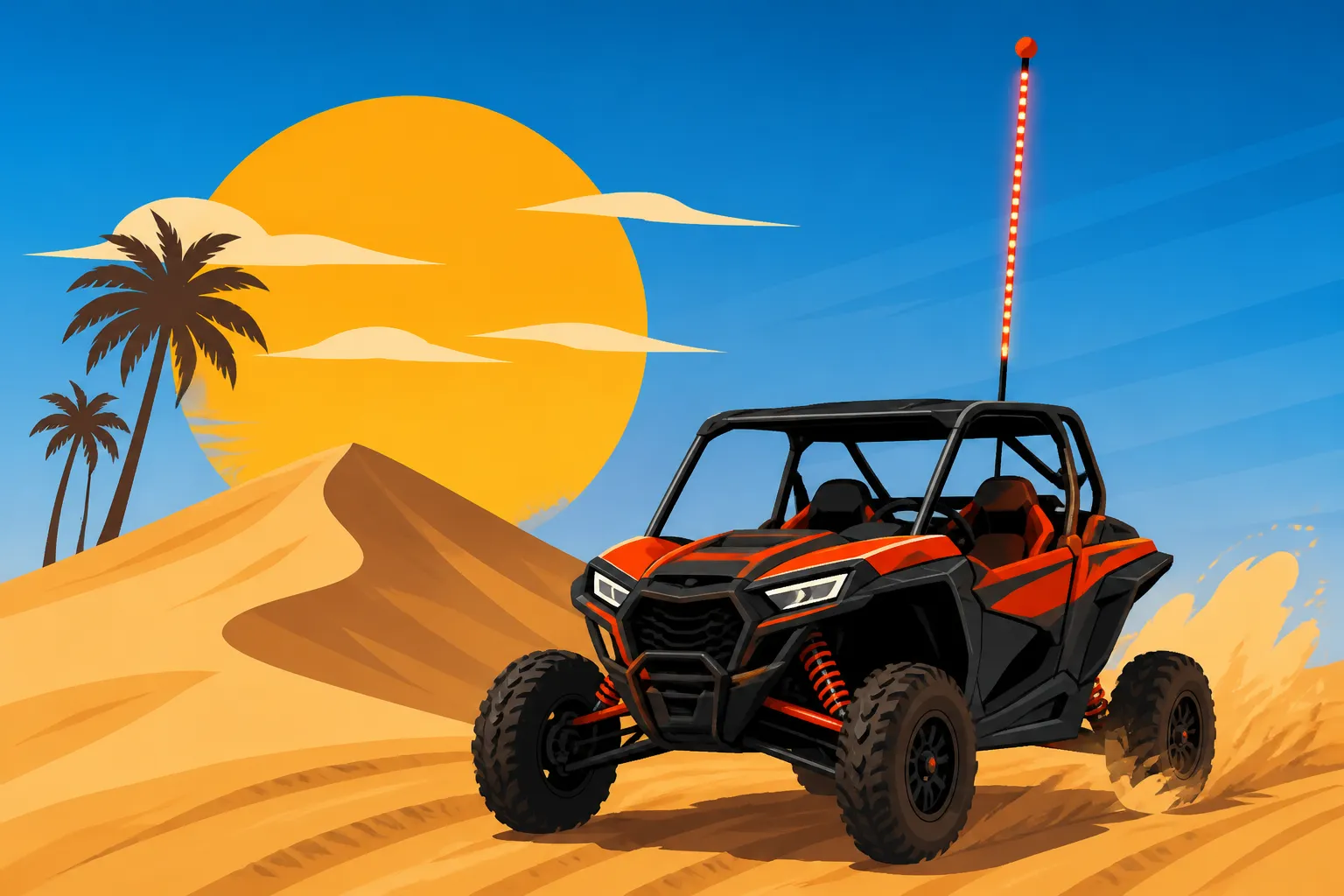
In California sand dunes and state vehicular recreation areas, off-highway vehicles must have a securely mounted whip mast and safety flag extending at least eight feet from the ground, according to the California Department of Parks and Recreation. The important point is that the measurement is about the assembled flag setup above ground, not just the length of a loose whip before installation.
That can make a difference when choosing or fitting equipment. A mast’s advertised length is not necessarily the same as its height above the ground after it is attached to a vehicle. Mount location, mounting hardware and the vehicle’s stance all affect the finished position. If the assembled setup falls short of the required height, a long-looking pole in the garage will not solve the problem.
The rule applies to OHVs on California sand dunes and in state vehicular recreation areas. It is not just a matter of personal preference or a way to make a machine easier to spot. A flag raised above the vehicle helps other riders see it, especially where dunes obscure vehicles from view. For more on the purpose of the flag, see Why Flags Exist on a Dune.
A reliable approach is to treat eight feet as the minimum for the complete installed setup, then check the measurement on the vehicle in its normal riding position. Do not assume a mast is compliant because its package says it is a certain length. If the product description does not make clear how its stated length relates to installed height, ask the seller or manufacturer before relying on it.
| What to check | Why it matters |
|---|---|
| Installed height above the ground | The California requirement is stated in relation to the ground, not the uninstalled pole length. |
| Secure attachment | The whip mast must be securely mounted; a loose or unstable fitting can compromise the setup. |
| Flag fitted to the mast | Check the complete assembly, not only the mast by itself. |
| Position during normal riding | Suspension movement and soft sand can change the vehicle’s stance. |
| Condition before each ride | A damaged or bent mast may not stay in the intended position. |
The height rule is only one part of riding preparation. A flag can be tall enough and still be poorly secured, difficult to see, or in need of repair. And a compliant flag does not replace the separate requirements that may apply to the machine or location. If you are planning a dune trip, California Dune Flag Requirements and California Rules for Riding Imperial Sand Dunes cover related riding considerations.
How to measure a whip mast on an ATV or UTV
Measure the setup after mounting it on the vehicle. Measuring a loose mast on the floor can give you a misleading result because the mast’s mounting point may sit above the ground, while the vehicle’s tires and suspension determine the height of that point in use.
Use a straightforward check:
- Park the machine on reasonably level ground in its normal riding configuration.
- Install the mast and flag using the mount and hardware you intend to ride with.
- Measure vertically from the ground to the top of the installed flag setup.
- Confirm that the measurement reaches at least eight feet.
- Check that the mast is secure and that the flag remains attached in the position intended for riding.
The California Department of Parks and Recreation states the minimum as an extension of at least eight feet from the ground. When checking your setup, measure the finished arrangement rather than adding the advertised pole length to an estimate of the mount’s height. If the ground is uneven, reposition the vehicle on a flatter surface for a more dependable check. A sloping parking spot can make a measurement less useful.
Check both the installed height and the way the mast is held. The requirement calls for a securely mounted mast, so a pole that meets the height measurement but shifts freely at its base is not a sound setup. Look for a mount that is appropriate for the machine and holds the whip firmly. Follow the equipment maker’s installation instructions, and do not improvise a mounting method if you are unsure it will hold during a ride.
A flexible mast can move as the vehicle travels. That does not change the need to check its installed height while the machine is parked. After fitting it, inspect for obvious problems: a mount that rocks, loose fasteners, a cracked fitting, or a pole that has taken a permanent bend. If the mast has been hit or damaged, check it again before heading out.
For a UTV, think about the mounting location as well as the height. The flag must be carried by the machine’s installed setup, and the mount should not interfere with the vehicle’s normal operation or the occupants. California also requires all occupants of a recreational off-highway vehicle to wear seatbelts or safety harnesses whenever it is moving, according to the California Department of Parks and Recreation. A whip installation should not get in the way of using those restraints as intended.
Choosing and maintaining a dune flag setup
Choose equipment based on the installed height and the fit of the mount, not just on a product name or an advertised pole measurement. Compatibility matters: a mount meant for a different frame, rack or vehicle style may not attach securely to your machine. Check the product details for the intended use and installation method, then verify the result on the vehicle before the trip.
If you shop through Amazon or another retailer, read the product description carefully and check what is included. A listing might describe the mast without clearly explaining the mount, flag or installed height. If key details are unclear, confirm them with the seller or manufacturer instead of guessing. Avoid relying on a title such as “dune flag” as proof that the assembled setup meets California’s height rule.
Do not confuse minimum height with every other possible flag specification. The fact that California’s rule requires a setup at least eight feet from the ground does not, by itself, establish the flag’s dimensions, color or a particular mounting location. Check the applicable official rules for any additional requirements relevant to the place you plan to ride. Flag Size on California Dunes covers the separate question of flag size, while California Whip Height Requirements focuses on the height issue.
Before riding, make a quick inspection part of loading the machine. Check that the mount is tight, the mast is not damaged, the flag is firmly attached and the setup still reaches the required height. A whip that was compliant when installed may need attention after being bent in transport or struck during use. If anything has changed, inspect and measure it again rather than assuming it is still in its original position.
Secure the equipment during transport, too. A mast can be bent or its attachment damaged before the machine reaches the riding area. If it is removable, store it so it is not crushed under heavy gear. When reinstalling it at camp or at the riding area, confirm the mount is seated and the assembly is in its intended position. A quick check is easier than discovering a loose fitting after the ride has started.
A high-visibility flag is useful only if the full setup remains in place and can be seen. Keep it clear of items that could cover or snag it, and make sure it does not obstruct your view or interfere with normal vehicle controls. These are sensible setup checks; they do not replace the stated legal requirement for a securely mounted mast and flag extending at least eight feet from the ground.
Before you ride
A whip check belongs alongside the rest of your pre-ride preparation. The mast and flag requirement is specific to the riding context, but the machine’s registration, permit status and equipment can also matter. California’s Off-Highway Motor Vehicle Recreation Division manages designated trails within California State Parks and operates state-owned vehicular recreation areas. The Bureau of Land Management oversees its own public lands and OHV areas, so rules can depend on who manages the area you intend to visit.
If you are visiting from out of state, do not assume that a flag setup alone covers the requirements for riding in California. California’s nonresident OHV use permit program is administered by the Off-Highway Motor Vehicle Recreation Division of California State Parks. A qualifying home-state registration or another permit arrangement may affect what you need; confirm the applicable rules before travelling. The article California’s Nonresident OHV Use Permit explains that separate permit topic.
For a quick pre-departure check, confirm the following:
- The complete installed mast and flag extend at least eight feet from the ground.
- The mast is securely attached and does not have visible damage.
- The flag is attached and not hidden by cargo or other equipment.
- You have checked for any additional requirements that apply at the riding area.
- Your machine’s documents and permit arrangements are ready for the trip.
Keep registration and permit decals separate from the whip setup in your checks. For example, the California Department of Parks and Recreation says that a California Nonresident OHV Use Permit on an ATV must be affixed to the left rear quadrant on a permanent plastic or metal frame member, visible to outside inspection. That is a different placement rule from the whip-height requirement. See Displaying a Permit on the Left Side for more on permit placement.
The practical takeaway is to measure the installed flag setup from the ground, not to rely on the loose mast’s advertised length. California requires the whip mast and safety flag on an OHV in sand dunes and state vehicular recreation areas to extend at least eight feet from the ground, according to the California Department of Parks and Recreation. Secure the mount, check for damage and verify the finished setup before riding.
Sources
- California Department of Parks and Recreation — OHMVR Frequently Asked Questions (checked November 2, 2026)
- California Department of Parks and Recreation — Oceano Dunes State Vehicular Recreation Area (checked November 2, 2026)
- California Department of Parks and Recreation — OHMVR Division | California State Parks (checked November 2, 2026)
- Bureau of Land Management — Off-Highway Vehicles | Bureau of Land Management (checked November 2, 2026)
- California Department of Parks and Recreation — Oceano Dunes Safety Tips (checked November 2, 2026)
Disclaimer
This article is for general informational purposes only and does not constitute professional advice. Laws, prices and regulations vary by location and change over time. Consult a qualified professional for guidance on your specific situation.