Why Dune Flags Measure 6 by 12 Inches
A dune flag can look like a small piece of gear, but its size, color, and position all affect whether other riders can see it over the sand. California sets a minimum flag size and mounting requirements for dune riding. Knowing what those measurements mean helps you choose a suitable flag, attach it correctly, and catch common setup problems before you ride.
What California’s 6-by-12-inch flag requirement means
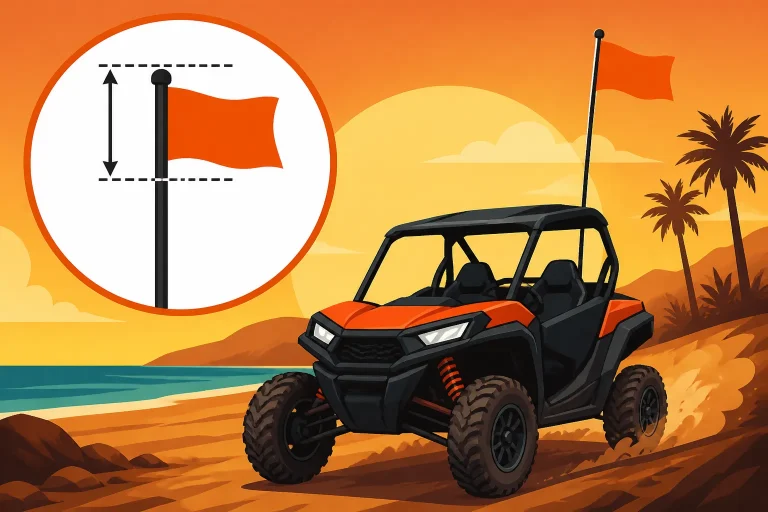
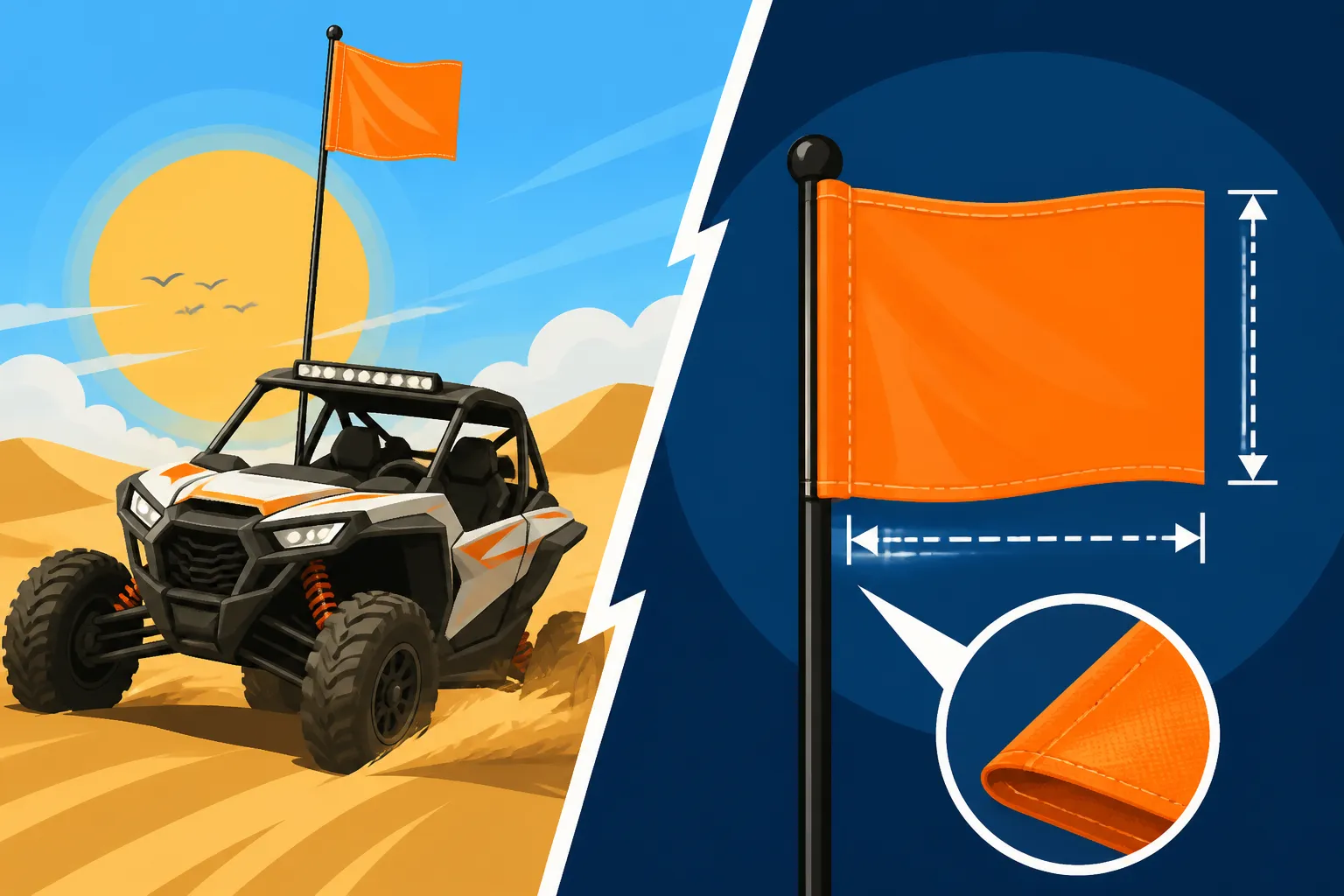
The required measurement refers to the flag itself, not the whip mast. In California sand dunes, the California Department of Parks and Recreation requires an off-highway vehicle safety flag to measure at least 6 inches by 12 inches. The flag must be solid red or orange, and it must be attached near the top of the whip.
The mast has its own requirement. According to the California Department of Parks and Recreation, it must extend at least 8 feet from the ground, and the flag must be positioned within 10 inches of the mast’s top. Those are separate parts of the setup: a correctly sized flag on a mast that is too short does not meet the stated requirements, and a tall mast does not make an undersized flag compliant.
| Part of the setup | California requirement | What to check |
|---|---|---|
| Flag size | At least 6 inches by 12 inches | Check the flag’s actual dimensions, not just the product name |
| Flag color | Solid red or orange | Make sure the flag is a single solid color |
| Whip mast height | At least 8 feet from the ground | Check the mast’s height from the ground to its top |
| Flag position | Within 10 inches of the top of the whip | Make sure the flag is attached close to the mast’s upper end |
The California Department of Parks and Recreation provides the requirements summarized in the table. For more detail on the rules, see California Dune Flag Requirements and California Whip Height Requirements.
The measurement is a minimum, not a recommended maximum. A flag that looks large enough from a distance may still be smaller than the stated minimum, so check the dimensions rather than relying on appearance. Product listings can also describe a flag by its overall size, its fabric panel, or the package dimensions. Confirm that the flag itself meets the requirement.
The color matters too. A patterned flag or a flag with a large logo may not meet the requirement for a solid red or orange flag, even if it is easy to spot. If you are uncertain about a particular design, choose a plainly solid-color flag that meets the required size.
Why the flag is sized and mounted this way
The regulations specify the dimensions and placement; they do not need to be treated as a promise that a flag will be visible in every circumstance. The practical purpose of a flag is to make an OHV easier to notice in an environment where the sand can hide the machine itself. A flag that rises above the vehicle and presents a visible area gives other riders another chance to see you.
Dunes are not flat, open pavement. A machine can be on the far side of a slope, partly hidden by a crest, or moving through an area where several riders are using the same terrain. From another rider’s position, the vehicle may be difficult to see even when the rider is close enough that a collision would be dangerous. A raised flag can become visible before the rest of the machine clears the slope.
The flag’s size and mast height work together. A small flag may be harder to notice at a distance or against a busy background. A flag mounted too low can disappear behind the vehicle or the contour of the sand. Meeting the minimum size and height does not eliminate those visibility limits, but it provides a standard setup rather than leaving each rider to guess.
A red or orange flag offers a distinct, solid patch of color. The visibility of any color can still vary with light, dust, the landscape, and what is behind it. Treat the flag as an aid to awareness, not as a substitute for watching the terrain, riding cautiously, and leaving room for other machines.
For an explanation of the safety purpose behind dune flags, see Why Flags Exist on a Dune. The related Flag Size on California Dunes and Flags Within 10 Inches of the Mast Top cover the size and placement details from another angle.
A flag also does not tell another rider exactly where you are going or how quickly you are approaching. Riders still need to pay attention to changing sightlines and avoid assuming that a flag means its machine is safely out of the way. Even a well-mounted flag can be obscured by terrain or dust, so visibility is helpful but never guaranteed.
Choosing and installing a flag
When shopping, use the legal requirements as a checklist rather than relying on a broad description such as “dune flag” or “off-road whip.” Check the stated fabric dimensions, color, mast height, and how the flag attaches. If a listing leaves out a measurement, look for the manufacturer’s specifications or ask the seller to confirm them before buying.
Amazon may be one place riders look for flags and whip kits, but a marketplace listing is not proof that a product meets California’s requirements. Check the actual product details, including whether the flag is solid red or orange and meets the minimum dimensions. Also confirm that the mast and mounting hardware are appropriate for your machine and can hold the flag in its intended position.
A useful pre-ride setup check is:
- Confirm that the flag is solid red or orange and at least 6 inches by 12 inches.
- Check that the mast extends at least 8 feet from the ground.
- Make sure the flag sits within 10 inches of the mast’s top.
- Inspect the attachment points and mount so the assembly stays secured during riding.
- Check that the flag is easy to see from different directions and is not folded, covered, or caught against the machine.
The first three checks match the requirements stated by the California Department of Parks and Recreation. The last two are practical checks for a working setup, not additional measurements specified in those requirements.
Follow the instructions supplied with the mast and mount. A flag can meet the size rule but still be poorly installed if the mount is loose or the flag is obstructed by the vehicle. The location and hardware may vary by machine, so check that the chosen setup is secure without interfering with the machine’s safe operation.
After installation, view the setup from a distance and from more than one angle. Check whether the flag remains visible above the vehicle and whether the fabric hangs freely. If it has twisted around the mast, become folded, or been blocked by an accessory, adjust it before setting out. Recheck it during the ride if the attachment loosens or the flag becomes damaged.
A product sold as a complete kit may include a flag, mast, and mount, but those parts still need to meet the requirements when assembled. A kit description alone does not confirm that the flag is the required size or that the assembled mast reaches the required height from the ground. Verify each part and the finished setup.
Common mistakes and a practical pre-ride check
One common mistake is measuring the wrong thing. The flag’s fabric dimensions are not the same as the mast’s height. Check the flag and mast separately: the flag must meet the minimum dimensions, while the mast must extend at least 8 feet from the ground. The California Department of Parks and Recreation also requires the flag to be within 10 inches of the mast’s top.
Another mistake is choosing a flag with the right general look but the wrong color or design. A bright patterned panel may seem highly visible, but the stated requirement is for a solid red or orange flag. When in doubt, select a plainly solid-color flag and verify its dimensions with the seller or manufacturer.
Flag placement can be overlooked when a mast is replaced or adjusted. A compliant flag attached well below the top of the whip may not satisfy the placement requirement. Check the distance from the top of the mast to the flag itself, not merely whether the flag is somewhere on the upper portion.
It is also easy to assume that a flag’s presence alone means the setup is ready. Loose hardware, worn fabric, or a flag wrapped around the mast can make it much less useful. The legal dimensions do not prevent ordinary wear or installation problems. Inspect the complete assembly before each ride and replace damaged parts as needed.
Use this quick check before heading onto the dunes:
- Is the flag solid red or orange?
- Does the flag measure at least 6 inches by 12 inches?
- Does the mast extend at least 8 feet from the ground?
- Is the flag within 10 inches of the mast’s top?
- Is the flag securely attached and plainly visible?
The first four questions reflect the requirements from the California Department of Parks and Recreation. The final question is a practical visibility check. If the setup fails any of the measurements or color requirements, correct it before riding on California sand dunes.
A flag is only one part of preparing for a dune ride. The rules for the area you plan to visit, your OHV identification or permit, and other riding requirements can vary with the situation. For broader trip planning, see California Rules for Riding Imperial Sand Dunes and California OHV Permits Explained. Keep the flag easy to inspect, and do not assume that a familiar setup is compliant without checking the flag, mast, and placement together.
Sources
- California Department of Parks and Recreation — Oceano Dunes State Vehicular Recreation Area (checked November 2, 2026)
- California Department of Parks and Recreation — California Code of Regulations Title 14, § 4609 – Oceano Dunes State Vehicular Recreation Area (checked November 2, 2026)
Disclaimer
This article is for general informational purposes only and does not constitute professional advice. Laws, prices and regulations vary by location and change over time. Consult a qualified professional for guidance on your specific situation.