California Whip Height Requirements
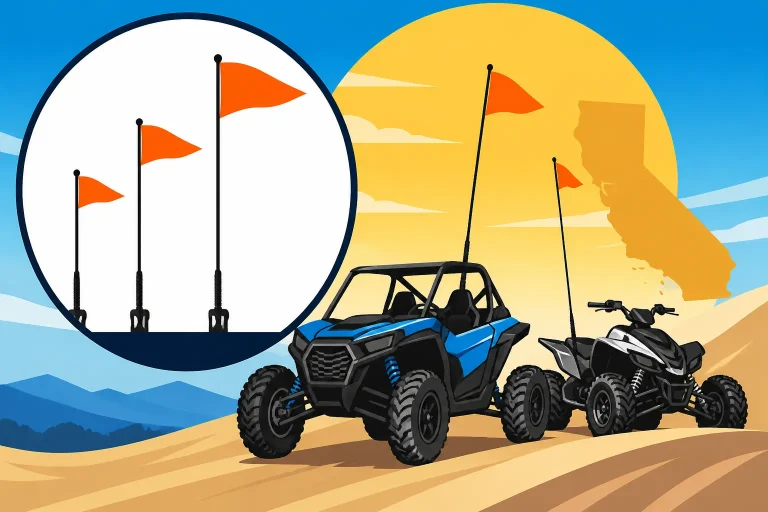
A dune flag is easy to overlook until you reach a checkpoint or see how quickly a rider can disappear behind a crest. In California, the common sand-dune standard is a flag mounted so it sits at least 8 feet above the ground, but the rule and setup can depend on where you ride. Here’s how to understand the height, fit a whip sensibly, and check local requirements before unloading.
The 8-foot whip height and where it applies
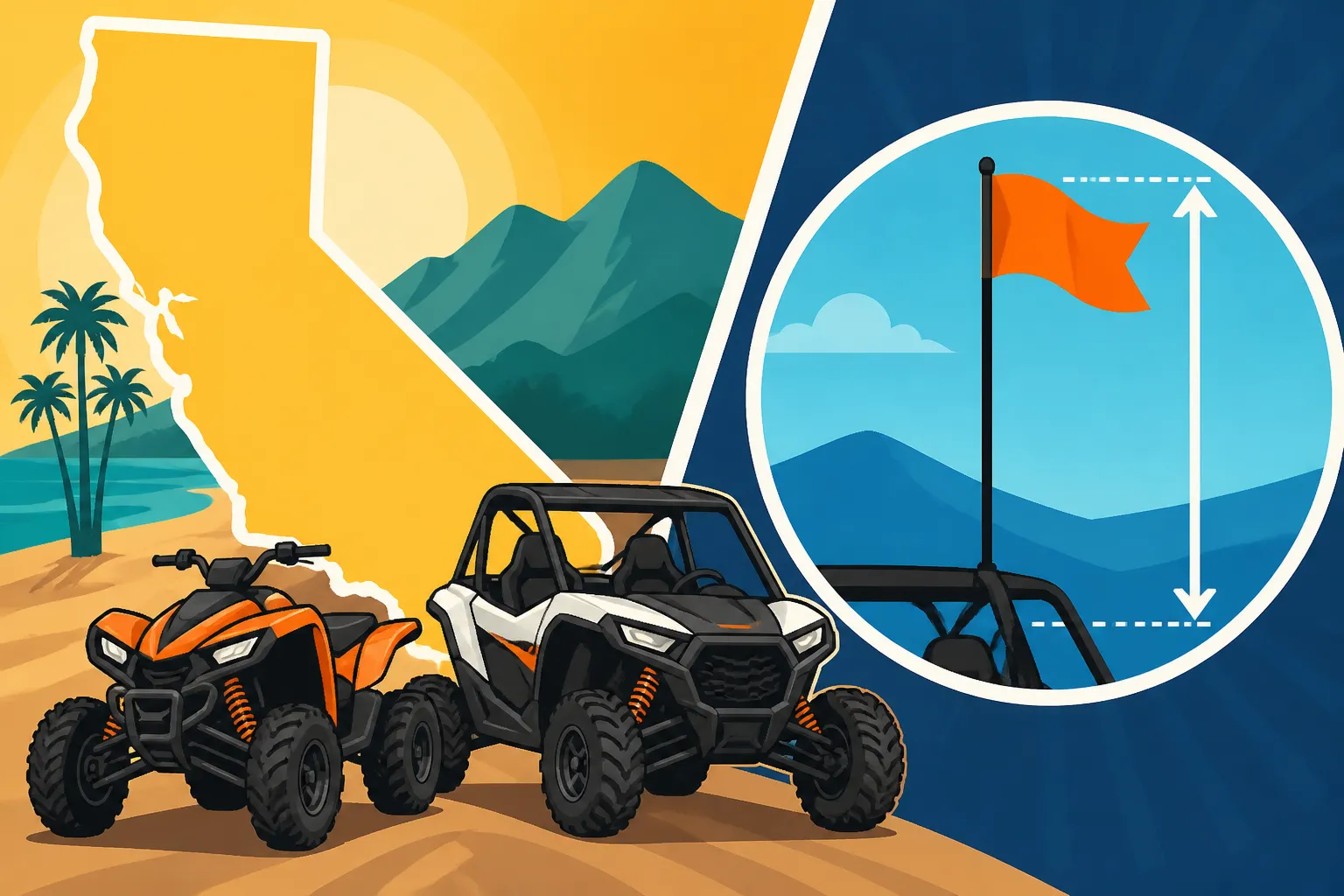
For California sand-dune riding, plan on a whip and flag that place the flag at least 8 feet above the ground. The height is about making your vehicle visible to riders approaching from the other side of a dune, not about fitting a particular brand or mast length.
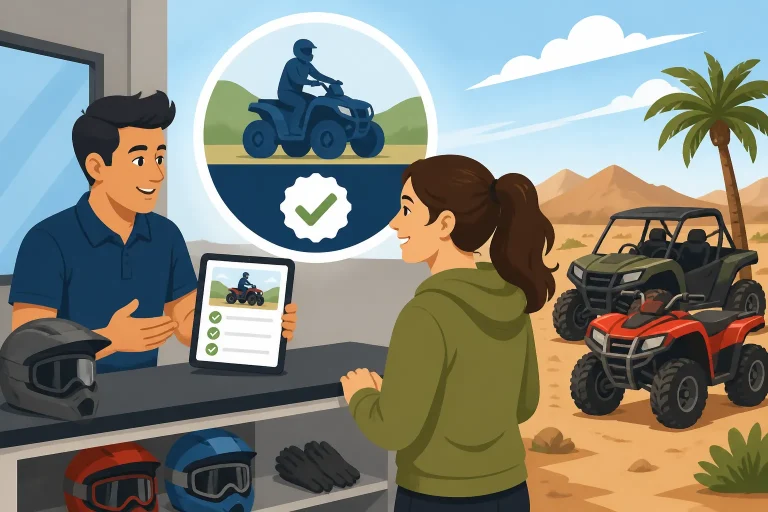
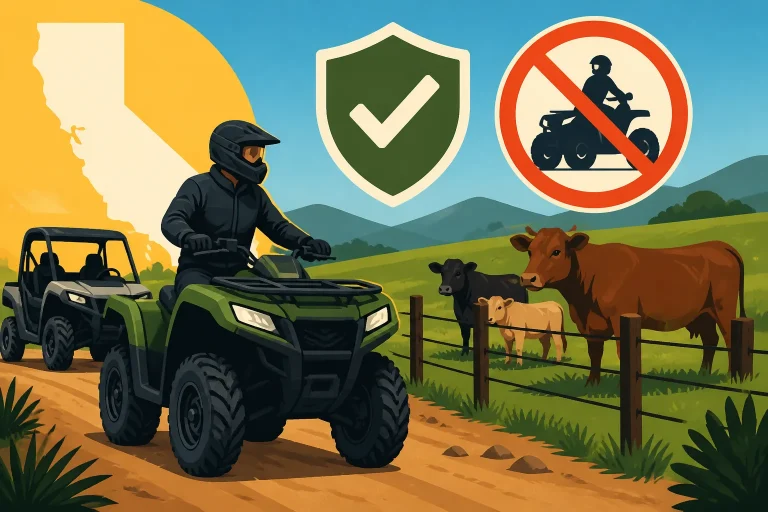
That figure is not a blanket rule for every trail, riding area, or private property in the state. Requirements can depend on the land manager and the location. The Imperial Sand Dunes Recreation Area, for example, has its own visitor rules. Before a trip, check the current rules for the specific area and follow signs or directions from staff at the entrance. The broader safety and access rules are covered in California Rules for Riding Imperial Sand Dunes and California Dune Flag Requirements.
Height means the flag’s position, not just the whip’s advertised length
A whip sold as a certain number of feet long does not necessarily put its flag at that height once installed. The mount, attachment point, bend in the whip, and vehicle’s height all affect where the flag ends up. A short whip attached high on a side-by-side may put the flag at a different height than the same whip installed near the rear of a quad.
Treat the requirement as a finished-vehicle measurement: the flag must be positioned at least 8 feet above the ground when the vehicle is sitting on its tires. Don’t assume that a mast’s catalog length alone proves compliance. Check the mounted setup, with the vehicle parked on level ground, and leave a margin above the minimum rather than aiming for an exact borderline measurement.
This is especially important if you switch the whip between machines. A setup that reaches the required height on one vehicle may not reach it on another. Suspension changes, tires, a different mounting point, or a replacement whip can also change the final height.
Check the rule for the place you are riding
A dune flag requirement is tied to the riding location, not simply to the fact that the vehicle is registered in California. One area may require a flag for dune travel, while a different trail system may have different equipment rules. A machine that is legal to transport on a trailer is not automatically ready to ride in every recreation area.
Before leaving, check:
- The current rules published by the land manager for your destination.
- Entrance signs and posted notices when you arrive.
- Whether the flag must be a particular color, size, or position.
- Whether the rule applies to every off-highway vehicle in your group, including tow vehicles driven on the riding area.
- Whether a permit or other access requirement applies separately from the safety flag.
A flag does not replace a required riding permit, registration, or other safety equipment. For a wider look at visitor requirements, see California Permits & Reciprocity is not a listed title, so use California OHV Permits Explained and What Happens Without a Dune Permit.
How to measure and mount a whip
A careful fit check takes only a few minutes and can prevent a last-minute adjustment at the staging area. The goal is a flag that is high enough to be seen, firmly mounted, and positioned so it does not create an avoidable snag or visibility problem for the driver.
- Park on level ground. Set the machine on its tires in its normal riding configuration. Avoid measuring while it is on a trailer, jack, or uneven ground.
- Install the mount where it will stay. Attach the whip to the intended mounting point and tighten the hardware as directed by the manufacturer. A loose base can lean or rotate under vibration.
- Extend the whip fully. If it has telescoping sections, make sure they are properly locked or secured. A partially extended mast can fall short of the required height.
- Measure the finished height. Measure from the ground to the flag’s position, not just from the mount to the end of the whip. If the flag is mounted below the tip, include that difference.
- Check the flag and mounting position. Make sure the flag is visible, securely attached, and not hidden behind cargo, a roof, or another part of the vehicle.
- Recheck after any change. A different vehicle, mount, tire size, or replacement whip can alter the result. Repeat the measurement rather than relying on an earlier setup.
The height measurement is only one part of a usable installation. A mast that technically reaches the minimum but droops, detaches, or leaves the flag hard to see is not a good setup. Use hardware designed for the vehicle and riding conditions, and inspect it before each trip.
Choose a mount that suits the vehicle
Quads and side-by-sides often need different mounting approaches. A quad has limited bodywork and may be more exposed to falls or contact with brush. A side-by-side may have a cage or rear structure that offers a convenient attachment point, but the roof and cargo can obstruct the flag if the mount is poorly placed.
A good mount should:
- Hold the mast securely without crushing or damaging the vehicle.
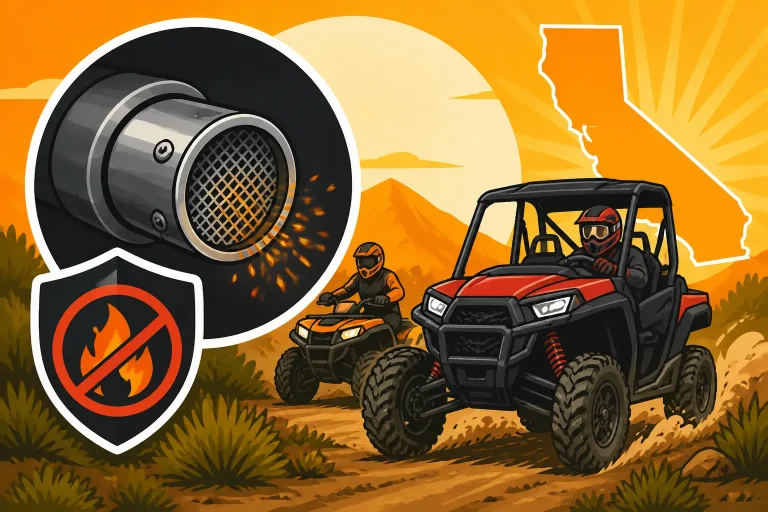
- Keep the whip clear of moving parts, hot exhaust components, and the rider’s normal controls.
- Allow the flag to remain visible from the rear and sides.
- Avoid putting a rigid fitting where it is likely to injure a rider in a rollover or impact.
- Be compatible with the whip diameter and attachment style.
Follow the vehicle and accessory manufacturer’s instructions. Do not drill or clamp onto a structural component unless the manufacturer allows it. On a side-by-side, also make sure the installation does not interfere with the roof, windshield, cargo, seat belts, or any required safety equipment.
A little extra height can help, but taller is not always better
A whip set just above the minimum may be vulnerable to sagging or a small change in the vehicle’s stance. Allowing some extra height can provide a practical buffer, as long as the mast remains secure and does not create a new hazard.
Longer whips can flex more, catch on things, or be awkward to transport. A whip that is too tall for a trailer, garage, or covered storage area may need to be removed or folded for transport. Follow the accessory maker’s guidance on extension, folding, and storage. Never rely on a whip to support other gear or tie-downs.
For the related specifications, see Flag Size on California Dunes and Flags Within 10 Inches of the Mast Top. Height, flag dimensions, and placement are separate details; meeting one does not automatically mean the others are correct.
Picking a flag and keeping it visible
The purpose of a dune flag is to make a vehicle easier to spot, especially when terrain blocks a clear view. The flag should be easy to distinguish against the landscape and should stay attached in wind and vibration. Check the local rules for required size, color, and placement rather than assuming that any small flag will do.
A high-visibility flag is useful only if it remains in good condition. Before riding, check that the fabric is not badly torn or faded, the attachment is secure, and the mast is not cracked or bent. Replace worn components rather than tying or taping them in a way that could fail while riding.
| Setup detail | What to check | Why it matters |
|---|---|---|
| Finished height | Flag is at least 8 feet above the ground where that standard applies | A whip’s listed length may not equal its installed height |
| Flag size and placement | Match the destination’s current rules | A correct height does not establish compliance with other flag requirements |
| Mount | Secure, compatible, and clear of moving or hot parts | A loose or poorly placed mount can fail or interfere with riding |
| Visibility | Flag is easy to see and not blocked by the vehicle or cargo | The flag is intended to help riders see one another over terrain |
| Condition | Check the mast, hardware, and fabric before riding | Wear, damage, or loose fittings can make the setup unreliable |
If you buy a replacement mast or flag, compare the product’s compatibility and dimensions with your vehicle and the rules for your destination. Amazon may have a broad selection of whips and mounts, but a product listing is not proof that the item meets a particular area’s requirements. Check the actual installed height and flag specifications, and confirm that the mount fits your machine.
Pack a spare plan
A spare flag or a basic repair item can be useful on a multi-day trip, but it is not a substitute for a compliant, secure setup. If a whip breaks, the flag tears, or the mount loosens, stop and fix the problem before continuing in an area where a flag is required. A damaged whip that is flapping or dragging can also create a distraction or catch on the vehicle.
If the vehicle has a tall roof, rack, or cargo load, view the setup from several angles before riding. The flag should not disappear behind a roofline or gear when another rider approaches from a different direction. Keep additional cargo from covering the flag or bending the mast.
Flags serve a basic visibility purpose, but they do not make dune travel risk-free. Ride at a speed that gives you time to react, avoid cresting a dune without a clear view, and leave room for other riders. Why Flags Exist on a Dune explains the visibility issue behind the requirement, while Riding Etiquette on a Busy Dune covers how to share crowded terrain.
Common mistakes and a pre-ride check
A few recurring setup mistakes are easy to avoid:
- Measuring the whip before installation. The mount and vehicle affect the final flag height.
- Using the same setup on every machine. A whip that works on a side-by-side may be too short when moved to a quad, or vice versa.
- Forgetting the other flag specifications. Height is only one requirement; check size, color, and placement too.
- Assuming every California riding area has identical rules. Confirm the destination’s current requirements.
- Ignoring a loose or bent mast. A flag that sags or shakes excessively may be difficult to see and may not remain in position.
- Checking only at home. Recheck after trailering, unloading, or changing the vehicle setup.
Use this quick check before entering a dune area:
- The whip and mount are installed firmly.
- The flag reaches the required height for the location.
- The flag meets applicable size, color, and placement requirements.
- The flag is visible and in usable condition.
- The mast is clear of controls, moving parts, and other equipment.
- Your vehicle’s access permit and paperwork are handled separately.
At a checkpoint, be ready to follow staff directions and correct an issue before riding. Rangers may check flags along with permits or other requirements, so keep your setup easy to inspect. For related checkpoint expectations, see Rangers at a Dune Checkpoint and Carrying Paperwork on the Sand.
The practical takeaway is straightforward: use 8 feet as the minimum flag height where the California dune rule applies, measure the finished installation from the ground, and verify the full flag specifications for the area you plan to ride. A secure, visible setup is more useful than a whip chosen by advertised length alone.
Disclaimer
This article is for general informational purposes only and does not constitute professional advice. Laws, prices and regulations vary by location and change over time. Consult a qualified professional for guidance on your specific situation.