California Dune Flag Requirements
California dune riding requires more than a flag that looks visible in the garage. The whip, flag size, mounting position, and local riding-area rules all matter, and a setup that is hard to see in a crowd can create a real collision risk. Here’s how to prepare your ATV or UTV and what to check before heading onto California sand.
California dune flag requirements at a glance
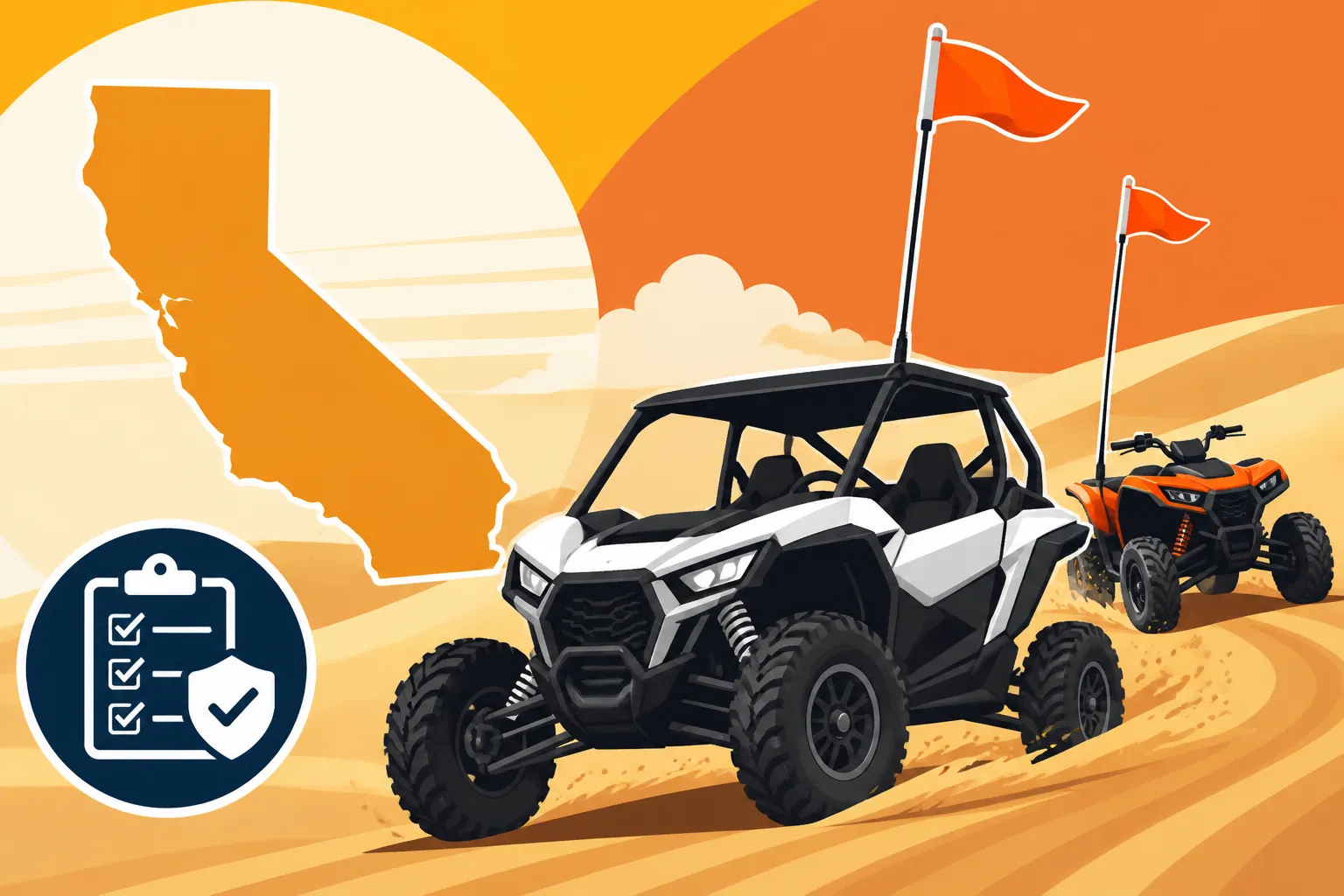
A dune flag is mounted on a flexible whip so other riders can spot your ATV or UTV over ridges and through traffic. For California dunes, plan on a whip that reaches at least 8 feet above the ground and a flag measuring at least 6 by 12 inches. A conspicuous color, such as orange or red, helps the flag stand out against sand and sky.
Those measurements are a useful baseline, but do not assume every riding area applies identical requirements in exactly the same way. Rules can depend on who manages the land and where you ride. Check the current instructions for your destination before you travel, especially if you’re going to an area you haven’t visited before.
| Item | Practical baseline | What to check |
|---|---|---|
| Whip height | At least 8 feet from the ground to the top of the whip | How the riding area measures height and whether it has additional requirements |
| Flag size | At least 6 by 12 inches | That the flag meets the minimum dimensions, not just the advertised size of the kit |
| Flag visibility | Bright, high-contrast color, commonly orange or red | Any color or visibility instructions for your riding area |
| Mounting | Securely attached near the top of the whip | That it stays in place and is not hidden or folded around the pole |
| Condition | Intact and easy to see | Tears, fading, loose attachments, and damage to the whip base |
The dimensions are only part of a compliant setup. A large flag mounted too low can be difficult to see, while a tall whip with a torn or folded flag may not do its job. It is worth reviewing California Whip Height Requirements and Flag Size on California Dunes separately if you want a closer look at the two measurements.
A flag does not replace a permit, vehicle identification, or safe riding practices. Check the permit rules for your destination as well as the equipment rules. For example, a trip to the Imperial Sand Dunes Recreation Area involves requirements beyond the flag itself; California Rules for Riding Imperial Sand Dunes covers that wider checklist.
Choosing and mounting a flag and whip
Measure the full whip height
The key measurement is the height from the ground to the top of the whip, not the length of the flexible pole by itself. A pole advertised as 8 feet can fall short when its mount is installed above the ground or when the pole bends. Measure the complete setup on the machine, standing on level ground, and confirm that the flag reaches the expected height.
If the machine has adjustable suspension, a tall tire setup, or an unusual mounting point, do not rely on the package description alone. Measure the actual finished installation. A secure mount matters, too: a whip that loosens or leans over in normal riding can reduce both its effective height and visibility.
For more on how the measurement is understood, see Whip Mast Height on the Sand. The important practical point is that the whip-and-flag setup needs to be visible above the machine and the changing shape of the terrain.
Check the flag’s dimensions and condition
A flag described as “dune size” or “high visibility” is not necessarily the size required for your riding area. Check the stated dimensions before buying. The familiar 6-by-12-inch minimum means the flag needs to meet both dimensions; a narrow flag does not qualify just because it is long.
A clean, bright flag is easier to spot than one that has been sun-bleached, ripped, or rolled around the pole. Replace it if its size has been reduced by tearing or if it no longer stays open while riding. The discussion in Why Dune Flags Measure 6 by 12 Inches explains why a flag’s visible area matters, not just its color.
When choosing a color, prioritize contrast with the landscape and other equipment. Orange and red are common choices, but the destination’s instructions take priority if they specify something different. Avoid relying on a small decorative pennant or a flag that blends into the machine’s graphics.
Mount it securely and high on the whip
The flag needs to stay attached near the top of the whip, where it can be seen from multiple directions. Use the attachment method intended for the pole and check that the flag does not slide down, twist tightly around the whip, or flap in a way that makes it hard to identify. A flag positioned close to the pole’s tip also helps keep as much of the whip as possible visible.
Some guidance discusses how close the flag should be to the top of the mast. See Flags Within 10 Inches of the Mast Top for that specific mounting question. Whatever hardware you use, inspect the connection after installation and again before riding. A hand tug can reveal a loose strap or clamp before the machine reaches the dunes.
Buy by specification, not by the product photo
A ready-made flag-and-whip kit can be convenient, but product listings do not always make it easy to tell whether the full installed height and flag dimensions meet your needs. If shopping on Amazon or elsewhere, confirm the measurements in the product details, check that the mount fits your ATV or UTV, and read the assembly instructions. A photo showing a tall whip is not proof that the installed setup reaches the required height.
You may also need a different mount for a roll cage, rear rack, or other machine design. Make sure the attachment point is strong and does not interfere with passengers, cargo, lights, or moving parts. A setup that is technically tall but easily knocked loose is not a good one.
Why visibility and setup matter on the dunes
Dunes block sightlines. A rider climbing a ridge may not see someone approaching from the other side until both machines are close. A high, bright flag gives other riders an earlier warning that a machine is nearby, even when the vehicle itself is hidden behind sand.
That does not make the flag a guarantee of safety. Riders still need to control speed, keep a lookout, avoid blindly crossing ridges, and leave room for other machines. Do not assume a flag means the other rider can see you, or that you can safely crest a dune because you can see someone else’s flag.
A flag can also help distinguish one machine from another in a busy riding area. But it is not a substitute for headlights, a working brake light where required, or any other equipment rules that apply to the machine and location. The flag’s job is to improve visibility over terrain; it cannot solve every visibility problem.
Make a pre-ride check
Before unloading, look over the setup from the side and from behind. Check that the flag is easy to see against the background and is not hidden by a passenger, cargo, or a roof accessory. Verify that the base is tight and the whip is not cracked, bent, or worn where it enters the mount.
A simple pre-ride routine helps catch problems:
- Park on level ground and check the installed height from the ground to the top of the whip.
- Confirm that the flag meets the required dimensions and has not torn or faded badly.
- Check that the flag is attached near the top and can open freely.
- Tighten the mount and look for cracks, damaged threads, or movement at the base.
- Recheck the setup after transporting the machine, since tie-downs or contact with other gear can damage a whip or flag.
Carry a spare flag or basic repair parts if you ride far from your vehicle. A spare is especially useful for a group, where one damaged flag can otherwise mean a trip back to camp or the trailer.
Consider the machine and the terrain
ATVs and UTVs need a setup that suits their mounting points and how they are used. A passenger cage may offer a different mounting option from an ATV’s rear rack, but the same concerns apply: the whip must be secure, the flag must remain visible, and the setup must not create a snag or obstruction.
If a whip bends during a ride, check whether it returns to position and whether the flag is still visible. Do not keep riding with a damaged pole or a flag that has detached. A bent whip can be less visible and may be more likely to break or become tangled.
Checking local rules before you ride
California has several kinds of riding areas, and the land manager’s posted requirements are the final check for a specific destination. Confirm the rules for the area you plan to use, including any updates about flags, permits, vehicle access, and seasonal closures. A general rule of thumb should not replace the current instructions for a particular riding area.
If you are visiting a State Vehicular Recreation Area, check its posted rules and visitor information. If you are riding on federal or other public land, check the managing agency’s directions for that area. Ask about the exact equipment standard if the instructions are unclear: the required whip height, flag dimensions, and any color or placement details.
A ranger or gate attendant may inspect the machine or ask you to correct a problem before riding. For related preparation, see Rangers at a Dune Checkpoint and What Happens Without a Dune Permit. Equipment rules and permit requirements are separate, so being prepared for one does not automatically satisfy the other.
Before you leave home, use this quick checklist:
- Confirm the destination’s current dune flag instructions.
- Measure the assembled whip from ground level to its top.
- Verify the flag’s actual dimensions and condition.
- Check that the mount fits the machine and stays tight.
- Make sure the flag is visible above the vehicle and cargo.
- Review the area’s permit, access, and other equipment rules.
A compliant flag setup is straightforward once you check the full installed height, the flag’s actual size, and the destination’s current instructions. Install it securely, keep it visible, and inspect it before each ride. Those steps help other riders see your machine sooner, while leaving speed, lookout, and good judgment as essential parts of dune safety.
Disclaimer
This article is for general informational purposes only and does not constitute professional advice. Laws, prices and regulations vary by location and change over time. Consult a qualified professional for guidance on your specific situation.