Does California Honor an Oregon OHV Permit?
An Oregon OHV permit can usually serve as the required OHV identification when you ride an eligible Oregon-registered machine in California. The important part is carrying the right credential for that machine: a permit for one vehicle or activity may not cover another. Here’s how reciprocity works, what it doesn’t cover, and what to check before you ride.
The short answer: usually yes, for an eligible machine
California recognizes valid OHV credentials from Oregon and Nevada under its reciprocity rules. So, if your ATV or UTV is properly covered by a current Oregon OHV permit, you generally do not need to buy a California nonresident OHV use permit just to operate that machine in California.
The word “permit” can cause confusion. Riders may use it to mean an Oregon OHV permit sticker, a vehicle registration document, a riding-area pass, or a safety certificate. These are different things. Reciprocity concerns the valid OHV credential associated with the vehicle; it does not mean that any Oregon document, regardless of purpose, satisfies California’s requirements.
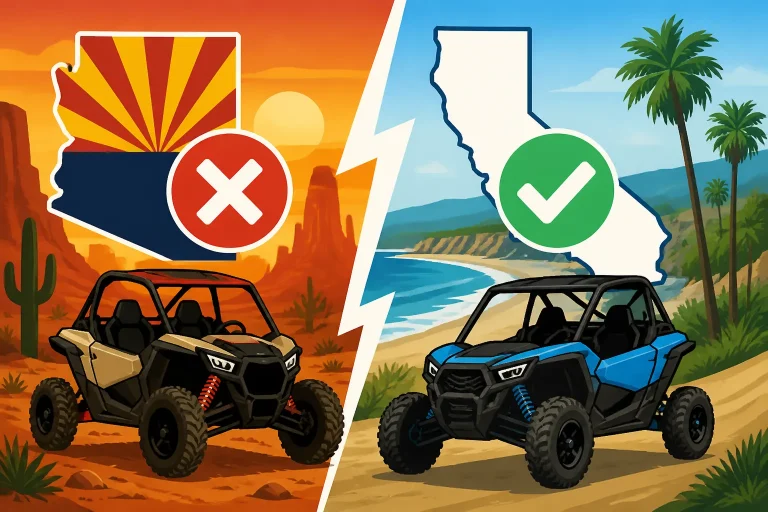
For background on how California treats out-of-state credentials, see [California OHV Reciprocity Rules] and Why Only Oregon and Nevada Count in California. The practical distinction is that California does not treat every state’s registration or permit as interchangeable. An Arizona registration, for example, should not be assumed to work just because it is valid at home.
Before you travel, check that:
- The Oregon credential is current and applies to the machine you plan to ride.
- The permit or decal is displayed as required, and you can show supporting paperwork if asked.
- The vehicle type and use are within the Oregon credential’s scope.
- The California riding area is open to your machine and has no separate pass or permit requirement.
If your Oregon OHV permit is expired, belongs to a different machine, or is not the kind of credential California recognizes, don’t rely on reciprocity. Check whether you need a California’s Nonresident OHV Use Permit instead. Confirm current requirements with the relevant California and Oregon OHV authorities before the trip, especially if your machine has an unusual registration status.
What an Oregon permit covers—and what it does not
Reciprocity is about meeting California’s OHV identification requirement for a machine that is properly covered by an accepted Oregon credential. It is not a blanket permission to ride anywhere, nor does it replace every other permit, registration, safety, or equipment requirement.
It does not make every road legal
A permit does not turn an ATV or UTV into a street-legal vehicle. It does not give you permission to ride on a public road, cross a road wherever you choose, or use a route that is closed to OHVs. Road access depends on the type of road and any specific designation that allows OHV use. A street-legal plate from another state does not automatically settle the question either. For the distinction between OHV identification and road use, see Why a California OHV Plate Is Not a License Plate and California Rules for Crossing a Public Road.
It does not replace area-specific requirements
Some riding areas have their own entry rules, passes, or permit requirements. The Imperial Sand Dunes Recreation Area, commonly called Glamis, is a clear example: a valid Oregon OHV permit does not by itself cover a separate area-use requirement. Check California Rules for Riding Imperial Sand Dunes before heading to the dunes.
State Vehicular Recreation Areas and other public riding areas can also have site-specific entry rules, closures, or vehicle restrictions. A credential that satisfies California’s general OHV identification requirement does not guarantee admission or access to every trail. Check the current rules for the destination, including any required passes, operating hours, closures, or restrictions on vehicle type. California’s State Vehicular Recreation Areas explains how these designated riding areas differ from other public land.
It does not replace safety or equipment rules
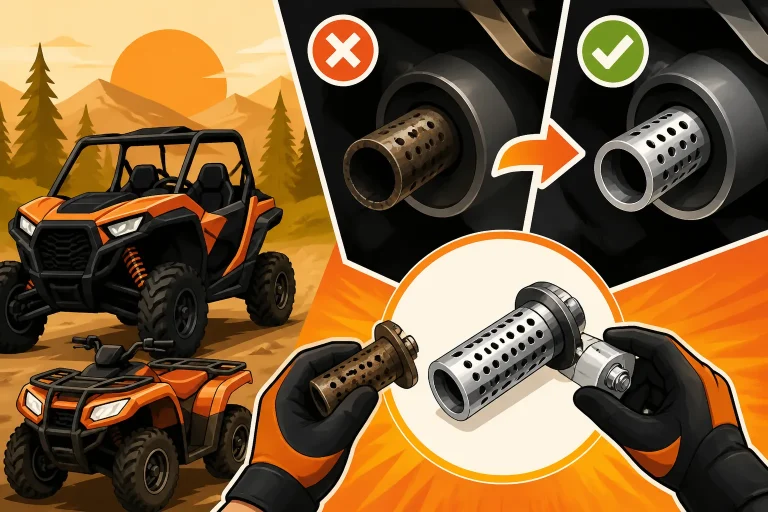
California’s riding rules apply to visitors as well as residents. Depending on the rider, vehicle, and location, requirements can include safety training or certification, age and supervision rules, helmets, sound limits, and spark arresters. A valid Oregon permit does not waive California rules for the ride itself.
That matters particularly when a group includes young riders or a mix of ATV and side-by-side operators. Check the applicable requirements before setting out, rather than assuming that an Oregon permit or Oregon riding card covers everything California requires.
It does not automatically cover every machine in a group
Reciprocity should be checked vehicle by vehicle. If you bring two ATVs and a UTV, confirm that each machine has its own valid Oregon credential where required. Do not assume that one permit, a tow vehicle’s registration, or a family member’s paperwork covers the rest of the group.
If a machine is borrowed, newly purchased, recently transferred, or registered under an unusual arrangement, verify that its Oregon credential is valid for that specific vehicle and that the permit is displayed correctly. If you cannot establish that, ask the issuing authority or California OHV officials whether a California nonresident permit is needed.
| Your situation | What to check before riding in California |
|---|---|
| Current Oregon OHV permit for the machine | Confirm it is valid, applies to that vehicle, and is displayed as required |
| Expired or missing Oregon credential | Do not count on reciprocity; check California’s nonresident permit requirements |
| Multiple machines | Verify the credential for each ATV or UTV individually |
| Ride at a special destination | Check for separate area passes, permits, closures, and vehicle restrictions |
| Ride on or across a public road | Check route-specific rules; an OHV permit does not make the machine street legal |
| Borrowed or recently transferred machine | Confirm the permit and paperwork match the machine and its current status |
What to carry and how to prepare
A little document checking before departure can prevent a frustrating disagreement at a gate or on the trail. Keep the Oregon permit properly displayed and bring documents that help establish which vehicle it applies to. The exact proof a land manager or enforcement officer requests can vary, so don’t assume that a photograph is always accepted instead of the original document.
A sensible preparation routine is:
- Check the Oregon credential. Confirm that it is current and valid for the machine’s type and intended use. If you have any doubt about the credential, ask the Oregon issuing authority what it covers.
- Match the permit to the machine. Compare identifying details on the permit or related paperwork with the machine. If the vehicle has changed owners or the paperwork is unclear, resolve that before travel.
- Check California reciprocity. Confirm that California recognizes the specific Oregon credential you have. If it does not, find out whether you need a California nonresident permit. The overview in California’s Nonresident OHV Use Permit can help you understand that alternative.
- Check your destination separately. Look for site fees or permits, operating restrictions, current closures, and vehicle-specific rules. For dune trips, see An Oregon Permit on California Sand and the area requirements for the Imperial Sand Dunes.
- Review rider and equipment rules. Make sure everyone in the group understands California requirements for their age, vehicle, and riding location.
- Keep documents accessible. Carry the relevant paperwork in a secure place where it is protected from sand, water, and damage. Carrying Paperwork on the Sand offers more detail for dune riders.
If you discover that your Oregon permit is not valid for the trip, deal with it before you leave rather than hoping an officer or entrance attendant will accept a different document. California’s nonresident OHV permit may be the appropriate option for a machine that lacks an accepted reciprocal credential. Check the official instructions for eligibility, how to obtain it, and how to display it. Permit formats and procedures can change, so use current information rather than relying on an old decal, forum post, or a friend’s experience.
Common mistakes Oregon riders can avoid
The most common mistake is treating “Oregon permit” as a single, all-purpose document. A vehicle’s OHV credential, a riding-area pass, a safety certificate, and permission to use a road serve different purposes. Having one does not prove you have the others.
Another mistake is assuming reciprocity guarantees access. It only addresses the relevant identification requirement; trail managers can still close routes, restrict vehicle types, or require separate entry permissions. Check the destination’s current rules before loading up.
A third is relying on a credential that does not match the machine. This can happen when a permit is expired, a used vehicle has incomplete paperwork, or several machines are traveling together. Confirm each machine’s status individually. If a machine is recently purchased, the seller’s paperwork and the Oregon permit may not be enough to answer every question about ownership or registration. Resolve uncertainty with the issuing authority before riding.
Finally, don’t assume a road-legal registration from another state makes an ATV or UTV legal on California roads. California’s rules for OHV routes, road crossings, and street-legal vehicles are separate from reciprocity. If your planned route includes a public road, verify that the road is specifically open to the vehicle and that you meet all applicable requirements.
The useful rule of thumb is simple: a valid Oregon OHV credential is generally recognized for an eligible machine, but it is not a universal riding pass. Confirm the credential, check California’s rules, and verify every requirement for the specific area you plan to ride.
Disclaimer
This article is for general informational purposes only and does not constitute professional advice. Laws, prices and regulations vary by location and change over time. Consult a qualified professional for guidance on your specific situation.