Stopping Before You Cross
It’s a scenario many California off-highway vehicle (OHV) riders know well: you’re out on the trails, enjoying the freedom of the dirt, when suddenly you reach a paved road. It might be a small county road, a busy state highway, or even just a short residential street that connects two sections of your favorite riding area. The immediate question flashes through your mind: "Can I cross this?" And if so, "How do I do it legally and safely?" This guide is here to walk you through the often-confusing regulations surrounding OHV road crossings in California, helping you understand not just if you can cross, but how to do it right, every single time.
The Critical Moment: Why "Stopping Before You Cross" Matters
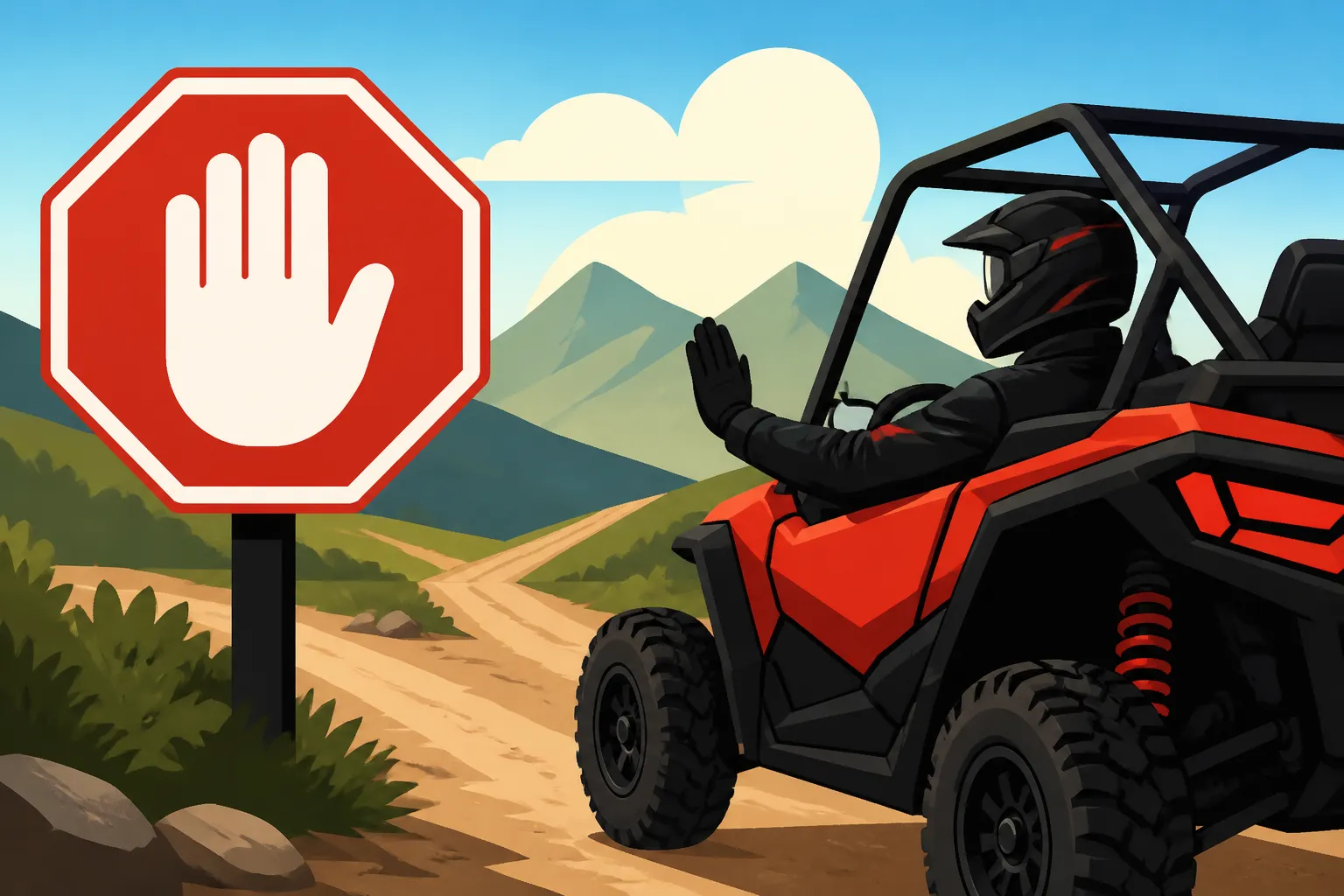
Before your tires even touch the asphalt, that moment of hesitation—that critical stop—is paramount. It’s not just a suggestion; it’s a fundamental safety and legal requirement in California when operating an off-highway vehicle near or on public roads. Ignoring this simple, yet vital, step can lead to dangerous situations, hefty fines, and even the loss of your riding privileges.
Think about it: your ATV or UTV is designed for off-road terrain, not for the high-speed, unpredictable environment of public streets. It lacks many of the safety features of street-legal vehicles, like turn signals, horn, and often sufficient lighting for road use. Moreover, other drivers on the road aren't expecting an OHV to suddenly appear, especially not without warning. A sudden, unsignaled entry onto a paved road is a recipe for disaster, risking collisions with cars, trucks, or even pedestrians. This is why California law, specifically the Vehicle Code, has very clear and strict rules about how OHVs may interact with public roads, and "stopping before you cross" is at the heart of responsible operation. [California Rules for Crossing a Public Road] are designed to protect both the rider and the public.
Safety First: Mitigating Risks on Paved Surfaces
Beyond the legalities, stopping gives you precious seconds to assess the situation and mitigate risks. First and foremost, you need to check for traffic. Paved roads, even quiet country ones, can have vehicles approaching from either direction at speeds far greater than you’re used to on the trail. A quick glance is not enough; a full stop allows for a thorough scan of all directions, listening for approaching vehicles that you might not yet see, and taking into account any blind spots or curves in the road.
Moreover, a complete stop gives you a moment to prepare your machine. Are your tires properly inflated for the brief pavement interaction? Is your spark arrester in good condition and your exhaust within noise limits, especially if you're approaching an area where rangers might be present? While you won't be traveling far on the pavement, ensuring your machine is in top working order, with good brakes and steering, is crucial for a safe crossing. You want to make sure you have complete control over your ATV or UTV for the brief, high-stakes maneuver of crossing.
Avoiding Penalties and Preserving Riding Privileges
California is serious about OHV safety and compliance. Deviating from the established rules for road crossings can quickly lead to significant consequences. Law enforcement, whether it's the California Highway Patrol (CHP), a county sheriff, or a local ranger, can issue citations for violations of the Vehicle Code. These fines can be substantial, often in the hundreds of dollars, and can impact your driving record, even if you’re not operating a street-legal vehicle. [California Fines for Riding on a Highway] can stack up quickly, making a momentary lapse in judgment quite costly.
Furthermore, repeated violations or particularly egregious acts can lead to impoundment of your vehicle or even charges of reckless endangerment. These are consequences that no rider wants to face. By adhering to the "stop before you cross" rule and all other guidelines for OHV road interaction, you’re not just protecting yourself and others; you're also protecting your investment in your machine and your ability to enjoy the sport you love. Understanding [What a California Sheriff Checks Roadside] can help you be prepared for any interaction.
Understanding California's Legal Requirements for OHV Road Crossings
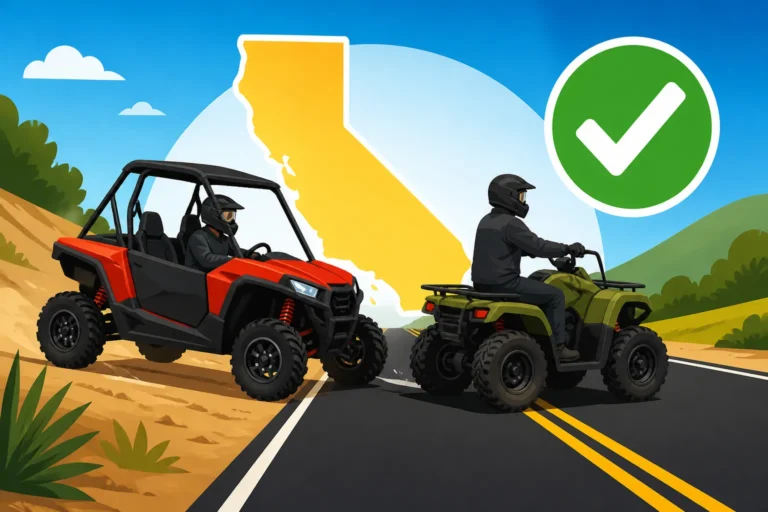
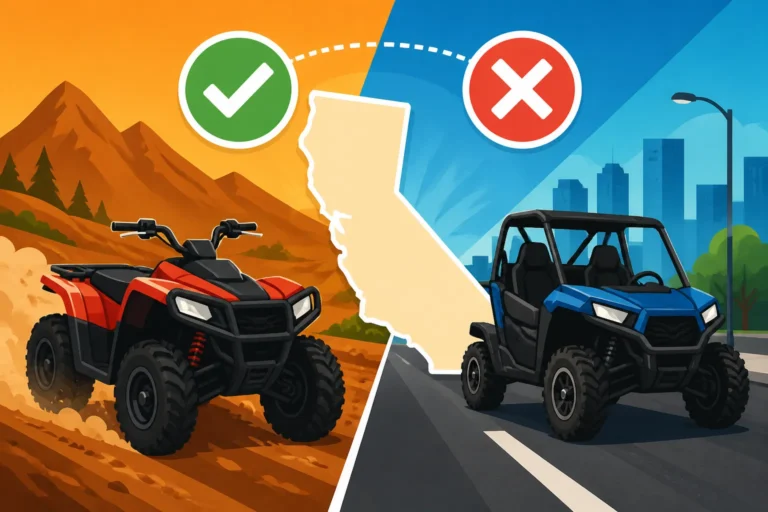
California Vehicle Code (CVC) Section 38025 specifically addresses the crossing of highways by off-highway vehicles. It's important to recognize that this is a crossing provision, not a license to ride on public roads. Generally, OHVs are not street legal in California, and attempting to make a UTV street legal is usually futile. [Why California Will Not Convert a UTV] highlights the difficulties. The law carves out specific, limited exceptions for crossing, recognizing that trails often intersect with the public road network.
The core of this section outlines specific maneuvers and conditions that must be met to ensure the safety of all road users. These aren't arbitrary rules; they've been put in place to standardize the procedure and minimize the inherent risks of mixing off-road and on-road traffic. Adhering to these strict guidelines is non-negotiable for any responsible OHV operator.
The Right-Angle Rule and Yielding to Traffic
One of the most critical aspects of CVC 38025 is the requirement to cross at a right angle. This means you must approach the road, stop, and then proceed directly across to the opposite side, forming an approximate 90-degree angle with the roadway. You absolutely cannot drive parallel to the road for any distance, even a short one. The intention here is to minimize the time your OHV spends on the paved surface, reducing exposure to other vehicles. Imagine drawing a straight line from where you enter to where you exit; that's the path you should take. [Crossing at a Right Angle] is a non-negotiable part of the process.
Crucially, you must also yield the right-of-way to all traffic on the highway. This isn't just a suggestion; it's a legal obligation. You must wait until there is a completely clear and safe opportunity to cross without impeding the flow of traffic or forcing any driver to brake or swerve. Patience is key here. If you’re riding a dirt bike, ATV, or side-by-side, you're the one who needs to wait, regardless of how long it takes. [Riding a Quad Across a Paved Highway] requires extreme caution and adherence to these rules.
Visibility and Signaling Your Intent
While OHVs typically lack traditional turn signals, you still have a responsibility to make your intentions clear and maximize your visibility. Before you even approach the crossing point, be mindful of your surroundings. If there are any available, use hand signals to indicate your intention to cross, especially if you see approaching vehicles. Even if there are no specific legal requirements for hand signals for OHVs, it's a smart safety practice to emulate street-legal vehicle signals where possible.
Wearing bright, high-contrast clothing can also significantly improve your visibility to other drivers. If you’re riding in low light conditions or at night (which is generally restricted on public roads for OHVs, but might apply to the very brief moment of crossing if permitted by local rules), ensure any available lighting on your OHV is fully functional and visible. Remember that while your OHV might have headlights and taillights, they might not be as bright or as legally compliant as those on street-legal vehicles, so always assume you are less visible than you think you are.
Here’s a quick overview of legal crossing requirements:
| Action | Requirement | Why It Matters |
|---|---|---|
| Stop | Must come to a complete stop before entering the roadway. | Allows time to check for traffic, assess conditions, and prepare for the crossing. Prevents sudden entry. |
| Yield | Must yield the right-of-way to all traffic on the highway. | Ensures you do not interfere with existing traffic flow, preventing collisions. Safety of yourself and others. |
| Right Angle | Must cross at approximately a 90-degree angle to the roadway. | Minimizes time spent on the pavement, reducing exposure to traffic. Prevents riding along the road. |
| Clear View | Cross only when there is a clear view of oncoming traffic and it is safe to proceed. | Reduces risk of being hit by approaching vehicles. Requires patience and good judgment. |
| Quickest Path | Proceed across the roadway by the most direct and expeditious route. | Reinforces minimizing time on the road. The goal is to get from one side to the other, not to travel. |
| No Riding Parallel | Absolutely no driving along the highway for any distance. | OHVs are not street-legal. Any extended travel on pavement is illegal and dangerous. This is a crossing provision, not a travel permission. |
| Helmet | All riders and passengers must wear an approved safety helmet. | Mandated by law for all OHV operation on public lands, and crucial for safety during brief road interactions. [California Helmet Law for ATV Riders] |
Navigating Different Road Types: Divided vs. Undivided Highways
Not all roads are created equal, and the type of highway you encounter will influence how you execute a legal crossing. Understanding the difference between divided and undivided highways is crucial, as each presents its own set of challenges and specific considerations under California law. The principle of [Stopping Before You Cross] remains constant, but the execution might differ slightly.
Whether it's a small county road or a multi-lane highway, your primary goal is to cross safely and quickly while adhering to the CVC. Always approach any paved road with the mindset that it is a dangerous obstacle that needs to be traversed with the utmost care, not a convenient shortcut.
Crossing Undivided Highways
An undivided highway is typically a single roadway with opposing traffic lanes separated only by a painted line (single yellow, double yellow, etc.), or sometimes no median at all. These are common in rural areas, connecting small towns or remote trailheads. When crossing an undivided highway, your process should be:
- Approach with caution: Slow down significantly as you near the pavement.
- Come to a complete stop: Stop completely before your tires touch the paved surface. This gives you a clear vantage point and time to assess.
- Check traffic in both directions: Look left, then right, then left again. Pay close attention to the speed of approaching vehicles. Remember, OHVs are generally slower to accelerate, so you need a much larger gap in traffic than you might in a car.
- Yield to all traffic: Do not proceed until there is absolutely no oncoming traffic that you would impede.
- Cross at a right angle: Once clear, proceed directly across to the other side in a straight line, minimizing your time on the road.
- Maintain control: Keep a firm grip on your handlebars or steering wheel, looking where you want to go. Don't accelerate excessively but ensure you have enough momentum to clear the road quickly.
Remember, even if a road looks quiet, conditions can change rapidly. Dust or shadows might obscure an approaching vehicle. Always assume a vehicle could appear at any moment.
Crossing Divided Highways
Divided highways are typically multi-lane roads with a physical barrier (like a median, guardrail, or wide grassy strip) separating opposing directions of traffic. Freeways are the most common example, but some state routes also feature medians. [Crossing a Divided Highway] presents a unique challenge, as you essentially have two separate crossing events. It's vital to treat each section as an individual crossing.
Here’s the breakdown:
- Approach the first section: Slow down and stop completely before entering the first set of lanes.
- Check for traffic: Look for traffic coming from your left (if you're on the right side of the road, heading toward the median).
- Cross the first section: Once clear, cross at a right angle to the median.
- Stop in the median: If the median is wide enough and safe to stop in, come to a complete stop within the median. This is your safe zone to re-evaluate. Do not stop if the median is too narrow or would put you in danger from traffic. In such cases, you might have to wait for a clear path across both sections, making the crossing much riskier and potentially impossible if traffic is heavy.
- Check traffic for the second section: From your stop in the median, look for traffic coming from your right (the lanes heading away from you).
- Cross the second section: When clear, proceed across the second set of lanes at a right angle.
- Exit safely: Once you’ve cleared the entire paved surface, return to your off-road route.
It's important to stress that crossing divided highways, especially busy ones, is incredibly risky and often not advisable. Sometimes, the safest and only legal option is to find an alternative route that avoids such a crossing, or to trailer your machine past the highway. The law does allow agencies to designate [California's Combined-Use Highways] for limited OHV travel, but these are specific, designated segments, and generally, you cannot just ride onto any highway.
What to Do if Law Enforcement Stops You During a Crossing
Even when you follow all the rules, there's always a chance you might encounter law enforcement. Maybe a deputy didn't see you stop fully, or perhaps they're checking for compliance in general. Your behavior during such an encounter is critical. Just like in a street-legal vehicle, remaining calm, cooperative, and respectful is the best course of action. This applies whether you're being checked at a gate in [Oceano Dunes: California's Only Sand Beach Ride] or simply questioned during a road crossing.
Understanding your responsibilities and the officer's role can help de-escalate any potential tension and ensure the interaction proceeds smoothly. Remember, officers are primarily concerned with safety and enforcing the law, especially when OHVs are involved near public roads where they aren't typically expected.
Being Prepared: Documents and Safety Gear
Before you even head out on your ride, ensure you have all necessary documentation with you. This typically includes your OHV registration (the physical paper, not just the sticker on your machine), and if applicable, your ATV Safety Certificate. While you don't need a driver's license to operate an OHV on public lands, having it on you for identification purposes is always a good idea. Make sure you know [California OHV Registration Paperwork Checklist] to avoid any issues. Many riders carry their documents in a waterproof bag in their pack or in a secure compartment on their machine. [Carrying Registration Paper on the Sand] is a good habit, even on trails.
Equally important is ensuring you and any passengers are wearing proper safety gear, especially an approved helmet. [California Helmet Law for ATV Riders] mandates helmets for all riders on public land, regardless of age. If you're riding a side-by-side, ensure all occupants are properly secured with seatbelts, and that you're not exceeding the machine's passenger capacity. These simple preparations can prevent additional citations if you are stopped.
How to Interact with an Officer
If an officer signals you to stop while you're crossing or immediately after:
- Pull over safely: If you are on the pavement, move immediately and safely to the shoulder or nearest safe spot off the road. Turn off your engine.
- Remain calm and cooperative: Keep your hands visible, preferably on the handlebars or steering wheel. Do not make any sudden movements.
- Provide documents when asked: When the officer asks for your registration, identification, or safety certificate, retrieve them calmly and hand them over.
- Answer questions honestly: Be truthful in your responses. If you made a mistake, acknowledge it. Trying to argue or evade questions will likely worsen the situation.
- Understand the reason for the stop: Politely ask why you were stopped if it's not immediately clear.
- Avoid arguments: If you disagree with a citation, accept it calmly. You'll have an opportunity to contest it in court later. Arguing roadside rarely changes the outcome and can sometimes lead to additional charges.
- Do not admit guilt unnecessarily: While you should be honest, you are not obligated to volunteer information that wasn't asked or to admit guilt if you believe you followed the law. Stick to factual answers.
Remember, the officer's job is to ensure public safety and adherence to the law. By showing respect and cooperation, you facilitate a quicker, less stressful interaction for everyone involved. A brief encounter can quickly become a prolonged ordeal if you are confrontational or uncooperative. Always prioritize safety and legal compliance, especially when interacting with the road system.
Disclaimer
This article is for general informational purposes only and does not constitute professional advice. Laws, prices and regulations vary by location and change over time. Consult a qualified professional for guidance on your specific situation.