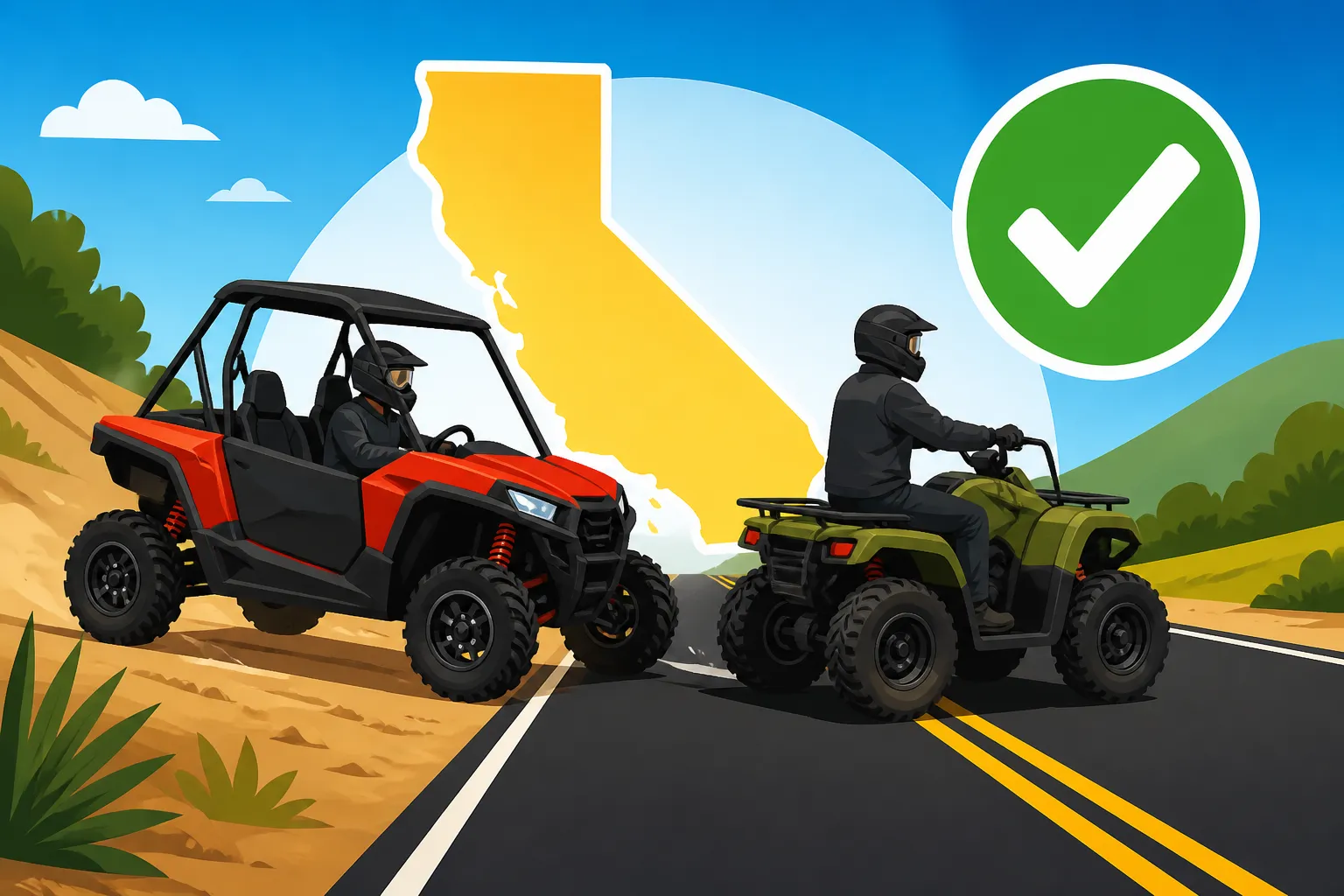
California Rules for Crossing a Public Road
You're out on the trails, the sun's shining, and you're having an amazing time, only to hit that dreaded moment: a paved public road stands between you and the next stretch of adventure. It's a common headache for California ATV and UTV riders, and the rules around crossing these roads can feel like a minefield. This guide is here to untangle the complexities of California's regulations, helping you understand exactly how to legally and safely navigate those asphalt barriers that so often interrupt our off-road fun.
Why Crossing a Public Road is Such a Big Deal in California
Let's face it, California isn't exactly known for being laid-back when it comes to vehicle regulations, and OHVs are no exception. For many riders, the temptation to just zip across a paved road to get to the next trail or perhaps to a gas station can be incredibly strong. But this isn't just a minor infraction; it can lead to significant penalties and safety risks. The state's general stance is that off-highway vehicles belong off-highway. This isn't just about being difficult; it's rooted in public safety, traffic flow, and environmental concerns.
California's vehicle code is pretty clear: OHVs are generally not street-legal. They lack the standard safety equipment required for on-road use, like turn signals, rearview mirrors, and often proper headlights and taillights for street visibility, especially critical in low-light conditions. When you're on a public road, you're mixing with cars, trucks, and motorcycles that are designed and equipped for that environment. The speed differences, the lack of protective enclosures on many ATVs, and the sheer unpredictability of an OHV in a traffic lane create a dangerous situation for everyone. This is precisely why law enforcement, from local sheriffs to the California Highway Patrol, takes these rules very seriously.
Beyond safety, there are also considerations like noise and emissions. Many OHVs, particularly those with aftermarket modifications, can be quite loud, which isn't ideal for residential areas or shared public spaces. While we all love the roar of a powerful engine, the state has set [California Sound Limits for OHVs Explained] for a reason. These rules are in place to minimize disturbances and protect air quality in areas not designated for off-road recreation. It's a tricky balance between enjoying our machines and being good neighbors, but it's a balance California prioritizes.
The General Prohibition Against OHVs on Paved Roads
The foundational rule in California is straightforward: off-highway vehicles are generally prohibited from operating on paved public highways, roads, or streets. This means you can't just drive your quad down the road to your buddy's house, even if it's just a mile. This blanket prohibition is designed to keep OHVs in their intended environment – the dirt, the dunes, the trails, and the designated off-highway vehicle recreation areas (SVRAs).
This strict rule can be incredibly frustrating, especially when you encounter a short stretch of pavement separating two fantastic trail sections or when you simply need to cross a road to access a staging area or a local store. It feels counter-intuitive to have to load your machine onto a trailer for a mere 100-foot crossing. However, this is the reality of OHV laws in the Golden State. The state's position is that the potential for accidents and the disruption to conventional traffic far outweigh the convenience for off-road riders. It's a tough pill to swallow, but understanding this fundamental principle is the first step toward staying on the right side of the law.
Why Safety and Traffic Flow Dictate the Rules
Think about it from a different perspective: a typical OHV is built for rugged terrain, not for high-speed, multi-lane traffic. The tires are knobby, designed for grip in loose soil, not for smooth, wet asphalt where they can lose traction quickly. The suspension is geared for absorbing bumps and jumps, not for stable cornering at road speeds. The braking systems, while effective off-road, might not offer the same stopping power or control on pavement as a street-legal vehicle.
Furthermore, visibility is a huge concern. Many OHVs are smaller and sit lower than cars, making them harder for drivers of larger vehicles to spot, especially in busy intersections or at night. While you might equip your machine with some aftermarket lights or a bright flag, perhaps from a brand like SuperATV, it still doesn't change the fundamental design for road use. The state is trying to prevent accidents, and a significant part of that is ensuring that all vehicles on public roads meet a baseline of safety equipment and design appropriate for that environment. [California Helmet Law for ATV Riders] is another example of these safety measures, recognizing the vulnerability of riders. When you ride on public roads, you're not just risking a ticket; you're putting yourself and others in harm's way because your machine simply isn't engineered for that kind of environment.
The Nitty-Gritty: How to Legally Cross a Paved Road
Okay, so we've established that the general rule is "no riding on paved roads." But here's where it gets interesting – and a little bit confusing. California does allow for specific, limited crossings of public roads under very strict conditions. This isn't a free pass to drive a mile down the highway; it's about connecting two legitimate off-highway segments or accessing an immediate service. It's crucial to understand these distinctions because breaking them can lead to serious trouble.
The key here is that these aren't "riding on the road" provisions; they are "crossing the road" provisions. This implies the shortest possible distance, a direct path, and specific safety protocols. You cannot use these allowances to travel alongside a road for any distance, even if it seems convenient. The intent is to allow you to bridge a gap, not to create an alternative highway.
Permitted Conditions for Crossing
For those moments when a public road truly bisects your trail, California law provides a narrow window for legal crossings. You can only do this if the public highway or road is part of a designated off-highway vehicle trail or segment, or if it's necessary to cross to access a legal off-highway area. Even then, there are very precise rules you must follow:
- Stop Before You Cross: This might sound obvious, but it's often overlooked in the excitement of the moment. You must bring your OHV to a complete stop before entering the paved portion of the highway, much like you would at a stop sign. This gives you time to assess traffic conditions and make sure it's safe to proceed.
- Cross at a Right Angle: The crossing must be made at approximately a 90-degree angle to the roadway. You can't merge into traffic, travel parallel to the road for any distance, or take a gradual curve onto the pavement. The goal is to get off the road as quickly and directly as possible.
- Cross Only When Safe: This is paramount. You must yield the right-of-way to all vehicles on the highway and only proceed when it is safe to do so, without interfering with the flow of traffic. This requires good judgment and patience. A quick check of both directions is essential.
- Shortest Practical Distance: The crossing must be by the most direct and shortest route practical. This means no detours, no cruising to the next side street; just straight across to the next legal off-highway point.
- No Divided Highways: You are generally prohibited from crossing divided highways unless there's a specifically designated crossing point or it's part of a [California Combined-Use Highway List]. A divided highway presents significantly more hazards with multiple lanes and medians. The risk simply outweighs any convenience.
- Full Registration and Safety Gear: Your OHV must be properly registered and display its current ID plate or sticker. You should also be wearing appropriate safety gear, including a helmet, as required by law for public land use. This helps ensure that even during these brief crossings, you're adhering to all necessary safety and legal standards. [California OHV Registration Cost] is a small price to pay for legal operation.
It's critical to understand that these conditions are cumulative – you must meet all of them. Missing even one can turn a legal crossing into an illegal act, potentially leading to a citation.
Designated Combined-Use Highways and Routes
California does offer a glimmer of hope for some riders through what are known as "combined-use highways" or "designated routes." These are specific, clearly marked segments of public roads where OHVs are permitted to operate for certain purposes, typically to connect one trail system to another or to access nearby services like gas stations or food. These routes are usually designated by local authorities in conjunction with the California Department of Parks and Recreation, Off-Highway Motor Vehicle Recreation (OHMVR) Division.
However, these are not widespread, and they come with their own set of rules:
- Explicit Designation: The road segment must be officially designated and clearly signed as a combined-use route. You can't just assume a county dirt road is fair game. Always look for signage. [What California's CVC 38026 Lets an Agency Designate] explains how agencies can enable these routes.
- Speed Limits: There are often specific, reduced speed limits for OHVs on these segments, much lower than the posted highway speed.
- Duration/Distance Limits: These routes usually have strict limitations on how long or how far you can ride on them. Often, it's a matter of a few miles at most, designed just to bridge a gap. [How Long a California Combined-Use Segment Can Be] is usually quite short.
- Safety Equipment: Even on these designated routes, your OHV still needs to meet certain basic safety requirements, which may include lights, mirrors, and a functional brake system. While a full street-legal conversion might not be required, you're still expected to be as visible and safe as possible. Upgrades from companies like SuperATV, such as better lighting kits or mirrors, can be invaluable here for increased visibility.
- Registration and Licensing: You must have a properly registered OHV and, if you're driving a UTV or an ATV in certain scenarios, you might need a valid driver's license.
The key takeaway here is: do your homework. Before you ever plan to use a combined-use route, check official maps from the local land management agency (like the Forest Service, BLM, or California State Parks) or local county sheriff's department. Never rely on hearsay or old information. These designations can change, and ignorance of the law is no excuse.
What Happens If You Don't Follow the Rules?
Ignoring California's strict rules about OHV use on public roads can lead to a lot more than just a stern talking-to. Law enforcement takes these violations seriously because, as discussed, they're not just about paperwork – they're about public safety. Getting caught can quickly turn a fun day of riding into a very expensive and frustrating experience.
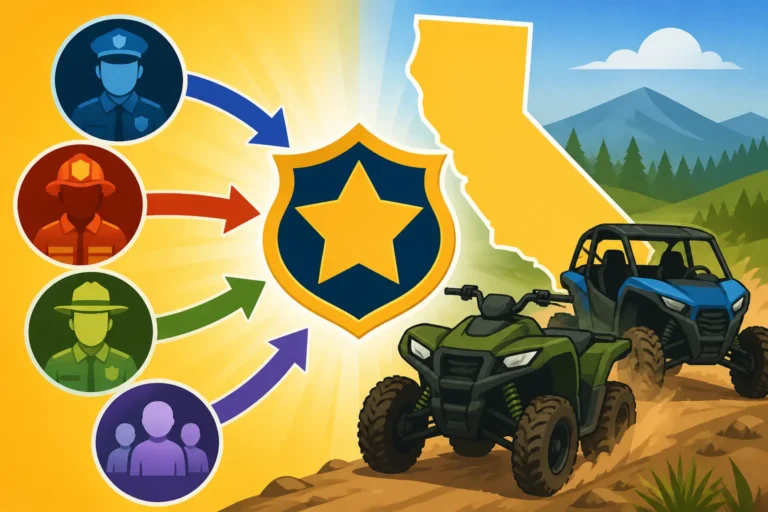
It's important to remember that various agencies enforce these rules. This isn't just the California Highway Patrol (CHP); it can be local sheriff's deputies, city police departments, or even rangers within state or federal recreation areas that border public roads. [What a California Sheriff Checks Roadside] can include everything from your registration to your safety gear and how you're operating your machine.
Fines and Penalties
The financial penalties for riding an OHV illegally on a public road in California can be quite steep. You're not just looking at one simple ticket. Depending on the specific violation and the officer's discretion, you could be cited for multiple infractions.
Here's a breakdown of potential penalties:
- Operating an Unregistered OHV on a Highway: If your machine isn't registered at all, or if its registration has expired, you'll face fines for that in addition to the highway violation. This is why keeping your [Renewing California OHV Registration] up to date is so important.
- Operating an OHV on a Highway Not Designated for Such Use: This is the primary violation and carries a significant fine. It’s essentially the charge for being where you shouldn't be.
- Failure to Yield Right-of-Way: If you cross a road unsafely and don't yield to traffic, that's another fine.
- Unsafe Operation: This is a broad category that an officer can apply if they deem your actions on the road dangerous, even for a brief crossing.
- Lack of Required Safety Equipment: If you're caught without a helmet, or if your machine lacks required lights (even for a crossing), those can be additional tickets.
- Impoundment: In some cases, especially for repeat offenders or particularly egregious violations, law enforcement has the authority to impound your OHV. Getting your machine back from impound can involve hefty towing and storage fees, adding significantly to your costs.
These fines are designed to be a deterrent, and they can quickly add up to hundreds, if not thousands, of dollars. It's a painful lesson to learn, and one that's easily avoidable by knowing and following the rules. [California Fines for Riding on a Highway] are not something you want to experience firsthand.
Safety Concerns and Liability
Beyond the legal and financial penalties, the most crucial consequence of riding an OHV illegally on a public road is the inherent danger. As we discussed, OHVs are not designed for road use, and the risk of an accident is substantially higher.
Consider these grim possibilities:
- Collisions with Other Vehicles: OHVs are less visible, less stable on pavement, and generally slower than road vehicles. A collision with a car or truck can result in severe injuries or fatalities for the OHV rider and potentially occupants of the other vehicle.
- Loss of Control: Loose gravel at the edge of pavement, slick spots, or even sudden braking can cause an OHV to lose traction and control, leading to a crash.
- No Fault Insurance: If you're involved in an accident while illegally operating your OHV on a public road, your insurance policy might not cover damages or injuries. This leaves you personally liable for potentially astronomical medical bills, vehicle repairs, and legal fees. This is why [California OHV Insurance Requirements] are worth understanding for off-highway use, but they generally won't protect you for illegal on-road operation.
The liability extends beyond your own injuries. If you cause an accident involving another vehicle or person, you could face civil lawsuits for damages. This means losing your vehicle, your savings, and potentially your future earnings. It’s a terrifying prospect, and it underscores why adhering to these crossing rules isn’t just about avoiding a ticket – it's about protecting yourself and others from catastrophic outcomes. Always prioritize [Trailering Instead of Riding in California] when possible.
Alternatives to Riding on Public Roads
Given California's strict regulations and the potential repercussions of non-compliance, it's clear that relying on illegal road crossings is a gamble you don't want to take. Fortunately, there are smarter, safer, and entirely legal alternatives to get your OHV where it needs to go. Planning ahead is your best friend when navigating California's extensive network of trails and recreation areas.
Sometimes, it might feel like an inconvenience to load up a machine for a short hop, but that inconvenience pales in comparison to the fines, impoundment, or even serious injury that can come from a momentary lapse in judgment. Our off-road machines are powerful and fun, but they demand respect for the rules and the environment in which we operate them.
Trailering Your OHV Between Sections
This is, hands down, the safest and most legally sound method for connecting non-contiguous trail sections or accessing services that require crossing a public road. While it might add a few minutes to your journey, the peace of mind is invaluable.
Think of your trailer as an extension of your off-road experience:
- Dedicated Trailers: Many riders invest in open utility trailers or dedicated OHV trailers that are perfect for hauling one or multiple machines. These trailers are designed for easy loading and secure transport, ensuring your quad or side-by-side arrives safely at its destination. You can find robust accessories, like tie-downs or ramps, from brands like SuperATV, to make trailering even easier and safer.
- Truck Beds: For single, smaller ATVs or dirt bikes, a truck bed can often suffice, especially if equipped with ramps and proper tie-downs. Always ensure your machine is securely fastened to prevent shifting or falling out during transit.
- Planning Your Route: Before you head out, look at a map (digital or paper) and identify any paved road sections you'll encounter. If there isn't a designated combined-use route, plan a staging area on either side of the road where you can safely load and unload your machine. This might mean having two separate starting points for your day's ride, but it eliminates the risk.
- Safety First: When trailering, always ensure your trailer lights are working, your tires are properly inflated, and your load is balanced and secured. A wobbly trailer or a shifting load can be just as dangerous on the highway as an illegally ridden OHV.
Yes, trailering adds a step to your adventure, but it’s a non-negotiable part of responsible OHV use in California. It means you get to continue your ride without the anxiety of seeing flashing lights in your rearview mirror.
| Action | Legality in California (Generally) | Risk of Citation/Fine | Safety Level (Compared to riding on road) |
|---|---|---|---|
| Riding OHV on any paved public road | Illegal | High | Very Low |
| Crossing a paved road at right angle | Conditional (see rules) | Medium | Low |
| Using a Designated Combined-Use Route | Legal (with conditions) | Low | Medium |
| Trailering OHV between sections | Legal | Very Low | High |
Researching Designated Routes and OHV Areas
As mentioned, some areas do have those coveted combined-use routes, but they are the exception, not the rule. The responsibility falls on you, the rider, to know before you go.
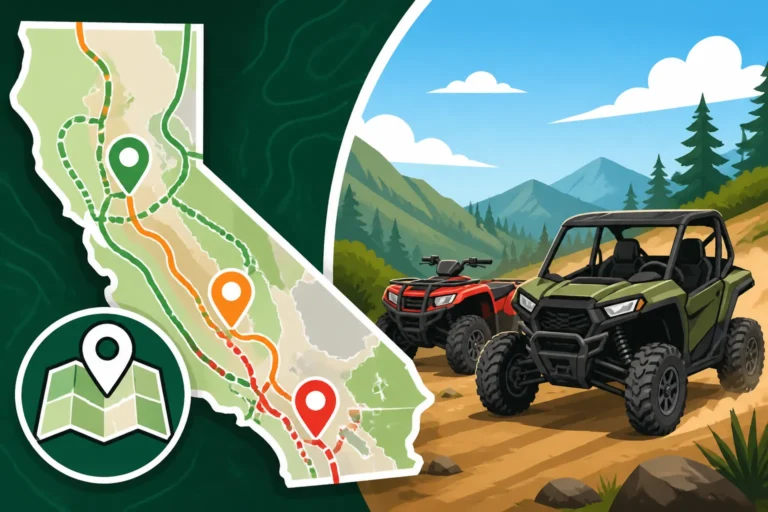
- Official Sources: Always consult official sources for trail maps and regulations. This includes the California State Parks OHMVR Division website, U.S. Forest Service Motor Vehicle Use Maps (MVUMs), and Bureau of Land Management (BLM) field office websites for specific areas like the Imperial Sand Dunes Recreation Area. These maps clearly show designated OHV trails, staging areas, and any allowed combined-use segments.
- Local Ordinances: Some counties or cities might have specific local ordinances regarding OHV use, even on seemingly remote dirt roads. It’s always a good idea to check with the local sheriff’s department or county clerk’s office if you’re riding in an unfamiliar area.
- OHV Clubs and Communities: Local OHV clubs are fantastic resources. Members often have first-hand knowledge of legal routes, closures, and new regulations. They can be invaluable for learning about permissible crossings or combined-use roads in specific riding areas.
- Planning Apps: Many popular GPS and mapping apps now include layers for OHV trails. While these can be helpful for navigation, always cross-reference them with official agency maps to ensure legality, as app data isn't always perfectly up-to-date with changing regulations.
By taking the time to plan your route, identify legal crossing points, or commit to trailering between sections, you ensure that your California ATV and UTV adventures remain safe, fun, and completely legal. Don't let a public road be the obstacle that ruins your day – plan around it!
Disclaimer
This article is for general informational purposes only and does not constitute professional advice. Laws, prices and regulations vary by location and change over time. Consult a qualified professional for guidance on your specific situation.