A Child Passenger in a California Side-by-Side
Bringing your kids along for a side-by-side adventure in California is a dream for so many families, offering incredible memories and a unique way to explore our beautiful state. However, the rules around safely and legally carrying child passengers in UTVs can feel like navigating a maze, leaving many parents wondering if they're doing it right. This guide is here to clear up that confusion, providing you with a clear roadmap to ensure your little co-pilots are safe, secure, and ready for adventure on California's public lands.
Understanding California's Rules for Child Passengers in UTVs
It’s completely natural to want to share the thrill of off-roading with your children. Before you hit the trails, it’s crucial to understand California's specific regulations regarding child passengers in Recreational Off-Highway Vehicles (ROVs), which include side-by-sides or UTVs. These aren't just suggestions; they are laws designed to protect everyone, especially our youngest riders.
The Core Law: What Does California Say?
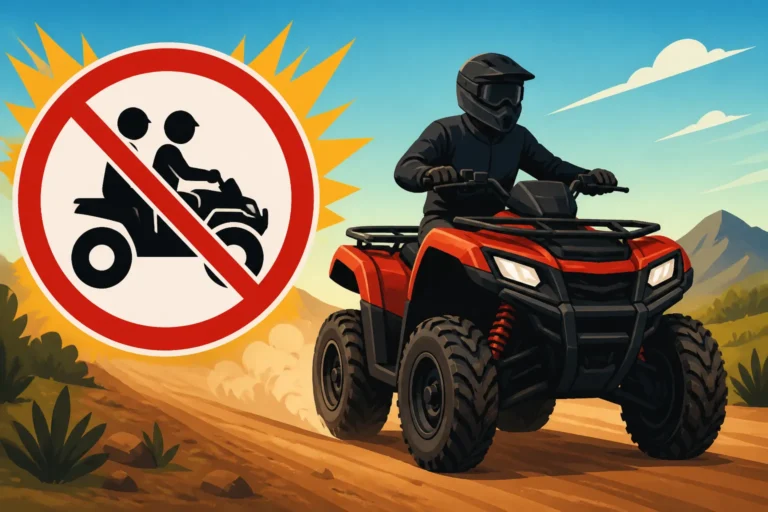
California's Vehicle Code has distinct provisions for off-highway vehicles, and UTVs (or ROVs as the state often calls them) fall under these regulations. Unlike ATVs, which have a strict [California ATV Passenger Ban Explained], UTVs are generally designed to carry multiple passengers, including children, provided certain conditions are met. The fundamental principle is that every person in the vehicle must be properly seated and restrained. This isn't just about avoiding a ticket; it's about physics. In the event of a sudden stop, a roll, or even just bumpy terrain, an unrestrained child can be seriously injured.
The law emphasizes that passengers must occupy a seating position designed and provided by the manufacturer. This means no riding on laps, no standing in the bed, and no extra passengers crammed into a two-person bench. Each passenger must have their own designated seat. Furthermore, every passenger must be secured by a seat belt or safety harness, similar to what you'd find in a standard car. This "seated and belted" rule is the bedrock of UTV passenger safety in California. It ensures that in a dynamic off-road environment, everyone stays put, reducing the risk of being thrown from the vehicle.
Minimum Age and Supervision Requirements
When it comes to the minimum age for a child to be a passenger in a side-by-side, California focuses more on proper restraint and supervision rather than a hard age cut-off for passengers. However, there are age requirements for operating these vehicles that indirectly influence how and when children participate. Generally, a person must be at least 16 years old and possess a driver's license or be under the direct supervision of an adult to operate an ROV. For passengers, the focus shifts to their ability to be safely secured.
While there isn't a specific "no child under X age" rule for UTV passengers, common sense and the need for proper restraint often dictate practical limits. If a child is too small to be properly secured by the UTV's seat belt system, or if a booster seat isn't feasible (which we'll discuss in more detail later), then they simply cannot safely be a passenger. For very young children, direct adult supervision is implicitly required, as the responsible adult operating the UTV is accountable for all passengers. It’s also highly recommended that any child passenger be mature enough to understand and follow basic safety instructions. If your little one tends to fidget or unbuckle themselves, a UTV ride might need to wait a bit longer, or you might need a more robust restraint system. Understanding [California Rules for Riders Under 18] is also important, as these often influence the overall safety approach for young people in off-road settings.
Essential Safety Gear and Vehicle Requirements
Taking your child out in a side-by-side means stepping up your safety game. It’s not just about compliance; it’s about providing the maximum protection possible for your most precious cargo. From head protection to proper restraints, every detail matters.
Helmets, Seat Belts, and Restraints
California's helmet law is unequivocal: anyone riding in an open-air off-highway vehicle, including a side-by-side, must wear a helmet. This is especially critical for children, whose developing brains are more vulnerable to injury. [California Helmet Law for UTV Passengers] mandates that all passengers wear a safety helmet meeting U.S. DOT standards. No exceptions. This means a properly fitting helmet, snug and secure, that doesn't obstruct vision or hearing but stays put even during bumpy rides. It's not enough to just have a helmet; it has to be the right size and worn correctly.
Beyond helmets, the seat belt system is your child's primary restraint. Most factory UTVs come with three-point seat belts, similar to a car. However, for more aggressive riding, or for children who might slip out of a standard belt, many owners upgrade to four- or five-point harnesses. These harnesses offer a much more secure fit, distributing impact forces across a broader area of the body and preventing a child from sliding forward or sideways in their seat. When considering such upgrades, brands like SuperATV offer a range of aftermarket harnesses and mounting solutions designed to enhance safety and provide a more secure fit for various body types, including younger passengers. Remember, the goal is to keep your child firmly planted in their seat, even if the terrain gets wild. You can learn more about general vehicle restraints in [California Seat Belt Rules in a UTV].
Ensuring Your UTV is Safe for Children
The UTV itself needs to be in tip-top shape and, ideally, equipped with features that enhance child safety. Your side-by-side should always have a functioning Roll Over Protective Structure (ROPS), which is the integrated cage designed to protect occupants in a rollover. Never modify your ROPS in a way that compromises its integrity.
Beyond the core structure, consider side nets or full doors. While many UTVs come with half doors or nets, upgrading to full doors or more robust netting can prevent small limbs from accidentally extending outside the vehicle during a turn or over rough terrain. This isn't just for safety; it also helps keep dust and debris out. Another consideration is the stability of the vehicle. For a smoother ride for kids, avoiding extreme lifts or modifications that significantly alter the center of gravity is wise. While these modifications might look cool, they can reduce stability, which is the last thing you want with young passengers on board. Always ensure your UTV is well-maintained, with good brakes, steering, and suspension.
Practical Considerations for Riding with Kids
Once you've got the legalities and equipment sorted, it's time to think about the actual experience. Riding off-road with children is a blast, but it requires extra planning and a different approach than adult-only rides.
Choosing the Right Trails and Conditions
This might be the most important practical consideration. When you have kids in the side-by-side, your definition of a "fun trail" changes dramatically. Forget the aggressive rock crawling, the high-speed desert runs, or the deeply rutted mud pits, at least for now. Start with gentle, smooth trails that have minimal obstacles. Fire roads, designated scenic routes, or the easier trails in a State Vehicular Recreation Area (SVRA) like Hungry Valley are perfect for introducing kids to off-roading. [California OHV Areas Good for Kids] provides excellent resources for finding suitable locations.
Pay close attention to weather conditions. Extreme heat can quickly lead to dehydration and discomfort for children, even with shade. Dust can be an issue for breathing and visibility, so consider dust masks or goggles. Cold weather requires appropriate layering to prevent hypothermia. Always check for trail closures due to fire or adverse weather before you head out. Planning frequent stops for snacks, hydration, and stretching is crucial. Kids have shorter attention spans and bladders, so be realistic about how long they can comfortably sit in the vehicle.
Preparing for Emergencies and Comfort
Being prepared for anything is part of the off-road ethos, and it's doubly important with children. A well-stocked first-aid kit is non-negotiable, including specific items for children like smaller bandages, children's pain relievers, and any necessary medications. Carry plenty of water and snacks. Sunscreen, hats, and appropriate clothing (layers are always good) are essential, even on overcast days.
Keep the lines of communication open. Talk to your children before and during the ride. Explain what to expect, the importance of staying seated, and how to signal if they need a break. Boredom can set in, so consider bringing a small, contained toy or a picture book for downtime during breaks. Some parents even bring portable Bluetooth speakers (used responsibly and quietly, of course) for some favorite tunes. Comfort is key: proper helmet fit, good goggle fit (especially over glasses), and a secure but not overly constrictive harness all contribute to a happier child passenger. Small additions like grab handles for little hands or extra padding for seats can make a big difference in comfort. Again, this is an area where accessories from SuperATV can enhance the experience, offering things like padded roof liners or specific grab handles that might be easier for smaller hands to hold onto securely. For more general advice, consider tips for [California Desert Riding Safety] to prepare everyone in your party.
Booster Seats in a Side-by-Side: The Nitty-Gritty
This is where many parents hit a wall. Can you use a regular car seat or booster seat in a side-by-side? The short answer is usually no, or at least, not without significant caution and research. Traditional car seats are designed for the specific crash dynamics of a passenger car, which are very different from the jarring, multi-directional forces experienced in an off-road vehicle. The way they attach to a vehicle (LATCH system or seat belt path) may not be compatible or secure in a UTV. Furthermore, the robust vibrations and potential for rollovers mean a standard car seat might not offer the intended protection.
Instead, when considering [Booster Seats in a Side-by-Side], look for child restraint systems specifically designed for off-road use. Some UTV manufacturers or aftermarket companies offer youth seats or booster bases that integrate directly into the UTV's frame or are designed to work with off-road harnesses. These are built to withstand the unique stresses of off-road riding. If you do use a booster seat, ensure it allows the UTV's seat belt or a multi-point harness to fit correctly over the child's shoulder and across their lap, without riding up onto their neck or abdomen. The child must be able to sit comfortably and securely, with their back against the seat and their feet able to be supported if possible. Always check the UTV manufacturer's guidelines for any recommendations or restrictions on child restraint systems in their specific model.
| Feature / Consideration | Standard Car Seat / Booster Seat (Passenger Vehicle) | UTV-Specific Child Restraint System (Aftermarket) |
|---|---|---|
| Designed For | Road vehicle crash dynamics | Off-road dynamics, vibration, potential rollovers |
| Attachment Method | LATCH, standard car seat belts | Often integrates with UTV frame, specific harness mounts |
| Impact Absorption | Optimized for forward/side impacts on paved roads | Built for diverse off-road forces, rugged use |
| Vibration Tolerance | Minimal | Designed for heavy vibration and jarring |
| Harness Compatibility | Designed for 3-point car seat belts | Often designed to work with 4- or 5-point UTV harnesses |
| Roll-Over Protection | Limited to car environment | Enhanced consideration for UTV roll cages |
| Comfort/Fit in UTV | May be awkward, ill-fitting, or too wide | Designed to fit UTV seating, ergonomic for off-road |
Ultimately, ensuring your child is a safe and happy passenger in your California side-by-side means doing your homework, investing in the right gear, and always prioritizing their safety over adrenaline. With proper preparation, you're not just taking them on a ride; you're creating unforgettable family memories.
Disclaimer
This article is for general informational purposes only and does not constitute professional advice. Laws, prices and regulations vary by location and change over time. Consult a qualified professional for guidance on your specific situation.