Are ATVs Street Legal in California?
It’s a scenario many of us in the California OHV community have dreamed about: hopping on our ATV or UTV right from the driveway and cruising down a paved road to the local store, or connecting trails without the hassle of trailering. The harsh reality, however, is that California has some of the most stringent laws in the nation when it comes to off-highway vehicles (OHVs) and public roads, making this dream, for the vast majority of us, impossible. This guide will cut through the confusion and explain exactly why your ATV or UTV isn't considered street legal in the Golden State, and what limited exceptions might exist.
The Blunt Truth: California's Stance on Street-Legal ATVs and UTVs
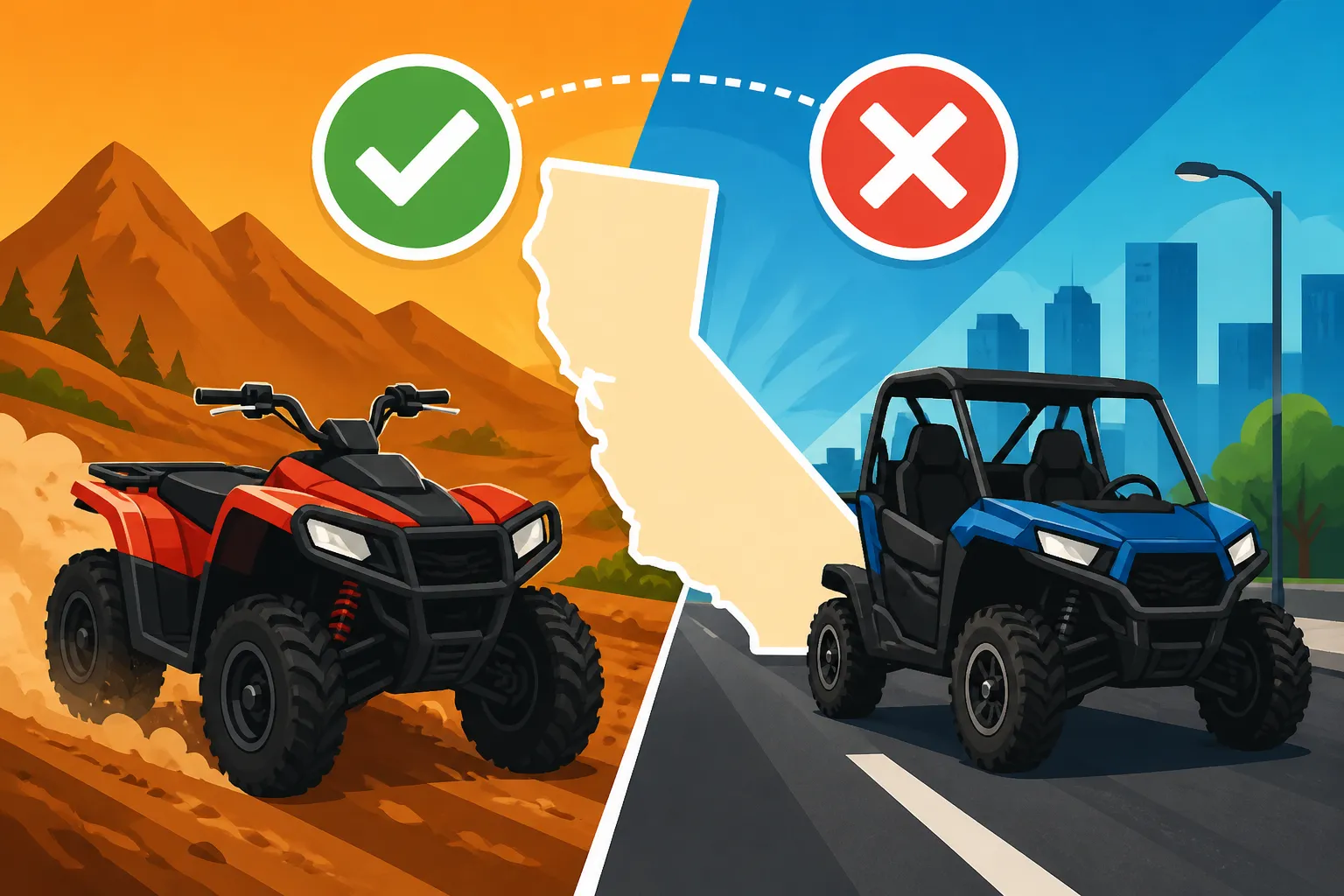
Let's get right to it: for nearly all recreational riders, ATVs and UTVs are not street legal in California. This isn't just a matter of slapping on a few turn signals; it's deeply rooted in how the state defines and regulates vehicles for use on public roads. The California Vehicle Code (CVC) draws a very clear line between vehicles designed exclusively for off-highway use and those permitted on paved streets and highways. This distinction creates a major hurdle for anyone hoping to convert their dirt machine into a road-worthy commuter.
Understanding the Fundamental Divide: OHVs vs. Street-Legal Vehicles
In California, an All-Terrain Vehicle (ATV) or Utility Terrain Vehicle (UTV) is generally classified as an Off-Highway Vehicle (OHV). This means it's built and intended for riding on dirt trails, sand dunes, and designated off-road areas like our fantastic [California's State Vehicular Recreation Areas]. These vehicles are registered with a "Green Sticker," "Red Sticker," or "Tan Sticker" through the DMV, and they receive an identification plate, not a traditional license plate. This identification signifies that they are not compliant with the safety, emissions, and construction standards required for vehicles on public roads.
Think of it this way: a vehicle designed for navigating rocky trails and deep sand has fundamentally different engineering requirements than one built for highway speeds, stop-and-go traffic, and shared road use. The suspension, tire type, braking systems, and overall frame rigidity are optimized for their respective environments. The state's strict regulations reflect this functional difference, prioritizing public safety on its extensive network of roads and highways. Trying to bridge this gap with an OHV often means trying to force a square peg into a round hole, legally speaking.
Why Your Machine Doesn't Qualify: Key Differences
The reasons an ATV or UTV won't pass muster for street legality in California are numerous and comprehensive. It's not just one or two things; it's a complete package of standards that most OHVs simply don't meet.
Here's a breakdown of the critical differences:
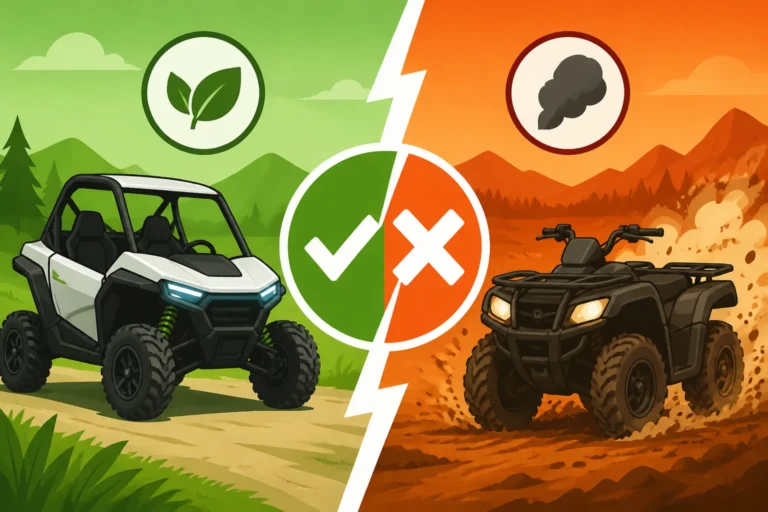
- Emissions Standards: California has arguably the strictest emissions standards in the country, especially for internal combustion engines. Off-highway vehicles, while having their own emission controls, are not typically certified to meet the same stringent evaporative and tailpipe emission standards as street-legal vehicles. This is why you see specific labels, often referred to as [California OHV Emissions Label Location], which delineate their compliance for off-road use only. Getting an OHV to meet California Air Resources Board (CARB) street-legal standards is a monumental, if not impossible, task for a vehicle not originally designed for it. [What CARB Compliance Means in California] is a whole different ballgame for street-legal machines.
- Safety Equipment: Street-legal vehicles require a comprehensive suite of safety features beyond what's found on most ATVs and UTVs. This includes Department of Transportation (DOT) approved tires (not typically knobby off-road tires), a windshield made of safety glass, windshield wipers, side and rearview mirrors that provide specific fields of vision, a horn that meets CVC standards, and specific lighting configurations (headlights with high/low beams, tail lights, brake lights, and turn signals). While many aftermarket companies, including those like SuperATV, offer great accessory lighting and mirrors for off-road use, these additions often don't meet the specific DOT and CVC requirements for street vehicles.
- Vehicle Identification and Title: A street-legal vehicle in California has a 17-digit Vehicle Identification Number (VIN) that is recognized as such by the DMV, leading to the issuance of a traditional vehicle title and license plates. An OHV, while it also has a VIN, is titled and registered specifically as an off-highway vehicle, which means it receives an ID plate and an off-highway certificate of title. California generally does not allow the conversion of an OHV title to a street-legal title, regardless of what modifications you might make. This is a fundamental barrier: [Why a Stock UTV Cannot Be Plated in California] is because its original manufacturer's certificate of origin designates it as an OHV.
The Very Limited Exceptions: Where You Might See an OHV on a Road
While the general rule is "no street legal ATVs or UTVs," California does acknowledge extremely narrow, controlled circumstances where an OHV might legally touch a paved road. It's crucial to understand that these are not loopholes to make your machine street legal, but rather specific allowances for momentary or highly restricted access.
Designated Combined-Use Highways and Crossing Roads
One of the most frequently asked questions revolves around riding on designated combined-use highways. Yes, in very specific circumstances, a local government agency (like a county or city) can petition the California Highway Patrol (CHP) to designate a short segment of a public road as a "combined-use highway." This designation allows OHVs to travel on that specific segment for the purpose of connecting trails or accessing services, usually with strict speed limits and other rules. [California's Combined-Use Highways] are few and far between, and they are typically very short, often limited to [California's 3-Mile Combined-Use Cap].
Even on these rare designated segments, your OHV is still an OHV, not a street-legal vehicle. You're simply being granted temporary permission to use a road segment under strict conditions. Always look for posted signs, as riding a combined-use route without proper authorization or outside the designated area will result in a citation. These routes are usually found near popular OHV recreation areas, like connecting campgrounds to trailheads.
Beyond these specific segments, the CVC allows OHVs to cross a public road at a right angle when moving from one off-highway area to another. This is not for cruising down the road, but for a direct and immediate crossing. You must come to a complete stop, yield to all traffic, and cross safely. This is a quick maneuver, not a joyride down the street. It’s a very specific allowance for practical access, not for general road use. [California Rules for Crossing a Public Road] are clear on this: it must be done safely, directly, and at a right angle.
Specific Exemptions That Don't Mean "Street Legal"
There are a handful of other, highly specialized exemptions that allow OHVs on roads, but these are almost exclusively for work-related purposes and do not apply to recreational riding.
- Agricultural Use: Farmers sometimes use ATVs or UTVs on short stretches of public roads to move between fields or access irrigation equipment on their own land. These machines must be registered as implements of husbandry and meet specific requirements. This is a functional exemption tied to farming operations, not a general allowance for recreational use. [Farm Quads and California Registration] typically falls under these very specific agricultural codes.
- Emergency Services and Utility Work: Law enforcement, fire departments, and utility companies may use OHVs on public roads when responding to emergencies, performing maintenance, or accessing remote areas that require crossing roads. These vehicles are clearly marked and operated by trained professionals in the course of their duties.
- Government Vehicles: State and local government agencies sometimes operate OHVs on public roads for specific tasks, such as park patrols, land management, or construction projects. Again, these are official uses, not personal recreational driving.
It's vital to remember that these exemptions are for specific, regulated activities and do not translate into a general right for private recreational OHV owners to operate their machines on public roads. Trying to claim an agricultural exemption when you're just out for a ride is a quick way to get pulled over and ticketed. [What a California Sheriff Checks Roadside] can range from simple registration to appropriate equipment for the road, and an OHV will typically fail inspection for general road use.
| Feature | California Street-Legal Vehicle (e.g., Car, Truck, Motorcycle) | California OHV (ATV, UTV, Dirt Bike) |
|---|---|---|
| Registration | DMV License Plates and Street-Legal Title | OHV ID Plate (Green/Red/Tan) and Off-Highway Title |
| Emissions | CARB Certified for On-Road Use | CARB Certified for Off-Road Use (Different Standards) |
| Safety Glass | Required (Windshield, etc.) | Not Required |
| Turn Signals | Required | Not Required (Often aftermarket only) |
| Brake Lights | Required | Required |
| Headlights | High/Low Beam (DOT Approved) | May or May Not Have High/Low (Off-road Specific) |
| Mirrors | Required (Specific CVC Field of Vision) | Not Required (Often aftermarket only) |
| Horn | Required (Specific CVC Standards) | Not Required |
| Tires | DOT Approved for Road Use | Off-Road Knobby Tires (Not DOT Approved) |
| Seatbelts | Required for all passengers (if applicable) | Required in UTVs (often 3-point harness), Not ATVs |
| Operator Age | Varies by vehicle type (e.g., 16+ for driver's license) | [California Minimum Age to Ride on Public Land] is generally 14+ for ATVs, 16+ for ROVs |
The Myth of the Street-Legal Conversion Kit in California
Many riders, desperate to avoid trailering their machines, look to aftermarket "street-legal kits" as a solution. These kits typically include items like turn signals, a horn, a license plate bracket with a light, and perhaps some mirrors. While these components are certainly necessary for a street-legal vehicle, simply bolting them onto your ATV or UTV will almost never make it street legal in California.
Why Bolt-On Kits Aren't Enough
The primary reason these kits fall short in California is that they only address a fraction of the requirements. As discussed, it's not just about having the visible components; it's about fundamental vehicle certification, emissions compliance, and the underlying legal designation of the vehicle itself. You could install the most robust turn signal kit from SuperATV, outfit your UTV with every mirror imaginable, and add a horn that could wake the dead, but none of these modifications will change the fact that your machine was originally manufactured and certified as an off-highway vehicle.
California's vehicle code is incredibly specific about construction standards, crashworthiness, lighting lumen output, and more. An aftermarket kit cannot alter the core vehicle type on its certificate of origin or magically get it to pass complex CARB street-legal emission tests. The DMV will not register an OHV with street-legal license plates simply because you've added some accessories. You're still operating an OHV, albeit a slightly more accessorized one, and it remains illegal for general use on public roads.
The Registration Hurdle: Plates, Titles, and the DMV
The biggest roadblock to making an ATV or UTV street legal in California isn't the physical components; it's the legal framework. To be street legal, a vehicle must be issued a traditional California license plate and a street-legal title by the Department of Motor Vehicles. For an OHV, this typically means a complete reclassification that the DMV is simply not authorized to perform for vehicles not originally manufactured to street-legal specifications.
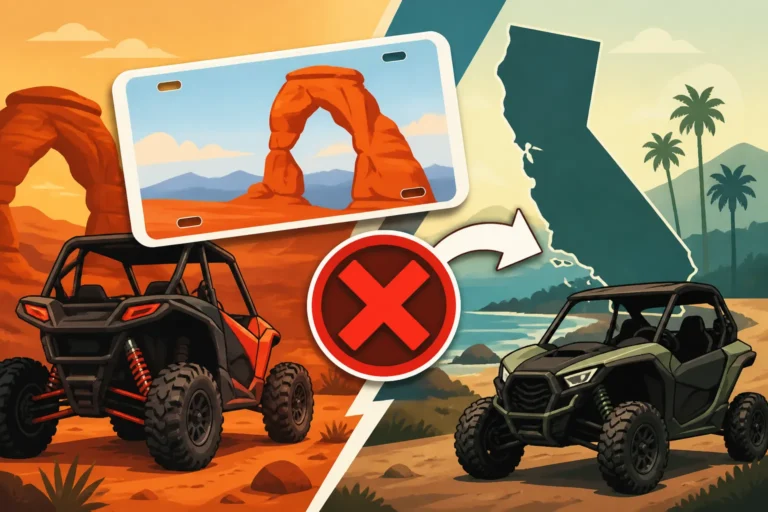
Even if you purchased an ATV or UTV from another state that does allow street-legal conversions and you have a valid street-legal title and license plate from there, California will likely not honor it for long-term residency. This is a common point of frustration for riders moving into the state, as [An Arizona Street-Legal UTV in California] or [A Utah Plate That Means Nothing in California] will quickly become a problem when trying to register it for California residency. The state has its own specific set of rules and compliance standards that generally supersede out-of-state classifications for resident vehicles. This is a major reason why [Why California Will Not Convert a UTV] into a street-legal vehicle for public road use.
Ultimately, while the desire to ride freely on California's roads is understandable, the reality is that the state's comprehensive laws are designed to keep off-highway vehicles exactly where they belong: off the highway. For most of us, this means continuing to rely on trailers to get our machines to the fantastic riding areas California has to offer.
Disclaimer
This article is for general informational purposes only and does not constitute professional advice. Laws, prices and regulations vary by location and change over time. Consult a qualified professional for guidance on your specific situation.