Machines Built in 1985 and the Louder Limit
If your ATV or other off-highway vehicle was built in 1985, its age matters when California applies the state’s sound limit. The older-machine limit is higher than the limit for newer machines, but it is not permission to ride with any exhaust setup. Here’s how the cutoff works, what the sound measurement means, and what else to check before riding.
The sound limit for a machine built in 1985
California draws its sound-limit cutoff at January 1, 1986. According to the California Department of Parks and Recreation, Off-Highway Motor Vehicle Recreation Division, an OHV manufactured before that date is limited to 101 dBA, measured from 20 inches. An OHV manufactured on or after that date is limited to 96 dBA, measured from the same distance.
A machine manufactured in 1985 falls on the older side of the cutoff. That means the 101 dBA limit applies, assuming the vehicle’s actual manufacture date is before January 1, 1986. The 1985 build date does not change the stated measurement distance: the limit is still assessed at 20 inches.
| Manufacture date | California sound limit | Measurement distance |
|---|---|---|
| Before January 1, 1986 | 101 dBA | 20 inches |
| On or after January 1, 1986 | 96 dBA | 20 inches |
The difference between the limits is small enough that judging sound by ear can be misleading. An exhaust that seems only a little louder may still be over the applicable limit. And the older-machine limit is a maximum, not a target: a machine built in 1985 can still fail a sound check if its noise exceeds 101 dBA.
The key question is the vehicle’s manufacture date, not simply the year someone calls it. “1985 machine” might mean a 1985 model year, a purchase year, or a year written on a registration document. Those labels may not establish when the machine was manufactured. If the date is close to the cutoff, check the vehicle’s identification and ownership documents and ask the relevant official agency how it determines the applicable category.
For a broader explanation of how California separates the two categories, see California Sound Limits for OHVs Explained and California Sound Limit for Older Machines. If you are comparing a 1985 machine with a later model, don’t assume the model-year label alone answers which limit applies. The state’s stated distinction is based on when the vehicle was manufactured.
What the 20-inch measurement does and does not tell you
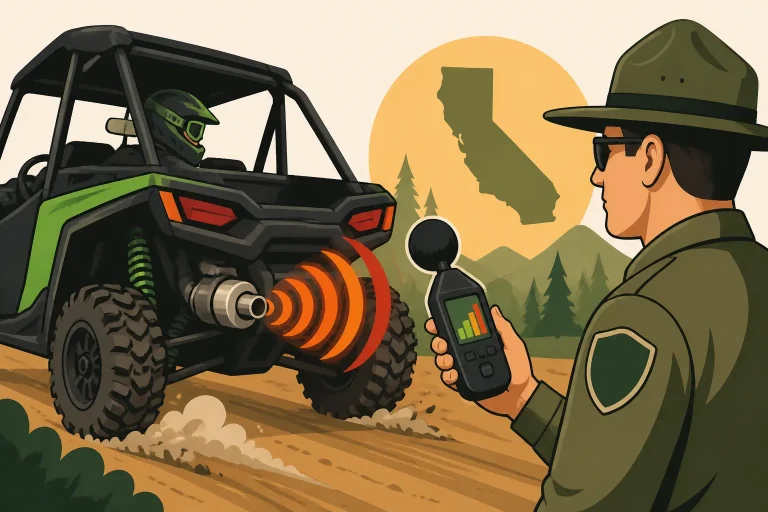
The 20-inch figure is part of the sound-limit rule, not a casual suggestion for where to stand and listen. A phone app, a handheld sound meter, or a comparison with another machine may help you notice that an exhaust sounds unusually loud, but it cannot establish that your OHV complies with California’s official sound limit. The result can depend on the measurement setup and the procedure being used.
That is why it helps to distinguish between a rough check at home and an official or enforcement sound check. A reading from a consumer device may be useful as a warning that your machine needs attention, but do not treat it as a pass certificate. Likewise, standing beside the machine and deciding it sounds reasonable does not show that it meets the limit when measured as required.
For more on the distance in the rule, see Measuring Sound at 20 Inches. If you want to understand what may happen during an enforcement check, How a Ranger Measures Your Exhaust Noise and California Sound Test Procedure cover the related process. The exact procedure matters: the limit and distance alone do not describe every detail needed to reproduce an official measurement.
This is especially important if you have changed the exhaust. A replacement muffler, removed component, damaged silencer, or other alteration can affect noise. Do not assume that an aftermarket part is acceptable just because it fits the vehicle, or because it is marketed for off-road use. Check whether the equipment and setup meet the applicable California requirements before riding.
If the machine sounds louder after work on the exhaust, investigate before heading out. Check for loose connections, damage, missing parts, and changes from the original configuration. A repair may address the problem, but a sound impression at home still cannot confirm compliance. For further context, see Aftermarket Exhaust and California Sound Checks. If a machine does not meet the limit, Failing a Sound Check at a Gate explains why it is better to deal with the issue before a ride.
A 1985 build date is not a general exemption
The 101 dBA limit is the sound category for an older machine. It does not exempt the vehicle from other requirements that may apply to the machine, the rider, or the riding area. Sound compliance is only one part of being ready to ride.
For example, the age-based sound limit does not establish that an exhaust is acceptable under every rule for every location. The USDA Forest Service requires a properly installed, approved spark arrester on an OHV operated on National Forest lands. Whether the machine is subject to that requirement depends on where it is operated; the sound limit does not replace it.
Emissions are also a separate issue from exhaust noise. The California Air Resources Board governs emissions for off-highway recreational vehicles under Title 13 of the California Code of Regulations, Sections 2410 through 2419.4. A machine’s eligibility under an emissions or sticker rule cannot be determined just from the fact that it was built before 1986, and passing a sound check does not establish emissions compliance. For emissions context, see What CARB Compliance Means in California.
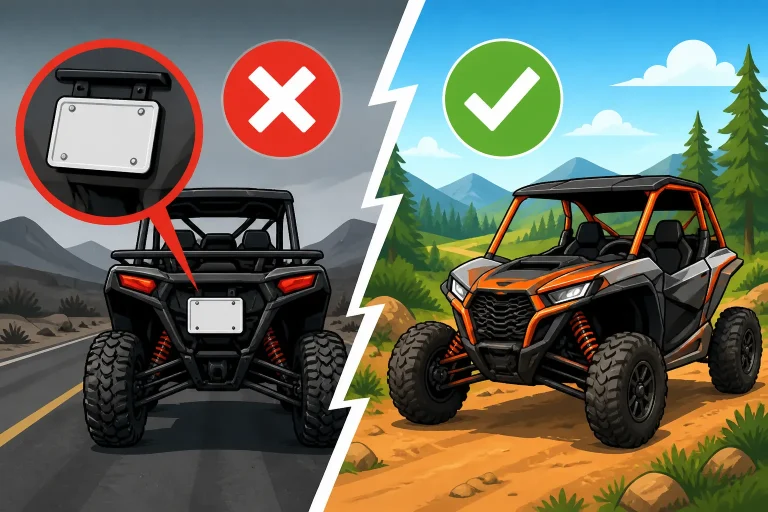
Registration and identification are separate as well. A registration card or sticker can provide evidence of registration, but it does not certify that a vehicle meets the sound limit. On an ATV, the California Department of Motor Vehicles and Department of Parks and Recreation require the Green Sticker or Red Sticker to be securely fastened to the left rear quadrant on a permanent plastic or frame member, where it remains clearly visible from the rear. A correctly displayed sticker is not a substitute for a sound check.
The same is true of riding equipment and conduct. For example, California’s public-land helmet requirements are separate from noise rules. To meet federal safety standards adopted by California, a helmet must display the symbol “DOT,” indicating the manufacturer’s certification of compliance with Federal Motor Vehicle Safety Standard No. 218, according to the National Highway Traffic Safety Administration. And California law prohibits operating an OHV under the influence of alcohol or drugs under California Vehicle Code Section 23152, according to the Department of Motor Vehicles.
These examples are not a complete checklist for every ride. Requirements can differ depending on the land manager, vehicle type, and circumstances. The practical point is simple: the older-machine sound limit answers one question only. Check the requirements for your riding area and machine separately, including any rules for equipment or access.
How to prepare before taking an older machine out
If you are buying, restoring, or preparing a 1985 OHV, use a cautious process rather than relying on the model year or an informal sound comparison.
- Confirm the manufacture date. Look at the machine’s identification and ownership records. If they do not make clear whether it was manufactured before January 1, 1986, ask the appropriate official agency how to establish the date. Do not assume a model-year label settles the question.
- Use the correct sound category. According to the California Department of Parks and Recreation, Off-Highway Motor Vehicle Recreation Division, a machine manufactured before the cutoff is subject to the 101 dBA limit at 20 inches. A machine manufactured on or after the cutoff is subject to the 96 dBA limit at 20 inches.
- Inspect the exhaust. Look for damage, missing parts, loose connections, or modifications that could make the machine louder. If you are uncertain about a repair or part, consult a qualified mechanic or the relevant official guidance.
- Do not rely on an app as proof. A personal sound reading may give you a warning, but it cannot necessarily reproduce the applicable official procedure. Review California Sound Test Procedure if you need more detail about how the measurement is conducted.
- Check the rules for the riding area. Confirm whether separate requirements apply to equipment such as a spark arrester, and whether the area has its own access or operating rules. A machine that meets the sound limit may still be unsuitable for a particular location if it does not meet that location’s other requirements.
This approach is useful when buying a used ATV, too. Ask what is known about the manufacture date and exhaust configuration, and be wary of a seller’s claim that an older machine is “grandfathered” without any qualification. The older category allows a higher maximum sound level than the newer category, but it does not mean that noise is unrestricted or that a modified machine will automatically pass.
If the vehicle is built for competition, do not assume that label alone changes the sound limit. The applicable category still depends on the rule and the machine’s details. Competition Machines and California Decibels may help clarify how competition machines relate to the state’s sound rules.
Ultimately, treat the 1985 build date as a way to identify which maximum applies, not as assurance that the machine is ready to ride. Confirm the date, keep the exhaust in sound condition, and check the relevant requirements for the land where you plan to operate.
Sources
- California Department of Parks and Recreation, Off-Highway Motor Vehicle Recreation Division — OHV Sound Regulations (checked November 2, 2026)
- California Air Resources Board — Off-Highway Recreational Vehicle Emissions Certification Requirements (checked November 2, 2026)
- Department of Motor Vehicles — Section 9: Alcohol and Drugs (checked November 2, 2026)
Disclaimer
This article is for general informational purposes only and does not constitute professional advice. Laws, prices and regulations vary by location and change over time. Consult a qualified professional for guidance on your specific situation.