What CARB Compliance Means in California
Anyone who's ever tried to register an ATV or UTV in California knows it can feel like navigating a bureaucratic maze, especially when terms like "CARB compliance" start flying around. It’s not just about getting a sticker; it’s about understanding the specific emissions standards your machine must meet to be legally ridden on public lands. This guide will cut through the confusion and explain exactly what CARB compliance means for you and your off-highway vehicle in the Golden State.
Understanding CARB: What It Is and Why It Matters
The California Air Resources Board (CARB) is a state agency responsible for maintaining and improving air quality. They set some of the toughest emissions standards in the nation, and these standards don't just apply to cars and trucks. They extend to off-highway vehicles (OHVs) like ATVs and UTVs because these machines, while incredibly fun, can also contribute to air pollution if not properly regulated. For riders in California, this means that your quad or side-by-side needs to meet specific criteria to get its required identification (ID) plate and sticker.
The Mission Behind CARB Regulations
It's easy to feel frustrated by all the rules, especially when you just want to hit the trails, but CARB's mission is genuinely focused on public health and environmental protection. California is known for its beautiful, diverse landscapes, from the redwood forests to the sprawling deserts, and the air quality in these areas directly impacts residents and visitors alike. Emissions from internal combustion engines, including those on OHVs, contain pollutants that can contribute to smog, acid rain, and other environmental issues. By setting strict standards, CARB aims to reduce these harmful emissions, protecting both the environment and the people who live, work, and recreate here.
Think about it this way: when you're riding through a pristine forest or across a vast dune field, the last thing you want is for your recreation to degrade the very environment you're enjoying. CARB regulations are a proactive step to ensure that off-highway recreation can continue responsibly, with less impact on air quality. This also means that as technology advances, the regulations evolve, pushing manufacturers to produce cleaner, more efficient machines.
Emissions Standards for Off-Highway Vehicles
CARB's emissions standards for OHVs primarily target uncertified engines, meaning engines that haven't been designed to meet specific emissions requirements. This is where the distinction between "green sticker," "red sticker," and "tan sticker" machines really comes into play. Manufacturers building OHVs for sale in California must ensure their engines meet specific hydrocarbon and nitrogen oxide emission limits. These limits vary depending on the engine's displacement (size) and the machine's model year.
For you, the rider, this translates into a need to understand your machine's compliance status. Newer machines typically come with a CARB-compliant engine from the factory, earning them a green sticker and unrestricted access to public lands. Older machines, or those designed primarily for closed-course competition, might fall under different categories, leading to red or tan stickers, each with its own set of rules and limitations. It's a system designed to categorize and regulate machines based on their environmental footprint, ensuring that the cleanest machines have the broadest access to public riding areas.
The California OHV Sticker System and CARB Compliance
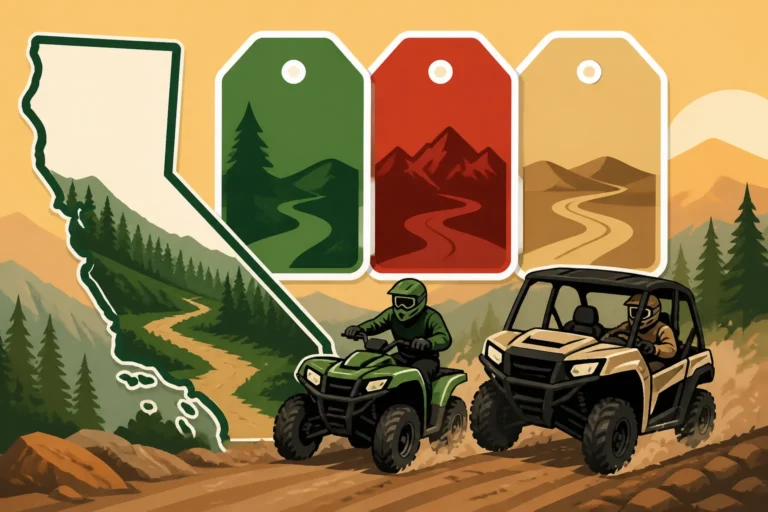
California's OHV identification system uses colored stickers – green, red, and tan – to quickly communicate a machine's compliance status and, by extension, where and when it can be ridden on public lands. These stickers are more than just a colorful decal; they are your passport to California's extensive network of OHV trails and riding areas, directly tied to the emissions regulations set by CARB. Understanding which sticker your machine carries, and why, is fundamental to legal riding in the state.
Green Stickers: The Gold Standard for Compliance
The [California's Green Sticker Explained] signifies that your ATV or UTV meets California's stringent emissions standards, making it eligible for year-round riding on all public lands open to OHVs. This includes state vehicular recreation areas (SVRAs), National Forest roads, and Bureau of Land Management (BLM) lands. Essentially, a green sticker means your machine is considered environmentally friendly enough for unrestricted use.
Machines that typically qualify for a green sticker are those manufactured with engines designed and certified to meet the latest CARB emission standards. This often applies to most newer, recreation-oriented ATVs and UTVs. If you're buying a brand-new machine from a California dealer, it will almost certainly come with a green sticker, ready for adventure. This classification offers the most flexibility for riders, allowing spontaneous trips to popular spots like Glamis or Oceano Dunes without worrying about seasonal restrictions. You can learn more about specific requirements for machines like a dirt bike in [California OHV Registration for a Dirt Bike].
Red Stickers: Seasonal Restrictions and Competitive Use
The red sticker category is where things get a bit more complicated, reflecting CARB's focus on machines that may have higher emissions. Historically, [Red Stickers and What Changed in California] have been issued to machines that do not meet the green sticker emissions standards, primarily those built for closed-course competition or certain model years that predate the stricter regulations. These machines face seasonal riding restrictions on public lands.
Generally, red sticker machines are restricted from riding during the peak smog season, typically from May 1 to September 30, in areas managed by the California State Parks OHMVR Division. However, they can still be used during the cooler, less smog-prone months (October 1 to April 30) or year-round on private land or at specific designated competitive events. This system aims to reduce the impact of higher-emitting machines during times when air quality is most vulnerable. Riders with red sticker machines need to be particularly aware of the current year's riding schedule and potential changes, especially as regulations continue to evolve, such as those impacting [Red Sticker Machines After January 2025].
Tan Stickers: The Newcomer for Sanctioned Events
The tan sticker is a more recent addition to California's OHV identification system, specifically designed for machines participating in sanctioned competitive events. [California's Tan Sticker Machines] are generally competitive machines that do not meet green or red sticker requirements but are allowed to operate under a special permit for organized races or events. These stickers are not for general recreational riding on public lands.
The tan sticker is really for those highly specialized racing machines that, due to their performance-oriented design, cannot meet the emissions standards of green or even red sticker vehicles. It acknowledges the need for competitive off-road sports while isolating their environmental impact to controlled, sanctioned environments. If you're a serious racer with a machine built specifically for competition, a tan sticker might be relevant to you, especially if you're participating in events that require this specific permit, like those described in [California's Sanctioned Event Permit Explained].
How CARB Impacts Your Riding Experience
CARB compliance isn't just a detail on paper; it fundamentally shapes where and when you can enjoy your ATV or UTV on California's public lands. It dictates which riding areas are accessible to you throughout the year, influencing your trip planning, machine choices, and even potential interactions with park rangers. Understanding these implications helps avoid frustrating fines and ensures you're a responsible rider.
Access to Public Riding Areas
The most direct impact of CARB compliance, as indicated by your OHV's sticker, is on your access to California's diverse public riding areas. If you have a green sticker machine, you pretty much have the run of the place, subject to general park rules and closures, of course. You can head to any State Vehicular Recreation Area (SVRA), BLM land, or National Forest road designated for OHV use, year-round. This flexibility is a huge benefit for green sticker owners, allowing for spontaneous weekend trips or long holiday excursions without having to consult a calendar.
However, if your machine is red sticker-eligible, your riding options become more time-sensitive. You might find yourself planning trips around the seasons, hitting popular desert spots in the fall and winter, but having to find private land or sanctioned events during the warmer months. This can be a real bummer if your riding buddies all have green stickers and want to ride in July! It's crucial to check the specific regulations for each riding area, as some may have their own unique rules even within the general green/red sticker framework. Ranger checkpoints at places like Glamis or Hungry Valley frequently verify valid stickers, and an improperly registered or non-compliant machine will quickly end your day.
Noise Regulations and Spark Arresters
While the sticker system primarily addresses exhaust emissions, CARB's broader influence on environmental standards also touches upon other aspects of your OHV, notably noise and spark arresters. Excessive noise from OHVs can be a major source of complaint for residents living near riding areas and can disturb wildlife. [California's 96-Decibel Limit on a California Trail] means that your machine must adhere to specific sound limits, usually measured at a certain distance. This often requires stock exhaust systems or CARB-compliant aftermarket options designed to keep noise within legal limits. Aftermarket exhausts that don't carry a CARB Executive Order (EO) number are usually not compliant and can lead to citations.
Similarly, spark arresters are not directly a CARB emission regulation, but they are a critical safety and environmental requirement, especially in California's fire-prone landscapes. A spark arrester is a device in your exhaust system that prevents hot carbon particles from exiting the exhaust and potentially igniting dry vegetation. All OHVs operating on public lands in California are required to have a Forest Service-approved spark arrester. While CARB doesn't issue these approvals, the spirit of environmental protection and responsible recreation aligns with the need for spark arresters. Riding without one is a serious offense that can lead to substantial fines and even spark a wildfire, making it an absolute must-have for all riders.
Navigating CARB Compliance for Different Machines
The world of OHVs is vast, encompassing everything from compact youth ATVs to powerful, multi-seat UTVs and highly specialized racing dirt bikes. CARB compliance doesn't treat all these machines equally. Understanding how your specific type of machine fits into California's regulatory framework is key to avoiding issues and ensuring you have the correct ID and sticker.
ATVs and Dirt Bikes
For traditional ATVs and dirt bikes, CARB compliance largely revolves around their model year and whether they were originally designed for recreation or competition. Most modern, recreational ATVs and dirt bikes sold in California come with a green sticker, meaning they meet the required emission standards. This makes them eligible for year-round use on public lands. For those with [California Green Sticker for a Dirt Bike], it means hassle-free riding from the dealer.
However, older machines or those specifically labeled as "closed-course competition only" might fall into the red sticker category. For instance, many two-stroke dirt bikes, especially older models, are typically red sticker machines due to their higher emissions profile. Even some four-stroke competition bikes are red sticker due to their design focusing on performance over emissions. When purchasing a used ATV or dirt bike, especially one from an out-of-state seller, it's crucial to verify its CARB compliance status and what sticker it's eligible for, as this will dictate your riding options. You really don't want to buy a machine only to find out it can't be ridden when and where you want.
UTVs and Side-by-Sides
UTVs, or side-by-sides, have become incredibly popular, offering more utility and passenger capacity than traditional ATVs. Similar to ATVs, the vast majority of new UTVs sold in California are manufactured to be CARB compliant and thus receive a green sticker. This allows multi-passenger adventures on public trails throughout the year. The increasing demand for family-friendly and utility-focused machines has pushed manufacturers to ensure they meet these standards. [California OHV Registration for a Side-by-Side] will typically result in a green sticker if it's a newer, recreational model.
The issue of red stickers for UTVs is less common than with dirt bikes, but it can still apply to certain highly modified or older performance-oriented models that were not originally designed to meet the latest emission standards. It's less frequent because UTVs are typically four-stroke machines, which generally have lower emissions than many two-stroke dirt bikes. When considering a used UTV, always check the emissions label on the machine itself (often under the hood or near the engine) for information regarding its CARB certification. This label is the definitive source of truth about its compliance.
Homebuilt and Specialty Machines
This is where CARB compliance can get truly tricky. If you've built a custom sand rail, dune buggy, or modified a vintage machine, obtaining an ID plate and sticker in California can be a complex process. [California OHV Registration for a Homebuilt Buggy] might require a vehicle verification process where a certified verifier inspects your machine to ensure it meets certain safety and environmental standards. While getting a specific CARB emissions certification for a one-off homebuilt might be challenging, these machines often fall under different classifications or exemptions, depending on their engine, model year, and intended use.
For specialty machines, such as those used exclusively for agricultural purposes on private land, there might be specific exemptions from public land registration requirements, but even then, understanding local regulations is crucial. The key takeaway for unique or homebuilt machines is that you'll likely need to work closely with the DMV and possibly even consult a California-certified vehicle verifier to determine the appropriate pathway for registration and compliance. Don't assume anything; always do your homework before investing time and money into a custom build if you intend to ride it on public land in California.
What to Look for When Buying or Selling an OHV in California
Whether you're eagerly anticipating a new-to-you quad or looking to sell your current UTV, understanding CARB compliance is absolutely essential for a smooth transaction in California. It affects the legality of the sale, the value of the machine, and ultimately, the new owner's ability to ride. Ignoring these details can lead to headaches, fines, and a lot of wasted time.
Verifying a Used Machine's Compliance
When buying a used ATV or UTV in California, the first thing you want to know is its sticker status. Ask the seller about the machine's model year and what sticker it currently has. If it's a green sticker machine, that's generally straightforward. If it's red sticker, understand the seasonal limitations before you commit. You can often find a manufacturer's emissions label on the machine itself, usually on the frame, under the seat, or near the engine. This label will typically state if the machine is CARB compliant and for what year. Cross-referencing the model year with known CARB regulations or checking with the California DMV can also provide clarity.
Beyond the sticker, also inquire about any modifications. Aftermarket exhaust systems, for example, can nullify CARB compliance if they aren't approved. A responsible seller should be transparent about these details. If you're buying from an out-of-state seller, be especially cautious. A machine that was perfectly legal in Arizona or Nevada might not meet California's standards, potentially leading to a red sticker or even difficulty registering it if it's a very high-emission model. Always prioritize getting the VIN and doing your due diligence. You don't want to bring home a fantastic deal only to find out you can't ride it half the year.
Documentation and Legalities for Sale
When selling an OHV in California, you have a responsibility to accurately represent your machine's CARB compliance status to potential buyers. This includes clearly stating whether it's a green, red, or tan sticker machine and disclosing any modifications that might affect its emissions or legality. Providing a clear [California OHV Bill of Sale Requirements] is critical, and for those who want to ensure all bases are covered, especially regarding declarations of compliance or condition, utilizing a service like LawDepot to generate robust legal documents can add an extra layer of protection for both parties. A well-crafted bill of sale can include explicit statements about the machine's sticker type and any known modifications, preventing misunderstandings down the road.
The transfer of ownership also involves completing specific DMV forms, such as Form REG 343, and paying any applicable fees. Accurate paperwork ensures the new owner can register the machine without issues. If you're unsure about the exact wording for a comprehensive bill of sale that details compliance, or if you need other legal forms for the transaction, LawDepot can be a useful resource to draft customized, legally sound documents. It’s better to have too much documentation than too little, especially when dealing with California's specific regulations. For details on how the transfer process works, see [Transferring a California OHV Registration].
A Note on Aftermarket Parts
The world of aftermarket parts is vast, and many riders love to customize their machines. However, when it comes to CARB compliance, you need to be very careful. Any part that affects emissions, such as an exhaust system, fuel controller, or air intake, must either be a direct replacement for an OEM (Original Equipment Manufacturer) part or carry a CARB Executive Order (EO) number. This EO number indicates that the aftermarket part has been tested and approved by CARB to not increase emissions beyond legal limits.
Installing non-CARB compliant aftermarket parts can not only cause your machine to fail a sound check but can also lead to it being deemed non-compliant, potentially affecting your ability to renew your registration or ride on public lands. Even if your machine initially came with a green sticker, modifying it with unapproved parts can effectively turn it into a non-compliant machine in the eyes of California law. Always look for the EO number on aftermarket exhaust systems or other emissions-related components. If it doesn't have one, or if you're unsure, it's safer to stick to stock or consult with a reputable dealer about compliant options.
Beyond Emissions: Other California OHV Regulations
While CARB compliance focuses heavily on emissions, it's just one piece of the puzzle when it comes to legally and safely enjoying your ATV or UTV in California. There are numerous other regulations you need to be aware of, all designed to protect riders, other users of public lands, and the environment. Missing these can lead to fines, citations, or worse, accidents.
Registration and ID Plates
Every OHV operating on public land in California must be registered with the California Department of Motor Vehicles (DMV) and display a valid ID plate and sticker. This applies whether your machine is green, red, or tan sticker eligible. The registration process ensures that your machine is properly identified and that you've paid the necessary fees, which directly support the state's OHV program, including trail maintenance and enforcement. [Registering an OHV in California] is a crucial first step for any new owner.
The ID plate, often a small metal plate with a unique number, must be securely mounted and visible. You'll also receive a current-year sticker that corresponds to your machine's CARB compliance (green, red, or tan) which is affixed to the ID plate. These registrations are typically renewed on a biennial cycle, usually expiring on June 30th of the expiration year, as detailed in [California's June 30 Expiration]. Failing to have a current registration is an easy way to get a ticket from a ranger, regardless of how compliant your engine is.
Safety Equipment and Operation Rules
California has comprehensive safety regulations for OHV operation. This includes mandatory helmet use for all riders and passengers on public land, regardless of age, with limited exceptions for occupants in a roll-over protective structure (ROPS) equipped UTV. For ATVs, [California's Ban on ATV Passengers] is strictly enforced on public lands, meaning ATVs are single-rider vehicles. UTVs, however, can carry passengers up to the manufacturer's designed capacity, provided everyone is properly seated and wearing seatbelts.
Age restrictions also apply. For example, children under 14 operating an ATV on public lands must be supervised by an adult with a valid safety certificate. [California Minimum Age to Ride on Public Land] regulations are in place to ensure that young riders have the necessary skills and supervision to ride safely. These rules are designed to prevent injuries and ensure that everyone can enjoy the trails responsibly. Ignorance of these rules is not an excuse when a ranger stops you.
Environmental Responsibility and Trail Etiquette
Beyond emissions and safety, CARB compliance aligns with a broader call for environmental responsibility and respectful trail etiquette. This means staying on marked trails, avoiding sensitive habitats, and "treading lightly" wherever you ride. Riding off-trail can damage vegetation, disturb wildlife, and contribute to erosion, which is precisely what CARB's air quality initiatives are trying to mitigate.
Additionally, always pack out what you pack in, and dispose of trash properly. Be mindful of others on the trails, whether they are other OHV riders, hikers, mountain bikers, or equestrians. Share the trail, respect private property boundaries, and be a good ambassador for the OHV community. Following these unwritten rules, in addition to the formal regulations like CARB compliance, ensures that California's beautiful outdoors remain accessible and enjoyable for everyone for years to come.
Here's a quick reference for California's OHV sticker types and their general implications:
| Sticker Type | CARB Compliance Level | Riding Access (Public Land) | Common Machines | Key Consideration |
|---|---|---|---|---|
| Green | Meets California's stringent emissions standards | Year-round access to all public lands open to OHVs | Most new recreational ATVs, UTVs, and some dirt bikes | Offers the most flexibility for recreational riding |
| Red | Does not meet green sticker standards (higher emissions) | Seasonal restrictions (typically Oct 1 – Apr 30) on most public lands | Older machines, some high-performance competition machines, certain model years | Check seasonal schedules and specific riding area rules carefully |
| Tan | For sanctioned competitive events only (high emissions) | Restricted to specific sanctioned event locations | Highly specialized competitive racing machines not intended for general recreational use | Requires a special permit for organized events; not for casual riding |
Disclaimer
This article is for general informational purposes only and does not constitute professional advice. Laws, prices and regulations vary by location and change over time. Consult a qualified professional for guidance on your specific situation.