California’s $30 Nonresident Permit
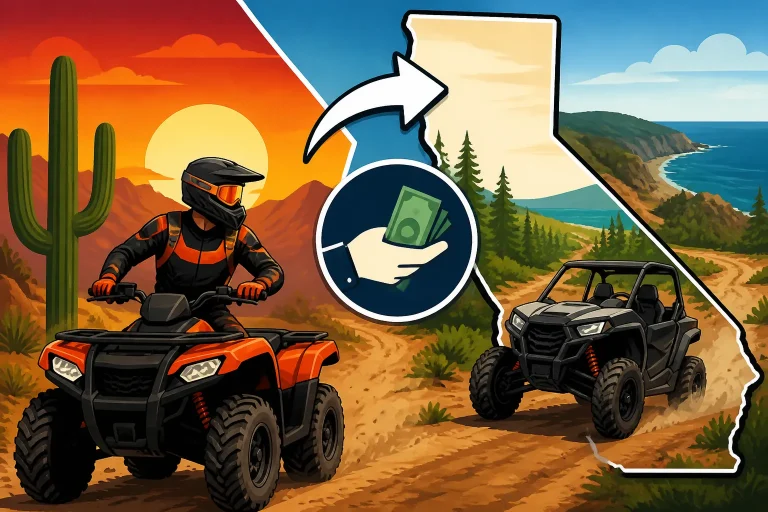
A California trip can turn into a paperwork problem when your ATV or UTV is registered in another state. For many nonresident riders, California requires a separate OHV use permit, even if the machine has valid home-state paperwork. Here’s what the $30 permit is for, who may not need it, how to get it, and what it does not let you do.
What California’s $30 nonresident permit covers
California’s nonresident OHV use permit is an identification permit for qualifying off-highway vehicles registered or identified outside California. It lets an eligible nonresident operate that machine in places where California requires OHV identification, subject to the riding area’s rules.
The permit is tied to the machine, not the person riding it. If you bring two quads, for example, do not assume one permit covers both. Check the application and permit instructions for how each vehicle must be identified and what paperwork is required.
The permit is not the same thing as registering an OHV in California. It does not transfer ownership, issue a California title, or convert an off-road vehicle into a street-legal one. It also does not grant permission to ride every trail, road, dune, or public-land route. Access depends on the land manager, the vehicle, and the route.
| Your situation | What to check |
|---|---|
| Your OHV has eligible Oregon or Nevada OHV identification | California generally recognizes qualifying identification from these two states. Confirm that the document or decal is valid and applies to your machine. |
| Your OHV is identified or registered in another state | You may need California’s nonresident OHV use permit before riding in places that require OHV identification. |
| Your machine has a street-legal plate from another state | Do not assume the plate replaces an OHV permit or allows you to ride public roads in California. Check the rules for both OHV areas and roads. |
| You are transporting the machine but not riding it | A California riding permit is generally about operating the OHV, not simply hauling it. Separate entry or recreation requirements may still apply at your destination. |
| You are riding on private property | The public-land OHV identification requirement may not apply in the same way, but other rules can still matter. Confirm the requirements for the property and activity. |
The simplest starting point is to ask: What kind of identification does this specific machine have, and where will I ride it? If it is an out-of-state OHV and its home-state identification is not covered by California’s limited reciprocity, plan on checking the California permit requirement before you travel. For the bigger picture, see California OHV Permits Explained and California OHV Reciprocity: Only Two States.
Why the amount in the title does not tell the whole story
The permit is commonly described as a $30 permit, but the amount you pay at checkout may include a separate service or transaction charge. The final total can depend on the authorized seller and how you buy it. Confirm the current amount and any additional charge through California’s official OHV permit channel or an authorized vendor before purchasing.
This is also a permit whose validity and expiration details matter. It is described as a two-year permit, but do not calculate your own expiration date from the day you buy it. Read the printed permit and current instructions. The permit’s actual validity is determined by its terms, not by an estimate based on your purchase date. For the timing details, see California’s Two-Year Nonresident OHV Permit Explained.
Who needs one and who may qualify for an exception
The permit is aimed at nonresident owners bringing an off-highway vehicle into California for riding. That can include ATVs, dirt bikes, side-by-sides, and other machines used as OHVs. The exact requirement depends on the vehicle’s legal status and the identification it carries.
California’s OHV reciprocity is limited. Qualifying Oregon and Nevada OHV identification is generally recognized, but that should not be read as a broad agreement with every neighboring state. A registration card, sticker, plate, or permit from another state is not automatically accepted just because it is valid where you live. See Why Only Oregon and Nevada Count in California for the distinction.
Oregon and Nevada identification
If your machine carries valid Oregon or Nevada OHV identification, you may fall within California’s reciprocity exception. The important word is qualifying. Make sure the paperwork or decal is current, belongs to that machine, and is the kind of OHV identification covered by the rule.
Do not rely only on the fact that your state calls a document a registration. Requirements differ. If you are unsure whether your machine’s particular Oregon or Nevada credential qualifies, confirm it with the relevant California authority before the trip. The practical comparison is covered in An Oregon Permit on California Sand and A Nevada Decal at a California SVRA.
If you are from another state, start with California’s Nonresident OHV Use Permit. It explains the permit requirement in the wider context of nonresident riding. You can also review Does California Honor Arizona OHV Registration? or Does a Utah Registration Work in California? if those are the documents you carry.
Street-legal plates are not a universal workaround
A street-legal plate can create confusion because it looks like a complete answer to a vehicle-identification question. It is not automatically a substitute for an OHV permit, and it does not mean you can ride on any road you choose. California distinguishes between vehicle registration, OHV identification, and permission to use a particular route.
Before relying on an out-of-state plate, check the rules that apply to the machine’s actual use. Are you driving it on an authorized public road, or riding it off highway in an OHV area? Does the location require its own permit or entry fee? Does California recognize the vehicle’s home-state status for the activity you plan? Those are separate questions.
A plate from a state that allows broad street registration for off-road vehicles does not, by itself, settle the California question. Read Out-of-State Plates California Will Not Honor, A Utah Plate That Means Nothing in California, or Why a Street-Legal Plate Does Not Substitute if you are considering relying on a plate instead of an OHV permit.
Transporting a machine is different from riding it
If you are bringing a quad into California on a trailer and never operating it, the OHV use permit question is different from the requirements for riding. You may still need to follow the rules for the destination. A dune area, state recreation area, or other managed site can have its own entry requirements, vehicle permits, or fees.
A tow vehicle and trailer are not the same thing as the OHV being carried. But do not assume that a transport-only plan exempts every vehicle from every site requirement. For example, a recreation area can have rules that apply to vehicles entering the area, even when those vehicles are not being ridden as OHVs. Check the site’s current instructions before arriving.
If your plans include a designated road or a short ride between a campsite and a trail, the permit still does not make an otherwise closed route legal. Read California’s Combined-Use Highways and Riding a Designated Route From the Dunes to a Store before treating a permit as road access.
How to buy the permit and prepare your paperwork
Buy the permit through California’s official OHV permit channel or a vendor authorized to issue it. Do not assume that an online marketplace, a general vehicle-registration service, or a social media listing is an authorized seller. Amazon may be useful for generic supplies such as a document pouch, but it is not a substitute for an official permit seller.
Before you start the purchase, gather the machine details and out-of-state documents the application asks for. The exact fields can vary, so follow the current instructions rather than relying on a saved checklist from someone else. It is sensible to have the following available:
- The machine’s make, model, and vehicle identification number
- The current out-of-state OHV registration, permit, or identification information
- The owner’s contact details
- A payment method accepted by the seller
- An email address or mailing address for receiving the permit or confirmation
Check every character in the VIN and registration details before submitting. A transposed digit can make it harder to show that the permit belongs to the machine. Keep a record of the purchase confirmation until you have the actual permit and have checked its information.
Check the permit as soon as it arrives
Do not wait until you are at a trailhead to open the envelope or download the permit. Confirm that the identifying details match the machine, the permit is valid for the planned trip, and you understand where it must be displayed. Follow the instructions printed on the permit; do not guess at placement based on a California Green Sticker or another state’s decal.
If anything is wrong, contact the seller or the issuing authority before your trip. A receipt showing that you paid may not solve a mismatch between the permit and the vehicle. Ask how to correct the information and whether you need a replacement document or decal.
Keep the paperwork accessible while travelling. A clear document pouch or folder can help prevent registration papers and receipts from getting buried in a gear bag. Amazon sells generic storage products, but choose something that protects documents from water and grit and does not interfere with the permit’s required display. Keep a digital copy as a backup if permitted, but do not assume a photo replaces the physical permit where one is required.
For a step-by-step look at obtaining the credential, read How to Buy a California Nonresident Permit Online. If your permit is being mailed, allow enough time for delivery and follow the seller’s guidance about what proof, if any, you should carry while waiting. Do not plan on a screenshot alone unless the official instructions say it is acceptable.
What the permit does not cover
A common mistake is treating the nonresident permit as an all-access pass. It is only one piece of the trip’s paperwork. It does not replace local entry permits, vehicle fees, safety requirements, route restrictions, or the rules for riding with children.
It does not provide unrestricted land access
A valid permit does not open closed trails, private property, restricted areas, or routes that are not designated for OHV use. The land manager’s rules still apply. Areas can also have temporary closures because of weather, fire danger, wildlife protection, maintenance, or other management needs.
Before leaving home, check the official information for the riding area you plan to visit. Verify that it is open, that your machine type is allowed, and that the route suits its size and capabilities. A permit can meet an identification requirement while the route remains closed to your vehicle.
It is separate from area-specific permits and fees
Some riding destinations have additional requirements. California’s nonresident OHV use permit should not be confused with a site-specific permit, entrance charge, camping reservation, or federal recreation requirement.
This distinction is especially important for dune trips. The California nonresident permit and a permit required for a particular dune area serve different purposes. Check the current rules for the location and for each vehicle entering or operating within its boundaries. See California’s Rules for Riding Imperial Sand Dunes and BLM Permits for California Dunes before planning a visit to the Imperial Sand Dunes.
Likewise, a permit does not cover camping, day use, or vehicle entry charges unless the issuing authority explicitly says it does. Confirm each requirement separately. If you are going to a State Vehicular Recreation Area, start with California’s State Vehicular Recreation Areas and then check the rules for the specific park.
It does not replace safety and equipment rules
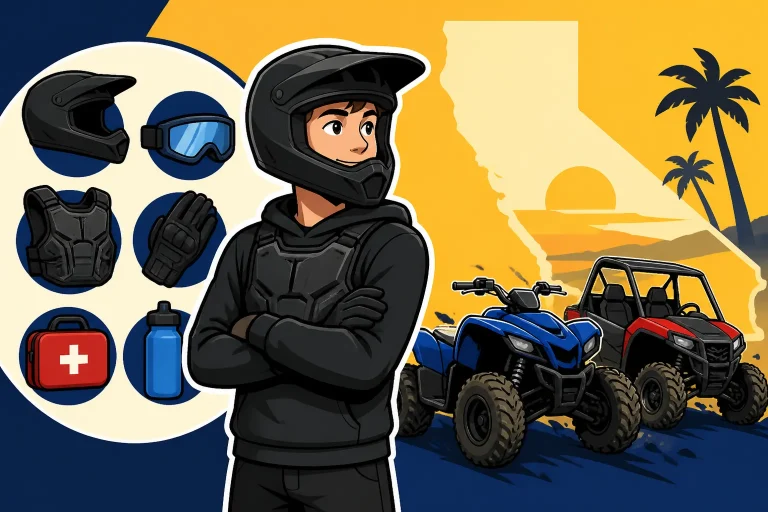
Riders may still need to meet age, supervision, helmet, sound, and equipment requirements. A permit does not certify that a rider is old enough to operate the machine or that the machine meets the rules for the terrain.
For a family trip, check the rules for the age of each rider and the type of vehicle. California’s requirements can differ between an ATV and a side-by-side. The permit does not override passenger restrictions or supervision rules. Helpful starting points include California Rules for Riders Under 18, California Minimum Age to Ride on Public Land, and California Helmet Law for ATV Riders.
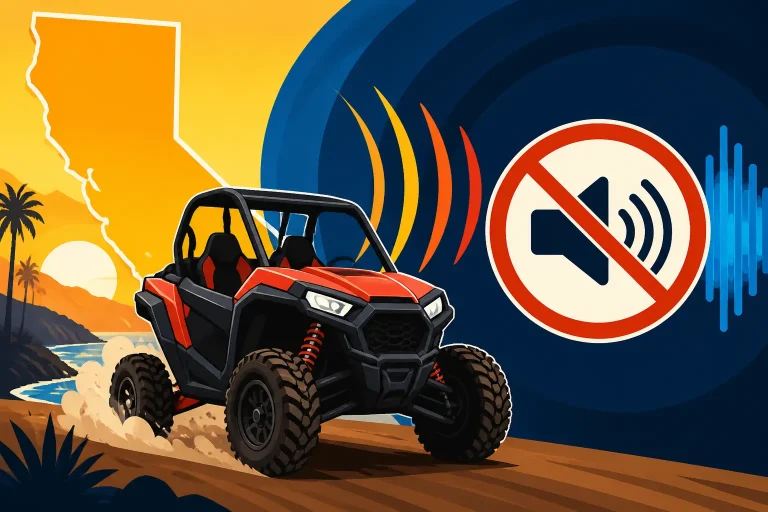
For machines used on public land, also check any applicable noise and spark-arrester rules. Those requirements are separate from registration or permit status. A valid permit will not excuse a machine that fails an equipment check.
A practical checklist before you leave
A little preparation is much easier than sorting out a permit question at the entrance to a riding area. Use this checklist for each machine in your trailer.
- Identify the machine’s paperwork. Write down the state that issued its OHV identification, registration, or plate. Confirm that it is current and belongs to the vehicle.
- Check whether reciprocity applies. California’s recognition is limited. Verify whether your Oregon or Nevada credential qualifies; do not infer acceptance from another state’s rules.
- Confirm whether a California nonresident permit is required. If the machine’s identification is not covered by an exception, use California’s official instructions to determine what permit to obtain.
- Verify the current total and validity. Check the official seller’s current amount, any added service charge, and the printed validity terms. Do not assume the permit lasts a full two years from the purchase date.
- Match the permit to the machine. Review the VIN, make, model, and other identifying information as soon as the permit is issued.
- Follow display instructions. Put the permit where its instructions require. A receipt, email, or phone photo may not satisfy a display requirement.
- Check the destination separately. Look for site permits, fees, closures, camping rules, and restrictions on your machine type.
- Carry the supporting paperwork. Keep the permit and current home-state documents where you can produce them. A sturdy document pouch can help; Amazon offers generic options, but the product does not need to be specialized or branded.
- Check rider and machine rules. Confirm age and supervision rules, helmet requirements, passenger limits, sound limits, and any required equipment.
- Recheck shortly before departure. Permit details and riding-area conditions can change. Use current official information for both the permit and the destination.
If you bring more than one machine, repeat the process for every vehicle. Do not assume that one purchase covers a whole family or trailer. If you borrow or rent a machine, ask who is responsible for the permit and make sure the vehicle’s paperwork is in order before you ride.
Common mistakes to avoid
- Assuming every state’s registration is accepted. California does not have blanket reciprocity with all states.
- Treating a street-legal plate as automatic permission. Vehicle registration does not settle OHV access or route legality.
- Confusing the state permit with a dune or park permit. They may be separate requirements.
- Waiting until arrival to inspect the permit. Errors are harder to resolve at the riding area.
- Assuming a receipt is the permit. Follow the issuing authority’s instructions on what must be carried or displayed.
- Forgetting that each machine has its own paperwork. A permit for one ATV should not be presumed to cover another.
- Relying on old information about the fee or expiration. Confirm the current total and read the permit’s own validity terms.
The short version: if you are bringing an out-of-state OHV to California, first check whether its identification qualifies under California’s limited reciprocity. If it does not, verify the current nonresident permit requirement and obtain the permit through an official channel before riding. Then check the rules for the exact riding area. The permit solves an identification issue; it does not replace the rest of your trip planning.
Disclaimer
This article is for general informational purposes only and does not constitute professional advice. Laws, prices and regulations vary by location and change over time. Consult a qualified professional for guidance on your specific situation.