California Nonresident OHV Permit Cost
If you’re bringing an ATV, UTV, dirt bike, or another off-highway vehicle into California, the permit rules can be confusing—and the purchase price is only part of the question. The nonresident OHV permit is commonly $30 for two years, but eligibility, reciprocity, and added service charges affect what you need to buy and pay.
What the California nonresident OHV permit costs
The commonly listed base cost for a California nonresident OHV use permit is $30 for a two-year permit. When you buy through an authorized seller, a service or transaction charge may be added. The amount you pay at checkout can therefore be higher than the permit’s base cost.
Because fees and seller charges can change, check the current total with California State Parks’ Off-Highway Motor Vehicle Recreation program or an authorized permit seller before purchasing. Confirm that you’re selecting the nonresident OHV use permit, not a different kind of permit for a riding area or event. For a closer look at what the permit covers, see California’s Nonresident OHV Use Permit.
| Cost item | What to expect |
|---|---|
| Nonresident OHV permit | The commonly listed base cost is $30 for two years |
| Seller or transaction charge | May be added, depending on where you buy |
| Riding-area permit | May be a separate requirement at a specific location |
| California registration | A different process for machines that need California OHV identification |
The two-year term is useful if you plan to ride in California more than once, but don’t treat it as a substitute for a machine’s registration or identification documents. The permit addresses California’s requirements for qualifying nonresident OHVs; it does not change the machine’s status in the state where it is registered.
Check the total before completing a purchase
If buying online, review the checkout total and the permit’s effective period before paying. Keep the purchase confirmation and follow the seller’s instructions for receiving and displaying the permit. If you buy in person, ask whether the amount quoted includes all charges and whether you’ll receive the permit immediately.
A permit’s price is also different from the cost of a trip. A riding area may have its own entrance, camping, or use charges, and a dune area may require an additional permit. Those costs are not included in the $30 base amount for the nonresident OHV permit.
Who needs the permit, and who may not
In general, a person bringing an OHV registered outside California should check whether that machine’s current registration or permit is recognized for riding in California. California’s nonresident permit is intended for eligible out-of-state OHVs used in the state when the rider does not qualify for reciprocity. The machine’s paperwork and the kind of place where you plan to ride both matter.
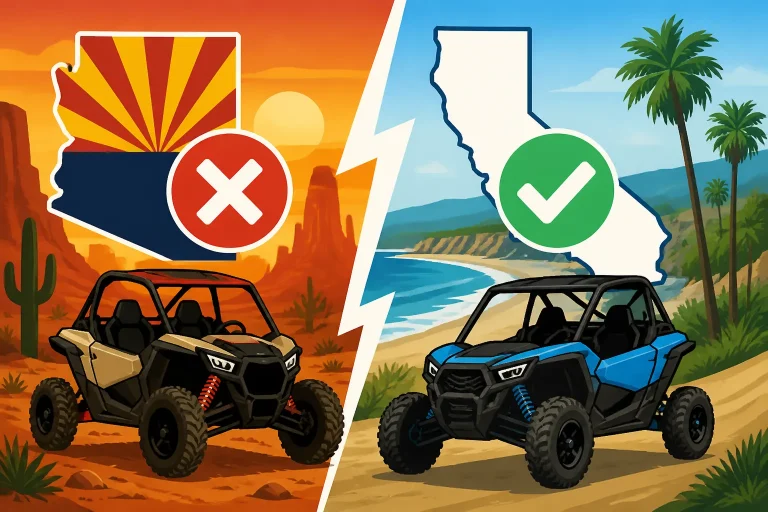
California recognizes limited reciprocity for qualifying OHV credentials from Oregon and Nevada. A rider with an eligible, valid credential from one of those states may not need to purchase California’s nonresident permit for that machine. The details depend on the credential and its validity, so compare your documents with the current California rules. The limits are explained in California OHV Reciprocity: Only Two States and Why Only Oregon and Nevada Count in California.
A registration or decal from another state is not automatically accepted just because it proves the machine is legal there. If you’re from Arizona, Utah, or another state outside California’s reciprocity arrangement, don’t assume that your state registration alone meets California’s requirement. The relevant distinction is not whether your machine has paperwork, but whether California recognizes that particular paperwork for the use you plan to make of the vehicle.
Use this quick check before buying
- Identify the machine and its home-state documents. Note whether it has an OHV registration, permit, decal, or only a street-legal plate.
- Check for California reciprocity. Oregon and Nevada are the states named in California’s limited arrangement, but the credential must qualify and remain valid.
- Consider where you’ll ride. Requirements can differ between public OHV areas, private property, and other locations.
- Confirm what the machine needs at the destination. A nonresident permit does not automatically satisfy a riding area’s separate entry or use rules.
- Buy the correct permit if required. Follow the current official or authorized-seller instructions, including any display requirements.
This check helps avoid paying for a permit you may not need—or arriving with documents that do not meet California’s rules. For state-specific examples, see Does California Honor Arizona OHV Registration?, Does a Nevada Decal Work in California?, and California OHV Permit for Out-of-State Riders.
Street-legal plates are not the same as OHV reciprocity
A street-legal plate can make a machine legal for certain road use in its home state, but it does not automatically settle California’s OHV permit requirements. California may treat off-highway use differently from use on public roads. A plate is not a universal substitute for an OHV credential that California recognizes.
That distinction matters for side-by-sides and other vehicles that are plated elsewhere but are brought to California for trail or desert riding. Check the paperwork against California’s current requirements rather than assuming that road registration covers every kind of use. Why a Street-Legal Plate Does Not Substitute explains this issue in more detail.
What the permit does—and does not—cover
The nonresident OHV permit is not a general pass for every activity or riding area. It does not, by itself, authorize riding on a closed route, private land without permission, or a road where OHV use is prohibited. You still need to follow local access rules, posted closures, riding-area regulations, and safety requirements.
It also does not replace a dune-use permit where one is separately required. For example, the Imperial Sand Dunes Recreation Area has its own permit program. If you’re headed to the dunes, check those requirements in addition to the nonresident OHV permit rules. The applicable dune permit depends on the trip and purchase method; it is a separate cost and should not be confused with California’s nonresident OHV permit.
A permit also does not turn an out-of-state machine into a California-registered vehicle. If California registration is required for your situation, the nonresident permit is not a shortcut around that process. Registration, titling, and nonresident permit requirements serve different purposes. Riders moving to California or keeping a machine in the state should review Registering an Out-of-State Machine in California and California Registration After a Move.
Carry proof and make the permit easy to verify
After purchase, keep the permit and related proof available while riding. Follow the placement instructions supplied with the permit, and don’t rely only on a payment card statement or an email if the permit itself must be displayed or shown. Requirements can depend on the permit format, so read the instructions that come with your purchase.
It’s sensible to carry the machine’s registration or other supporting paperwork as well. A ranger may need to determine what the machine is, where it is registered, and whether the permit applies. Keep documents protected from water, sand, and damage, and make sure the identification details remain readable.
If you’re unsure whether a particular document counts, resolve that before leaving home. A photo of paperwork may be useful as a backup, but it may not satisfy every proof or display requirement. For practical guidance about documentation, see What a Ranger Accepts as Proof.
How to avoid paying for the wrong permit
A few minutes of checking can prevent a duplicate purchase or a surprise at the riding area. Start with the machine’s paperwork, then confirm reciprocity, the trip’s location-specific requirements, and the full checkout cost.
A useful way to sort out the paperwork is to keep these questions separate:
- Does California recognize the machine’s current out-of-state OHV credential? If it is from Oregon or Nevada, check that it meets the reciprocity conditions and has not expired.
- If not, does the machine need a California nonresident OHV permit? Confirm the answer for the machine and the intended use.
- Does the riding area require another permit or fee? Check the land manager’s rules, especially for special riding areas and dunes.
- Is the machine’s underlying registration valid? A California permit does not repair an expired or missing home-state credential.
- What is the complete purchase total? Include any seller or transaction charges, not just the base permit amount.
If you have multiple machines, check each one separately. The permit is tied to the relevant OHV and its eligibility; a single purchase should not be assumed to cover every vehicle in a trailer or riding group. Likewise, the driver’s home state alone does not determine whether a machine qualifies for reciprocity. The machine’s credential is central.
For online buying steps and the related eligibility details, see Buying a California Nonresident Permit Online and California’s $30 Nonresident Permit. If you still cannot tell whether your documents qualify, use the current official California OHV information or contact the authorized seller before traveling. Keep a record of the answer and your purchase confirmation with the machine’s paperwork.
The practical takeaway is simple: plan on a $30 base cost for a two-year nonresident OHV permit, allow for possible service charges, and verify the current total before buying. First check whether your machine already qualifies under California’s limited Oregon and Nevada reciprocity. Then confirm any separate requirements at the place you intend to ride.
Disclaimer
This article is for general informational purposes only and does not constitute professional advice. Laws, prices and regulations vary by location and change over time. Consult a qualified professional for guidance on your specific situation.