Does the Truck That Towed You Need a Permit?
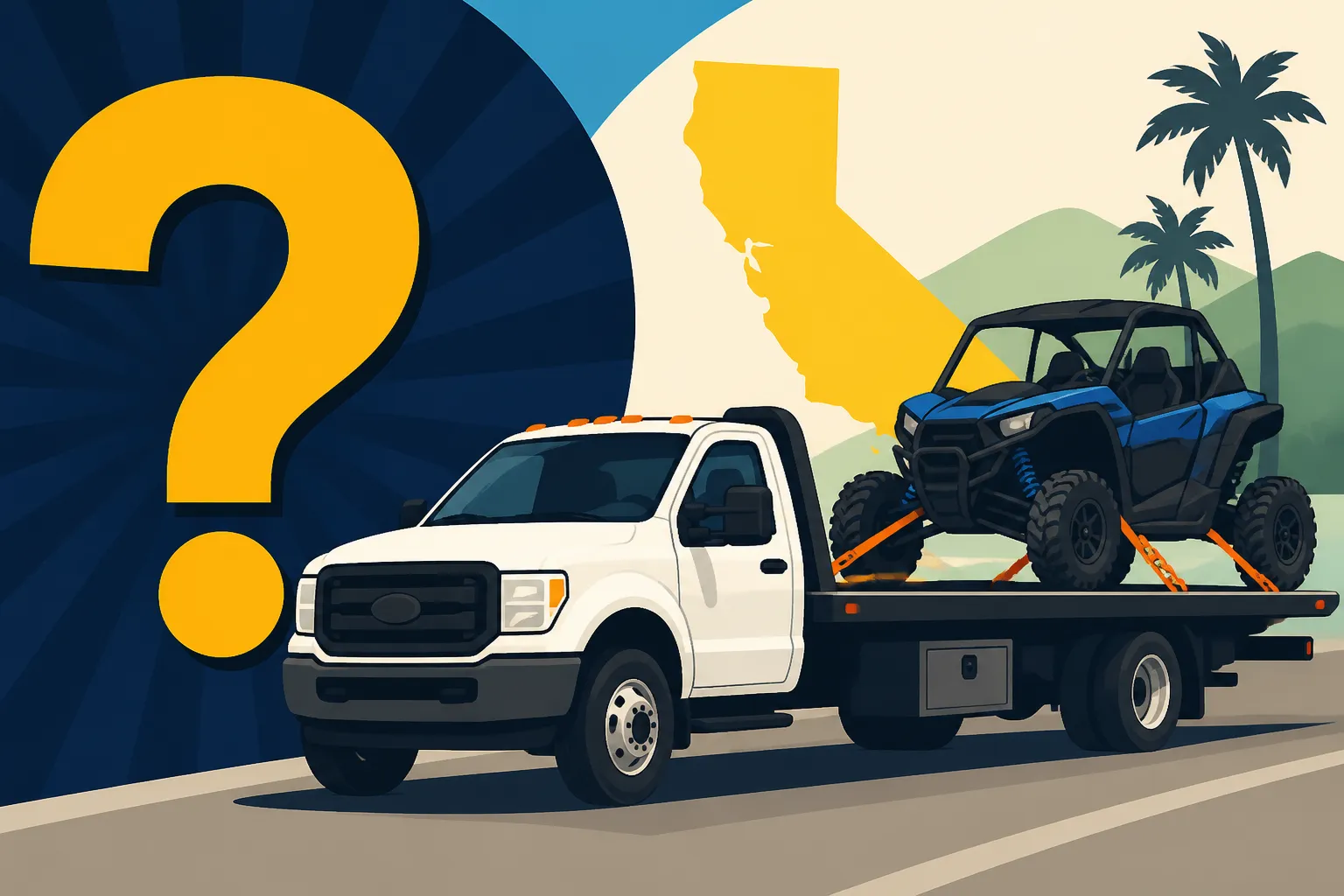
If you’re taking an ATV or UTV into California behind a truck, it’s easy to mix up the permit for the machine with the fee for entering a riding area. The short answer: an ordinary truck used only to tow your OHV does not need the OHV use permit for that machine. But a separate vehicle entrance fee may apply when the truck enters a State Vehicular Recreation Area.
The OHV permit is for the machine you ride
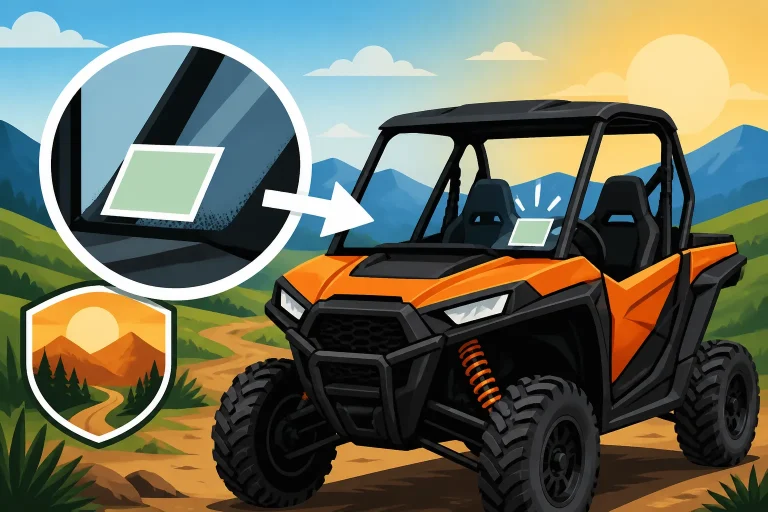
California’s nonresident OHV use permit concerns the off-highway vehicle being operated, not simply the passenger vehicle that transported it. California State Parks administers the nonresident permit program, and on an ATV the permit must be affixed to the left rear quadrant on a permanent plastic or metal frame member where it can be seen during an outside inspection.
That distinction matters at a riding area. If your truck carries an ATV or UTV on a trailer, the truck is serving as a tow vehicle. The permit question for the OHV is about the ATV or UTV you plan to operate, not the truck’s role in getting it there. The truck does not become an OHV merely because it is towing one.
For eligible out-of-state machines, the permit may be unnecessary if the owner can establish the required home-state status and registration. The California DMV says nonresident OHV owners must carry a valid out-of-state driver’s license to establish residency and provide proof of current home-state OHV registration, or its equivalent, to operate without a California permit. The details of which out-of-state credentials California accepts are covered in California OHV Reciprocity: Only Two States and Why Only Oregon and Nevada Count in California.
If your OHV does need a California nonresident permit, the required fee is $30, according to California State Parks, as of November 2026. The permit is for the OHV, not an extra permit for every vehicle involved in towing it. See California’s Nonresident OHV Use Permit for the permit’s purpose and display requirements.
| What you bring | What to check |
|---|---|
| A truck used only to tow an OHV | Whether the riding area charges an entrance or day-use fee for the truck |
| A nonresident ATV or UTV | Whether it needs a California OHV use permit or has qualifying home-state credentials |
| A California-registered OHV | Whether its registration is current and its identification is displayed as required |
| A truck driven into a State Vehicular Recreation Area | Whether the site requires a vehicle entrance pass or daily fee |
| A truck driven off-highway as well as used for towing | Whether the route and land manager allow that vehicle’s use |
The table separates the two checks because satisfying one does not automatically satisfy the other. A permit or registration for an ATV does not necessarily cover the truck’s entry to a recreation area, and a vehicle entrance pass for the truck does not authorize the ATV to be ridden without its required identification.
A recreation-area entrance fee is separate
Some California State Vehicular Recreation Areas collect day-use fees from passenger vehicles. According to California State Parks, a passenger vehicle entering an SVRA where day-use fees are collected must purchase a vehicle entrance pass or pay the daily fee. An optional Off-Highway Motor Vehicle Recreation Annual Pass is also available.
That means the practical answer for a tow vehicle depends on where you are going. If the truck enters an SVRA that collects a vehicle day-use fee, plan for the truck’s entrance requirement even though the truck does not need the ATV’s OHV use permit. If you are using a different kind of public land or a recreation area with different access rules, check that site’s requirements rather than assuming the SVRA rule applies everywhere.
Oceano Dunes State Vehicular Recreation Area is managed by the California Department of Parks and Recreation. For a visit there, treat the tow vehicle’s entry requirement and the OHV’s riding credentials as separate questions. California’s State Vehicular Recreation Areas gives broader context on the places covered by the SVRA system, while What California Charges Visitors to Ride can help distinguish visitor costs from machine permits.
Do not assume that a pass attached to your truck covers the ATV, or that the ATV’s registration covers the truck. Those documents serve different purposes. At an SVRA, confirm what the site charges for the vehicle entering the area and what identification the machine must carry before unloading or riding.
What to confirm before you leave
A short check before departure can prevent a frustrating surprise at the entrance. First, identify where you are taking the OHV and who manages that land. California’s Off-Highway Motor Vehicle Recreation Division operates state-owned vehicular recreation areas and manages designated trails within California State Parks. The Bureau of Land Management oversees its own public lands and OHV areas. Rules for one manager’s area should not be assumed to apply to another.
Then check the requirements for both the tow vehicle and the machine:
- Confirm the site’s entry rules. Ask whether the location collects a day-use or vehicle entrance fee from passenger vehicles. If it does, determine what the tow vehicle needs to enter.
- Check the OHV’s status. For a California-registered machine, carry its registration card. The California DMV issues an identification certificate, also known as a registration card, as proof of valid OHV registration.
- Check whether a nonresident permit is needed. If the machine is from out of state, confirm that its home-state registration or equivalent qualifies for operation without a California permit. If it does not, arrange the California permit for the OHV.
- Make sure required identification is displayed. A nonresident permit on an ATV belongs on the ATV in the location California State Parks specifies, not on the tow vehicle. For California ATVs, the Green Sticker or Red Sticker must be securely fastened to the left rear quadrant on a permanent plastic or frame member, where it remains clearly visible from the rear, according to the California DMV and Department of Parks and Recreation.
- Carry the documents separately. Keep the truck’s entrance-pass information and the OHV’s registration or permit information available. If you are unsure what a ranger may ask to see, Carrying Paperwork on the Sand covers the practical distinction between having the documents and displaying the required identification.
If you are visiting an SVRA, also check whether your planned route involves riding only at the designated area or using public roads to get there. A recreation-area entrance pass is not road authorization, and an OHV permit does not make a route open to off-highway travel. For background on nonresident machine credentials, see Does California Honor Arizona OHV Registration? and A Nevada Decal at a California SVRA.
Common mistakes to avoid
Buying an OHV permit for the truck. The nonresident OHV use permit is associated with the off-highway machine being operated. A truck that is only towing the ATV or UTV should not be treated as the machine’s permit holder.
Assuming the truck never has a separate charge. The truck may still need a vehicle entrance pass or payment of a daily fee at an SVRA that collects day-use fees. That requirement is about entering the recreation area, not about registering the ATV.
Assuming a recreation-area pass covers the OHV. The truck’s entry pass and the machine’s registration or permit answer different questions. Check both.
Treating every public riding area alike. An SVRA, BLM-managed area, and other public lands may have different access arrangements. Check the land manager and the specific location before traveling.
Putting the permit on the wrong vehicle. A permit intended for an ATV must be displayed on the ATV as directed. Attaching it to the truck or trailer does not put it on the machine that will be ridden.
The useful rule is simple: ask two questions, not one. Does the OHV have the registration or permit needed for its operation? And does the place you are entering require a separate pass or fee for the tow vehicle? Once those are checked independently, it is much easier to know what to bring.
Sources
- California Department of Parks and Recreation — Nonresident OHV Use Permits (checked November 2, 2026)
- California Department of Parks and Recreation — Oceano Dunes State Vehicular Recreation Area (checked November 2, 2026)
- California Department of Parks and Recreation — OHMVR Division | California State Parks (checked November 2, 2026)
- Bureau of Land Management — Off-Highway Vehicles | Bureau of Land Management (checked November 2, 2026)
Disclaimer
This article is for general informational purposes only and does not constitute professional advice. Laws, prices and regulations vary by location and change over time. Consult a qualified professional for guidance on your specific situation.