Why Only Oregon and Nevada Count in California
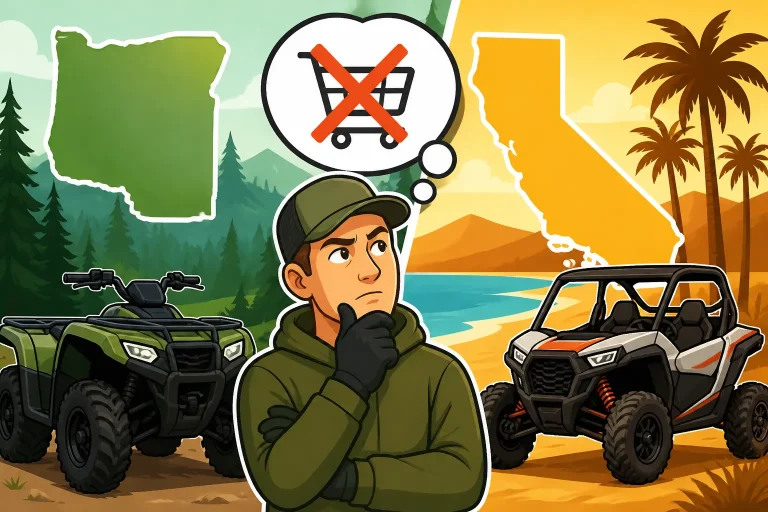
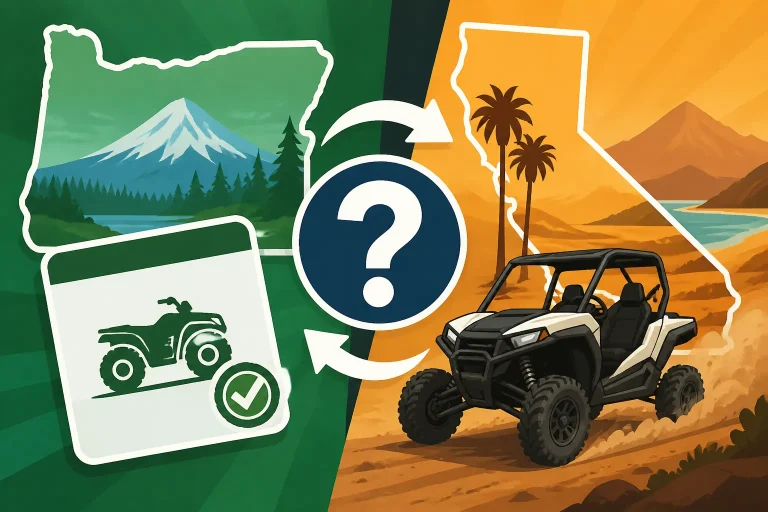
A registration decal from another state does not automatically let you ride an ATV or UTV in California. For the state’s off-highway vehicle reciprocity, Oregon and Nevada are the two states whose qualifying credentials California recognizes. Here’s what that means, what it doesn’t cover, and what to check before loading your machine.
What California means by reciprocity
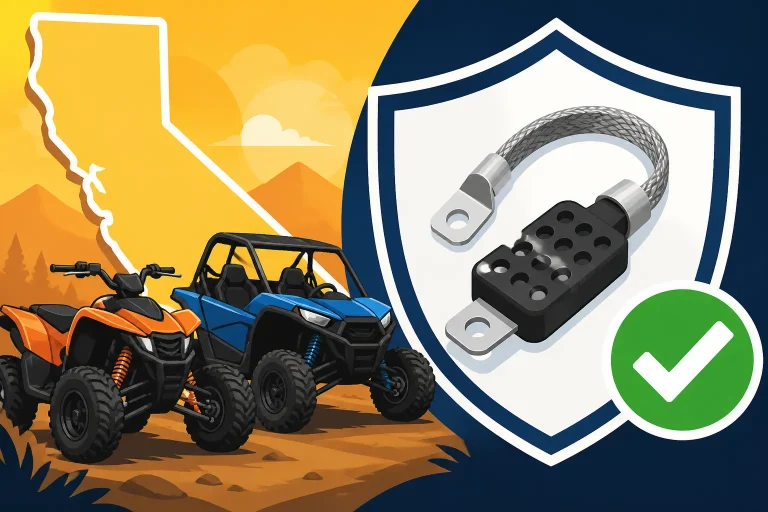
Reciprocity is a limited agreement: California accepts certain off-highway vehicle credentials issued by another state instead of requiring the rider to obtain California’s nonresident OHV use permit. In practical terms, a qualifying, current Oregon or Nevada off-highway registration can satisfy California’s identification requirement for eligible machines.
The key word is qualifying. Reciprocity does not mean California accepts every document that looks like registration, every out-of-state plate, or every permit issued by a state. It applies to the credentials California recognizes for off-highway use. If your machine’s paperwork is unclear, check with the California agency responsible for OHV identification before you ride.
This system is about identifying a machine when it is operated off highway in California. It is separate from where you are allowed to ride, whether the machine is street legal, and whether an area requires an additional entry or use permit. [California OHV Reciprocity Rules] explains the broader framework, while California’s Nonresident OHV Use Permit covers the alternative for riders whose machines do not qualify for reciprocity.
Why the list is short
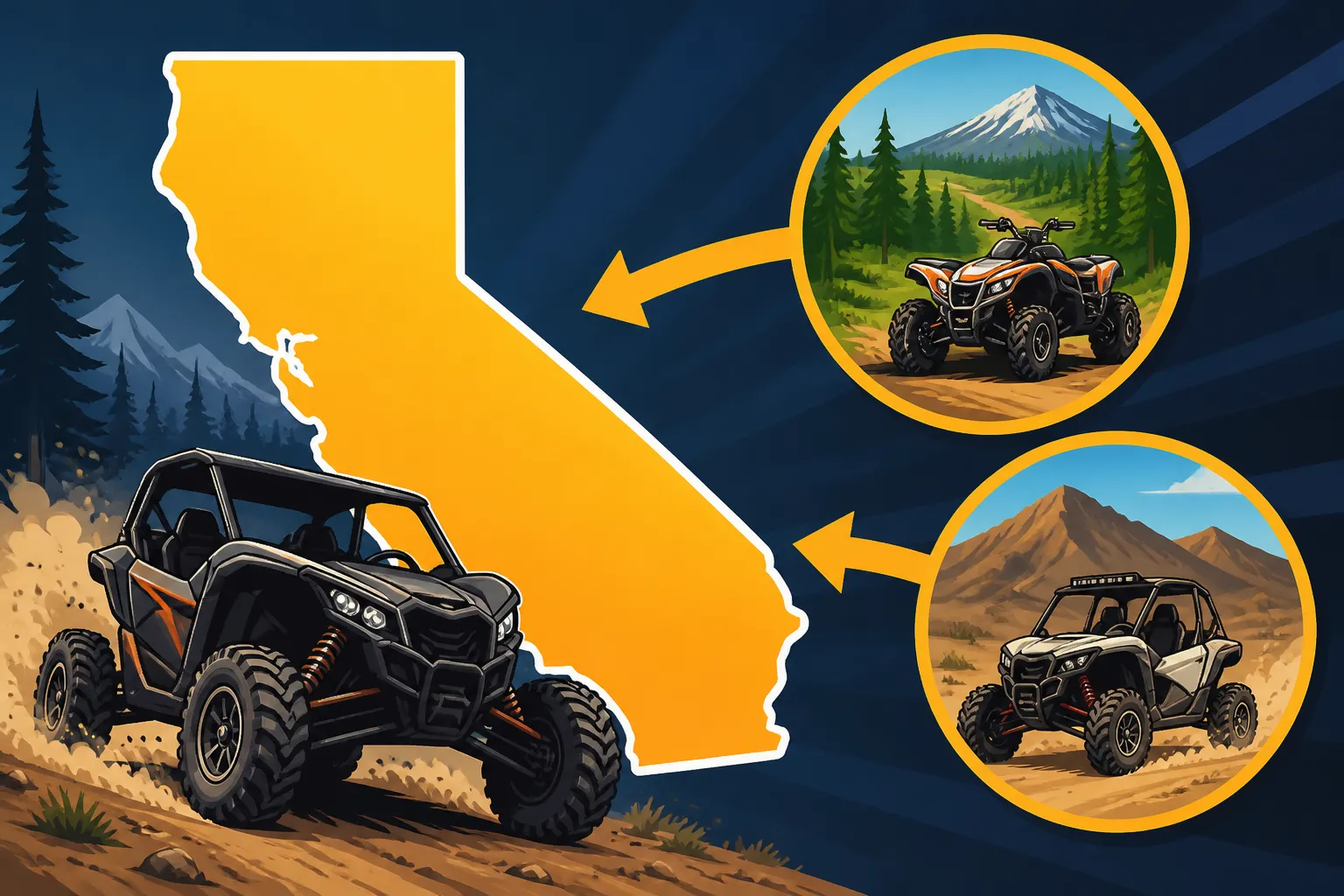
California does not grant reciprocity simply because another state has an OHV decal, registration card, or permit. The state recognizes specific arrangements. Oregon and Nevada are the two states whose relevant off-highway credentials qualify under those arrangements.
Other states may have robust OHV programs of their own. Their rules may require registration, a permit, or a decal, and those documents may be valid within that state. That alone does not make them valid substitutes for California’s nonresident permit. California’s decision turns on its own recognition rules, not on whether another state’s system seems similar.
That distinction can be frustrating if you have already paid for an OHV credential elsewhere. But it is safer to treat the question as “Does California recognize this particular credential?” rather than “Is my machine registered somewhere?”
Reciprocity is not general vehicle registration recognition
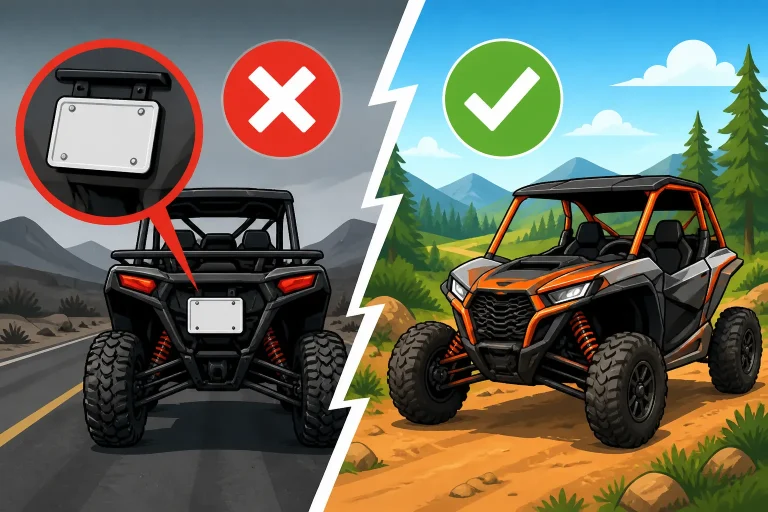
A street-legal license plate is not automatically the same as an OHV registration decal for reciprocity purposes. A road plate may show that a vehicle is registered for highway use, but it does not necessarily prove that the machine has the off-highway credential California requires. Why a Street-Legal Plate Does Not Substitute explains why the two types of identification should not be confused.
Similarly, having a title, bill of sale, insurance card, or registration card from another state does not by itself establish that California recognizes the machine for OHV use. Those documents can be useful for proving ownership or answering questions, but they are not necessarily the required off-highway permit or decal.
Which Oregon and Nevada documents may count
A useful starting point is to identify exactly what you have, rather than relying on the state name printed on a plate or document. Check the issuing state, the kind of credential, the vehicle it covers, and whether it is current. Keep the registration or permit paperwork with the machine so you can show what the decal or identification belongs to if asked.
| Your situation | What to check before riding in California |
|---|---|
| The machine has a current Oregon OHV credential | Confirm it is the off-highway credential for that machine, not only a road-use plate or another document |
| The machine has a current Nevada OHV decal or registration | Confirm it is valid, displayed as required, and linked to the machine you are bringing |
| The machine is registered in another state | Do not assume the credential is accepted; check whether you need California’s nonresident permit |
| The machine has an out-of-state street plate | Do not treat the plate alone as proof of OHV reciprocity |
| The machine is rented, borrowed, or newly purchased | Ask who holds the registration and what documentation must travel with the machine |
| You are going to a particular park, dune area, or event | Check the site’s separate entry, use, or event requirements |
For Oregon riders, make sure the document is the appropriate Oregon off-highway credential for the machine. A road registration, title, or other state-issued paper may serve a different purpose. For a closer look at the distinction, see An Oregon Permit on California Sand.
For Nevada riders, check that the OHV decal or registration is current and belongs to the machine you are transporting. A Nevada credential is relevant because California recognizes qualifying Nevada OHV identification—not because any Nevada plate or sticker automatically covers every vehicle or use. A Nevada Decal at a California SVRA discusses the practical question of riding at a California State Vehicular Recreation Area with Nevada identification.
If your machine has mixed paperwork—for example, an OHV decal as well as a street plate—do not rely on a visual guess about which one California will accept. Review the credential’s purpose and current status, and confirm the requirements for your machine type. The terminology can differ between states, and the fact that a document is called a “permit” in one place or “registration” in another does not settle how California treats it.
Why credentials from other states may not qualify
The simple answer is that California’s reciprocity is specific, not universal. A state can require its own residents to register an OHV without California automatically accepting that registration. California’s rules determine which outside credentials stand in for a California nonresident permit.
There are several practical reasons to avoid assuming that two states’ programs are interchangeable:
- Different documents can cover different uses. A state may have separate paperwork for road use, off-highway riding, ownership, or a particular area.
- A decal may not mean the same thing everywhere. States can use decals or cards for different purposes, and their display rules may differ.
- Vehicle categories are not always identical. A credential intended for one type of OHV may not settle the requirements for a different machine.
- Out-of-state plates can be misleading. A road registration may look like proof of legal status but may not replace off-highway identification.
- Recognition is a California rule. A permit that works at home or in another neighboring state does not automatically work in California.
This is why riders from Arizona, Utah, Idaho, and other states should not treat a home-state OHV decal as a California substitute unless California specifically recognizes it. For example, Why an Arizona Registration Will Not Do in California addresses a common point of confusion, and Why a Utah Registration Will Not Do in California covers another. Those examples are not a judgment on the validity of those states’ own programs; they are a reminder that a valid home-state credential and a credential accepted in California are different questions.
The same caution applies to a machine that is registered for highway use elsewhere. A state may permit a particular ATV or UTV to use roads under its laws, but California may not treat that plate as an OHV permit for riding California public lands. If you are relying on a plate rather than an off-highway credential, check the rule for your exact machine and intended use. Out-of-State Plates California Will Not Honor provides more context.
What to do if your state is not Oregon or Nevada
If your machine does not have a qualifying Oregon or Nevada credential, the usual next step is to look into California’s nonresident OHV use permit. Do this before the trip, not at the trailhead or after unloading. Confirm the current application process, eligibility, display instructions, and validity period through the official California channel. Details can change, so avoid relying on an old permit image or a forum post as the final word.
The basic process is:
- Identify the machine and its current credentials. Note the vehicle type, state of registration, decal or permit status, and whether it has a street plate.
- Check whether California recognizes that credential. If it is not a qualifying Oregon or Nevada OHV credential, do not assume it satisfies California’s requirement.
- Check the current nonresident permit instructions. Confirm which machine types are covered and what information you need to apply.
- Obtain and display the required California permit as instructed. Follow the current placement and visibility directions rather than improvising based on another state’s decal rules.
- Carry supporting paperwork. Keep the permit or registration details accessible in case you need to show what is displayed on the machine.
- Check the destination’s separate rules. A valid OHV credential does not replace site-specific permits, reservations, or event requirements.
Do not wait until the last minute if you are traveling with several machines or a group. Each machine may need its own identification, and the paperwork may be held by different owners or riders. If someone else is transporting or operating your ATV or UTV, make sure that person knows where the permit documents are and which machine they match.
You can keep a paper copy in a sealed document sleeve or pouch. A waterproof sleeve—available through outdoor retailers and Amazon—can help protect paperwork from sand, mud, and spray. It does not replace the required decal or permit, and it is not proof by itself that the machine meets California’s rules. Keep digital photos as a backup, but don’t assume a phone image will substitute for any required physical display or document.
For more detail on the permit process, see Buying a California Nonresident Permit Online and California OHV Permit for Out-of-State Riders. If you are trying to work out the current cost, check [California Nonresident OHV Permit Cost] and verify the official amount before you buy. Avoid using a price quoted in an old trip report as a reliable current figure.
When reciprocity is not the only question
Even with the right Oregon or Nevada credential, the ride itself may involve additional rules. The destination might require a separate dune permit, day-use payment, reservation, or event permit. The machine may also have to meet equipment rules for the land you plan to use. These are separate from reciprocity.
For example, a rider heading to a dune area should check whether that location has a site-specific permit system. A rider going to an organized event should check event requirements. A state-recognized OHV credential answers an identification question; it does not, by itself, authorize access to every riding area.
Also check that the machine is being used in a place where it is allowed. Public lands, private property, roads, and designated recreation areas can have different access rules. A current decal will not make a closed route legal or authorize riding on a road that is not open to OHVs.
Common mistakes to avoid before a California ride
Many permit problems are easy to prevent once you separate the different kinds of paperwork. Before you leave, check the following:
- Assuming any out-of-state sticker counts. California’s reciprocity is limited; an OHV decal from another state is not automatically accepted.
- Confusing a street plate with an OHV credential. A plate may relate to highway registration, not the off-highway identification California requires.
- Relying on an expired credential. Confirm the registration or permit is current for the trip.
- Using paperwork for a different machine. Match the credential to the ATV or UTV you are bringing.
- Leaving the paperwork with someone who is not traveling. The operator should know what is required and how to show the supporting information.
- Assuming one permit covers a group. Confirm whether each machine needs its own identification.
- Stopping once you have the decal. Check the riding area, route, and any separate local permit or access requirements.
If you bought a used machine recently, check the paperwork before your first California trip. A previous owner’s decal or registration may not be current, may not match the machine, or may not establish that you have the right documentation. When ownership papers are incomplete, resolve that issue before relying on the machine’s existing identification. Checking a VIN Before Buying a Used Quad can help with the purchase side, while What a Seller Must Hand Over covers the documents a buyer should expect.
If you are still uncertain, ask the relevant California OHV authority or the destination area directly. Give them the machine type and the exact credential you hold, rather than asking only whether “out-of-state registration” is accepted. That makes it easier to get an answer that applies to your situation.
The practical rule is straightforward: qualifying Oregon and Nevada off-highway credentials may satisfy California’s reciprocity requirement; credentials from other states generally should not be treated as substitutes without confirmation. If you do not have one of the recognized credentials, check whether you need the California nonresident permit, then confirm any separate rules at your riding destination. A few minutes spent matching the right document to the right machine can prevent a frustrating stop before the ride even begins.
Disclaimer
This article is for general informational purposes only and does not constitute professional advice. Laws, prices and regulations vary by location and change over time. Consult a qualified professional for guidance on your specific situation.