Roadside Stops on the Way to the Dunes
That feeling of dread when you see flashing lights in your rearview mirror, especially when you're loaded up with your precious ATV or UTV and heading for a weekend of dunes or trails, is all too real for California off-road enthusiasts. It’s not just about getting to your destination; it’s about navigating the journey safely and legally. This guide is here to walk you through what to expect during a roadside stop when you're trailering your off-highway vehicle, ensuring you're prepared, compliant, and can get back on the road to your adventure as quickly as possible. We'll cover everything from the basic paperwork to vehicle specifics, helping you avoid unnecessary delays and potential citations.
Why Law Enforcement Conducts Roadside Stops for OHV Haulers
It might feel like you're being singled out, but there are several legitimate reasons why law enforcement officers might pull over a vehicle hauling off-highway vehicles (OHVs) in California. These stops aren't usually personal; they're often part of a broader effort to ensure safety, environmental protection, and compliance with state regulations, especially on routes leading to popular riding areas like Glamis, Oceano Dunes, or Ocotillo Wells. Officers are trained to look for certain indicators that might suggest a potential issue, even if everything appears fine at first glance.
Ensuring Proper OHV Registration
One of the most common reasons for a stop is to verify that your OHVs are properly registered and identified for use in California. California has specific rules regarding OHV identification, which includes displaying the correct Green, Red, or Tan sticker, or an ID plate. If an officer spots a machine on your trailer without visible, current identification, or if the sticker looks expired or is an out-of-state plate that doesn't qualify for reciprocity, it's a red flag. They want to make sure everyone is playing by the rules, especially since registration fees directly fund the state's OHV programs and facilities. It's not just about the sticker itself; it’s also about where and how it's displayed, and whether it matches the year and type of your machine. An officer might be curious about [California's Green Sticker Explained] or [Red Stickers and What Changed in California] and if your machine fits the rules.
Checking for Vehicle Safety and Modifications
Beyond registration, officers are also on the lookout for vehicle safety issues and modifications that might not be compliant with California law. This includes everything from the condition of your trailer and its load to the state of the OHVs themselves. They're checking for things like proper tie-downs, ensuring your load is secure and not a hazard to other drivers. They’ll also look at the OHVs for obvious modifications that could lead to noise violations or spark arrester issues, which are huge concerns in California's fire-prone landscapes. A machine with a visibly modified exhaust or one that looks like it's designed for competition-only might draw attention. Officers are tasked with enforcing rules that protect both riders and the environment, and a quick visual inspection can often raise questions about compliance.
Enforcing California's Roadway Regulations
Finally, officers are enforcing general roadway regulations that apply to all vehicles, including those towing trailers. This can include checking for proper trailer lighting, valid driver's licenses, proof of insurance for the tow vehicle, and any other traffic infractions. Perhaps your trailer's brake lights aren't working, or a taillight is out. Maybe your load is swaying excessively, indicating an improper weight distribution. These seemingly minor issues can escalate into safety hazards on busy highways. While the focus might be on your OHVs, the initial stop could stem from something as simple as a broken signal light on your tow rig. Keeping your entire setup in tip-top shape, from your truck to your trailer to your quads, is crucial for a smooth journey.
What Law Enforcement Looks For in a Roadside Stop
When you're pulled over with your OHVs in tow, it's natural to feel a bit anxious. But knowing what an officer is likely to scrutinize can help you stay calm and prepared. They're not just looking for a reason to write a ticket; they're ensuring everyone's safety and compliance with the numerous regulations governing off-highway recreation in California. Think of it as a comprehensive check-up for your entire hauling operation.
OHV Registration and Identification
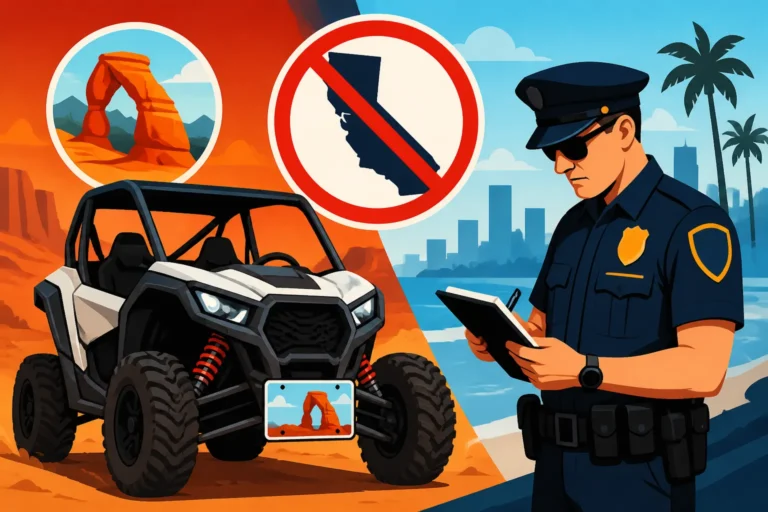
This is often the first thing an officer will check once they approach your vehicle. They'll want to see current and valid registration for your OHVs. This means a visible, unexpired California OHV sticker (Green, Red, or Tan) properly affixed to your machine, or a valid ID plate. If you're an out-of-state visitor, they'll verify if you have a [California's $30 Nonresident Permit] or if your home state has reciprocity with California for OHV use. Only Oregon and Nevada currently have that reciprocity, so if you're coming from Arizona or Utah, you'll need the California nonresident permit. They’ll also look for the corresponding paperwork, which should ideally be carried with your machine or in your tow vehicle. Don't forget that if your sticker has faded, you might run into issues, so it's always good to ensure it's legible. [California OHV Registration Paperwork Checklist] is a good resource to review before you head out.
| Sticker Type | Eligibility | Primary Use |
|---|---|---|
| Green Sticker | For OHVs that meet California Air Resources Board (CARB) emissions standards. Generally, this applies to 4-stroke machines, or 2-stroke machines meeting stricter standards, usually newer models. Also applies to all electric OHVs. | Allows year-round use on all public lands designated for OHV use in California. This includes State Vehicular Recreation Areas (SVRAs) and many BLM and National Forest lands. This is the most flexible sticker. |
| Red Sticker | For OHVs that do not meet California Air Resources Board (CARB) emissions standards for year-round use. This primarily applies to 2-stroke off-road motorcycles and older 4-stroke models that are not Green Sticker certified. Also for certain newer machines that aren't CARB compliant for year-round use. | Restricts riding to specific times of the year (generally October 1 to May 31) in areas designated for Red Sticker use. Some areas, like Oceano Dunes, permit year-round Red Sticker use. After January 1, 2025, new Red Sticker machines are no longer eligible for registration unless they are competition-only models. Existing Red Stickers remain valid until they expire. Check [Red Sticker Machines After January 2025] for details. |
| Tan Sticker | This is for competition-only machines that are exempt from CARB emissions requirements. These machines are not designed for general recreational use on public lands and are specifically built for closed-course competition. They do not receive Green or Red stickers. | Allows participation in sanctioned competitive events on designated closed courses. These machines are generally not legal for recreational riding on public lands. A [California's Sanctioned Event Permit Explained] might be necessary for temporary use. |
| Nonresident Permit | Required for out-of-state OHVs to operate on California public lands if their home state does not have a reciprocity agreement with California. Currently, only Oregon and Nevada OHV permits are recognized. If you're from any other state, you'll need this. | Allows out-of-state OHVs from non-reciprocal states to legally operate on California public lands for a limited period, typically two years. |
Safety Gear and Spark Arresters
California takes safety seriously, especially when it comes to fire prevention and rider protection. An officer will often check for spark arresters on your OHVs, particularly if you're traveling to a brush-covered or forested area. All OHVs operating on public land in California must be equipped with a US Forest Service approved spark arrester. Without one, you're not only creating a fire hazard but also risking a hefty fine. They might also inquire about helmets, especially if there are children in your group. While helmets aren't usually checked on a trailer, ensuring you have them and that they meet safety standards (DOT-approved) for every rider is crucial once you get to the dirt. Remember that [California Helmet Law for ATV Riders] applies to everyone on public lands.
Vehicle Modifications and Noise Limits
Many riders love to customize their machines, but certain modifications can draw unwanted attention from law enforcement. The most common issue is aftermarket exhaust systems that exceed California's strict noise limits. State law mandates a maximum of 96 decibels for OHVs manufactured after 1997, and 101 decibels for older machines. If your exhaust looks excessively loud or lacks proper baffling, an officer might suspect a violation. Companies like SuperATV offer a huge range of aftermarket parts, but remember to always ensure any modifications are still compliant with California's sound and spark arrester regulations. They might even have a sound meter to test it right there! It's better to be proactive and ensure your machine is compliant before you hit the road. You can learn more about [California Noise Rules at an SVRA Gate] for specific details.
Trailer and Tow Vehicle Compliance
While your OHVs are the stars of your weekend adventure, your tow vehicle and trailer are what get them there. Officers will verify that your trailer is properly registered and that its lights (brake lights, turn signals, running lights) are all in working order. They'll also check your tow vehicle's registration, driver's license, and proof of insurance. An improperly secured load, excessive sway, or even visible damage to your trailer tires can all lead to a stop. Make sure your tie-downs are secure, your safety chains are crossed, and your hitch is properly rated for the weight you're hauling. It's all about ensuring your entire setup is safe for everyone on the road.
Essential Documents and Gear for Your Trip
Being pulled over is never fun, but being prepared with all the right documentation and gear can make the experience much less stressful and get you back on your way quickly. Think of it as your "go bag" for OHV compliance on the road.
Required Documentation
Having your paperwork in order is perhaps the single most important thing you can do to prepare for a roadside stop. An officer will primarily be interested in two categories of documents: those for your tow vehicle and trailer, and those for your off-highway vehicles.
For your tow vehicle and trailer, you'll need:
- Valid Driver's License: This should be current and appropriate for the vehicle you're driving and the weight you're towing.
- Current Vehicle Registration: For your truck or SUV.
- Proof of Insurance: For your tow vehicle. This is legally required to operate on public roads.
- Trailer Registration: Your trailer also needs to be registered with the DMV.
For your OHVs, you'll need:
- OHV Registration Cards: These are the small paper cards that match the sticker or ID plate on your ATV or UTV. While the sticker needs to be visible on the machine, having the corresponding card with you is essential. Many riders keep these in a waterproof pouch on the machine itself, or in a central binder in their tow vehicle. Remember [Carrying Registration Paper on the Sand] is important too, not just on the road.
- Proof of Ownership (Title or Bill of Sale): While not always requested for a roadside stop, having these handy can clear up any questions about ownership, especially if you recently purchased the machine. California issues a Certificate of Title for OHVs, similar to a street vehicle.
- California Nonresident OHV Use Permit: If you're visiting from a state that doesn't have a reciprocity agreement with California, you must have this permit. You can often purchase these online or from various vendors. It's often required even if you have a valid registration from your home state. Don't be caught without it.
It's a good idea to keep all these documents organized in a waterproof folder or binder in your tow vehicle. That way, when an officer asks for them, you're not fumbling around, which can make a roadside stop feel even more chaotic.
Safety Gear and Vehicle Compliance Items
Beyond paper, having the right physical items on hand—and properly installed on your OHVs—is critical. These are the things that directly relate to the safety of your machine and others.
- Spark Arresters: Every OHV operating on California public lands must have a Forest Service-approved spark arrester. This is non-negotiable, especially during fire season. Make sure they are in good working order and not damaged. You can identify approved models by a stamped F.S. (Forest Service) approval number.
- Whip and Flag (for dunes): If you're heading to a dune riding area like Glamis or Oceano Dunes, an 8-foot whip with a 6×12 inch red or orange flag is mandatory. This increases visibility in the undulating terrain. Make sure your whip is securely mounted and the flag is within 10 inches of the top.
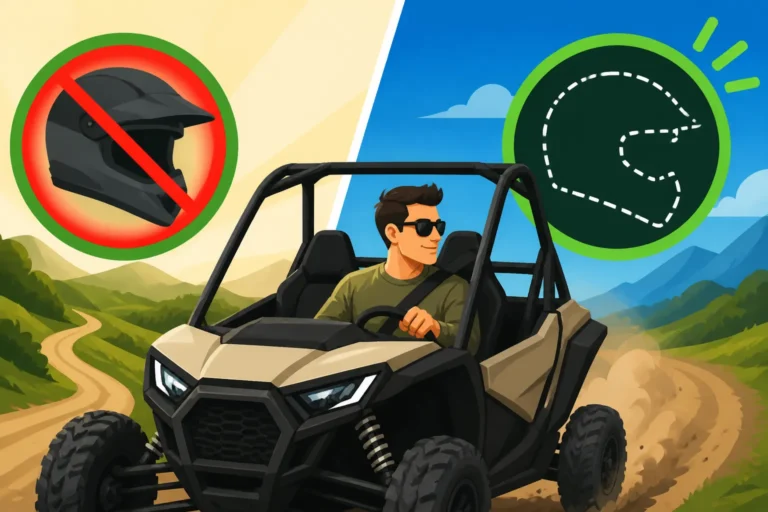
- Helmets: While not typically checked while trailering, every rider in your group, regardless of age, needs a DOT-approved helmet. If you have children, ensure they are wearing properly sized helmets. It's always a good idea to have them ready to go when you arrive at the staging area.
- Headlights and Taillights: Your OHVs must have functional headlights and taillights if you plan on riding at night. Even if you don't plan on night riding, having working lights is a good safety practice.
- Muffler/Exhaust System: Ensure your exhaust system is stock or an aftermarket unit that meets California's noise standards. Loud exhausts are a common reason for citations. Be mindful of [California Sound Limit for ATVs].
- Tie-Downs: Critically important for trailering. Ensure you have adequate, strong tie-downs securing each OHV to your trailer. Machines should be secured from at least four points, preventing any movement during transit. A loose machine on a trailer is a serious hazard and can lead to immediate citations and mandatory securing before you can proceed. Some riders use wheel chocks and specific products from companies like SuperATV to ensure their machines are completely locked down.
By having these documents and safety items squared away before you even pull out of your driveway, you're not just ready for a roadside stop; you're also ensuring a safer and more enjoyable trip for everyone.
What to Do During an OHV-Related Roadside Stop
Getting pulled over can be a jarring experience, but how you handle it can significantly impact the outcome. Staying calm, being courteous, and knowing your responsibilities are key to a smooth interaction with law enforcement, especially when your OHVs are involved.
Interacting with Law Enforcement
When you see those flashing lights, the first thing to do is to safely pull your vehicle over to the right side of the road as soon as possible. Turn off your engine, roll down your window, and place your hands on the steering wheel where they are clearly visible. Avoid any sudden movements.
When the officer approaches, greet them respectfully. They will typically ask for your driver's license, registration for your tow vehicle, and proof of insurance. They might then mention why they pulled you over – perhaps they noticed an expired sticker, or a trailer light was out, or they have a general interest in ensuring OHV compliance.
Listen carefully to what the officer says and answer their questions honestly and concisely. Avoid arguing or becoming defensive. If you're unsure about something, politely ask for clarification. Remember, their job is to enforce the law and ensure public safety. Cooperation goes a long way. If they ask about your OHV registration, you can calmly explain that you have all the required documents and point to the stickers on your machines.
Presenting Your Documents and Explaining Compliance
Once the officer explains the reason for the stop, they will likely ask to see your OHV registration and possibly inspect your machines. This is where your preparation pays off.
- Tow Vehicle & Trailer Documents: Have your driver's license, tow vehicle registration, and proof of insurance ready to hand over.
- OHV Documents: Present your OHV registration cards for each machine. If you're an out-of-state rider, provide your [California Nonresident OHV Permit Cost]. If you believe your state has reciprocity (like Oregon or Nevada), show your home state's registration.
- Point Out Compliance: As the officer inspects your OHVs, you can proactively point out features that demonstrate compliance. For example:
- "As you can see, the Green Sticker is current and properly displayed on the left side of the machine."
- "My exhaust is factory stock, and it has the required spark arrester, which you can see stamped here."
- "We're heading to Oceano Dunes, and as required, we have our whip and flag securely mounted for visibility."
- "All our helmets are DOT-approved and ready for use when we get to the staging area."
If there's an issue with a sticker (e.g., it's faded or peeling), explain the situation calmly. You might have your receipt for renewal or proof that you've applied for a replacement. If the issue is with a physical part of the OHV, like a non-compliant exhaust, the officer will advise you on what needs to be done. It's rare for them to let you proceed with a significant safety or emissions violation that could cause further issues. They might ask you about [What California's CVC 38026 Lets an Agency Designate] for riding on specific routes or roads, so having a basic understanding of your planned route can be helpful.
Addressing Potential Issues or Citations
If the officer identifies an issue, they will explain it to you. This could range from a warning for a minor infraction (like a loose tie-down) to a citation for a more serious violation (like no spark arrester, an expired registration, or an illegal exhaust).
- Expired Registration or Missing Permit: If your OHV registration is expired or you lack a required permit, the officer will explain the penalty, such as a fine for [California OHV Late Registration Penalty] or a ticket for operating without proper identification. In some cases, they might allow you to correct the issue, but more often than not, a citation will be issued.
- Safety Violations: Issues like improper tie-downs, missing safety gear, or non-compliant modifications can result in citations. For critical safety issues, like an unsecured load, they might even require you to fix the problem on the spot before allowing you to continue.
- Understanding Your Rights: You have the right to receive an explanation for any citation issued. If you believe there's a misunderstanding, you can politely express your concerns, but avoid arguing. The place to challenge a citation is in court, not on the side of the road.
The goal of a roadside stop is to ensure everyone follows the rules and travels safely. By being prepared, knowledgeable, and respectful, you can navigate these stops efficiently and continue on your way to enjoy California's incredible off-road opportunities.
Disclaimer
This article is for general informational purposes only and does not constitute professional advice. Laws, prices and regulations vary by location and change over time. Consult a qualified professional for guidance on your specific situation.