Rangers at a Dune Checkpoint
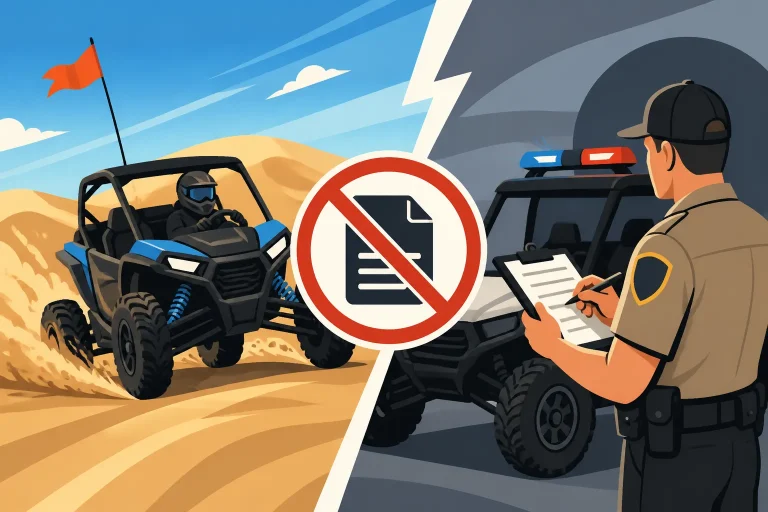
A stop at a California dune checkpoint can involve more than showing a sticker. Rangers may check your vehicle identification, required recreation permit, safety equipment and whether the machine is being operated where it is allowed. Knowing which documents apply to your vehicle—and which do not—can make the stop quicker and help you avoid a preventable problem.
What Rangers May Check at a Dune Checkpoint
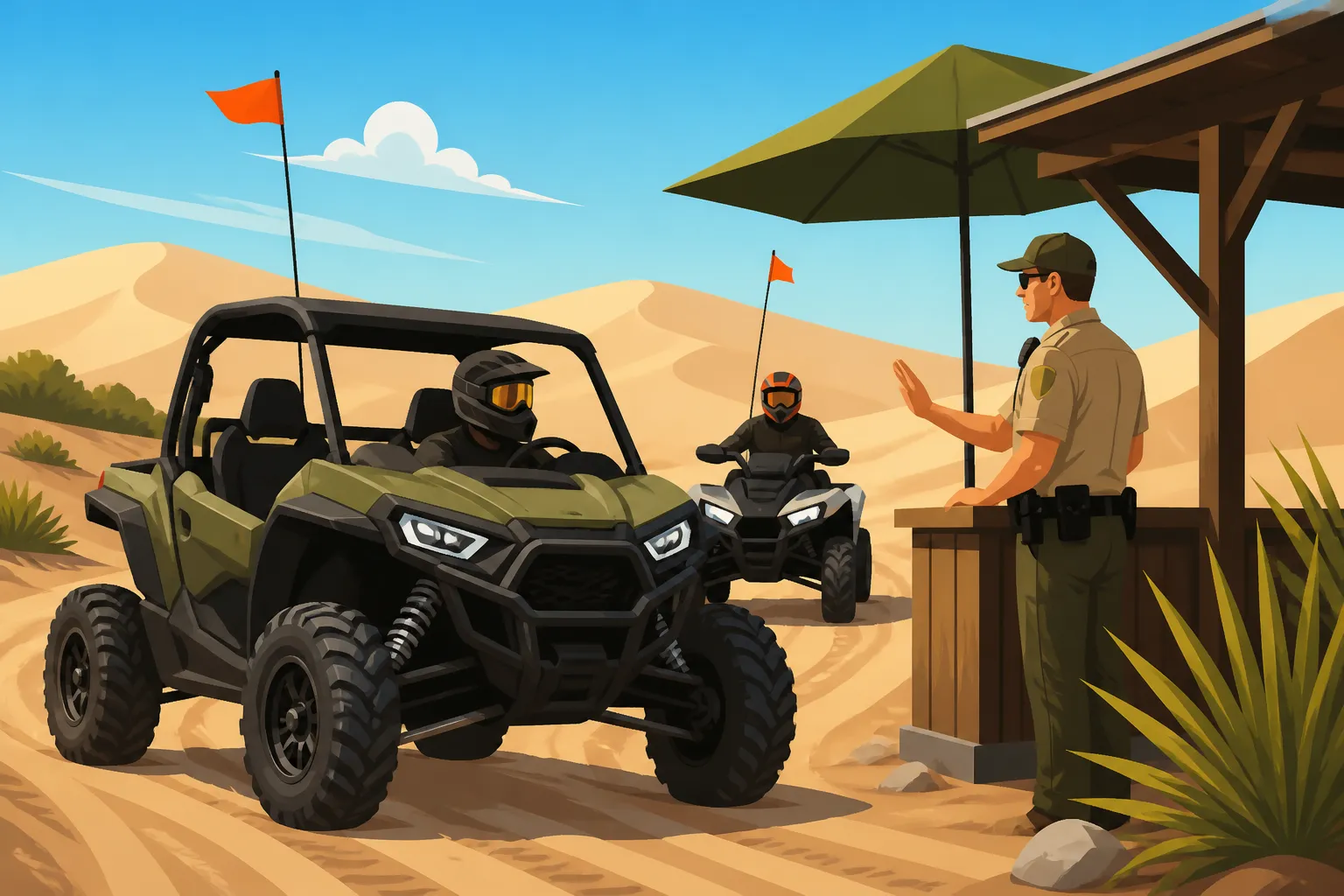
At the Imperial Sand Dunes, commonly called Glamis, a checkpoint may be set up at an entrance, road or other access point. Staff may include law enforcement or recreation-area personnel. The exact checks can vary with location and conditions, but the basic purpose is to confirm that vehicles and riders are following applicable rules.
Expect to be asked for proof that the vehicle is properly identified and that any required recreation permit is valid. Rangers may also look at the vehicle itself and check visible safety requirements, such as a dune flag. They can ask questions about where you are going or how you arrived, particularly if your vehicle is on a route with specific access rules.
A checkpoint is not necessarily a complete inspection of every part of your machine. Still, a visible issue—such as a missing permit, unreadable identification or absent required equipment—may be enough to prompt further questions or enforcement. Keep documents accessible, and do not assume that a familiar vehicle or a previous visit means this trip will be treated differently.
| What may be checked | What to have ready | Common point of confusion |
|---|---|---|
| OHV identification | Current registration or other accepted proof for the machine | A state registration sticker or plate is not automatically the same as a dune-use permit |
| Recreation-area permit | The required permit for the area and season, displayed as instructed | A permit for the dunes does not replace state OHV identification |
| Machine identity | Registration details that match the vehicle | A document for a different machine may not help |
| Dune flag and equipment | Required items in usable condition | Equipment rules still apply even when paperwork is in order |
| Rider and route compliance | Any required rider documents and a clear plan for where you may ride | A checkpoint does not make a closed route legal |
At a dune site, a permit and an OHV registration serve different purposes. Registration or an identification document connects a machine to its state’s system. A recreation permit covers access or use under the rules of a particular recreation area. Having one does not necessarily satisfy the other.
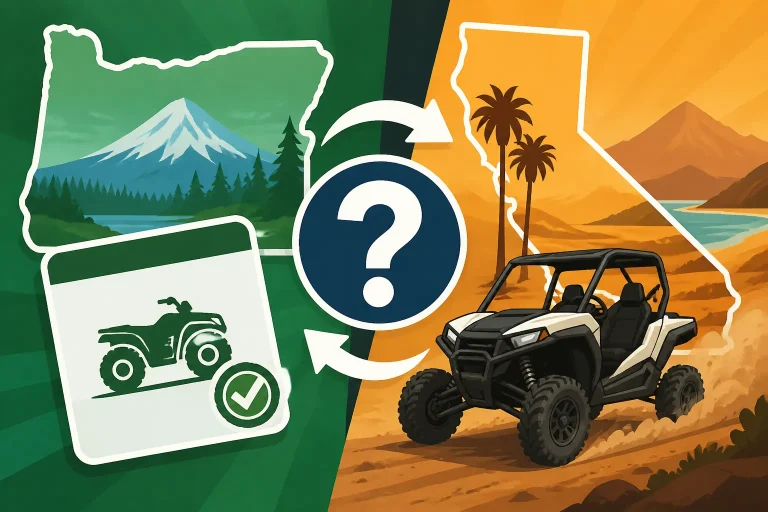
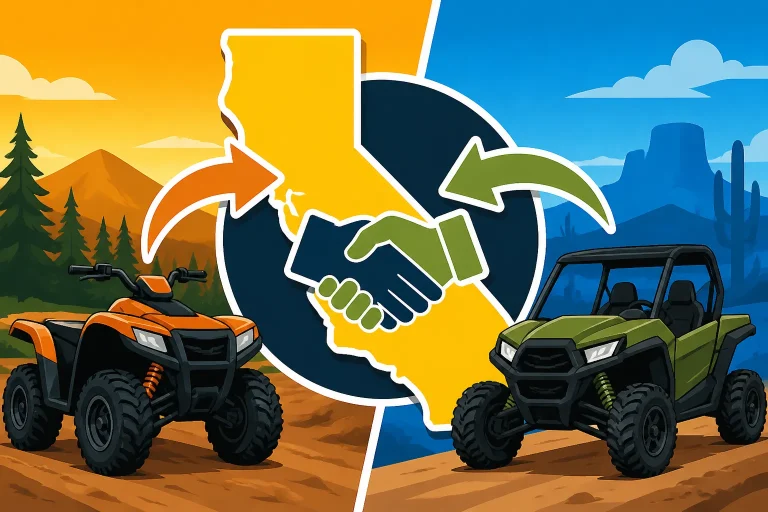
This distinction is especially important when a machine is registered out of state. California has limited OHV reciprocity, and the details depend on the state and type of credential. A permit accepted for state OHV identification does not necessarily take the place of an Imperial Sand Dunes recreation permit. For the registration side, see California OHV Reciprocity: Only Two States. For the area permit, see ISDRA Permits and California’s October Season.
Permits, Registration and Out-of-State Machines
Before leaving for the dunes, identify every vehicle that will be driven in the recreation area. A dirt bike, quad, side-by-side and tow vehicle may not all be treated the same way. Confirm the current permit instructions for the area and the specific vehicle, including where the permit must be displayed and whether it must be attached to the vehicle. Do not assume a single permit covers a group or multiple machines.
At the Imperial Sand Dunes, the required recreation permit is separate from the machine’s state registration. Permit types, purchase options, display rules and coverage can change, so check the official permit information before the trip. The reference Buying an ISDRA Permit Online can help you understand the purchase process, while Displaying a Permit on the Windscreen covers the display question. Follow the current instructions that come with the permit if they differ from what you remember.
A permit that is valid for one area may not be accepted at another. Likewise, a permit for one period of use may not cover a later visit. Check the permitted dates and make sure the permit is legible and visible where required. A photo of a permit may be useful as a backup record, but it should not be treated as a substitute for the required physical display unless the official instructions expressly allow it.
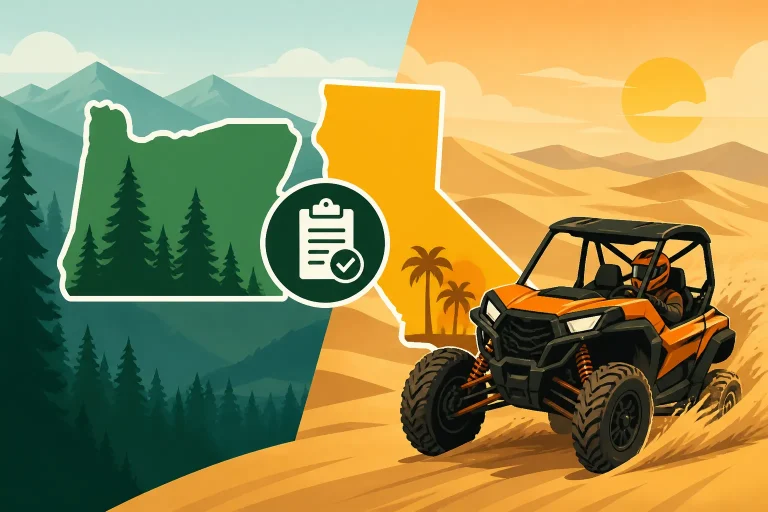
Out-of-state riders should check both California’s identification rules and the recreation-area permit rules. Some out-of-state credentials may be recognized for California OHV identification, while others are not. A street-legal plate also does not automatically satisfy the separate requirements for riding in a recreation area. If your vehicle is from Arizona, Utah or another state, do not rely on the fact that it can be legally registered at home. See Why Only Oregon and Nevada Count in California and Why a Street-Legal Plate Does Not Substitute.
Keep documentation for the specific machine you are riding. If a ranger asks about registration, a document showing a different VIN or plate number can create unnecessary confusion. Before the trip, compare the vehicle identification number on the machine with the one on the registration paperwork. If the machine has recently changed owners or you are still resolving a paperwork issue, carry the documents that explain the situation and confirm they are acceptable before riding.
Do not assume the tow vehicle is covered
A truck and trailer may bring your machine to the dunes, but the tow vehicle, trailer and off-highway machine are distinct vehicles. Permit requirements can depend on where each one is driven, parked and used. Confirm the current rules for the specific access area rather than assuming that a permit for the quad also covers the truck. The related question Does the Truck That Towed You Need a Permit? is worth checking when you are planning your setup.
If your tow vehicle stays on a road or in a designated parking area, that may differ from driving it into a permit-controlled recreation area. Pay attention to posted signs and instructions from staff. If you are unsure whether a particular vehicle needs a permit, ask before entering the area rather than waiting until a checkpoint.
How to Handle the Stop
When you reach a checkpoint, slow down, follow directions and stop where staff indicate. Keep your hands visible and avoid reaching suddenly into bags, storage compartments or a vehicle cab. If documents are stored out of reach, explain where they are and ask before retrieving them.
Answer questions calmly and directly. If you do not understand what is being requested, ask for clarification. For example, you can ask whether the ranger needs the machine’s registration, the recreation permit or both. These documents serve different purposes, and confirming which one is at issue can help you respond accurately.
Keep your paperwork organized before the trip. A simple folder or waterproof pouch can hold registration, permit information and any rider documents you may need. If several machines are traveling together, label the paperwork by vehicle or rider so you do not hand over a document for the wrong machine.
A phone photo or digital copy can help you find information quickly if a paper document is misplaced, but it may not be accepted in place of an original or required physical permit. Follow the official display and proof requirements. For tips on what to carry and how to present it, see Carrying Paperwork on the Sand and What a Ranger Accepts as Proof.
If a ranger points out a problem, listen to the explanation and ask what action is required. Do not argue on the roadway or attempt to leave while an officer is speaking with you. If you believe a citation or direction is mistaken, keep the interaction respectful and use the appropriate process afterward to ask questions or contest it. A checkpoint is not the place to settle a disagreement by continuing to ride.
A stop may also reveal that the issue is not paperwork. Rangers can enforce equipment requirements and restrictions on where a vehicle may operate. A valid permit does not authorize riding on a closed route, outside designated boundaries or in a way that violates safety rules. Check the current area map and posted notices before setting out, especially if you plan to travel between camp, a road and the dunes.
Prepare Before You Ride
A few checks at camp or at home can prevent most checkpoint delays. Use this process before driving into a dune area:
- Confirm the area and current access rules. Make sure the recreation area is open to your planned use and check for temporary closures or changed instructions.
- Match each machine to its paperwork. Compare the VIN or other vehicle identifier with the registration document. Keep each machine’s papers together.
- Confirm both kinds of authorization. Check the machine’s state identification requirements and the separate recreation permit requirements for the area.
- Check dates and display instructions. Make sure the permit covers your planned visit and is placed as directed.
- Inspect visible safety equipment. Verify required items are present, secured and usable before you reach an entrance.
- Plan where each vehicle will go. Know whether your tow vehicle, trailer and off-highway machine will enter, park or travel in different parts of the area.
- Carry supporting records. Keep relevant documents accessible, but do not rely on a phone image if the rules call for a physical permit or original document.
For dune riding, a flag is not just a decorative item. It helps other riders see a vehicle in terrain where dunes can block the view. Check that the flag and mast meet the current requirements and are attached securely. For more detail, see Why Dune Riders Need an 8-Foot Whip and Flag and Flag Size on California Dunes.
It also helps to keep a basic trip record: the permit confirmation, vehicle registration details and the location where you intend to ride. This is especially useful when a group has several machines or when one person handles the paperwork for everyone. Do not assume the lead rider’s documents cover the rest of the group; confirm what applies to each vehicle and rider.
If your permit is lost, damaged or difficult to read, resolve it before riding. A receipt or email may help show that you made a purchase, but it may not satisfy a display requirement. Contact the permit provider or responsible agency for instructions. Similarly, if your registration is expired, does not match the machine or is not recognized for California use, sort that out before heading to the checkpoint. California’s Nonresident OHV Use Permit explains a separate issue that may apply to visiting riders.
A checkpoint is easier to manage when the permit, machine identification and safety equipment are all in order. Treat the recreation permit as separate from state registration, check the current rules for every vehicle you plan to bring into the area, and follow staff directions at the stop. That preparation reduces confusion without guaranteeing that every inspection will be the same.
Disclaimer
This article is for general informational purposes only and does not constitute professional advice. Laws, prices and regulations vary by location and change over time. Consult a qualified professional for guidance on your specific situation.