California Rules for Electric Machines on Trails
An electric ATV, UTV, or dirt bike may be quiet and produce no exhaust, but that does not automatically make it legal on every California trail. The key questions are what type of vehicle it is, whether it has the required California identification or permit, and whether the land manager allows that machine on the route. Here’s how to check before you ride.
First, identify what kind of electric machine you have
“Electric machine” describes its power source, not its legal category. California trail rules can differ depending on whether your vehicle is an off-highway vehicle, an electric bicycle, or another type of vehicle. A machine’s appearance, pedals, or marketing name alone may not settle the question.
A purpose-built electric dirt bike, ATV, or side-by-side will generally need to be assessed as an OHV if it is designed for off-highway use. Its electric motor does not by itself exempt it from registration or permit requirements. By contrast, an electric bicycle may fall under a separate set of rules, and access for e-bikes can depend on the route and the agency managing the land.
Before you take a machine to a trailhead, gather its make, model, vehicle identification number or serial number, and manufacturer paperwork. Then confirm its classification and registration options with the California DMV or the relevant registration authority. If the vehicle is new or unusual, ask using its exact model and identifying number rather than relying on a dealer’s general description.
| What you have | What to check before riding |
|---|---|
| Electric ATV, UTV, or off-road motorcycle | Whether California classifies it as an OHV, and what registration or permit it needs |
| Electric bicycle | Whether the bike meets the applicable e-bike definition and whether that specific route allows e-bikes |
| Machine with a street-legal plate from another state | Whether California recognizes that registration for the planned route |
| Home-built or converted electric machine | Whether it can be identified and registered for the intended use |
A machine that cannot be registered for public-road use may still have an off-highway registration pathway, but don’t assume that a manufacturer’s claim of “trail legal” applies to every California trail. Trail access is controlled by the land manager, and local restrictions can be narrower than the machine’s general registration status.
For a broader look at how California classifies machines, see Registering an OHV in California and California OHV Registration for an Electric Machine. If your vehicle is a two-wheeled electric model, California OHV Registration for a Dirt Bike may also help clarify the paperwork questions to ask.
Registration and permits still matter
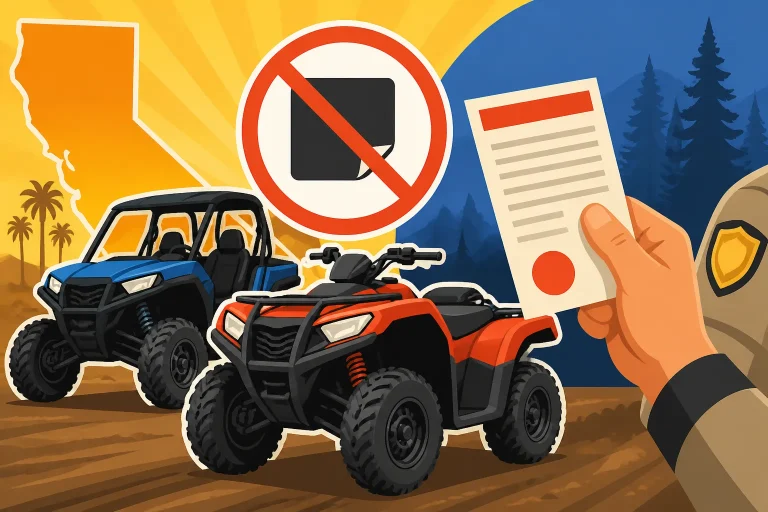
For an electric OHV used on California public lands, the power source does not remove the need to meet the applicable identification requirements. California OHV registration generally involves an identification plate and an associated sticker. Which category applies depends on the machine and its eligibility, not simply on whether it has an engine that burns fuel.
If your electric machine is registered in California, verify that its registration is current and that the identification plate is properly displayed. The plate and paperwork are useful during a ranger or gate check; a quiet motor is not proof of registration. California’s Green Sticker Explained describes the basic identification system, while Green, Red and Tan: California’s Three Stickers explains why sticker color matters for some machines.
Visitors should check reciprocity rather than assume that a registration from another state is accepted. California’s nonresident OHV rules include specific exceptions, and a street-legal plate or an out-of-state OHV document does not necessarily substitute for the California requirement. The electric motor does not create a separate exemption. Review California OHV Reciprocity: Only Two States and California’s Nonresident OHV Use Permit if you are bringing a machine from outside the state.
Keep registration papers or other required proof with you while riding. For advice on what to carry and how to present it during a check, see Carrying Registration Paper on the Sand. Requirements for a park, national forest, or other riding area can vary, so check the site’s current instructions before you leave home.
A useful pre-ride check is:
- Confirm the machine’s legal category and registration status.
- Check whether California identification, a nonresident permit, or another document is required.
- Make sure the plate or other required identification is attached and readable.
- Confirm that the specific riding area allows your vehicle type.
- Carry the documents the land manager requires.
If the DMV cannot confirm how a particular model should be classified, ask what manufacturer documents or inspections it needs to make a determination. Do not rely only on a seller’s description or on the fact that a similar model has been registered.
Trail access is separate from vehicle registration
Registration identifies the machine; it does not give it access to every trail. California riding areas may limit access by vehicle type, width, route designation, seasonal closure, or other site rules. An electric ATV that is properly identified may still be barred from a route that is too narrow or closed to that type of vehicle. A machine’s quiet operation does not override a posted restriction.
Check the official information for the specific area and route before riding. State Vehicular Recreation Areas, national forests, Bureau of Land Management lands, and local jurisdictions may use different rules and maps. If you plan to ride a forest route, a motor vehicle use map can show which routes are open to motorized use, but you should also check for current closures. California OHV Areas in the National Forests and Motor Vehicle Use Maps and Reading Them provide useful background.
Electric bicycles deserve particular care. They are not automatically treated like electric motorcycles or OHVs, and an e-bike’s access depends on the applicable vehicle definition and the rules for the trail. A path open to bicycles may not allow an electric motorcycle, while a trail open to certain motorized vehicles may still exclude e-bikes under local rules. Read the route’s posted signs and agency guidance rather than deciding from the vehicle’s top speed or motor sound.
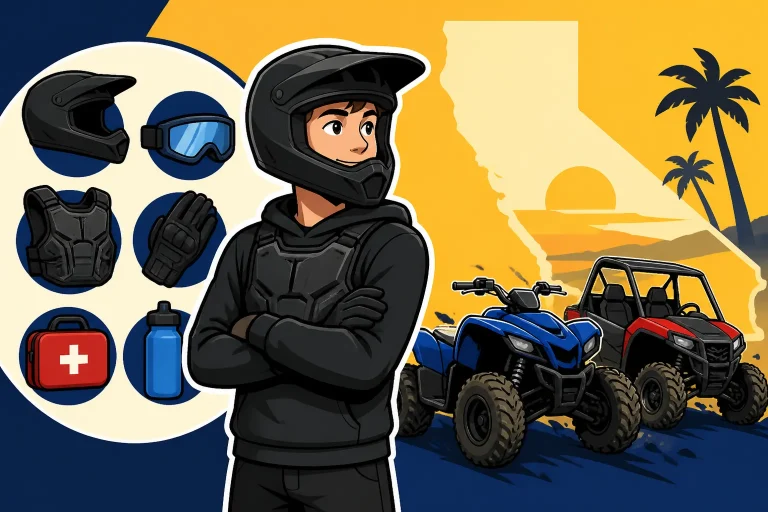
Other requirements can apply even when a machine is electric. Riders may still need to follow helmet, age, supervision, passenger, and route rules. A side-by-side’s seat belts and passenger arrangements do not become optional because the vehicle has a battery. For family trips, review California Rules for Riders Under 18 and California Helmet Law for UTV Passengers.
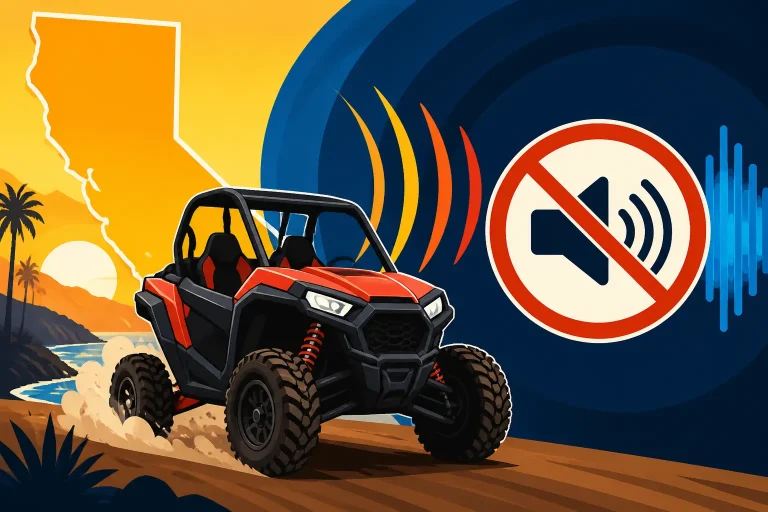
Noise and spark-arrester rules also need a careful reading. An electric machine has no combustion exhaust, so an exhaust sound test or exhaust-mounted spark arrester may not apply in the same way as it does to a gasoline machine. But that does not erase general noise restrictions, equipment rules, or requirements imposed by a particular riding area. If the rule’s wording is unclear for an electric model, ask the managing agency before arriving.
Plan for charging, transport, and changing conditions
A quiet electric machine can make conversations on the trail easier, but silence is not a safety feature on its own. Other riders may not hear you approaching. Slow down near blind corners, trail junctions, campsites, and busy staging areas. Use lights where appropriate, stay on designated routes, and give other trail users enough warning and space.
Range can change with terrain, rider load, speed, temperature, tire choice, and how often the machine climbs or accelerates. A manufacturer’s range figure may not reflect a long ride on soft sand or steep trails. Plan a route that leaves a practical reserve rather than assuming you can recharge at the trailhead or camp. Many riding areas do not provide charging facilities for personal vehicles, and access to an outlet is not permission to use it for vehicle charging.
Before a longer outing, check:
- The machine’s expected range under the conditions you will encounter.
- Whether the route has an easy way to turn back before the battery is low.
- Whether charging is available and explicitly permitted at your destination.
- How the battery and machine should be transported.
- Whether the route is open to your vehicle’s size and type.
Battery damage can create a serious hazard. Inspect the battery enclosure and cables before a ride, and do not use a machine with a visibly damaged battery or charging system. Follow the manufacturer’s handling and charging instructions, especially during transport or storage. If the machine gets wet, overheats, or suffers a hard impact, follow the manufacturer’s guidance before using or charging it again.
Conditions can change after you have planned a trip. Fire activity, weather, maintenance, special events, or resource protections can close a route or riding area. Verify access close to departure and obey barriers and signs on site. For general planning, California Trail Closures to Check First and California OHV Areas After a Storm cover issues that can affect otherwise suitable routes.
The most dependable approach is to treat an electric machine like any other motorized vehicle until the responsible agency confirms otherwise: establish its legal category, meet the registration or permit rules, and verify access for the exact route. The motor may be electric, but the rider is still responsible for identification, safe operation, and staying within designated areas.
Disclaimer
This article is for general informational purposes only and does not constitute professional advice. Laws, prices and regulations vary by location and change over time. Consult a qualified professional for guidance on your specific situation.