Green, Red and Tan: California’s Three Stickers
Navigating the world of California off-highway vehicle (OHV) stickers can feel like trying to solve a cryptic puzzle, leaving many riders scratching their heads and worrying about fines. It’s a common frustration to see different colored stickers on machines and wonder what they all mean for your access to the Golden State’s incredible riding areas. This guide is here to untangle the mystery of California’s Green, Red, and Tan OHV stickers, explaining what each one signifies and how it impacts where and when you can ride.
The Basics of California's OHV Sticker System
If you’ve spent any time around California’s vast network of OHV trails, dunes, and parks, you’ve undoubtedly noticed that not all off-road vehicles display the same kind of identification. It’s not just a decorative choice; these colored stickers are a critical part of the state’s strategy for managing OHV use, especially concerning environmental protection and responsible recreation. Understanding the system is the first step to enjoying your machine without unnecessary worry.
A Quick Look at California's OHV Registration
At its core, California’s sticker system is tied directly to the state’s OHV registration process. Think of the sticker as your machine's ID card for off-highway use. Just like your street vehicle needs current registration tags, your dirt bike, ATV, or side-by-side needs a current OHV sticker to be legally operated on public lands. This isn't an annual affair like car tags; instead, OHV registration in California operates on a [California OHV Registration Two-Year Cycle], expiring on June 30th of the second year.
The fees collected through this registration process are vital. They help fund the development, maintenance, and operation of California's State Vehicular Recreation Areas (SVRAs), as well as provide grants to other agencies that manage OHV opportunities. Without these fees, many of the places we love to ride simply wouldn't exist or be maintained to the standards we expect. So, while it might seem like just another hoop to jump through, it’s a direct contribution to preserving our riding experiences. Every time you see a new trail opened, a campground renovated, or a safety program implemented, a piece of your registration fee likely played a part.
The Purpose Behind the Colors
The reason for different colored stickers boils down to California's unique environmental regulations, particularly its stringent air quality standards. The state has been at the forefront of emissions control for decades, and OHVs are no exception. Rather than banning certain types of machines outright, California developed a system that categorizes vehicles based on their compliance with these emission standards. This allows for a wider variety of machines to be used, but with specific conditions attached.
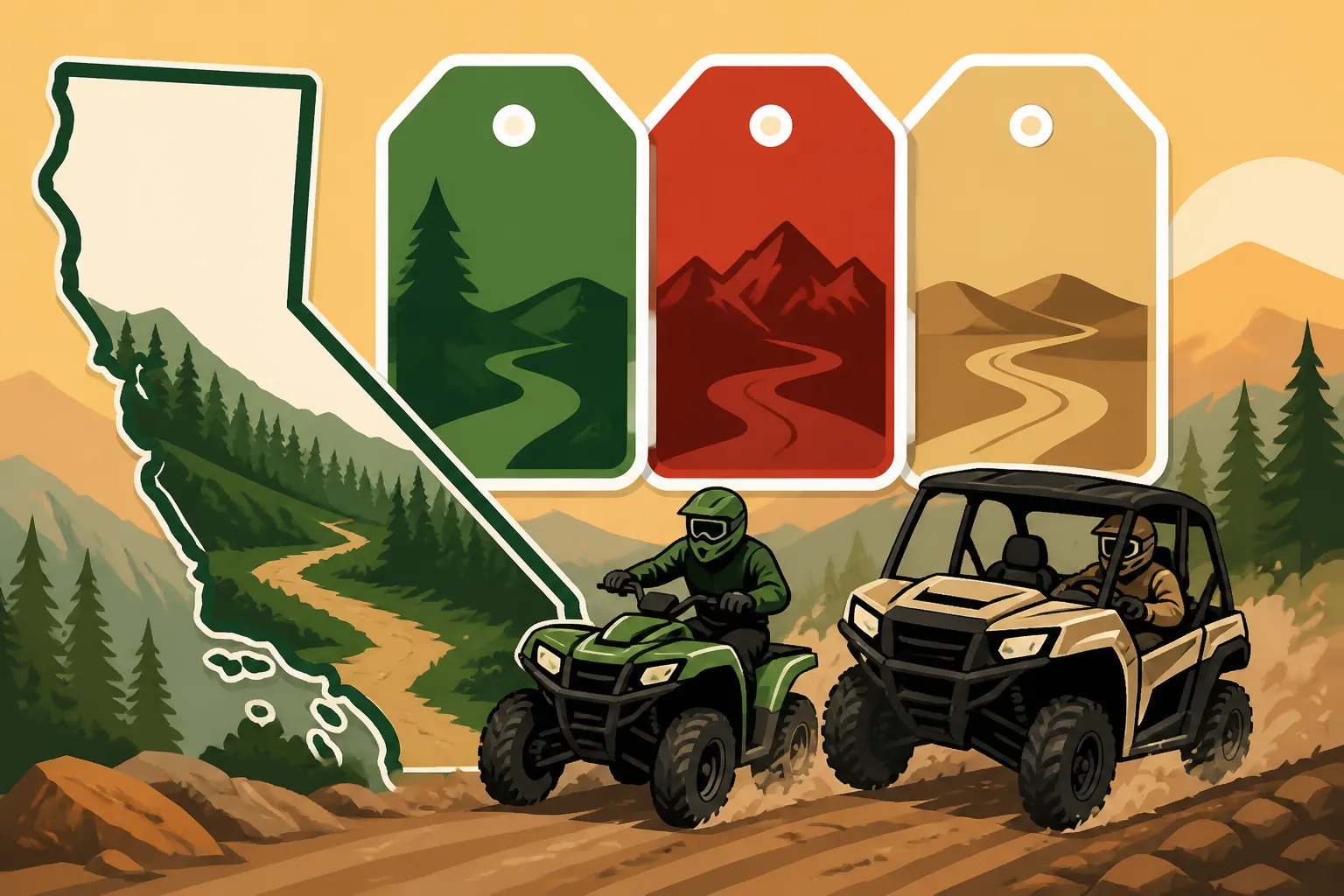
The colors—Green, Red, and Tan—act as a visual shorthand, instantly telling enforcement officers and park rangers whether a machine meets current California Air Resources Board (CARB) emission standards for year-round operation, if it's subject to seasonal restrictions due to non-compliance, or if it's strictly for closed-course competition. It’s easy to feel frustrated by the complexity, especially if you’re coming from a state with simpler rules, but this system is California’s way of balancing recreational access with its commitment to clean air. It’s about ensuring that our beloved riding areas remain accessible while also protecting the natural environment for future generations.
Deciphering the Green Sticker
The Green Sticker is, for most recreational riders, the holy grail of California OHV identification. It represents the fewest restrictions and the broadest access to public lands. If your machine proudly displays a green sticker, you’ve got the green light for year-round fun across the state’s diverse OHV opportunities.
What a Green Sticker Means for Riders
When your OHV has a Green Sticker, it means your machine is considered compliant with California’s emission standards, allowing you to ride it year-round in all designated OHV areas within the state. This includes state vehicular recreation areas, national forests, and Bureau of Land Management (BLM) lands. You won't have to worry about seasonal closures or restrictions that apply to other sticker types, which is a massive relief for planning those spontaneous weekend trips or long holiday adventures. Whether you're hitting the dunes of Glamis in the winter, exploring forest trails in the summer, or tackling desert washes in the spring, a Green Sticker ensures your access isn't limited by the calendar.
This unrestricted access is incredibly valuable, especially when you consider the sheer variety of riding environments California offers. From the high desert to coastal dunes, and from dense forests to wide-open playas, the Green Sticker is your passport to nearly all of it, anytime you want to go. It offers peace of mind, knowing that your machine is recognized as meeting the state's environmental requirements for continuous operation. It means fewer headaches when planning your trips and more time enjoying the ride.
Which Machines Qualify for a Green Sticker
Generally, a Green Sticker is issued to OHVs that are certified to meet California's emission standards. This typically includes most newer model year machines (those built in 2003 or later) that were manufactured for sale in California and display a CARB emission label. [What CARB Compliance Means in California] is crucial here; machines must have an emissions label specifically stating they are California compliant. You'll usually find this label on the frame, engine, or under the seat. Checking this label is one of the first things you should do when considering a purchase, especially if you're buying a used machine. The label will clearly indicate if the vehicle meets California standards.
Interestingly, many older machines, those built prior to 2002, also qualify for a Green Sticker. This is because the stricter emission standards for OHVs primarily began to be phased in around the 2003 model year. Therefore, many pre-2002 dirt bikes, ATVs, and other OHVs that were sold when standards were less stringent are automatically Green Sticker eligible. This is fantastic news for vintage enthusiasts or those who prefer the reliability of older models. It means that an older, well-maintained machine can offer the same year-round access as a brand-new, cutting-edge model. Always verify the emissions label or consult the DMV’s guidelines for specifics, but this broad eligibility for older models is a significant advantage for many riders. [Machines Built Before 2002 and the Green Sticker] delves deeper into this particular eligibility. When buying a used machine, always check its existing sticker or find the [California OHV Emissions Label Location] to confirm its status before you finalize the deal.
Getting and Maintaining Your Green Sticker
Obtaining a Green Sticker typically happens as part of your initial OHV registration process when you purchase a new or used machine in California. When you register your OHV at the Department of Motor Vehicles (DMV) or through an authorized registration service, they will assess your vehicle's model year and emission compliance to determine which sticker type you qualify for. If your machine meets the Green Sticker criteria, that’s the identification you’ll receive. The process usually involves submitting forms like the REG 343, proof of ownership, and potentially a vehicle verification, especially for out-of-state transfers or machines that have never been registered in California.
Maintaining your Green Sticker simply means keeping your OHV registration current. California OHV registration is valid for two years, and it expires on June 30th. You’ll receive a renewal notice in the mail, reminding you to pay your fees. Renewing is generally straightforward and can often be done online or by mail, preventing the need for an in-person DMV visit. [Renewing California OHV Registration] outlines this process in detail. Make sure to keep your sticker securely affixed to your OHV in the designated spot – typically the left rear fender for dirt bikes and ATVs, or a prominent location on side-by-sides. A lost or damaged sticker should be replaced promptly, as operating without a current, visible sticker can lead to citations. Staying on top of your renewal means uninterrupted access to California's amazing trails and dunes, without any unnecessary hassle.
Understanding the Red Sticker
The Red Sticker is often the source of much confusion and frustration among OHV riders in California. It signifies a significant limitation on when and where you can ride, primarily due to emission non-compliance. While not a ban, it does require careful planning to avoid fines and disappointment.
The Seasonal Riding Restrictions of the Red Sticker
The primary characteristic of a Red Sticker is its seasonal riding restriction. Machines with a Red Sticker are not compliant with California’s stringent emission standards for year-round operation. This usually applies to vehicles that were manufactured after 2002 and do not have a CARB-compliant emissions label, or those imported from other states that don't meet California's specific requirements. To mitigate their impact on air quality during certain periods, these machines are restricted to specific "open" seasons and "closed" seasons. Historically, this meant Red Sticker machines could only operate from October 1 to May 31 in designated OHV areas. The months of June, July, August, and September were generally off-limits for these vehicles due to air quality concerns during the warmer, often stagnant, summer air.
This seasonal schedule can be incredibly frustrating for riders who own Red Sticker machines. Imagine planning a summer camping trip to a national forest that has fantastic OHV trails, only to realize your machine is effectively "garaged" for those crucial months. It forces riders to plan their entire year around these dates, often missing out on prime riding conditions in the mountains or specific events held outside the permitted window. Many riders feel caught between their love for a particular machine and California's regulations, leading to tough choices about where and when they can recreate. The restrictions are strictly enforced at park gates and by rangers on patrol, so it’s essential to know the rules to avoid a citation.
Machines That Typically Receive a Red Sticker
The machines that receive a Red Sticker are typically those that do not meet California's stringent emission standards, specifically for model years 2003 and newer. This often includes many two-stroke dirt bikes that are still manufactured for competition or sale in other states, as well as some older four-stroke models that predate stricter CARB certification. It can also include off-highway vehicles that were originally sold in other states and subsequently brought into California. Even if a machine is perfectly legal and popular in, say, Arizona or Nevada, if it doesn't carry a California-specific emissions label for its model year, it's likely to be assigned a Red Sticker upon registration here.
This distinction highlights California's unique position in regulating emissions. A manufacturer might produce a specific model for the national market and a slightly different (and often more expensive) version specifically for California. If you buy the national version and bring it into California, or purchase a used machine that originated elsewhere, you'll likely find yourself with a Red Sticker. It's a common scenario that catches many unaware, especially those new to the state or those making an out-of-state purchase. Always check the machine's emissions label and its history before committing to a purchase if year-round riding is important to you.
Changes and Considerations for Red Sticker Holders
The landscape for Red Sticker machines is continually evolving in California. Riders who have owned these machines for a while know that regulations can shift, adding another layer of complexity. For example, there have been discussions and changes concerning the seasonal riding schedule and the future of Red Sticker machines. While the core principle of seasonal restriction remains, specific dates or areas can sometimes be adjusted. It's crucial for Red Sticker owners to stay updated on the latest rules, particularly any changes coming into effect.
One significant change to be aware of involves [Red Sticker Machines After January 2025]. The state has been working towards a goal where all new OHVs sold in California (from certain model years onward) meet Green Sticker requirements. This means the pool of new Red Sticker machines has been shrinking, and over time, the emphasis is on phasing out machines that don't meet the stricter standards for year-round use. For current Red Sticker holders, this means continuing to adhere to the seasonal calendar. For those considering buying a used Red Sticker machine, it's important to understand that its long-term utility in California may face increasing scrutiny or diminishing riding opportunities, depending on future regulatory decisions. It’s always best to check the latest California OHV regulations from official state sources to ensure you have the most current information for your specific machine.
The Niche of the Tan Sticker
While Green and Red Stickers cover the vast majority of recreational OHV use, there's a third, much less common type: the Tan Sticker. This sticker serves a very specific and limited purpose, and most casual riders will likely never encounter or need one.
What a Tan Sticker Allows
The Tan Sticker is exclusively for OHVs that are designated for closed-course competition use only. This means if your machine has a Tan Sticker, you are not permitted to use it for general recreational riding on public lands, such as state parks, national forests, or BLM areas, unless it is during an officially sanctioned competitive event. Think of motocross races, enduro competitions, or specific OHV events where the entire area is permitted and regulated for that particular use. Outside of these specific events, a Tan Sticker machine is effectively restricted from public OHV trails and open riding areas.
This distinction is critical. A Tan Sticker does not grant any general recreational riding privileges. It’s a permit for participation in structured, permitted events. This is why you rarely see Tan Sticker machines out on regular trails or in popular dune areas during casual riding days. Its purpose is to acknowledge that these specialized competition machines might not meet all the regular emission or noise standards for everyday recreational use, but their limited, controlled use in events is allowed under specific conditions. If you're not participating in sanctioned races or events, a Tan Sticker offers no benefits for your typical weekend ride. [California's Sanctioned Event Permit Explained] can give you more insight into how these events are permitted and regulated.
Eligibility for a Tan Sticker
Eligibility for a Tan Sticker is quite specific, targeting machines that are designed and manufactured solely for closed-course competition. These are typically high-performance dirt bikes or ATVs that often lack features commonly found on recreational OHVs, such as lights, subdued exhaust systems, or even some basic safety equipment required for general public land use. Crucially, these machines are not certified to meet California’s emission standards for recreational use. Their engines are often tuned for maximum performance, with emissions being a secondary consideration, given their very limited and specific operational environment.
A significant recent change is that most competition machines for model year 2022 and later that are sold in California will receive a Tan Sticker. [Tan Stickers on Model Year 2022 Machines] specifically addresses this. Previously, some competition-only machines might have been categorized differently or been subject to other restrictions. The Tan Sticker clarifies their status, ensuring that these high-performance, non-emissions-compliant machines are used strictly in environments where their impact can be managed, such as a closed race track or a designated event course. If a machine is built for the track and not the trail, a Tan Sticker is its likely designation in California.
The Limited Use Case for Tan Stickers
Given their specific eligibility and restricted use, the Tan Sticker has a very limited use case for the vast majority of OHV enthusiasts. Unless you are actively involved in competitive OHV racing or events that require such a specialized machine, you will likely never need or even encounter a Tan Sticker. Recreational riders seeking to enjoy California’s trails, dunes, and open areas will almost certainly be looking for a Green Sticker machine, or, with proper planning, a Red Sticker machine.
The intent behind the Tan Sticker is to support the vibrant OHV competition scene in California, recognizing that these events are an important part of the culture and economy. It allows racers and event organizers to operate specialized equipment without forcing it into the same regulatory box as a casual trail rider's machine. Event organizers are responsible for ensuring that all participating Tan Sticker machines adhere to the event's specific permits and environmental safeguards, which might include specific sound limits or spark arrester requirements even within a closed course, depending on the location and conditions. For casual riders, it's a sticker that's interesting to know about, but one that probably won't impact your personal riding experiences unless you decide to hit the race circuit!
Common Misconceptions and Choosing the Right Sticker
With three different sticker types, it's easy to get things mixed up. Many riders have questions, especially when it comes to buying a used machine or bringing one into California from another state. Understanding these common points of confusion can save you a lot of hassle and ensure you're compliant with the rules.
Is My Machine Green, Red, or Tan?
Determining whether your OHV qualifies for a Green, Red, or Tan Sticker is one of the most important steps for any California rider. The easiest way to tell is to look at the machine's existing sticker if it has one. If you're buying a used OHV, this is crucial. However, sometimes stickers are old, faded, or missing. In that case, the key is the machine's emissions label, which is typically found on the frame, engine, or under the seat. This label will state whether the machine is California emission compliant (which usually means Green Sticker eligible for model year 2003 and newer) or if it's for competition use only (Tan Sticker), or if it's a 49-state compliant machine not specifically certified for California (likely Red Sticker for 2003+ models).
For older machines, generally pre-2002 models, they are typically Green Sticker eligible regardless of an explicit California emissions label. The state's emission rules primarily focused on model year 2003 and beyond. When buying a used machine, always verify its status. Ask the seller about the sticker, inspect the emissions label yourself, and if in doubt, you can sometimes cross-reference the VIN with a knowledgeable DMV representative or an OHV dealership. Making sure you know what sticker your machine qualifies for before you finalize a purchase can prevent future headaches and ensure you can ride when and where you want. For a smooth transaction when buying from a private seller, you might consider using a legal document service like LawDepot to create a robust bill of sale that clearly outlines the machine’s current registration status and condition. This adds a layer of protection for both buyer and seller. [Buying a Used Quad in California] offers more tips on this process.
The Impact of Out-of-State Machines
Bringing an OHV from another state into California can often lead to the "Red Sticker surprise" for unsuspecting owners. While some states have similar OHV registration or permit systems, California's specific emission standards mean that an OHV perfectly legal in Arizona, Oregon, or Nevada might not automatically qualify for a Green Sticker here. If your out-of-state machine is a 2003 model year or newer and does not have a California-specific emissions label, it will likely be assigned a Red Sticker when you try to [Registering an Out-of-State Machine in California]. This means you’ll be subject to the seasonal riding restrictions, even if you’ve never faced them before.
For non-residents simply visiting California with their OHV, the rules are slightly different. Non-residents generally need a California Nonresident OHV Use Permit, regardless of their home state’s registration. However, California does have reciprocity agreements with Oregon and Nevada, meaning if your machine is properly registered and stickered in those two states, you might be exempt from needing the California nonresident permit. But even with reciprocity, the fundamental Green/Red/Tan sticker rules still apply to your machine's type when riding on California public lands. So, while you might not need a permit, your Oregon-registered 2005 two-stroke might still be subject to Red Sticker seasonal restrictions on California trails. [Do Nonresidents Need California OHV Registration?] provides more clarity on this often-confusing aspect. Always double-check California’s current regulations for non-residents before you head out on your trip to avoid any unwelcome surprises.
Why the Sticker System Exists
The elaborate sticker system in California isn't just about making things complicated; it's rooted in the state's deep commitment to environmental protection, particularly air quality, and the sustainable management of its natural resources. The primary driver behind the Green and Red Sticker distinction is air pollution control. California faces unique geographical and meteorological conditions that can trap pollutants, leading to significant air quality challenges. By differentiating between low-emission (Green Sticker) and higher-emission (Red Sticker) OHVs, the state aims to regulate the collective impact of these vehicles, especially during warmer months when smog formation is more prevalent.
Furthermore, the fees collected through the OHV registration and sticker program play a crucial role in funding the very infrastructure that supports our riding. These funds go into the OHV Trust Fund, which is used for the acquisition, development, and operation of state vehicular recreation areas, as well as providing grants to federal and local agencies for OHV recreation projects and conservation efforts. [What California OHV Fees Pay For] explains how these contributions directly benefit riders. So, while the system can feel a bit cumbersome, it's designed to ensure that OHV recreation can continue in a state with strict environmental mandates, allowing us to enjoy our passions while also striving to protect the beautiful landscapes we ride through.
Comparing California's OHV Stickers
To help clarify the differences, here's a quick comparison of California's three OHV stickers:
| Feature | Green Sticker | Red Sticker | Tan Sticker |
|---|---|---|---|
| Emission Compliance | Meets California emission standards (CARB) | Does NOT meet California emission standards | Designed for competition, not CARB compliant |
| Riding Season | Year-round access | Seasonal restrictions (Historically Oct 1 – May 31) | Sanctioned events ONLY |
| Typical Machines | Pre-2002 models; Post-2002 California-spec | Post-2002 49-state models; non-CA compliant | Post-2022 competition-only machines (CA-sold) |
| Primary Use | Recreational riding on public lands | Recreational riding (restricted season) | Closed-course competition and authorized events |
| Where to Get It | Part of standard OHV registration | Part of standard OHV registration | Part of standard OHV registration for specific competition machines |
This table should give you a quick reference point for the main characteristics of each sticker type. Remember, always verify the specific status of your machine or one you plan to purchase, as regulations and interpretations can sometimes vary.
Disclaimer
This article is for general informational purposes only and does not constitute professional advice. Laws, prices and regulations vary by location and change over time. Consult a qualified professional for guidance on your specific situation.