How Long a California Combined-Use Segment Can Be
It's incredibly frustrating when you want to take your off-highway vehicle (OHV) from your campsite directly to a nearby trail, only to be met with confusing rules about what roads you can actually use. California's laws around "street legality" for ATVs and UTVs are notoriously complex, especially when it comes to connecting trails via public roads. This guide is going to meticulously break down the specific limitations on how long a designated "combined-use" segment can be, and what that truly means for your riding adventures.
The Frustration of Street Legality in California for OHV Riders
For anyone who loves hitting the trails, dunes, or open desert in California, the idea of seamlessly connecting riding areas by briefly using public roads is often a pipe dream. You see videos from other states where riders cruise down quiet county roads to get from point A to point B, and it just seems so straightforward. Then you try to apply that logic here in California, and you quickly realize it's a whole different ballgame. The rules are intricate, often seem restrictive, and can lead to a lot of head-scratching – or worse, a costly citation.
The core frustration stems from the fundamental difference in how California views OHVs compared to street-legal vehicles. Your side-by-side, no matter how much aftermarket equipment you've put on it – even robust upgrades from companies like SuperATV – is generally considered an off-highway vehicle first and foremost. This designation carries with it a strict set of regulations regarding public road use, designed to separate these machines from the daily flow of traffic. It's not about whether your UTV can handle pavement; it's about whether the law allows it to. This distinction is often the biggest hurdle for riders hoping to make their machine truly versatile.
Why California Is Different for OHVs on Roads
California has a long history of regulating off-highway vehicle use, driven by factors like environmental protection, public safety, and managing the impact on local communities. While other states might have more relaxed interpretations, California generally maintains a very firm stance: if it's not registered and equipped for street use like a car or motorcycle, it belongs off the paved road. This isn't just about the type of tires you have or if you remembered your turn signals; it's deeply rooted in the state's vehicle code.
The state doesn't allow ATVs or UTVs to be converted into fully street-legal vehicles in the way some other states do. While you might add a horn, mirrors, and lights to meet basic requirements, these additions don't magically grant you full access to public highways. This is a common misconception, and many riders learn the hard way that a well-equipped machine, even with all the bells and whistles, still falls under the "off-highway" umbrella when it comes to road use. This strict framework is why the concept of "combined-use" segments even exists – it's a very specific, limited exception to a broad rule.
The Dream of Riding From Camp to Trail
Imagine you've set up a perfect basecamp just a short distance from the trailhead. Maybe it's a stunning overlook at Ocotillo Wells, or a quiet spot near the entrance to Hungry Valley. Your ideal scenario is to simply hop on your quad or side-by-side, drive a mile or two down a paved or graded road, and then seamlessly transition onto the dirt trails. This dream often bumps up against the harsh reality of California's combined-use laws.
That short drive, which seems so logical and convenient, is precisely where the regulations become critical. You're not looking to drive to the grocery store or commute to work; you just want to connect two points within an OHV recreation area, or get to that one trail you've been wanting to explore. This desire for direct access and the ability to ride rather than constantly loading and unloading your machine on a trailer is a major draw for many OHV enthusiasts. Unfortunately, the state's stringent rules mean that unless that specific short stretch of road has been designated for combined use, you're out of luck and potentially facing a fine. It's a logistical headache that forces many riders to consider [Trailering Instead of Riding in California] for any significant distance on pavement.
Understanding California Combined-Use Highway Designations
California Vehicle Code (CVC) Section 38026 is the key piece of legislation that allows for these specific, limited exceptions to the general rule prohibiting OHVs on public roads. It's a provision designed to facilitate OHV use by creating designated corridors, but it comes with very strict parameters, especially concerning length. Understanding these designations is crucial for any rider hoping to avoid legal trouble while navigating the fringes of public land.
Combined-use highways are not just any road; they are specific segments that have undergone a formal designation process by the appropriate local or state agency. This isn't something you can decide for yourself, nor can you assume a road is combined-use just because it's in a rural area or connects to a popular riding spot. These are official designations, often marked with specific signage, that allow OHVs to operate on a segment of road that would otherwise be off-limits. They exist to bridge gaps, not to create extensive OHV travel networks on public roads.
The Statutory Limit: Why 3 Miles Isn't Just a Suggestion
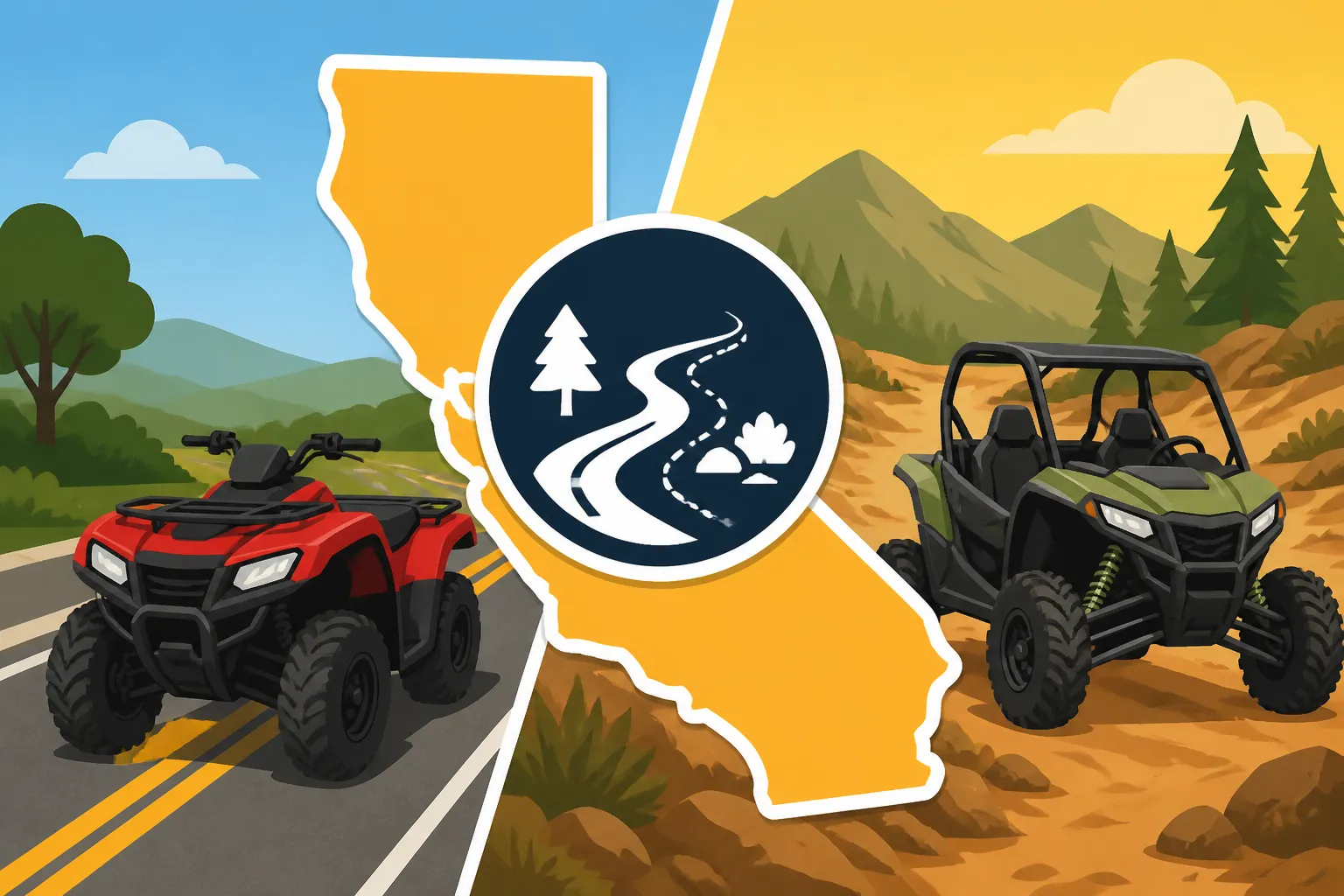
Here's the critical point: a combined-use highway segment in California cannot exceed three miles in length. This isn't a guideline; it's a hard, statutory limit embedded in the California Vehicle Code. Specifically, [California's 3-Mile Combined-Use Cap] is a non-negotiable aspect of the designation. This means that if an agency wants to allow OHVs on a paved road to connect a campground to a trail, that segment must be three miles or less. If the logical connection point is four miles away, that entire road segment cannot be designated as combined-use under this provision.
This limit is a direct reflection of the state's cautious approach to mixing OHV traffic with regular vehicular traffic. The intent is to provide minimal, essential connectors, not to open up vast portions of the road network to off-highway machines. For riders, this means constant vigilance and careful route planning. You can't just keep going if the trail you want is "just a little further" than three miles down a designated combined-use road. Exceeding this limit, even unknowingly, can lead to serious consequences, as you'd be riding an unregistered or improperly used vehicle on a public highway. For an in-depth understanding of the basic rules, you might want to review [California Rules for Crossing a Public Road], as combined-use segments are an extension of this careful consideration.
Who Designates These Segments and How
The authority to designate combined-use highway segments rests with specific governmental agencies, not with individuals or OHV clubs. According to [What California's CVC 38026 Lets an Agency Designate], the Department of Parks and Recreation, the Department of Fish and Wildlife, the United States Forest Service, the Bureau of Land Management, or a local authority (like a county board of supervisors or city council) can designate a highway segment for combined use.
The process is generally quite formal and involves coordination with the California Highway Patrol (CHP). The designating agency must determine that the segment is safe for combined use and that the designation will not have an undue impact on public safety or traffic flow. This often involves traffic studies, public hearings, and careful consideration of alternative routes. Once designated, these segments are typically marked with clear signage indicating that OHVs are permitted. Without this official designation and signage, assuming a road is fair game for your OHV is a risky gamble. Even well-maintained dirt roads that look like trails might actually be public county roads, with different rules entirely.
Practical Implications of the 3-Mile Rule
The strict 3-mile limit has very real, day-to-day consequences for California's OHV riders. It means you can't just casually link up distant riding areas. It demands careful planning, a keen eye for signage, and a good understanding of local regulations. Ignoring these details can quickly turn a fun day of riding into an expensive lesson in California Vehicle Code.
This rule also means that many roads that seem like perfect connectors are simply not eligible for combined-use designation because they exceed this length. Riders often scratch their heads, wondering why a particular stretch of road isn't "open" to OHVs, and more often than not, the 3-mile cap is the silent reason. It requires you to be realistic about your expectations for road use and adapt your strategy accordingly.
Planning Your Route Around Short Segments
Given the 3-mile cap, planning your OHV route in California requires a "segment by segment" approach. You can't just map out a long road journey on your GPS and expect to use your OHV for it. Instead, you need to identify where actual combined-use segments exist, understand their exact start and end points, and then figure out how to bridge any gaps longer than three miles.
This might mean:
- Checking official maps: Always consult current Motor Vehicle Use Maps (MVUMs) for National Forests or BLM land, and local county maps for any designated routes. These maps are invaluable for understanding [Motor Vehicle Use Maps and Reading Them] and can often show designated OHV routes and combined-use segments.
- Looking for signage: Designated combined-use segments will be clearly marked. Never rely on the absence of "no OHV" signs as permission. Look for positive signage indicating OHV use is permitted.
- Utilizing staging areas: If a desired trail is further than three miles down a non-designated road, you'll need to trailer your machine to a closer staging area or a different entry point. This is where a reliable trailer and tow vehicle become indispensable for serious riders.
- Local knowledge: Sometimes, local OHV clubs or ranger stations can provide the most up-to-date information on designated routes, as these can change.
For many riders, this means making tough choices. Do you really need to try to connect those two points by road, or is it safer and more legal to simply trailer your [California OHV Registration for a UTV] to the next staging area? Companies like SuperATV offer excellent gear for making your machine trail-ready, but even the best modifications can't change state law.
Enforcement and Consequences of Exceeding the Limit
The California Highway Patrol (CHP) and local law enforcement take OHV road-use regulations seriously. If you're caught riding your OHV on a public highway that isn't a designated combined-use segment, or if you exceed the 3-mile limit on a designated segment, the consequences can be significant.
Here's what you might face:
- Citations and Fines: You could be ticketed for operating an unregistered vehicle on a public highway, or for operating a vehicle not designed or equipped for highway use. [California Fines for Riding a Public Road] can be substantial, often hundreds of dollars, and can quickly add up if multiple violations are cited.
- Vehicle Impoundment: In some cases, your OHV could be impounded, leading to towing and storage fees on top of any fines. This is a massive headache and an expensive ordeal.
- Safety Risks: Beyond the legal penalties, riding an OHV on a paved road, especially one not designed for it, poses significant safety risks. OHVs handle very differently on pavement than on dirt, and their speed and maneuverability often don't match that of regular street traffic. This is a major reason why these laws exist in the first place.
It's much safer and less costly to err on the side of caution. If in doubt, don't ride your OHV on the paved road. Trailer it, find a different access point, or stick strictly to designated trails and OHV areas.
Beyond the 3-Mile Limit: Exceptions and Other Road Types
While the 3-mile combined-use limit is very firm for designated highway segments, it's important to understand that not all roads are created equal in California's OHV landscape. There are other types of roads where OHVs might have more, or different, access. It's crucial not to confuse these different categories, as each comes with its own set of rules and limitations.
For instance, the conversation around [California's Inyo County Pilot Ended in 2025] showed that even specific, experimental programs with longer segments have a sunset clause, reinforcing the state's general stance on strict limits for OHV road access. These are very specific carve-outs, not a broad loosening of regulations.
| Road Type | Typical OHV Access | Length Restrictions (for OHVs) | Designation Authority | Common Purpose |
|---|---|---|---|---|
| Combined-Use Highway Segment | Limited, designated segments. | Max 3 miles | State Parks, BLM, USFS, Local Authority | Connect trails/camps, minimal road use |
| County Dirt Roads | May be open if not posted otherwise, local rules vary. | No statutory length limit; varies | County Boards of Supervisors | Access to rural properties, some recreation |
| Forest Service Roads | Varies by MVUM; some allow OHVs, some don't. | Varies greatly; check MVUM | US Forest Service | Access to forest lands, recreation, logging |
| Designated Trail Connectors | Specific non-highway routes, often short. | Varies by specific designation | Land Management Agencies | Link adjacent trails or staging areas |
| Paved State Highways/Freeways | Generally PROHIBITED | N/A | N/A | Primary thoroughfares, street-legal vehicles only |
County Roads and Local Ordinances
Some county roads, particularly in remote or sparsely populated areas, might allow OHV use for certain purposes or on specific segments. These are often unpaved dirt roads. The key here is that local ordinances supersede state general prohibitions if they specifically allow OHV use. This is not a blanket permission; it requires proactive checking of the county's specific regulations.
For example, a county might have an ordinance allowing [Riding a County Dirt Road in California] if it's not paved, not signed as prohibited, and OHVs are being used for agricultural purposes or to access private property. However, even these local allowances often come with caveats regarding speed limits, time of day, or specific equipment requirements. It's vital to research the specific county you plan to ride in. What's legal in Imperial County might be strictly forbidden in San Bernardino County, even on similar-looking roads. Never assume; always verify.
Designated Trail Connectors
Beyond the formal combined-use highway segments, some OHV areas and land management agencies create "designated trail connectors." These are typically unpaved routes, often more like trails themselves, that link different parts of a riding area or connect a staging area to a main trail system. These connectors are integral to a comprehensive network and are typically managed directly by the land manager, like the Bureau of Land Management (BLM) or the US Forest Service.
While these aren't "highway" segments in the traditional sense, they serve a similar function by providing legal access between points. They are typically clearly marked on OHV park maps or MVUMs. These are distinct from the CVC 38026 combined-use highways in that they are almost always off-highway routes themselves, rather than shared-use paved roads. Always confirm you are on a designated route before venturing onto one of these connectors. Understanding the subtle differences between these types of access points is crucial for responsible and legal riding in California. Your ability to get from one point to another on your [California OHV Registration for a Dirt Bike] often hinges on these specific, designated paths.
Disclaimer
This article is for general informational purposes only and does not constitute professional advice. Laws, prices and regulations vary by location and change over time. Consult a qualified professional for guidance on your specific situation.