Dust Storms in the Imperial Valley
Dust storms can turn a familiar Imperial Valley ride into a confusing, low-visibility situation in minutes. At Glamis and the Imperial Sand Dunes, blowing sand can hide other riders, landmarks, and the route back to camp. This guide explains how to prepare, what to do when visibility drops, and how to decide when it is safer to stop riding.
Why dust storms are a serious riding hazard
How wind and blowing sand affect visibility
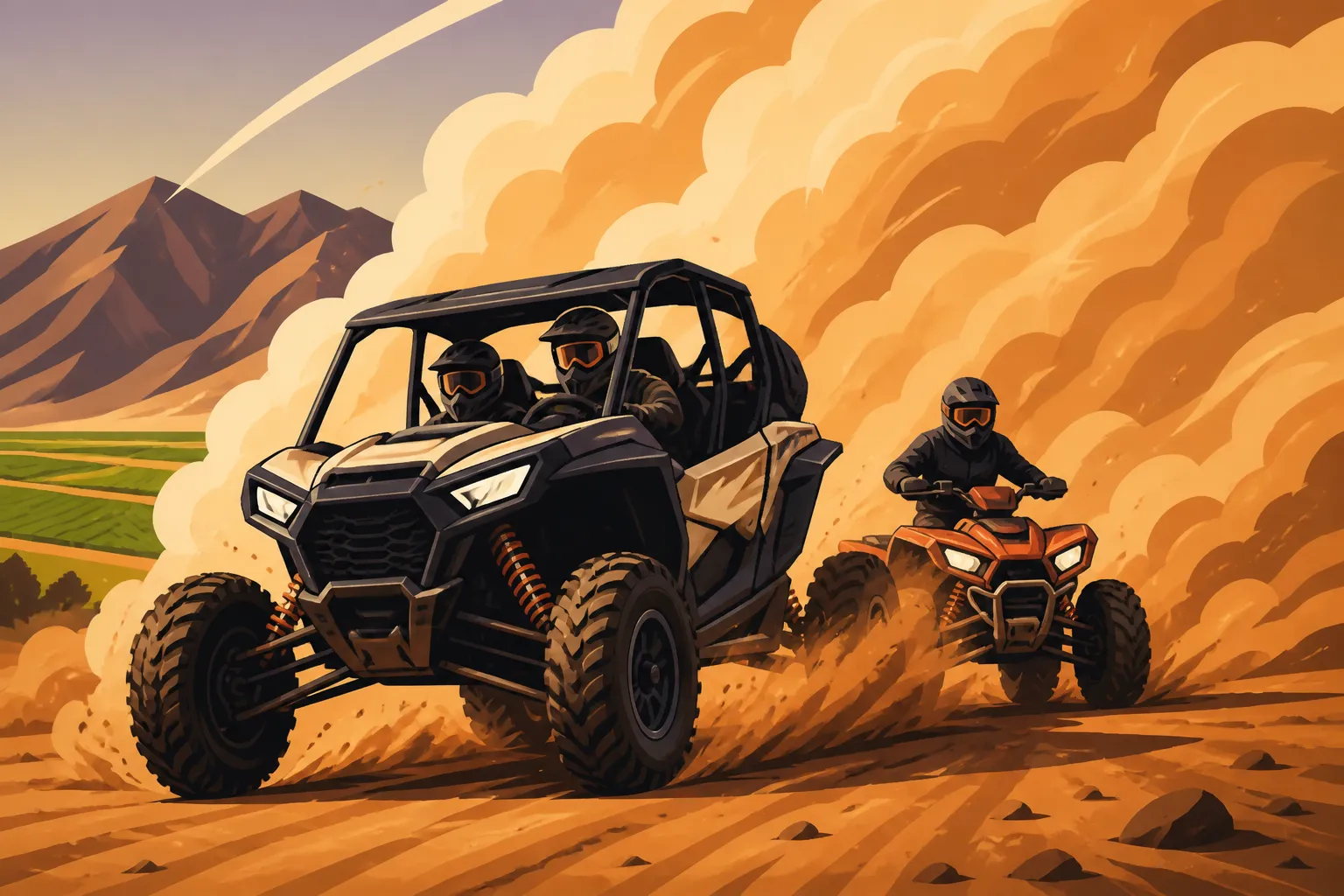
A dust storm does more than make the ride uncomfortable. Wind can lift sand from exposed slopes, washes, and open stretches of the Imperial Sand Dunes, creating a haze that makes it difficult to judge distance and direction. A rider who could see a dune crest or another machine clearly moments earlier may suddenly have trouble seeing anything beyond a short stretch of trail.
Visibility can change unevenly. One section may be dusty but manageable while a nearby open area is almost impossible to navigate. That makes it risky to assume conditions are safe just because the camp or parking area still looks clear. Wind can also blow sand into goggles, sting exposed skin, and make it harder to communicate with companions.
The danger increases when multiple vehicles are moving through the same area. A rider may be hard to spot against the sand, especially near a dune face or in a busy riding zone. If someone brakes or turns unexpectedly, a following ATV or UTV may not have enough time to react. For a closer look at how conditions affect dune visibility, read Wind and Visibility on the Dunes.
Why the Imperial Valley deserves extra caution
The Glamis area is a vast, open landscape, and dunes can make it difficult to maintain a reliable sense of direction. A familiar route may look different when wind softens tracks or blows sand across them. A line of machines can also scatter as riders respond to changing visibility, leaving a group separated when everyone thought they were staying together.
Riders should be especially cautious around popular areas such as Gecko Road, Gordon’s Well, and the open riding areas near the Imperial Sand Dunes. These names may help you plan, but they are not substitutes for knowing your location, having a meeting plan, and checking conditions before setting out. The broad riding area is part of the appeal; in poor visibility, that same openness can make it harder to find shelter or retrace your route.
If you are new to the region, start with a clear understanding of the terrain and access points. Imperial Sand Dunes, California’s Biggest Dune Field offers useful context for planning where you intend to ride. Make sure everyone in your group knows the agreed destination and what to do if the group becomes separated.
Weather cues to take seriously
A rising wall of dust or a fast change in visibility is a reason to reassess the ride immediately, not to push on until the next landmark. Watch for wind picking up, sand streaming across the ground, and the horizon becoming harder to distinguish. If you can no longer see your riding partners clearly, the group’s spacing and speed may already be unsafe.
Do not rely on a single cue. Conditions can look different from camp than they do out on an exposed dune, and a forecast cannot tell you exactly what is happening along your route. Before leaving, check available local weather and land-management updates, then continue paying attention to what you see and feel on the ground.
A practical rule is to decide in advance what level of visibility will make your group stop. That removes the pressure to debate the decision while riding in worsening conditions. If a rider is already struggling to see the next person or identify the route, it is time to get off the trail and regroup.
How to prepare before an ATV or UTV ride
Make a ride plan that still works if you get separated
Agree on the route, intended turnaround point, and expected return before leaving camp. Choose a recognizable meeting location and tell every rider what to do if the group splits up. For example, the plan might be to stop in a safe place, stay with the machine, and avoid trying to search for the group through low visibility.
Keep the plan simple enough that everyone can remember it under stress. A long chain of turns and landmarks is difficult to follow when the wind has erased tracks or visibility is reduced. If you use a digital map, save or download the area you need before leaving and make sure riders know how to use it. Tools such as onX Offroad can help you review a route and understand your position, but a screen should not replace a group plan or good judgment. Battery life, device damage, and poor visibility can all limit how useful a map is in the moment.
Set a check-in time and discuss what counts as a missed check-in. If one rider has less desert experience, make sure they know the plan without having to follow someone else’s lead blindly. Also talk through the possibility that the group may need to turn around or stop before reaching its planned destination.
Carry equipment for dust, communication, and navigation
Wear properly fitted eye protection and a helmet appropriate for your machine and riding area. Goggles can help shield eyes from blowing sand, but they need to fit comfortably and work with your helmet. A face covering can reduce exposure to dust, though it should not interfere with breathing, vision, or communication. Store spare eye protection where it can be reached without unloading the vehicle.
Bring a charged phone, a backup power source if appropriate, and a map available offline. Pack water, basic first-aid supplies, and clothing that covers exposed skin. In a UTV, check that belts and doors or nets are in working order; in an ATV, keep loose items secured so they cannot catch or fall off. If your group uses radios, confirm that they work before riding and agree on a simple channel and check-in routine.
A navigation app can help riders orient themselves, but it cannot tell you that a route is safe to cross right now. Marking a camp location in onX Offroad or another mapping tool may be useful for orientation, especially when the terrain looks unfamiliar. Still, make sure everyone understands the route and does not depend on one person’s phone as the group’s only navigation plan.
Use the same preparation mindset for heat and fatigue. Wind, dust, and sun can make a ride more tiring than expected, and tired riders are more likely to make poor decisions. Review Heat Risk on Desert Sand as part of your planning, particularly for long rides or days when you expect to be away from camp for several hours.
| Situation | Safer response | Avoid |
|---|---|---|
| Dust is increasing but you can still see your group and route | Slow down, increase spacing, and head toward a known safe stopping point if conditions continue worsening | Racing to reach a distant landmark |
| You can no longer see your riding partners clearly | Stop in a safe location away from active traffic, regroup if possible, and communicate your position | Continuing at normal speed or following tracks you can barely see |
| You are separated from the group | Follow the group’s agreed plan, stay with your machine in a safe place, and use your communication or navigation tools | Roaming around in search of camp |
| Wind and visibility are poor for an extended period | Pause the ride until conditions improve, or end the outing if they do not | Treating the pause as a short inconvenience and setting off repeatedly |
Check access, routes, and machine details before leaving
A ride plan should include more than the route. Confirm that the riding area you intend to visit is open and that you understand the rules and equipment requirements that apply there. Conditions and closures can change access, and a route shown on a map does not guarantee that it is open or suitable for riding. Check California Trail Closures to Check First before you head out.
Make sure your machine is in good working order. Check fuel, tires, steering, brakes, lights, and any safety equipment required for your machine. Secure registration and other required paperwork so it will not blow away or become buried in sand. If your route or riding style calls for a dune flag, inspect its attachment and visibility before departure. California’s Dune Flags and Whips explains why flags matter in dune riding and how to think about visibility around other vehicles.
Finally, set expectations with your group. A dust-related turnaround is not a failed trip; it is a sensible response to changing conditions. Agree that any rider can call for a stop if they cannot see safely, without needing to persuade the rest of the group first.
What to do when visibility drops
Slow down and stop riding before you lose control
When dust begins to obscure the route, reduce speed gradually and give other machines more room. Avoid sudden turns or hard braking unless there is an immediate hazard. Do not assume that the rider behind you can see your movements. In a group, use the agreed communication method and make sure the last rider knows that the group is slowing or stopping.
If you cannot clearly see the path ahead or other riders, move out of active travel lanes and stop in a location that offers the best available protection from passing traffic and blowing sand. Do not stop just over a dune crest, in the middle of a frequently traveled route, or where another rider may come upon you without warning. A safer stopping point is one that is visible to approaching vehicles and does not place your group in their path.
Once stopped, keep your group together if it is safe to do so. Make sure everyone is accounted for, and check whether anyone needs assistance. If the dust is severe, avoid trying to ride back to camp just because it is nearby on the map. The shortest route may cross a busy area or require navigating terrain you cannot see well.
Keep yourself visible and avoid confusing movements
Use lights or other visibility equipment when appropriate and permitted, but do not assume they make you easy to see through heavy dust. A flag can help other riders notice a vehicle in dune terrain, but visibility depends on the conditions and surroundings. California’s Dune Flags and Whips is a useful companion read if you are checking your setup before a trip.
Stay off the active riding line as much as possible while stopped, and avoid standing where a moving vehicle could approach unexpectedly. If you need to communicate, use a radio or phone when available and keep messages clear: say where you are, who is with you, and whether anyone needs help. If you use a navigation app such as onX Offroad, check your location only from a safe stationary position rather than trying to read a screen while moving.
Do not split up to search for a person who has become separated unless there is an immediate emergency and your group has a safe, coordinated way to do so. One rider moving off alone in poor visibility can quickly become another person who needs help. Follow the plan you discussed before the ride and communicate with the separated rider if possible.
Decide whether to wait, turn back, or call for help
There is no single amount of waiting time that makes every dust storm safe. Use the actual conditions, your group’s experience, the remaining daylight, water supply, and the distance to a secure location to decide what comes next. If visibility remains poor, waiting in a safe place may be preferable to riding. If conditions improve enough to travel, take a familiar route at a conservative speed and stay together.
Turn back only if you can do so without entering a more dangerous route. Do not let the pressure to make it back for dinner, meet another group, or finish a planned loop overrule what you can see. If you are uncertain which direction is safe, stay put and communicate rather than guessing. A map can support that decision, but it cannot account for a sudden change in traffic, terrain, or wind.
If someone is injured, a machine is disabled in a hazardous location, or your group cannot safely reach shelter, contact emergency services when possible. Give your location as clearly as you can, including a named access point, nearby road, coordinates from a device, or another recognizable reference. Keep the group together and conserve phone battery while waiting.
Building safer habits for future desert rides
Choose conditions and routes with your group in mind
A route that is manageable for experienced riders in clear conditions may be a poor choice for a mixed group or a day with strong, shifting wind. Consider the least experienced rider, the capability of each machine, and how easily you could stop or return if conditions change. Shorter routes with clear turnaround points can be a better choice than a long loop across unfamiliar terrain.
Busy riding areas require extra attention because other people may make unpredictable moves, especially when visibility is changing. Keep spacing generous, avoid cresting dunes close behind another machine, and do not tailgate simply because you are following a familiar track. Riding Etiquette on a Busy Dune covers habits that help reduce confusion and collisions when many riders share the same area.
If you are unsure whether a route or area fits your experience, choose a more conservative option. A ride near a familiar camp or a clearly understood access point is easier to manage than a long cross-desert trip when wind is picking up. You can always return for a more ambitious ride on a day with better conditions.
Debrief the ride and improve your plan
After the ride, talk through what worked and what felt uncertain. Was the meeting point easy to identify? Did everyone know how to contact the group? Could each rider find the planned route without relying on a single phone? These small questions often reveal a simple fix, such as saving an offline map, adding a radio check, or setting an earlier turnaround time.
If wind or dust forced a stop, note where it happened and whether the group had a safe place to pull over. That does not make the location a guaranteed safe spot for another day; conditions and traffic may differ. The point is to learn how your group reacts under pressure and make the next plan clearer.
Keep your equipment ready between outings. Charge devices, replace damaged goggles, inspect flags and mounts, and restock water and first-aid supplies. Before your next trip, review the route in onX Offroad or another mapping tool and make sure the plan still matches your group’s abilities. Good preparation cannot control the weather, but it can keep a stressful change in conditions from becoming a dangerous scramble.
Disclaimer
This article is for general informational purposes only and does not constitute professional advice. Laws, prices and regulations vary by location and change over time. Consult a qualified professional for guidance on your specific situation.