Heat Risk on Desert Sand
Desert heat can turn a California ATV or UTV ride from enjoyable to dangerous faster than many riders expect. Sand reflects and holds heat, shade may be scarce, and the breeze from riding can hide how much you are sweating. This guide explains how to plan around heat, recognize trouble early, and make safer decisions on the trail.
Why desert sand creates extra heat risk
Heat builds from more than the air temperature
A weather forecast tells only part of the story. Direct sun, hot sand, limited shade, physical effort, and warm air around a machine can all add to the strain on your body. Even if the temperature feels manageable at camp, walking across open sand, digging out a stuck quad, or helping someone with a mechanical problem can quickly become exhausting.
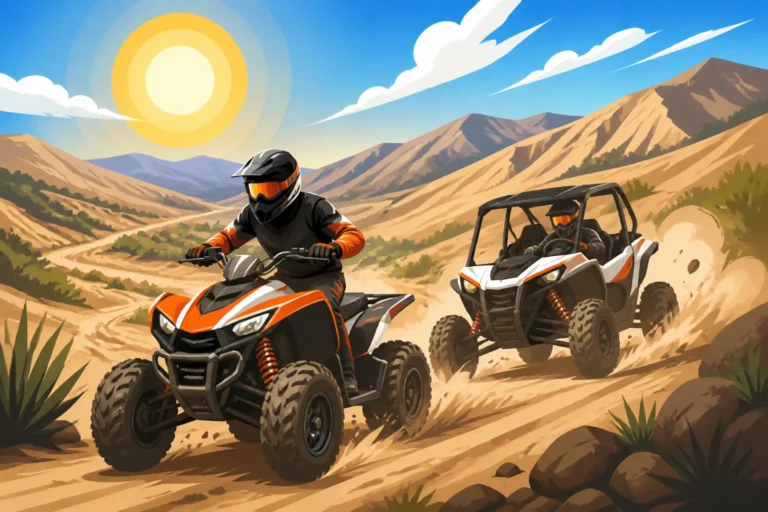
The ground matters, too. Sand exposed to direct sun can feel much hotter than the air, and it radiates heat back toward you. Riding areas such as Glamis and Ocotillo Wells have long stretches where natural shade is limited. A stopped machine may provide some shade, but it is not a substitute for a cooler, sheltered place to rest.
Protective clothing also changes how heat feels. A helmet, goggles, gloves, boots, and long sleeves are important pieces of riding gear, but they can make it harder to shed heat. That does not mean you should skip protective equipment. Instead, plan shorter riding sessions, drink regularly, take breaks in shade, and avoid pushing through symptoms just to finish a route.
Riding can mask the warning signs
Wind from a moving ATV or UTV can make your face and arms feel cooler while your body continues to heat up. Riders may not notice how much fluid they are losing until they stop. This is especially easy to miss when you are focused on following a group, navigating soft sand, or keeping an eye on changing terrain.
The risk often rises during unplanned exertion. A rider who is comfortable while cruising may feel very different after pushing a machine, walking back to camp, or repeatedly trying to climb a dune. UTV occupants can face another challenge: the vehicle may provide some wind protection, but that does not necessarily mean the cabin or seating area is cool.
Build pauses into the ride rather than waiting until someone feels unwell. Check in with your group at stops, and pay attention to changes in behavior, coordination, energy, or judgment. A rider who becomes unusually quiet, confused, dizzy, nauseated, or unsteady needs attention, not encouragement to keep going.
Conditions vary across California riding areas
Heat planning depends on the location and the kind of ride. The Imperial Sand Dunes near Glamis are open and exposed, while trails around Hungry Valley or Hollister Hills may offer different terrain, elevation, and shade. Desert conditions can also change through the day, so a comfortable start does not guarantee a comfortable afternoon.
Before you go, check the expected weather and the access information for the riding area. Consider the drive from your starting point, time spent unloading, and the possibility that a ride may take longer than planned. California Riding Seasons by Region can help you think about how riding conditions differ around the state, while California Desert Riding Safety provides a broader safety perspective for desert trips.
Plan a ride that gives you room to cool down
Choose the time and route with heat in mind
When hot conditions are expected, plan your ride for the cooler part of the day and keep the route conservative. Avoid committing to a long loop if your group is unfamiliar with the area, if you are riding with children, or if the route offers few easy places to stop and turn back. A shorter ride that ends comfortably is a better plan than a demanding route that leaves everyone far from camp when heat becomes a problem.
Look at the route before you leave. Identify likely stopping points, open areas with limited shade, and sections where turning around could be difficult. Offline maps can help when cell service is weak, but they are not a replacement for checking closures and local rules. If you use onX Offroad to review a route, save the relevant map information ahead of time and make sure everyone knows the planned turnaround point.
Give someone outside the riding group your basic plan, including where you expect to ride and when you expect to return. This is particularly helpful when a group splits up or a machine becomes disabled. For advice on finding and comparing riding locations, see Where to Ride an OHV in California and California Trail Maps and Where to Get Them.
Prepare water, food, shade, and a backup plan
Carry more drinking water than you expect to need, and keep it where riders can reach it without unpacking the entire vehicle. A group should not rely on one person’s small bottle or assume there will be water at the trailhead. Use containers that are secured for travel, and check that caps and hydration-system connections are working before you leave.
Water is only one part of preparation. Pack food, sun protection, a first-aid kit, and a way to communicate or call for help where service is available. Consider bringing a shade structure for camp or the staging area. A vehicle’s shadow shifts as the sun moves, and a stopped machine may not provide enough room for everyone to rest comfortably.
| Planning question | Safer approach |
|---|---|
| Is the forecast calling for high heat? | Shorten the ride, choose cooler hours, or postpone if the plan would require prolonged exposure |
| Is there reliable shade along the route? | Assume there may not be; carry a practical shade option for camp and breaks |
| Does everyone have enough water? | Check each rider’s supply before departure and keep extra water accessible |
| Could the route take longer than expected? | Set a turnaround time and leave a buffer for delays or mechanical problems |
| Is communication limited? | Share the route plan, carry suitable communication equipment, and avoid unnecessary route changes |
| Is someone already feeling unwell? | Stop the ride and assess the situation rather than continuing toward the next planned destination |
Do not treat thirst as the only signal to drink. Take regular breaks and make fluids easy to access. If a rider has a medical condition or follows specific hydration guidance, plan around that person’s needs rather than assuming one approach fits everyone.
Make the whole trip part of the heat plan
The riding portion may be only one part of a hot day. Loading machines in direct sun, waiting in a queue, airing down tires, setting up camp, or repairing a trailer can take significant effort. Schedule those tasks thoughtfully, and avoid leaving the most strenuous work until the hottest part of the day.
If you are camping, set up a shaded resting area before heading out. Keep the route to camp straightforward, and make sure the group knows how to find the staging area again. For location-specific preparation, Glamis From October to April and Ocotillo Wells in Spring offer useful context for two popular desert destinations, while California OHV Areas After a Storm can help with a different kind of changing-conditions planning.
Recognize heat illness and respond promptly
Notice early changes before they become severe
Heat-related illness can begin with signs that are easy to dismiss as ordinary fatigue. A rider may develop headache, dizziness, nausea, weakness, heavy sweating, or painful muscle cramps. They might also become irritable, unusually tired, or less coordinated than usual.
Pay attention to behavior as well as appearance. Someone who stops responding normally, seems confused, struggles to walk, or makes poor decisions may be in serious trouble. A helmet and riding gear can make it harder to judge how hot someone feels, so ask direct questions and look for changes from that person’s usual behavior.
Treat worsening symptoms as a reason to stop the ride. Move the person out of direct sun, help them rest, and begin cooling them while arranging appropriate medical help. Do not leave them alone or send them off by themselves to find camp. If symptoms are severe, rapidly worsening, or include confusion or collapse, call emergency services as soon as possible.
Stop riding and start cooling
Once heat illness is suspected, getting the person out of the heat and cooling them is more important than preserving the day’s itinerary. Move them to shade or a cooler area, loosen or remove unnecessary outer gear, and use available cool water, wet cloths, or airflow to help cool the body. If the person is alert and able to swallow, offer small sips of water. Do not force fluids on someone who is confused, unconscious, or unable to swallow safely.
Stay with the person and monitor their condition. If they do not improve promptly, become more confused, faint, or cannot keep fluids down, seek urgent medical care. Emergency responders may need a clear description of your location, so use a map reference or saved route information when available. If you are using onX Offroad for navigation, make sure the group understands how to communicate its location rather than assuming everyone knows how to use the app.
A machine issue should not take priority over a rider’s health. Leave the vehicle where it is if necessary, and focus on getting help. Heat illness can impair judgment, which is one reason the person affected should not be expected to navigate, drive, or make complex decisions alone.
Build heat safety into group riding habits
Agree on a check-in and turnaround system
Before starting, agree on where the group will stop and how often riders will check in. A simple system can be as practical as asking everyone to confirm they feel well at each planned break. Make it clear that anyone can call for a stop without having to justify it or keep up with the fastest rider.
Set a firm turnaround time, especially on an unfamiliar route. The group should turn back if a rider is struggling, water supplies are running low, the route is taking longer than expected, or conditions feel worse than anticipated. Don’t let the fact that camp is “not far” persuade someone to continue when they are already showing symptoms.
Keep the group together when conditions are difficult. If a rider needs to stop, make sure another person stays with them while someone else communicates with the rest of the group. Agree on what to do if riders become separated, and avoid changing the planned route without telling everyone.
Adjust the ride for children and less experienced riders
Children may not recognize or explain heat symptoms clearly. An adult should check in with them directly, offer regular breaks, and watch for unusual tiredness, irritability, headache, or lack of coordination. Keep rides short enough that children can stop before they become exhausted, and do not rely on a child to speak up when the rest of the group is eager to continue.
Less experienced riders may use more energy managing the machine, especially in soft sand or uneven terrain. A beginner who is concentrating intensely may overlook thirst or fatigue. Choose easier routes, provide frequent stops, and avoid pressuring new riders to match a more experienced person’s pace. California Riding Areas Good for Kids can help with choosing a more suitable outing, and California Dune Riding Areas offers context for comparing dune destinations.
Heat-safe riding is not about proving endurance. It is about noticing the conditions early, making a plan that allows for changes, and being willing to stop. When a route, rider, or weather forecast gives you reason to reconsider, shortening the ride or staying at camp is a sensible decision—not a failed trip.
Disclaimer
This article is for general informational purposes only and does not constitute professional advice. Laws, prices and regulations vary by location and change over time. Consult a qualified professional for guidance on your specific situation.