Imperial Sand Dunes, California’s Biggest Dune Field
The Imperial Sand Dunes can look like one enormous playground, but the riding experience changes dramatically between access points, camps, and dune areas. If you are planning an ATV or UTV trip near Glamis, it helps to know where you are going, what permits and gear to bring, and how to navigate soft sand safely. This guide covers the essentials before you unload.
Getting to know the Imperial Sand Dunes
Where the dunes are and what makes them different
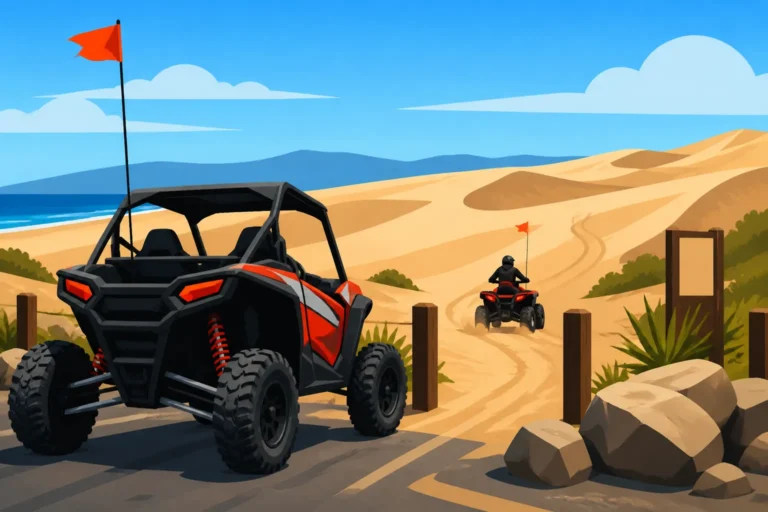
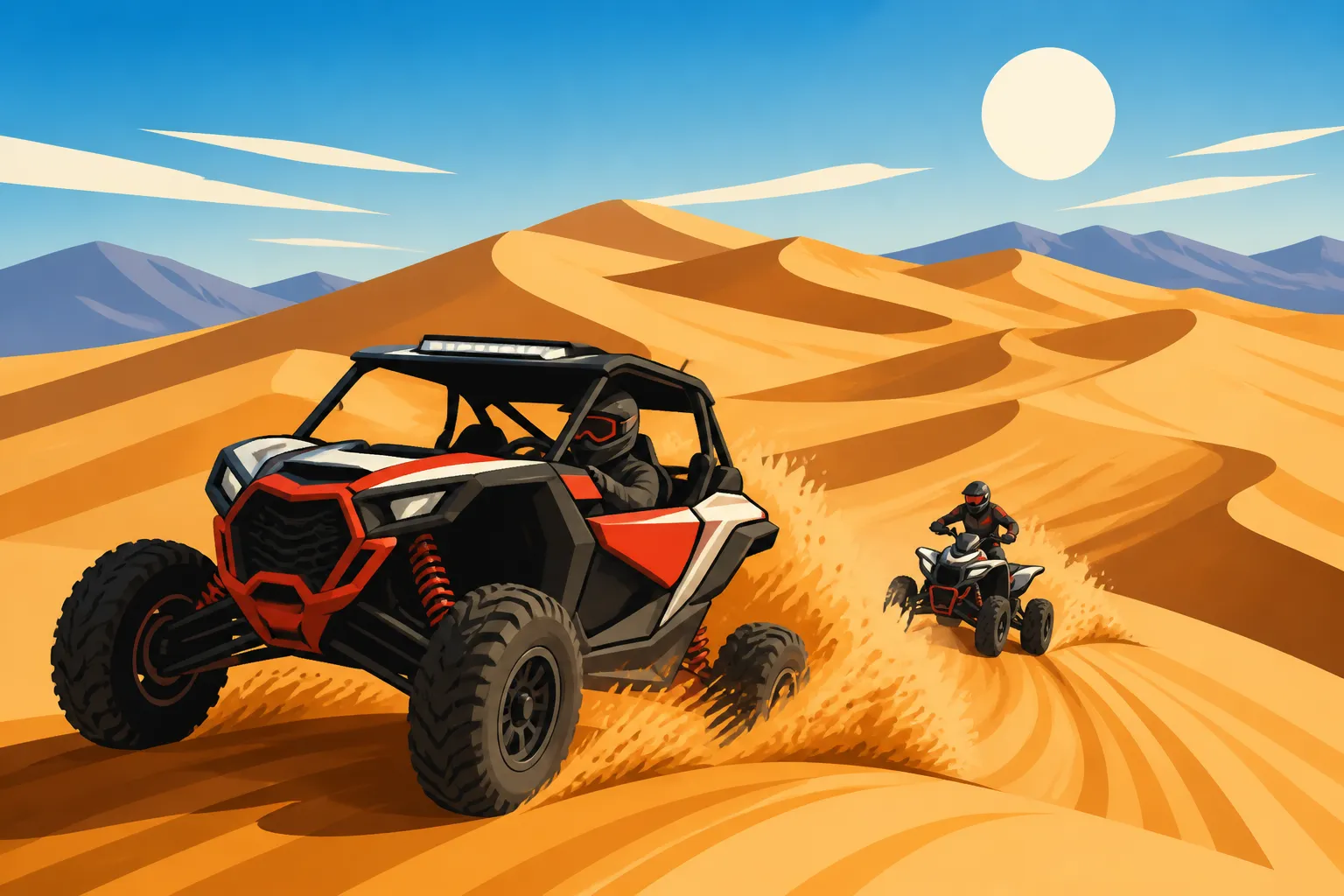
The Imperial Sand Dunes Recreation Area, commonly called the Imperial Sand Dunes or Glamis, stretches across southeastern California in Imperial County, west of the Arizona border and near the city of Yuma. The dune system extends for roughly 40 miles, creating a landscape of open sand, steep faces, bowls, washes, and established staging areas. It is one of the state’s best-known destinations for off-highway vehicle riding.
“Glamis” is often used as a catch-all name for the whole area, but it is also associated with a particular community and collection of access points. Other familiar locations include Gecko Road, Gordon’s Well, Buttercup, Ogilby, and Mammoth Wash. Each has a different feel: some are busy and social, while others may suit riders looking for a quieter starting point or a different route into the dunes.
The scale can be disorienting on a first visit. A dune that looks close may take much longer to reach than expected, and ridgelines can hide other riders approaching from the opposite direction. Before setting out, decide which area you intend to use rather than simply driving toward the first open sand you see. For a location-by-location overview, see [Gecko Road, Glamis and Buttercup] and [Mammoth Wash and Ogilby].
Choosing an area that fits your trip
Your best staging area depends on your group, vehicle, comfort level, and plans for the day. Families or first-time visitors may prefer to stay near their camp and explore gradually instead of trying to cross a large stretch of dunes. Experienced riders who know the area may plan longer loops, but should still agree on landmarks, regrouping points, and a return time.
Gordon’s Well and Dunebuggy Flats, Gecko Road, and Buttercup are distinct starting points, not interchangeable names for the same spot. Look at your route to the dunes, where you will park or camp, and how far you want to travel once riding. The guide to [Gordon's Well and Dunebuggy Flats] can help you think through that area’s setup before you choose a base.
A map app can be useful for orienting yourself, especially when a group has several vehicles or plans to meet at a specific staging area. Some riders use onX Offroad to review mapped routes and save an area for offline reference before leaving reliable cell coverage. Treat any app as a planning aid, not permission to ride: use official land-management information to confirm closures, boundaries, and allowed routes.
Planning permits, registration, and access
Separate the dune-use permit from vehicle registration
A common source of confusion is assuming that one sticker or permit covers every requirement. California OHV registration identifies a machine for use under state rules; the dune-use permit is a separate requirement for using the Imperial Sand Dunes during the applicable permit season. A machine’s registration does not automatically replace the area permit, and buying a dune permit does not resolve a registration issue.
California-registered OHVs generally need the appropriate state identification, while visitors from out of state should check whether their home-state registration or decal is recognized in California. If it is not, a California nonresident OHV permit may be required. The details depend on the machine and its documentation, so review [California Rules for Riding Imperial Sand Dunes], [ISDRA Permits and California's October Season], and [California's Nonresident OHV Use Permit] before the trip.
Keep required paperwork accessible rather than buried under camping gear. Carry the documents that apply to your vehicle and permit situation, and make sure the information is readable. A phone photo can be a handy backup, but do not assume it will replace original or official documentation when a ranger or checkpoint asks to see proof.
Check the season, closures, and current requirements
The main riding season is associated with cooler months, but weather is only one part of trip timing. Permit rules, access conditions, temporary closures, and restrictions can change. Check the official land manager’s information before leaving, especially if you are traveling a long distance or planning around a holiday weekend.
Do not assume that every patch of sand is open simply because it looks rideable. Boundaries, habitat protections, and posted closures matter. Stay out of signed or fenced areas, and do not create a shortcut around a closure. Conditions can also change after wind, weather, or heavy use, so a route that appeared straightforward in an older trip report may not be suitable now.
If you are going during a busy period, plan for queues, crowded staging areas, and slower travel. [Glamis From October to April] offers additional seasonal context. For a map-based overview, onX Offroad can help you keep track of your intended route and meeting points; compare it with official maps and posted signs before riding.
| Planning item | What to confirm | Why it matters |
|---|---|---|
| Dune-use permit | Whether a permit is required for your visit and how to obtain it | It is separate from vehicle registration |
| OHV identification | California registration or applicable out-of-state documentation | Requirements differ by vehicle and registration status |
| Open areas | Current boundaries, closures, and access notices | Open-looking terrain may still be restricted |
| Safety gear | Helmet, eye protection, flag, and vehicle equipment | Sand visibility and riding conditions can change quickly |
| Camp and staging plan | Where you will park, camp, unload, and regroup | The dune system is large and meeting by vague landmarks is risky |
Choosing a route and riding safely
Read the terrain instead of chasing the tallest dune
The dunes are not a smooth, predictable surface. Sand can be firm in one area and loose or powdery in another, and wind reshapes slopes and bowls. A ridge may conceal a sharp drop, another vehicle, or a group climbing from the other side. Approach unfamiliar terrain at a speed that lets you stop or change direction safely.
If you are new to dune riding, begin with modest slopes and open areas where you can see approaching traffic. Watch how experienced riders manage the terrain, but do not copy a line just because someone else made it look easy. Your ATV or UTV, tire setup, passenger load, and skill level all affect how it handles. When in doubt, take a longer, easier route or turn around.
Avoid riding directly over a crest without knowing what lies beyond it. Use a route that gives you a clear view, and leave room for other riders to maneuver. When your group spreads out, agree on a visible landmark where everyone can stop and regroup. onX Offroad can help a group keep a common reference point, but dunes can make visual navigation tricky, so pair digital tools with direct communication and sensible turnaround points.
Share the dunes with other riders
Busy weekends can bring machines moving in different directions, including vehicles that may appear suddenly over a crest. Keep a lookout well beyond the trail immediately in front of you. Give other riders space, avoid stopping in a blind spot, and do not park where a machine climbing or descending a slope might need room to maneuver.
A tall, high-visibility dune flag helps make your vehicle easier to see in rolling terrain. California dune riding rules include flag requirements, and the required setup should be checked before you go. Review [Why Dune Riders Need an 8-Foot Whip and Flag] for a focused explanation, then confirm current specifications with official guidance and posted requirements.
Communication matters as much as equipment. Before a ride, choose a route that everyone understands, agree on what to do if someone gets separated, and make sure each driver knows who is leading and who is sweeping. For a family group or mixed-experience crew, keep the pace comfortable for the least experienced rider. If someone is tired or unsure, stop somewhere visible and reassess rather than pressuring them to continue.
Preparing your ATV or UTV for soft sand
Set up for the machine and conditions you have
Soft sand asks more from a vehicle than a firm trail does. A UTV carrying passengers and supplies may respond differently from a lightly loaded sport quad, and the same machine may behave differently as the sand changes. Check tires, steering, brakes, fuel, lights, and other essential components before unloading. Follow your vehicle manufacturer’s recommendations for maintenance and tire setup.
Some riders adjust tire pressure for sand, but there is no single setting that suits every tire, vehicle, load, and riding style. Lower pressure can help in some circumstances, yet going too low can increase the risk of tire damage or a bead coming loose. Make adjustments cautiously, use reliable guidance for your specific setup, and know how to reinflate before returning to pavement. [Soft Sand and Tire Pressure] explains the tradeoffs in more detail.
Carry basic recovery supplies appropriate to your vehicle and group. A shovel, suitable recovery equipment, and a way to communicate can turn a minor stuck into a manageable pause. If you are traveling with multiple machines, decide who can help and how before anyone becomes stranded. Do not attach a recovery line casually or stand in its path; recovery work can be dangerous when equipment is under tension.
Pack for heat, distance, and limited signal
Even during the cooler riding season, the desert can be hard on people and machines. Bring more drinking water than you expect to need, and plan breaks before anyone feels depleted. Sun protection, suitable clothing, and eye protection make a long day more manageable. In warmer conditions, shorten rides and pay attention to fatigue, overheating, and changing weather.
Fuel planning deserves the same care. Know your vehicle’s practical range under sand-riding conditions, not just its advertised range on easier terrain. Carry only fuel in approved containers and secure it appropriately. Decide where you will refuel or return to camp, and avoid setting out on a long loop with no margin for delays.
Cell service may be unreliable across the dunes. Download maps or save key information before leaving a connected area, and tell someone at camp where the group expects to ride. onX Offroad can provide a useful offline planning reference if you have prepared it in advance, but it should not be your only navigation or emergency plan. A paper or official map, a charged phone, and a clear check-in plan provide useful backups.
Camping, logistics, and responsible riding
Make your camp a dependable home base
Camping near the dunes can make an early start easier and give your group a place to rest between rides. Choose an established, permitted camping or staging area and follow posted rules for vehicle movement, quiet hours, waste, and fire use. Do not assume that a convenient patch of open ground is approved for camping.
Pack camp so that essential items are easy to reach after the trailer is unloaded. Keep drinking water, first-aid supplies, tools, and recovery gear accessible rather than buried beneath items you will not need until the end of the weekend. Tie down loose equipment and check the trailer and tow vehicle before driving away from camp. For details on one popular base area, see [Camping at Gecko Road].
A crowded camp can become stressful when everyone is trying to unload or depart at the same time. Set a simple order for unloading, keep children away from moving vehicles, and agree on where machines can be started and parked. If your group is meeting friends, share a precise staging location and a backup meeting point rather than relying on “somewhere near the dunes.”
Leave the area safe for the next group
Responsible riding protects both people and the landscape. Stay within areas open to vehicle use, obey signs, and avoid disturbing wildlife or sensitive habitat. Do not widen routes, cut around barriers, or ride through a closed area because another vehicle has already done so. When a boundary is unclear, stop and check rather than guessing.
Pack out trash and secure lightweight items that could blow away. Give other visitors space, including people walking near camps and staging areas. Keep speeds appropriate for visibility and traffic, and never assume a vehicle ahead has seen you. Noise and equipment rules can also apply, so check the requirements for your machine before traveling.
Before loading up to leave, do a final check of your vehicle, trailer, and campsite. Look for loose fasteners, sand in critical areas, damaged tires, and anything left behind. After the trip, clean and inspect your machine according to the manufacturer’s guidance. A little care at the end of the weekend can prevent a small issue from becoming a breakdown on the next ride.
Disclaimer
This article is for general informational purposes only and does not constitute professional advice. Laws, prices and regulations vary by location and change over time. Consult a qualified professional for guidance on your specific situation.