No Passengers on a California ATV
Riding an All-Terrain Vehicle (ATV) in California offers an exhilarating escape into the state's vast wildlands, but it comes with a strict rule many riders find frustrating: the ban on ATV passengers. This guide dives deep into why California prohibits carrying passengers on ATVs, clarifies the important distinctions between ATVs and UTVs (Utility Terrain Vehicles), and explains how to enjoy the trails safely and legally, especially when riding with family or friends.
Understanding California's ATV Passenger Ban
It's a common sight in movies or older photos: two people riding tandem on an ATV, kicking up dust on a scenic trail. However, in California, that's strictly a no-go for traditional ATVs. This isn't just a suggestion; it's a critical safety regulation designed to protect riders and prevent serious injuries. The frustration is real when you want to share the adventure with a loved one, but understanding the "why" behind the rule is key to staying safe and legal.
Why California Prohibits ATV Passengers
The primary reason behind California's steadfast ban on ATV passengers boils down to vehicle design and inherent stability. Most ATVs are engineered for a single operator, meaning their weight distribution and handling characteristics are optimized for one person. Adding a second person significantly alters the center of gravity, making the machine much more prone to tipping, especially during turns, climbs, or traverses over uneven terrain. This increased instability can lead to rollovers, ejections, and severe injuries for both the operator and the passenger.
Furthermore, passenger seating on a traditional ATV is often limited to a small, often uncomfortable, portion of the seat behind the operator, with no dedicated handholds or footrests. This lack of proper support means a passenger can be easily jostled, thrown off, or inadvertently interfere with the operator's control by shifting their weight unexpectedly. This isn't a rule made to spoil your fun; it's a rule made to keep you from ending up in the emergency room. It's about recognizing the fundamental design limitations of these machines for tandem riding.
What Constitutes an "ATV" Under California Law
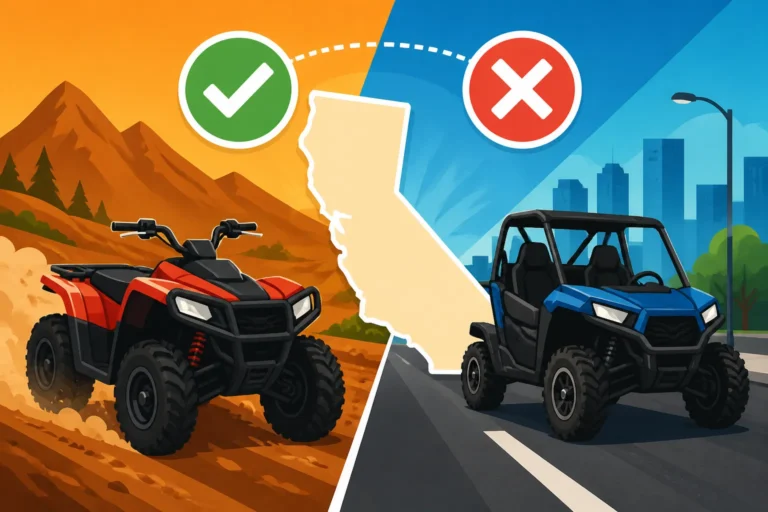
In California, an ATV is generally defined as a motorized off-highway vehicle designed to travel on four low-pressure tires, having a seat designed to be straddled by the operator, and handlebars for steering control. They're built for single-rider operation. Think of the classic quad you see racing across the dunes or tearing up a dirt track. The law makes a clear distinction between these machines and other types of off-highway vehicles, like UTVs or Side-by-Sides, which are specifically designed with multiple seats and occupant restraint systems. It's crucial not to confuse the two, as the passenger rules differ dramatically. This specific definition is what triggers the [California ATV Passenger Ban Explained].
When you're out on public lands, rangers and law enforcement are very familiar with these distinctions. They're not just looking for a sticker; they're observing the fundamental design of your machine and how many people are riding it. Getting caught with a passenger on a single-operator ATV can quickly turn a fun day into a costly one, regardless of how well you think you're handling the machine.
The Difference: ATVs vs. UTVs/ROVs and Passengers
This is where a lot of the confusion and frustration often comes in. Many people see side-by-sides with multiple occupants and wonder why their ATV can't do the same. The key lies in the design purpose and safety features inherent in each vehicle type. Understanding this distinction is vital for any off-road enthusiast in California.
UTVs and ROVs: Designed for Multiple Occupants
Unlike ATVs, Utility Terrain Vehicles (UTVs) and Recreational Off-Highway Vehicles (ROVs), often called Side-by-Sides, are specifically engineered to carry multiple passengers. These vehicles feature distinct characteristics that allow for safer tandem riding:
- Bucket Seating: UTVs typically have individual bucket seats (or bench seating) for each occupant, rather than a straddle-style seat. This provides dedicated space and support.
- Roll-Over Protective Structures (ROPS): UTVs come equipped with factory-installed roll cages or similar structures designed to offer protection in the event of a rollover. This structural integrity is a huge safety advantage.
- Seatbelts and Restraints: Every seating position in a UTV is outfitted with seatbelts, and sometimes even harnesses, to secure occupants in place. This is a critical safety feature that ATVs simply do not have.
- Steering Wheel Control: Operators use a steering wheel, similar to a car, which offers a different level of control and stability compared to handlebars, especially with varying loads.
These design elements make UTVs a viable and legal option for families and groups who want to share the off-road experience. If you're looking to bring along companions, a UTV is generally your go-to machine in California. [Side-by-Side Passengers and California Rules] delve deeper into the specifics of UTV passenger regulations.
Aftermarket Solutions and Their Limitations
Sometimes riders consider aftermarket seats or modifications for their ATVs, hoping to circumvent the passenger ban. This is a dangerous path to go down and usually doesn't make the ATV legal for carrying passengers. No matter how comfortable or secure an aftermarket seat might feel, it doesn't fundamentally change the ATV's design limitations regarding weight distribution, center of gravity, or lack of a ROPS. These machines are still legally classified as single-operator ATVs.
However, for UTV owners, aftermarket accessories can greatly enhance the passenger experience. Companies like SuperATV offer a wide range of products, from comfortable bench seats that can accommodate more people to upgraded suspension systems that smooth out rough trails, making the ride more enjoyable and safer for everyone on board. You can find robust harnesses and additional grab handles that further secure passengers, especially younger ones, during more aggressive riding. While these enhancements don't change the basic rules of carrying passengers, they can certainly improve the comfort and safety within the legal framework for UTVs. Just remember, these are for UTVs, not to convert an ATV into a passenger-carrying machine.
Safety Concerns Behind the Rule
The California ATV passenger ban isn't just about bureaucracy; it's rooted deeply in accident statistics and rider safety. The dangers of carrying an extra person on a vehicle designed for one are manifold and can have devastating consequences. When we talk about off-roading, we're already dealing with challenging terrain and inherent risks, and adding a passenger amplifies those risks exponentially.
Instability and Control Issues
An ATV's balance is incredibly sensitive to weight shifts, and a skilled rider constantly adjusts their body position to maintain control, especially when turning, climbing, or descending. Adding a passenger, whose weight is often positioned high on the machine and can shift unpredictably, severely compromises this delicate balance. Imagine trying to lean into a turn or shift your weight to prevent a tip-over, only to have a passenger's movements counteract your efforts. This creates a dangerous scenario where the operator loses critical control.
Furthermore, the extra weight can make the ATV harder to steer and brake, increasing stopping distances and reducing maneuverability. On challenging trails, where quick reactions are essential, this added instability can turn a minor obstacle into a major accident. The machine simply isn't designed to cope with two riders in these dynamic situations, and pushing its limits risks catastrophic failure and injury.
Increased Risk of Injury
When an ATV rolls over or tips, the consequences are often severe for a passenger. Unlike the operator who has handlebars to hold onto and can often react instinctively to brace for impact, a passenger is typically less prepared and less able to protect themselves. They are often flung from the vehicle, sometimes into obstacles, or crushed beneath it. Injuries can range from broken bones and head trauma to internal damage, far more severe than if the accident involved a single rider.
Even minor bumps or unexpected jolts that a single rider might easily absorb can cause a passenger to lose their grip and fall. Without dedicated footrests, their feet can get caught in the wheels or dragged along the ground, leading to serious lower limb injuries. The lack of proper restraints, like seatbelts, means there's nothing to keep them securely in place during a sudden stop or impact. The state's position is clear: the risk simply isn't worth it. This is why you'll often see rangers at trailheads and staging areas actively looking for violations of these passenger rules, as they've seen the painful aftermath firsthand.
Legal Consequences of Carrying an ATV Passenger
Ignoring California's ATV passenger ban isn't just unsafe; it's illegal, and the consequences can quickly dampen your off-road adventure. Law enforcement agencies, including the California Highway Patrol (CHP) and rangers from the California Department of Parks and Recreation, actively patrol OHV areas to ensure compliance with all regulations, including passenger limits. Don't assume you can get away with it; they're out there, and they take these rules seriously.
Fines and Citations
The most immediate consequence of carrying a passenger on an ATV in California is a citation and a fine. While specific amounts can vary by jurisdiction and whether it's a first offense or repeat violation, you can expect a significant financial penalty. These aren't just minor parking tickets; they reflect the serious safety risk involved. In addition to the base fine, there are often court fees, administrative charges, and assessments that quickly escalate the total cost. A spur-of-the-moment decision to let someone hop on for a short ride can easily cost you hundreds of dollars.
Beyond the monetary penalty, a citation can also mean valuable time lost dealing with court appearances or paperwork. It's a hassle that nobody wants when they're simply trying to enjoy their weekend. Remember, these fines are designed to deter unsafe behavior, and they often succeed by making the cost of non-compliance far outweigh the perceived convenience of carrying a passenger.
Potential for Further Legal Action
The legal ramifications can extend far beyond a simple fine, especially if an accident occurs. If you're involved in an incident while illegally carrying a passenger, you could face enhanced charges, particularly if that passenger sustains injuries. This could lead to civil lawsuits, personal injury claims, and even criminal charges, depending on the severity of the accident and whether negligence is determined. Your insurance policy might even deny coverage if you were operating the vehicle in an illegal manner, leaving you personally liable for damages and medical expenses.
Furthermore, repeated violations could lead to more severe penalties, such as the impoundment of your ATV or restrictions on your ability to ride on public lands. Authorities have the discretion to take such actions to protect public safety. It's a stark reminder that riding off-road is a privilege that comes with significant responsibilities, and adhering to passenger laws is a foundational aspect of that responsibility.
Navigating Passenger Rules for Youth Riders
Riding with kids is a huge part of the off-roading lifestyle for many families. However, when it comes to youth riders and passengers, California has even more stringent rules in place to ensure their safety. It's not just about what machine they can ride, but who can ride with them, and under what conditions. These rules are designed to protect the most vulnerable riders.
The Strict No-Passenger Rule for Youth ATV Riders
Just as with adults, children are strictly prohibited from riding as passengers on ATVs in California. This applies whether the ATV is operated by an adult or another youth rider. Even if it's a small "youth" ATV, it's still considered a single-operator machine. The reasons are the same: instability, lack of proper restraints, and the increased risk of severe injury.
For families with young children eager to experience the trails, this often means that each child needs their own appropriately sized ATV, or the family opts for a multi-passenger UTV. When considering a child's first machine, it's critical to ensure it's sized correctly for their age and skill level. [California Minimum Age to Ride an ATV] provides guidelines on age appropriateness for different ATV sizes. Trying to squeeze a child onto the back of an adult ATV, even for a short distance, is not only against the law but puts them at immense risk.
Supervision and Safety Certificates for Young Operators
California law also mandates specific supervision requirements for youth operating OHVs. Children under the age of 14 must be directly supervised by a parent, guardian, or an adult authorized by them, who holds an approved ATV Safety Certificate. For riders aged 14 to 18, while direct supervision might not be required in all circumstances, having an ATV Safety Certificate is still a critical component of legal and safe operation. These certificates ensure that young riders have received proper training on ATV operation, safety practices, and the rules of the trail. [California ATV Safety Certificate Requirements] explains what's needed to obtain one.
If your child is operating a UTV/ROV, different age and supervision rules apply. For example, to operate an ROV, a person must generally be at least 16 years old, or under direct supervision if they are younger and have completed a safety training course. [California ROV Operator Age Limit] details these distinctions. The emphasis here is on education and responsible riding from a young age, ensuring that future generations of off-road enthusiasts are equipped with the knowledge to stay safe.
Planning Your Ride: Best Practices for Groups
Riding with friends and family is one of the greatest joys of off-roading, but adhering to California's passenger rules for ATVs requires thoughtful planning. It's about ensuring everyone has a safe and legal way to participate, making memories without the risk of citations or accidents.
Choosing the Right Vehicle for Your Group
If your group includes companions who wish to ride alongside you, and you typically ride an ATV, your options in California are straightforward:
- Multiple ATVs: The simplest solution is for each rider, including children who meet the minimum age and size requirements, to have their own ATV. This allows everyone to experience the thrill of operating their own machine while complying with single-rider regulations. Ensure all riders are properly trained and have the necessary safety certificates, especially if they are minors.
- UTVs/Side-by-Sides: For groups or families who want to share a vehicle, a UTV is the ideal choice. These machines are designed for multiple passengers and come equipped with seatbelts and roll cages. There are UTVs available with two, three, four, or even more seats, making them incredibly versatile for group outings. Companies like SuperATV offer accessories that can enhance the comfort and safety of all passengers, from upgraded seats to storage solutions for gear, making long days on the trail much more enjoyable.
- Combination: Many groups bring a mix of ATVs and UTVs. This allows ATV enthusiasts to enjoy their single-rider machines while those who prefer to ride as passengers or have younger children can do so safely and legally in a UTV.
Thinking ahead about who you want to bring and what machines are available will prevent disappointment and ensure compliance. Remember, attempting to modify an ATV to carry passengers is not a safe or legal solution.
Group Riding Etiquette and Safety
Even when everyone has their own appropriate vehicle, group riding requires a commitment to safety and good etiquette. Communication is key, whether through hand signals, helmet communicators, or regular stops. Everyone in the group should be aware of the rules of the trail, speed limits, and environmental considerations.
- Pre-Ride Briefing: Before setting out, have a quick meeting to discuss the day's route, potential hazards, and how the group will handle stops or breakdowns.
- Maintain Distance: Encourage riders to maintain a safe distance between vehicles to avoid dust ingestion, flying debris, and rear-end collisions.
- Buddy System: For larger groups, implement a buddy system to ensure no one gets left behind.
- Safety Gear: Emphasize that all riders, whether on an ATV or in a UTV, must wear appropriate safety gear, including helmets. [California Helmet Law for ATV Riders] and [California Helmet Law for UTV Passengers] outline these requirements.
- Designated Leader and Sweeper: Having an experienced leader at the front and a "sweeper" at the back ensures the group stays together and any issues are quickly addressed.
- Permits and Registration: Ensure all vehicles have current California OHV registration (Green Sticker, Red Sticker, or Tan Sticker as appropriate) and any required permits for the specific riding area. If you're renting machines, ensure the rental company has handled all necessary paperwork and briefed you on the local rules. [Riding a Rented Quad in California] offers more insights into rentals.
By planning carefully and prioritizing safety, you can ensure that your group enjoys California's incredible off-road opportunities legally and without incident. It’s about making sure that the memories you create are good ones, not ones filled with regret over a preventable accident or a costly citation.
| Vehicle Type | Passenger Capacity | Legal in California? | Key Safety Features | Typical Steering |
|---|---|---|---|---|
| ATV | 1 (Operator Only) | No (for passengers) | Limited (designed for operator body lean) | Handlebars |
| UTV / Side-by-Side | 2-6+ (depending on model) | Yes (with seatbelts/ROPS) | Roll-Over Protective Structure (ROPS), Seatbelts, Doors | Steering Wheel |
Disclaimer
This article is for general informational purposes only and does not constitute professional advice. Laws, prices and regulations vary by location and change over time. Consult a qualified professional for guidance on your specific situation.