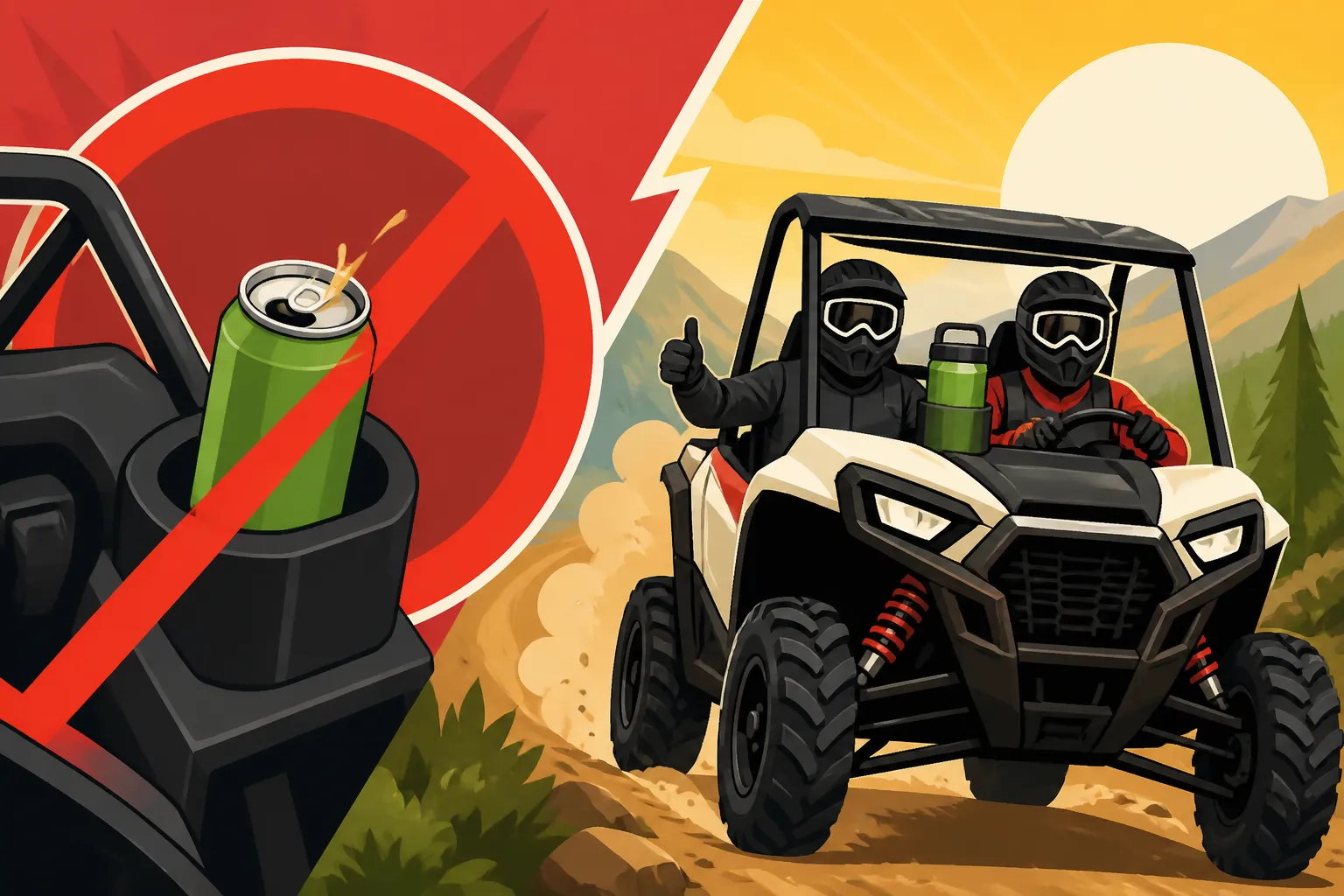
Open Container Rules on a California OHV
It can be incredibly confusing to figure out California's open container laws when you're out enjoying your off-highway vehicle (OHV). Many riders think that because they're "off-road" or "in the desert," the same rules that apply to cars on paved streets somehow magically disappear. This couldn't be further from the truth, and a simple misunderstanding can quickly turn a fun day into a costly citation or even worse. This guide will meticulously break down California's open container rules specifically for OHV enthusiasts, helping you understand where and how these laws apply, how to store beverages legally, and why it's so important to follow them.
Understanding California's Open Container Laws on Public Roads
Let's clear something up right away: California's open container laws are pretty strict, and they don't just apply to sedans on the freeway. They are designed to prevent impaired driving by making it illegal to consume alcohol or possess an open container of alcohol in a vehicle's passenger area. When you're talking about an OHV, this can get a little tricky, but the core principles remain.
The Core Prohibition: CVC 23222(a) and Beyond
California Vehicle Code (CVC) Section 23222(a) is the primary law most people think of when discussing open containers. It generally states that no person shall have in their possession on their person, while driving a motor vehicle upon a highway, any bottle, can, or other receptacle containing any alcoholic beverage which has been opened, or a seal broken, or the contents of which have been partially removed. And CVC 23222(b) extends this to passengers.
Now, you might be thinking, "But I'm not on a highway!" Here's where it gets interesting for OHV users. Many OHV trails or designated riding areas might have segments that are considered "highways" under a broad legal definition, or you might have to cross a public road, even just for a few feet, to get from one section of a trail to another. Even if you're just driving your UTV from your campsite across a paved county road to the staging area, those few moments on the "highway" are enough for the law to apply. It’s all about the potential for public interaction and the state's interest in preventing impaired operation on public thoroughfares.
This also extends to situations where your OHV might be pulled over or stopped by law enforcement for any reason while it's on a public roadway, even if you’re just trailering it. The law focuses on the possession of an open container in the passenger area. For an OHV, where the "passenger compartment" can be quite exposed, this means extra vigilance is required.
Distinguishing Between Open and Sealed Containers
The definition of "open" is critical here. An open container is generally any bottle, can, or other receptacle containing an alcoholic beverage that has been opened, has a broken seal, or has had some of its contents removed. This means if you've twisted the cap off a beer, even if you haven't taken a sip, it's considered open. If the seal on a bottle of whiskey is broken, it's open. Partially consumed? Definitely open.
What about an unopened bottle of wine or a six-pack of beer still sealed in its original packaging? These are generally not considered open containers. The key is the integrity of the original seal. As long as that seal is intact and unbroken, the container isn't considered "open" under the law. However, even if it's sealed, it still needs to be stored properly. The law specifies that even sealed alcoholic beverages must typically be stored in the trunk of a vehicle or a place not normally occupied by the driver or passengers, like a locked glove compartment or other designated storage area.
For OHVs, which often lack a traditional "trunk," this means finding a spot that is demonstrably not within the passenger compartment and is preferably out of reach of anyone in the vehicle. Simply throwing a sealed case of beer into the bed of your UTV might not always cut it if it's easily accessible while riding. We'll delve into practical storage solutions a bit later, but the distinction between open and sealed is your first line of defense.
Penalties and Consequences of an Open Container Violation
So, what happens if you're caught with an open container in your OHV in California? It's generally considered an infraction, similar to a minor traffic ticket, but it still carries consequences. The base fine can be several hundred dollars, and with court fees and other assessments, it can quickly add up to a significant sum. While it might not result in points on your driving record in the same way a speeding ticket does, it's still a mark on your record and a financial hit you definitely want to avoid.
More importantly, an open container violation can sometimes be a precursor or an accompanying charge to something much more serious, like a DUI. Law enforcement officers often use an open container as a reason to initiate further investigation into possible impaired driving. While an open container violation itself is not a DUI, it’s a clear indication that alcohol is present and perhaps being consumed in a way that the law prohibits, raising red flags for officers. Always remember, it's better to avoid the situation entirely by adhering strictly to the rules.
Navigating Open Container Rules in Off-Highway Settings
The confusion often escalates when riders are deep in the wilderness, far from any paved road. Surely, the "off-highway" part of OHV means different rules, right? Well, yes and no. It's a nuanced landscape, and understanding the specifics of public lands versus private property is crucial.
Public Lands and Designated OHV Areas
California has fantastic public lands for OHV riding, from State Vehicular Recreation Areas (SVRAs) like Hungry Valley and Oceano Dunes to vast tracts of Bureau of Land Management (BLM) land. While these areas are designated for off-highway use, they are not a lawless free-for-all when it comes to alcohol.
Many SVRAs and BLM areas have their own specific regulations regarding alcohol consumption, which often mirror the state's CVC laws, or even impose stricter rules. For instance, in a State Vehicular Recreation Area, while you might be able to have an open container in your campsite (where your vehicle is parked and you're not operating it), you absolutely cannot be driving around the trails with an open container in your OHV. Rangers and law enforcement personnel patrol these areas specifically to enforce these rules, among others like noise limits and spark arrester requirements. [California State Vehicular Recreation Areas] are patrolled, and the rules are enforced.
The general rule of thumb on any public land in California is that the open container laws for motor vehicles still apply to your OHV while it's in operation, regardless of whether it's on a paved road or a dirt trail. The definition of "highway" in the CVC is broad and can encompass public ways maintained for vehicular traffic, even if unpaved. This means that if you're riding through a national forest on a designated [Riding a Forest Road Legally in California], you are still subject to these regulations. Don't assume that just because the ground is dirt or sand, the law somehow ceases to exist.
Private Property and Special Event Waivers
When you're on truly private property with the owner's express permission, the state's open container laws for public roadways generally do not apply to the same extent. On private land, the rules about consuming alcohol are largely up to the property owner. You can typically have an open container and consume alcohol as long as you're not operating an OHV in a reckless manner, creating a public nuisance, or violating other laws (like driving under the influence, which can still apply even on private land if the area is publicly accessible or if law enforcement intervenes due to other infractions). However, public intoxication laws can still come into play if you venture off private land while heavily impaired.
Special sanctioned events, like races or organized rides with a [California's Sanctioned Event Permit Explained], might sometimes have specific designated areas where alcohol consumption is permitted, often off the course or away from active riding areas. These are usually clearly marked and managed. However, even at these events, operating an OHV with an open container or while impaired is almost universally prohibited for safety reasons and liability. Never assume an event waiver somehow negates all state laws; they are typically very specific about what they cover.
Practical Storage Solutions for Beverages on an OHV
Given the strict rules, how do you responsibly bring beverages with you on an OHV ride? The key is secure, sealed, and out-of-reach storage.
- Seal It Tight: Any alcoholic beverages, even if sealed, should be stored in a manner that prevents them from opening or spilling if the container is jostled or dropped.
- Out of Reach, Out of Sight: The ideal location is one that is not readily accessible from the driver or passenger seat. This could mean a storage box mounted in the bed of a side-by-side or a secure compartment on an ATV.
- Lockable Storage: Many aftermarket accessories are designed specifically for OHV storage, such as cargo boxes, bed enclosures, or even under-seat storage compartments. Brands like SuperATV offer a wide array of durable cargo boxes and bed covers that can provide secure, out-of-the-way storage for your gear and your sealed beverages. A sealed SuperATV cargo box mounted in the bed of your UTV, for example, is a perfect solution for transporting unopened drinks.
- Coolers with Latches: If you're using a cooler, make sure it has sturdy latches that will keep it securely closed, and place it in an area where it won't move around. Again, this cooler should be in a cargo area, not within arm's reach while you're operating the machine. Many UTVs have a decent cargo bed, and a quality cooler that locks shut placed there is usually a safe bet. When choosing your storage solutions, always think about the "passenger compartment" rule: if you or your passenger can easily grab it while riding, it might be an issue.
The Broader Context: DUI and Public Intoxication
While open container laws are important, they exist within a larger framework of alcohol-related regulations. It's crucial not to confuse an open container violation with a DUI or public intoxication, though they can often go hand-in-hand.
Understanding DUI Laws for OHVs in California
This is where things get very serious. California's DUI laws apply to any motor vehicle, and that absolutely includes OHVs. Operating an ATV, UTV, dirt bike, or any other OHV while under the influence of alcohol or drugs is just as illegal and dangerous as driving a car under the influence. The same California Vehicle Code sections, like CVC 23152(a) (driving under the influence of alcohol and/or drugs) and CVC 23152(b) (driving with a Blood Alcohol Content of 0.08% or higher), apply.
The consequences of an OHV DUI are severe and can include:
- Significant fines and court costs.
- Suspension of your regular driver's license (yes, even if you were on an OHV and not your car).
- Mandatory DUI education programs.
- Potential jail time, especially for repeat offenses or if there was an accident involving injury.
- Increased insurance rates.
The takeaway? If you plan to drink, do not ride. Period. Separate your enjoyment of alcoholic beverages from your operation of an OHV. Your safety, and the safety of others, depends on it. For more detailed information, check out [California DUI Rules for OHV Riders].
Public Intoxication Laws and Their Reach
Beyond driving, California also has laws against public intoxication (Penal Code 647(f)). This law generally prohibits someone from being in a public place under the influence of alcohol (or drugs) to the extent that they are unable to exercise care for their own safety or the safety of others, or they interfere with or obstruct pedestrian or vehicular traffic.
Even if you're not operating your OHV, if you're visibly and dangerously intoxicated in a public OHV staging area, a campground on public land, or any other public area, you could face arrest for public intoxication. This means that while you might be able to enjoy a beer back at your private campsite, once you step out into shared public spaces, especially if you're being loud or unruly, you could attract unwanted attention from law enforcement. The desert might feel remote, but many OHV areas are heavily patrolled, and rangers take public order seriously.
Prioritizing Safety and Responsible Riding
Operating an OHV demands your full attention, quick reflexes, and sound judgment. Alcohol, even in small amounts, impairs all of these critical faculties. It slows your reaction time, distorts your perception of speed and distance, reduces your coordination, and impairs your judgment. The risk of serious injury or even death in an OHV accident skyrockets when alcohol is involved.
Therefore, the most responsible approach is simple: do not drink and ride. Designate a sober driver if you're in a UTV, or simply wait until your riding day is over and your OHV is parked for the night before you enjoy any alcoholic beverages. Separate the activities completely. It's about enjoying the thrill of off-roading safely and responsibly, ensuring everyone goes home in one piece.
Common Misconceptions and Clarifications
Despite the clear laws and obvious safety implications, some persistent myths and misunderstandings surround alcohol and OHVs. Let's address a few.
"It's Only a Beer, What's the Big Deal?"
This casual attitude is perhaps the most dangerous misconception. While a single beer might not put you over the legal limit for DUI, having an open container is a violation, regardless of how much alcohol is left or how "fine" you feel. Moreover, that "only one beer" can quickly turn into two, then three, eroding your judgment and increasing your risk. Law enforcement officers, whether it's a Sheriff's Deputy, a Park Ranger, or a BLM Ranger, are not going to dismiss an open container violation or a potential DUI just because you claim it was "only one." They see the larger picture: the significant dangers associated with impaired operation and the strictness of the law. The "big deal" is the law itself, the potential for fines, legal trouble, and most critically, the heightened risk of a serious accident.
"We're in the Middle of Nowhere, No One Will Know."
California's vast deserts and remote forest trails might feel like the middle of nowhere, but they are almost always within the jurisdiction of some law enforcement agency. BLM rangers, Forest Service officers, State Park rangers, and County Sheriff's deputies routinely patrol these areas, often specifically looking for safety violations and illegal activities, including alcohol offenses. They use vehicles, ATVs, UTVs, and sometimes even aircraft to monitor popular riding spots. Just because you don't see a patrol car doesn't mean you won't encounter an officer on an OHV around the next bend. [Sticker Checks at Ocotillo Wells] and [Plates Checked at a Hungry Valley Gate] are common, and these checks often extend to general compliance and observation of rider behavior. Always assume that the rules are being enforced, no matter how remote you feel.
"I'm the Passenger, It Doesn't Apply to Me."
This is another common mistake, especially in side-by-sides. While the primary DUI offense typically applies to the operator, California's open container laws (specifically CVC 23222(b)) often apply to passengers as well, prohibiting them from possessing an open container of alcohol in a motor vehicle on a highway. Remember, the term "highway" in the vehicle code is very broad and can encompass many unpaved public trails.
So, if your buddy is driving the UTV and you, as a passenger, have an open beer in your hand or in an easily accessible cupholder, both you and potentially the driver could be cited. The law aims to prevent easy access to alcohol within the vehicle's "passenger compartment" for anyone, to reduce the temptation and opportunity for impaired driving. It's everyone's responsibility to ensure that no open containers are present in an operational OHV on public land.
Here's a quick reference for common alcohol-related infractions on an OHV in California:
| Violation Type | Description | Legal Repercussion | Key Differentiator |
|---|---|---|---|
| Open Container | Possessing any open container of alcoholic beverage in the passenger area of an OHV while it is being operated on public land or a public roadway. | Typically an infraction, resulting in a fine (e.g., $250+ including fees). No points on driver's license usually, but can lead to further investigation for DUI. | Focuses on the presence of an open container, regardless of impairment level. Applies to both driver and passenger. |
| OHV DUI | Operating an OHV while under the influence of alcohol (BAC 0.08% or higher, or impaired to an appreciable degree by any amount) or drugs. | Misdemeanor, significant fines ($2,000+), mandatory DUI education, potential jail time, suspension of regular driver's license, increased insurance rates. | Focuses on the impairment of the operator. Can result from consumption whether or not an open container is present (e.g., consumed at camp then drove). |
| Public Intoxication | Being in a public place under the influence of alcohol or drugs to the extent that one is unable to exercise care for their own safety or the safety of others, or they obstruct public way. | Misdemeanor, potential arrest, fines, and possibly jail time. (Penal Code 647(f)). | Focuses on being in public while severely impaired, regardless of operating a vehicle. Can occur in campgrounds, staging areas, or trailsides even if not riding. |
Understanding these distinctions is vital for responsible OHV use in California. Remember to always ride sober, secure your beverages properly, and be aware of the rules governing the specific public lands you're exploring. Staying informed and compliant ensures that your time on the trails is both thrilling and trouble-free. Don't forget to keep your [Carrying Registration Paper on the Sand] and other necessary documents on hand, and be mindful of other regulations such as [California OHV Fines for a Loud Machine] or [California Helmet Law for UTV Passengers] to avoid unnecessary issues. If you respect the land and the rules, you'll have a fantastic time.
Disclaimer
This article is for general informational purposes only and does not constitute professional advice. Laws, prices and regulations vary by location and change over time. Consult a qualified professional for guidance on your specific situation.