California Rules for Riders Aged 14 to 18
Riders aged 14 to 18 have more independence than younger children, but age alone does not settle whether they can ride a particular ATV or side-by-side in California. Safety certificates, vehicle type, helmets, registration and out-of-state permits all matter. This article explains what to check before a teen rides on public land and what paperwork to carry.
What changes at age 14
Turning 14 does not automatically make every young rider eligible to operate any off-highway vehicle. California’s rules depend on the vehicle and the rider’s safety training, and public-land managers can set additional requirements. A teen may be ready to ride one machine but not legally eligible to operate another.
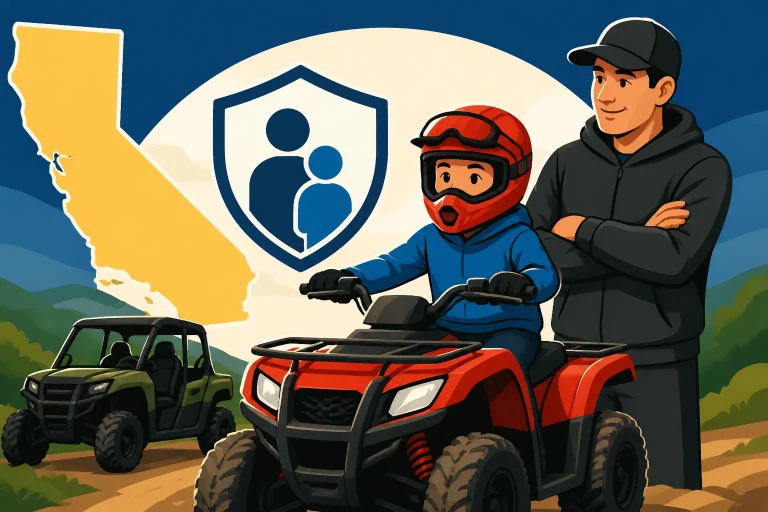
For ATVs, riders under 18 generally need to have completed an approved safety course and carry proof of certification, or ride under the direct supervision of an adult who has completed the required training. The details of who may supervise and what proof is accepted matter, so review California’s Safety Certificate Rules and Direct Supervision by a Certified Adult in California before heading out.
Age 14 is an important boundary in the supervision rules, but it is not a substitute for the safety certificate requirement. If a teen does not have their own certificate, do not assume that being 14 or older means they can ride alone. Check whether the supervising adult meets California’s requirements and can provide proof if asked.
| Rider or machine | What to check before a public-land ride |
|---|---|
| ATV rider aged 14 to 17 | Safety certificate or qualifying direct supervision; helmet; machine suited to the rider |
| Side-by-side operator aged 14 or 15 | The separate ROV age rule; do not assume an ATV certificate makes the teen eligible |
| Side-by-side operator aged 16 or 17 | Operator eligibility, safety training, helmet and seat-belt requirements |
| Any rider under 18 | Helmet, required documents and the riding area’s rules |
| Out-of-state teen | Certificate recognition, California riding permit or registration status, and site requirements |
A safety certificate is proof of training; it does not override the machine manufacturer’s age recommendations, equipment limits or a riding area’s restrictions. A youth ATV may have a recommended age range and weight capacity. Check the vehicle label and owner’s manual, not just the rider’s height or confidence. A larger machine can be difficult to control even for a teenager with riding experience.
Keep the age boundary in mind when comparing rules for younger children. What Changes for a California Rider at 14 explains why reaching this age affects supervision but does not remove the other requirements.
ATVs and side-by-sides have different age considerations
A quad is an ATV; a side-by-side is generally classified as a recreational off-highway vehicle, or ROV. The distinction is important because the age rule for operating an ROV is not simply the ATV rule applied to a larger machine.
For California public-land riding, treat 16 as the minimum age for operating a side-by-side unless you have confirmed an applicable exception with the relevant authority. A 14- or 15-year-old should not assume that an ATV safety certificate or an adult passenger makes them eligible to drive an ROV. See ROV Operators at Sixteen in California for the specific operator-age issue.
A teen who is old enough to operate a side-by-side still needs to follow the vehicle’s safety requirements. Occupants should use the installed seat belts, remain seated, and keep arms and legs inside the vehicle. Helmets are required on public land. Rules for passengers differ from rules for operators, so check California Helmet Law for UTV Passengers as well as the vehicle’s manual and the riding area’s posted requirements.
ATVs also have rules that are easy to overlook. Many are designed for one rider, and carrying a passenger on a single-rider quad can be dangerous and unlawful on public land. A second seat does not make a machine suitable for every age or rider. For a teen, match the vehicle to the rider’s size, skill and the manufacturer’s guidance, and do not rely on a short test ride as proof of a safe fit.
Before letting a teenager ride, check these points:
- Can the rider reach and operate the controls while seated properly?
- Can they use the brakes and throttle smoothly and maintain control over uneven ground?
- Does the machine’s label or manual identify an age or weight recommendation?
- Is the rider wearing a properly fitted helmet and other suitable protective gear?
- Does the rider understand where they may travel, how to stop and what to do if separated from the group?
A safety certificate is not a guarantee that a rider can safely handle every machine. An adult should supervise in a way that lets them respond to changing terrain, traffic and the teen’s ability—not merely ride somewhere nearby.
Certificates, permits and documents for visiting riders
A California OHV safety certificate and a California riding permit are different things. The certificate addresses training. The permit or registration concerns whether the machine may be used on California riding areas. Having one does not automatically satisfy the other.
California riders under 18 should carry proof of the required safety training or make sure the qualifying supervising adult is present and has proof of certification. What a Rider Under 18 Must Carry covers the paperwork question. Keep the certificate accessible rather than buried in a trailer or vehicle, and check the riding area’s instructions about acceptable proof.
If the teen’s certificate was earned in another state, do not assume it will automatically be accepted everywhere in California. Recognition can depend on the issuing program and the rules being applied. Confirm with the agency or riding area before traveling; Out-of-State Safety Certificates in California explains what to check.
The machine’s registration or permit is a separate issue. California recognizes limited reciprocity for certain out-of-state OHV credentials, but that does not mean every state’s registration or decal is accepted. Review California OHV Reciprocity: Only Two States and California’s Nonresident OHV Use Permit to determine what the machine needs. A teen’s age or safety certificate does not create an exemption from the machine’s registration or permit requirements.
Before leaving home, confirm:
- The teen’s certificate is valid and the riding area accepts it, or the required certified adult will be present.
- The machine has the correct California registration or accepted out-of-state credential.
- The riding area is open to that machine and its sticker or permit category.
- The rider’s age is allowed for the vehicle type, especially for a side-by-side.
- Required identification and proof of registration are available during the ride.
For a California-registered machine, sticker color and vehicle eligibility can affect where it may be ridden. For a visiting rider, a plate from another state may not settle the question. Check the specific area’s current rules before setting out, rather than relying on what was accepted at a different park or trail.
Helmets, supervision and a practical pre-ride check
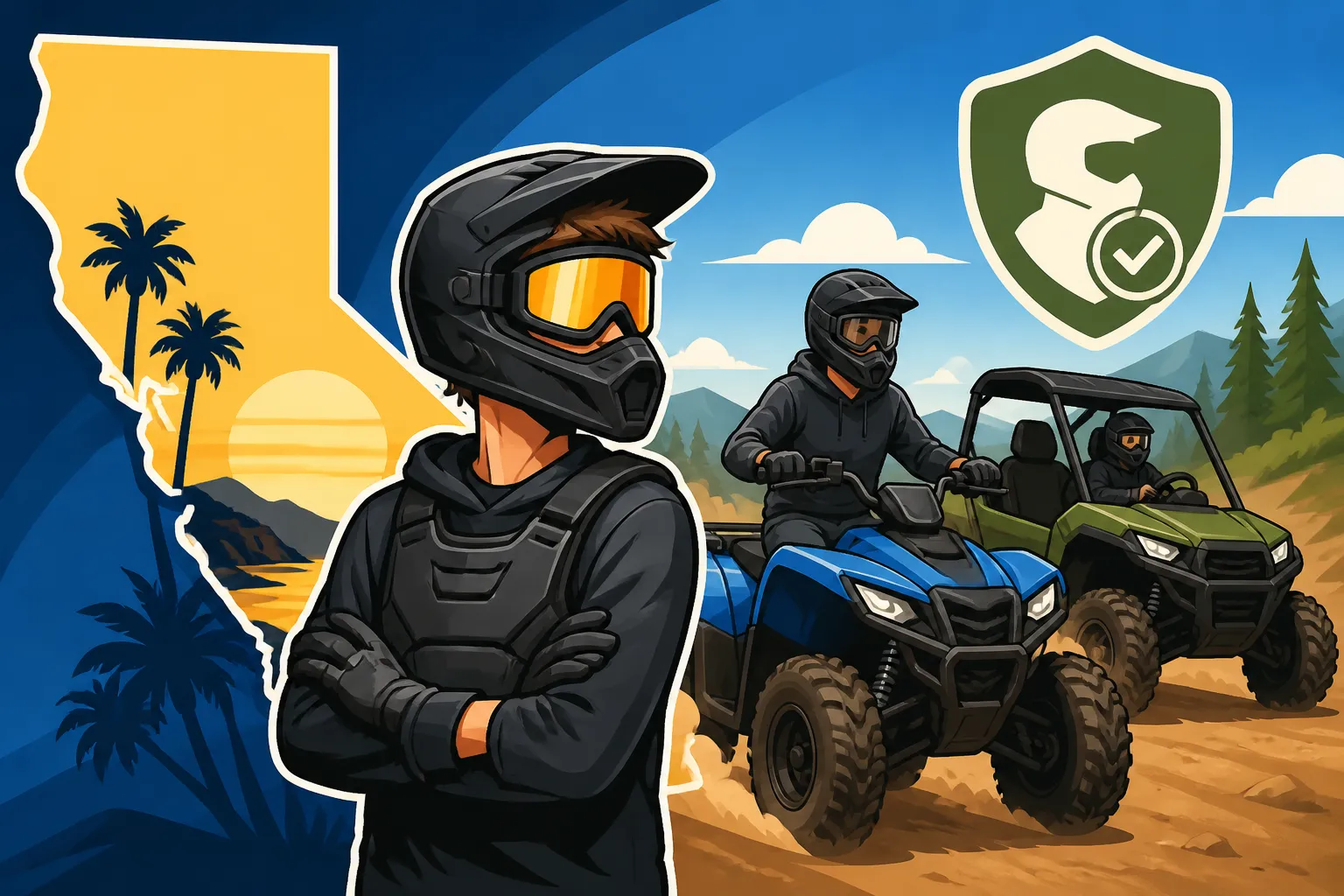
California requires helmet use for riders under 18 on public OHV land. That requirement applies even when a teen has a safety certificate, rides with an adult or operates a side-by-side. A helmet should fit securely and be suitable for the activity; a loose helmet can shift during a fall and may not provide the intended protection. See California Helmet Law for ATV Riders for the rule specific to ATV riders.
Supervision is more than satisfying a paperwork condition. A responsible adult should know the route, stay close enough to help and set limits the teen can follow. That may mean choosing an easier trail, riding in daylight, keeping the group together and stopping when the terrain or conditions become difficult. On busy dunes or narrow trails, the adult should consider whether the teen can manage the traffic and visibility challenges—not just whether the machine can climb the hill.
Use a short pre-ride check before every outing:
- Confirm the operator’s age is allowed for the specific vehicle.
- Check the safety certificate and supervision arrangements.
- Inspect the helmet, protective clothing, brakes, tires, throttle and controls.
- Confirm registration, sticker or permit requirements for the destination.
- Explain hand signals or other group communication, meeting points and emergency plans.
- Set a clear rule that the rider stops when asked and does not leave the designated route.
Rules can vary by vehicle category and riding area, and they may change. If a rule is unclear—particularly the age limit for a side-by-side or acceptance of an out-of-state certificate—contact the responsible land manager before the trip. A quick confirmation is safer than finding out at the gate or during a roadside check.
Disclaimer
This article is for general informational purposes only and does not constitute professional advice. Laws, prices and regulations vary by location and change over time. Consult a qualified professional for guidance on your specific situation.