Mixed Use Roads in a National Forest
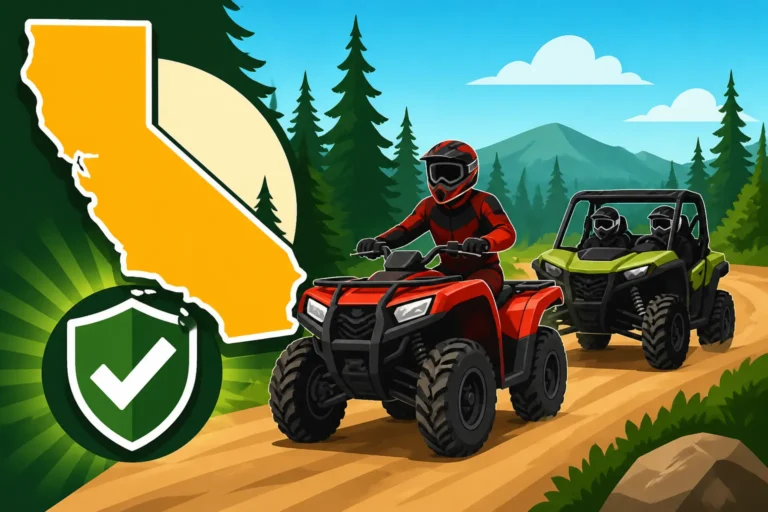
It's incredibly frustrating when you're itching to explore California's vast national forests on your ATV or UTV, only to feel utterly confused about where you're actually allowed to ride. The thought of getting a citation for being on the wrong path can quickly dampen any enthusiasm. This guide is here to unravel the mysteries of "mixed-use roads" within our beautiful national forests, helping you understand how to identify them, what rules apply, and how to enjoy these unique routes without breaking the bank or the law.
Understanding Mixed-Use Roads in California's National Forests
California's national forests are vast playgrounds, offering everything from towering redwoods to sprawling deserts. For off-highway vehicle (OHV) enthusiasts, these lands present an incredible opportunity, but they also come with a maze of rules. One of the biggest areas of confusion often revolves around "mixed-use roads"—those paths that are open to both highway-legal vehicles, like your pickup truck, and properly registered off-highway vehicles, like your quad or side-by-side. It's not just a simple dirt road; there's a specific designation and a whole set of expectations that come with it.
What Exactly is a Mixed-Use Road?
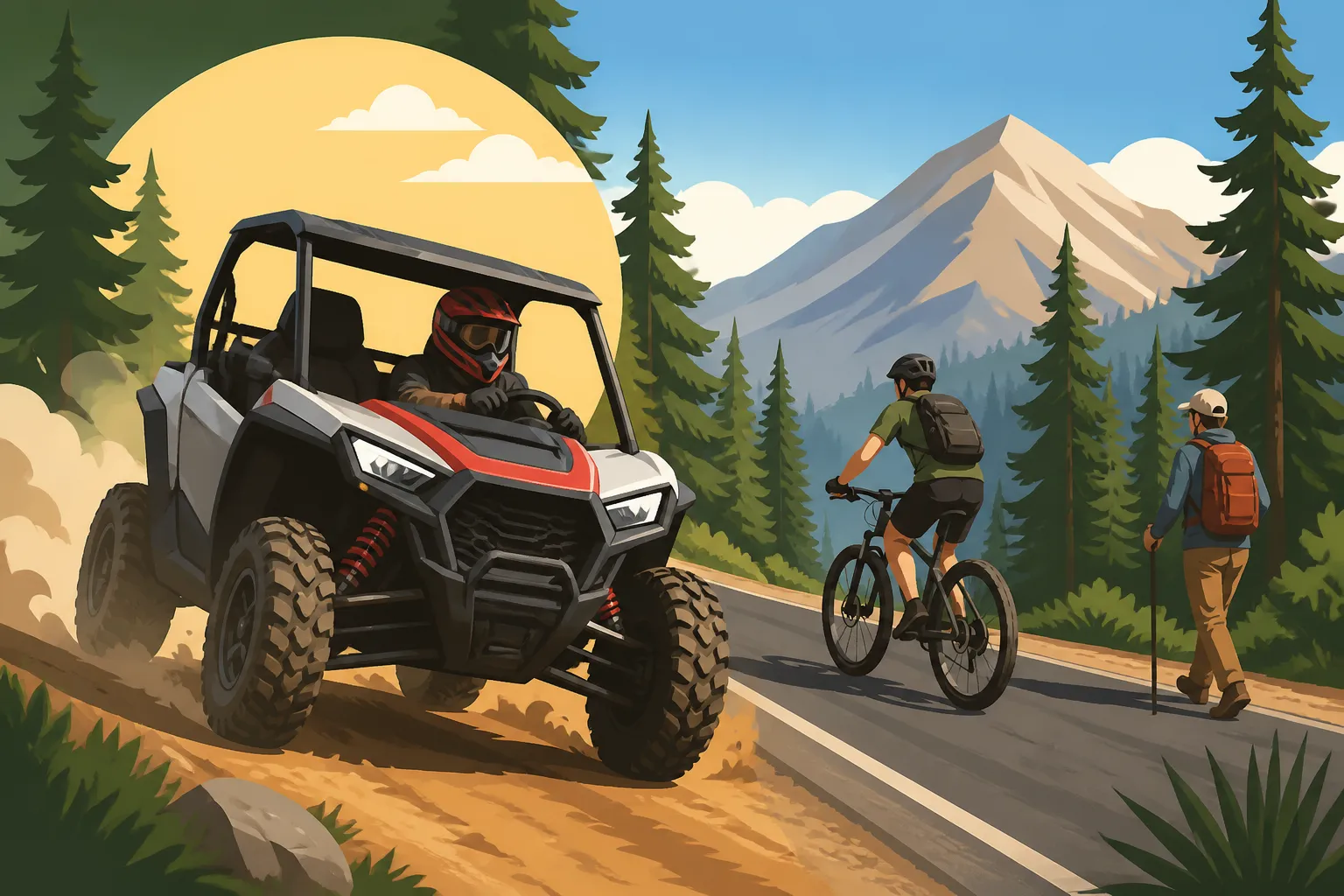
Think of a mixed-use road as a shared pathway, a kind of neutral territory where different types of vehicles can coexist. Unlike designated OHV trails, which are exclusively for off-highway vehicles, or paved forest roads primarily intended for cars, mixed-use roads bridge the gap. They are typically unpaved forest service roads, often with a numerical designation, that allow OHVs to travel alongside cars, trucks, and even hikers or mountain bikers. These roads are critical for connecting different trail systems, accessing campsites, or simply providing a scenic drive that also accommodates those on two or four wheels without a license plate.
The concept arose out of a need to provide greater access for OHV users while still managing public lands responsibly. It allows riders to get from point A to point B within the forest, often accessing specific staging areas or dispersed camping spots that might otherwise be unreachable if only highway-legal vehicles were permitted. Without these crucial arteries, many of our favorite riding areas would feel much more isolated, forcing riders to trailer their machines much more frequently. It's a pragmatic solution to a common access problem.
The Role of Forest Service Designations
When you're out in a national forest, you'll encounter all sorts of roads and trails. The U.S. Forest Service has a very clear system for designating what's what, and understanding it is absolutely crucial for any OHV rider. Every national forest is divided into administrative units, and within those units, roads are classified based on their intended use, maintenance level, and the types of vehicles allowed. Mixed-use roads fall under a specific classification that permits OHV use, but this isn't a blanket rule across all forest roads.
It’s important to remember that just because a road looks like a dirt road doesn't automatically mean your OHV is welcome. Forest Service roads designated for "highway-legal vehicles only" are still just that, even if they're unpaved. The key lies in the official designation, which you can usually find on Motor Vehicle Use Maps (MVUMs) or through specific signage. These designations are put in place to protect natural resources, ensure public safety, and manage the diverse recreational needs of all forest users. Respecting these designations isn't just about avoiding a fine; it's about being a responsible steward of our beautiful wild spaces.
How to Identify and Navigate Mixed-Use Roads
Navigating California's national forests with an OHV requires more than just a good sense of direction; it demands a solid understanding of how to find and interpret the official information that dictates where you can and cannot ride. It's often where riders get into trouble, as relying solely on GPS apps or word-of-mouth can lead you astray, potentially into areas where OHVs are restricted.
Motor Vehicle Use Maps (MVUMs)
Your absolute best friend when planning a ride in a national forest is the Motor Vehicle Use Map, or MVUM. These maps are the official word from the U.S. Forest Service on where motorized vehicles, including OHVs, are allowed. You can usually find them for free online on the specific national forest's website, or sometimes at ranger stations. [Motor Vehicle Use Maps and Reading Them] is a must-read for anyone heading into these areas.
MVUMs use a system of lines and symbols to indicate different types of roads and trails, and critically, which ones permit OHV use. Look for the lines that signify mixed-use roads—these are generally marked to show that both highway-legal vehicles and OHVs are allowed. Don't assume anything; if a route isn't explicitly marked as open for OHVs on the MVUM, then it's best to assume it's closed to them. Printing out a hard copy or downloading it to a GPS device before you head out, especially since cell signal can be spotty, is a smart move. Think of it as your official permission slip to ride. Many riders even laminate their MVUMs or put them in a clear map case for protection against the elements, something a company like SuperATV might offer accessories for to keep your documents safe.
Interpreting Roadside Signage
Even with an MVUM in hand, you still need to pay close attention to roadside signage. While MVUMs provide the overarching plan, signs on the ground offer real-time, specific instructions or warnings that might not be captured on the map, such as temporary closures due to fire, weather, or maintenance. These signs are generally posted at the entrance to a road or trail and at key intersections.
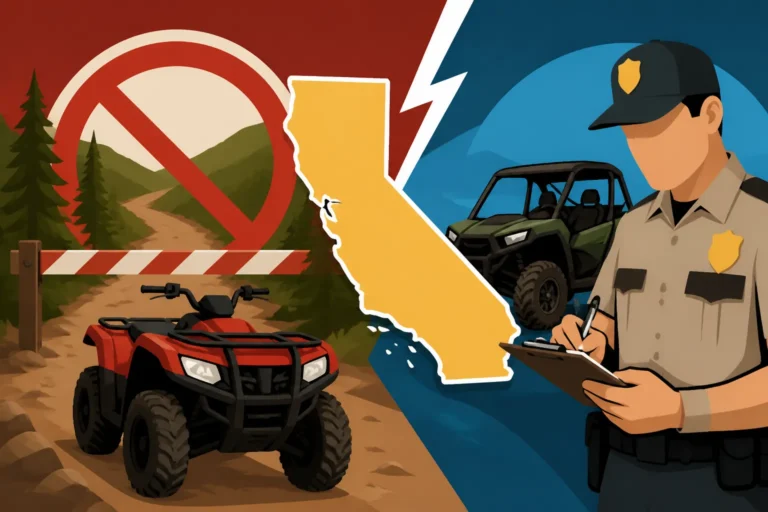
Look for signs that specifically indicate "OHV route" or "Mixed-Use Road." Conversely, keep an eye out for signs that explicitly state "Closed to OHVs," "Motorized Vehicles Prohibited," or "Highway-Legal Vehicles Only." Sometimes, a simple gate or a small sign might be the only indicator. It's not uncommon for OHV riders to miss these subtle cues, especially when they're excited to hit the dirt. Always slow down and read all signs carefully before proceeding. If there's any doubt, it's always safer to turn around and find an clearly designated route. Remember, rangers do check for compliance, and ignorance of the rules is rarely an excuse that will get you out of a citation. [Riding a Forest Service Road Legally in California] covers this in more detail.
Essential Rules and Safety for Mixed-Use Riding
Riding a mixed-use road isn't quite the same as tearing up a dedicated OHV park or cruising down a paved highway. It requires a unique blend of awareness, respect, and adherence to specific regulations designed to ensure everyone's safety and preserve the natural environment. These roads are shared spaces, and that means shared responsibilities.
Registration, Green Stickers, and Permits
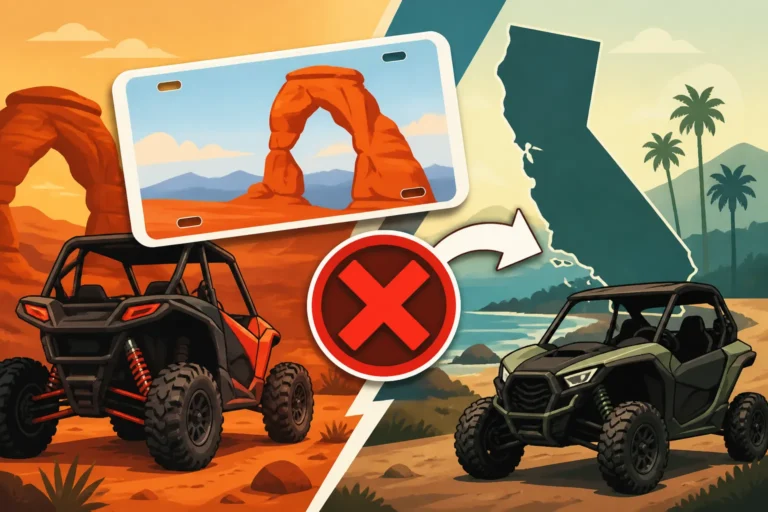
First and foremost, your off-highway vehicle must be properly registered in California to ride on any public land, including mixed-use roads in national forests. This typically means having a valid [Registering an OHV in California] and displaying a California Green Sticker, Red Sticker, or Tan Sticker, depending on your machine's model year and compliance with emissions standards. [California's Green Sticker Explained] goes into detail about what that green sticker really means. If you're visiting from out-of-state, you might need a California Nonresident OHV Use Permit, as reciprocity agreements are quite limited.
Always carry proof of your registration with you. While an OHV is not street legal and doesn't get a traditional license plate, it still has an ID plate and requires current registration. Rangers often conduct checks at popular staging areas or along routes, and not having your paperwork in order can lead to fines. Make sure your sticker is clearly visible and current—typically, California OHV registrations expire on June 30th every two years.
Safety Gear and Vehicle Requirements
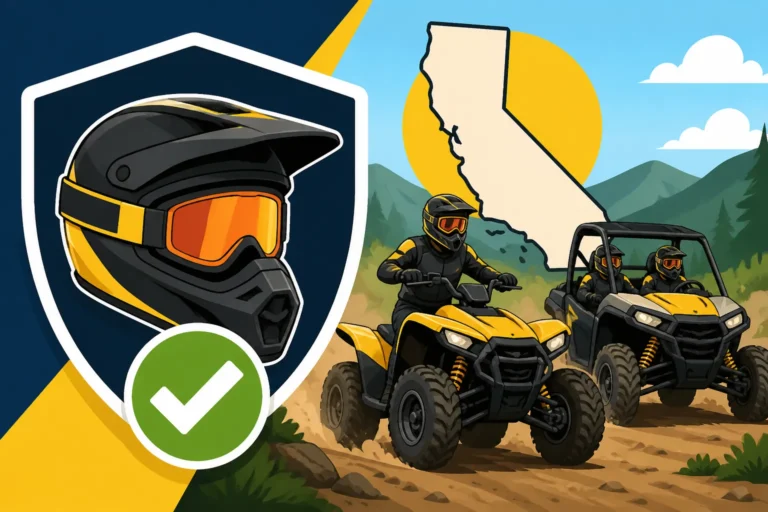
Safety is paramount on any OHV adventure, but especially on mixed-use roads where you could encounter other vehicles, wildlife, or even pedestrians around a blind corner. California has strict helmet laws: any person, regardless of age, operating or riding an ATV or UTV on public land must wear an approved safety helmet. For UTVs, seatbelts are also mandatory. [California Helmet Law for UTV Passengers] is a critical read before you go.
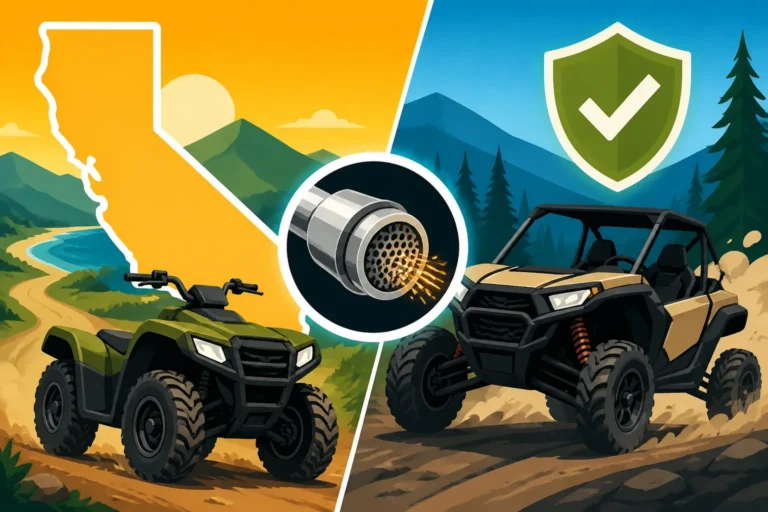
Beyond personal protective equipment, your machine itself needs to meet certain requirements. A UTV, for instance, must have a roll cage, and both ATVs and UTVs need a working spark arrester to prevent wildfires—a non-negotiable item, especially in California's fire-prone forests. Your exhaust system must also meet California's strict sound limits to avoid disturbing wildlife and other forest users. [California Spark Arrester Rules] and [California Sound Limits for OHVs Explained] provide comprehensive details on these requirements. Ensure your machine is well-maintained, with good tires, brakes, and headlights, especially if you plan on being out at dusk or dawn. Accessories from brands like SuperATV can help you meet some of these safety requirements, such as adding a full windshield for protection or side mirrors for better visibility, making your machine safer and more comfortable on varied terrain.
Responsible Riding Etiquette
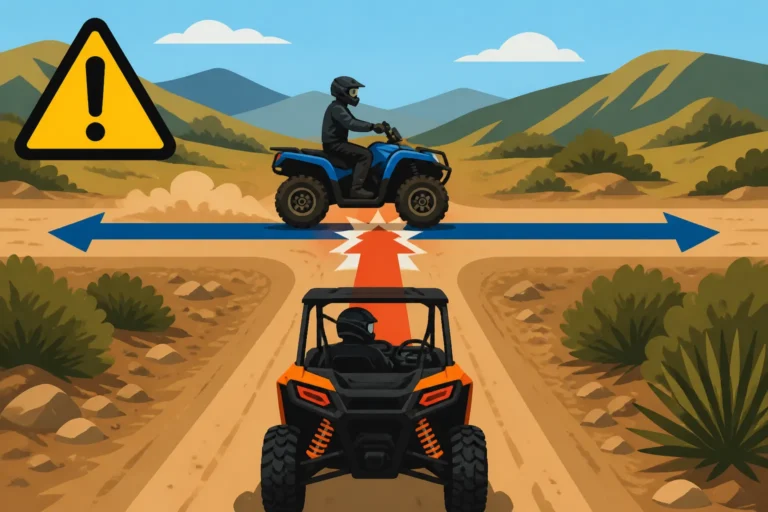
Sharing is caring, especially on mixed-use roads. You'll likely encounter a diverse group of users, from hikers and mountain bikers to horseback riders and families in passenger vehicles. Good etiquette means slowing down, yielding to non-motorized users, and always passing with caution, allowing plenty of space. Dust control is also critical; reduce your speed when passing other users or homes to minimize dust clouds, which can be a major nuisance and safety hazard.
Respect wildlife by maintaining a safe distance and never disturbing them. Stay on designated routes to prevent habitat damage and erosion. Remember, alcohol and OHVs do not mix; California has strict DUI laws that apply to OHV operators. [California DUI Rules for OHV Riders] outlines the serious consequences. Leave no trace—pack out everything you pack in, and perhaps even a little extra litter you find along the way. Your responsible actions help ensure that these mixed-use roads remain open for everyone to enjoy for years to come.
Making the Most of Your Mixed-Use Adventure
Exploring California's national forests on mixed-use roads offers a unique blend of adventure and accessibility. It allows you to stitch together different experiences, moving from a rugged trail section to a scenic forest drive, and then back into more challenging terrain. But to truly maximize the experience, a bit of planning and strategic thinking goes a long way.
Planning Your Route and Timing
Before you even load up your machine, dive into those MVUMs and topographical maps. Look for mixed-use roads that connect to interesting trails, scenic viewpoints, or specific camping areas. Often, these roads can serve as excellent bypasses around more difficult trail sections, or allow you to create longer loop rides by linking different areas. Consider the time of year and weather conditions; some forest roads, especially at higher elevations, might be impassable due to snow or mud during certain seasons. [California Riding Seasons by Region] offers great insights.
Planning your route with an eye for mixed-use roads can help you make the most of your day. Maybe you want to take a mellower mixed-use road to reach a specific trailhead for a challenging single track, or use one to access a secluded fishing spot. By understanding the network, you can design trips that are perfectly tailored to your skill level and desired adventure.
Preparing for Diverse Conditions
Mixed-use roads, by their very nature, can present a variety of surfaces and conditions. You might encounter stretches of smooth, packed dirt, loose gravel, rocky sections, or even muddy patches after a rain. Your ATV or UTV should be equipped to handle these variations. Ensure your tires are in good condition and consider running slightly lower air pressure for better traction and ride comfort on uneven terrain.
Carry essential tools and spare parts, like a tire repair kit, a small air compressor, and basic wrenches. Being prepared for a flat tire or a minor mechanical issue on a remote forest road can save your day. Always bring plenty of water, snacks, a first-aid kit, and a way to communicate, even if it's just a fully charged phone (and remember, cell service is often unreliable in remote areas). Having a strong winch, perhaps from a brand like SuperATV, could be a lifesaver if you get stuck in a particularly muddy or soft section of a mixed-use road.
| Item Type | Purpose | Essential for Mixed-Use? | Notes |
|---|---|---|---|
| Documents | OHV Registration, MVUM, ID | Yes | Hard copy of MVUM recommended. |
| Safety Gear | Helmet, Goggles, Gloves, Boots, Long Clothing | Yes | Required by law and for protection. |
| Vehicle Items | Spark Arrester, Functional Lights, Horn, Mirrors | Yes | Check noise limits; mirrors improve visibility on shared roads. |
| Emergency | First-Aid Kit, Water, Food, Fire Extinguisher | Yes | Always pack more water than you think you need. |
| Tools | Tire Repair Kit, Air Pump, Basic Tool Kit, Winch | Highly Recommended | Road conditions vary; winches are great for self-recovery. |
| Navigation | GPS Device (offline maps), Compass, Paper Map | Yes | Cell service is often nonexistent in national forests. |
| Etiquette | Awareness of others, Dust Control | Yes | Crucial for positive interactions with other forest users. |
Connecting Trails and Exploring the Unknown
The real magic of mixed-use roads often lies in their ability to connect you to a wider network of trails. Imagine using a mixed-use road to travel from one designated OHV riding area to another, rather than having to load your machine onto a trailer for a short hop. These roads can be your gateway to exploring areas you might have previously considered out of reach.
They also offer fantastic opportunities for scenic drives where your OHV truly shines. You can cover more ground, discover hidden vistas, and experience the diverse ecosystems of California's national forests in a way that might not be possible on dedicated OHV trails alone. Just remember that with this freedom comes the responsibility to stay on designated routes, respect private property boundaries, and leave every place better than you found it. Enjoy the journey, embrace the rules, and explore with confidence!
Disclaimer
This article is for general informational purposes only and does not constitute professional advice. Laws, prices and regulations vary by location and change over time. Consult a qualified professional for guidance on your specific situation.