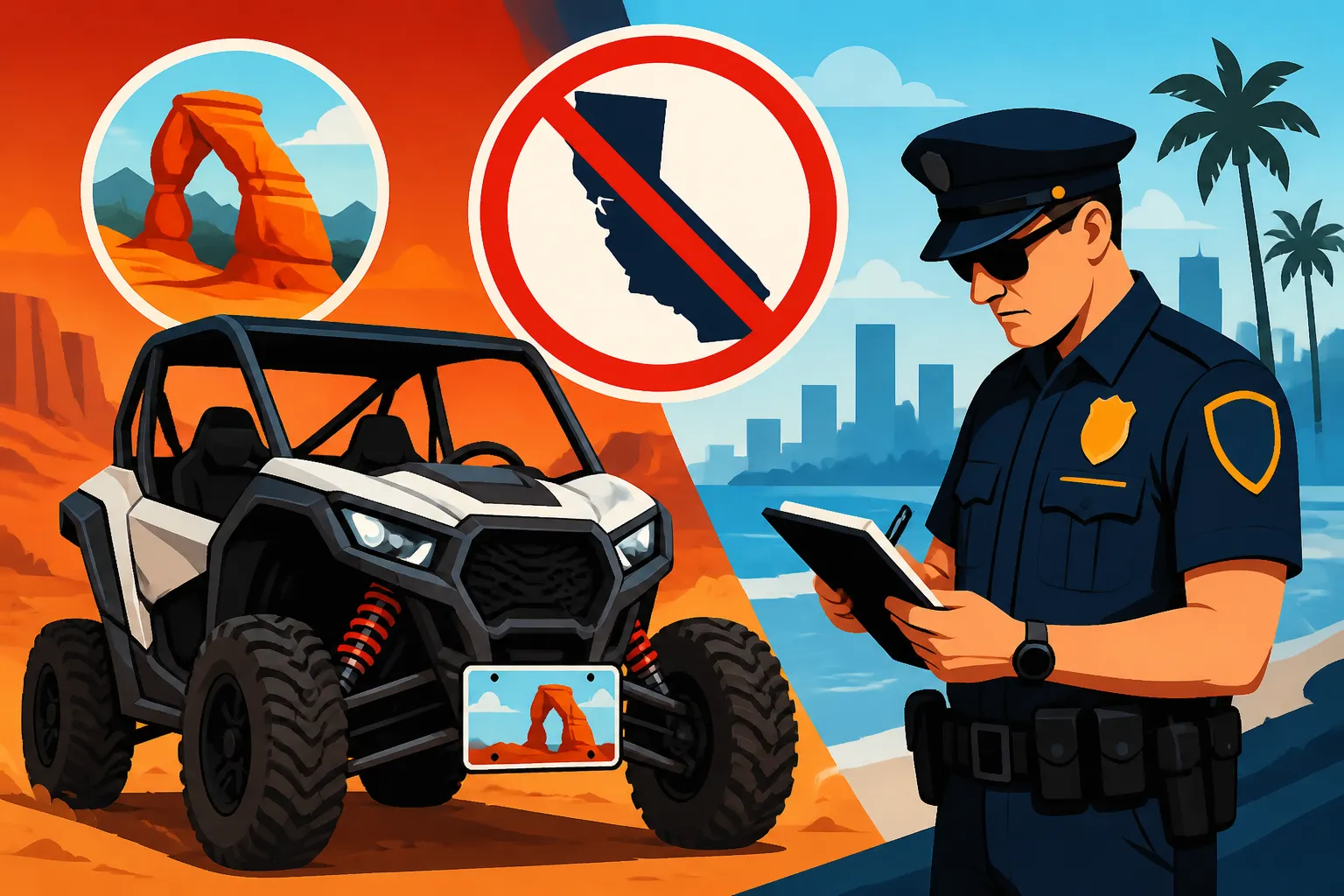
Why a Utah-Plated RZR Gets a Ticket in California
It can be incredibly frustrating to bring your pride and joy – your UTV or ATV, like a Polaris RZR – to California, fully expecting to enjoy some scenic road sections or connecting trails, only to find yourself facing a traffic stop and a costly ticket. Many riders assume that because their machine is legally registered for street use in their home state, say Utah, those rules somehow carry over across state lines. Sadly, California operates under a completely different set of rules for off-highway vehicles (OHVs) on its paved roads, and it can catch out even the most well-meaning riders. This guide will walk you through why that Utah plate, while valid at home, won't save you from a citation here in the Golden State, and what you need to know to avoid a costly misunderstanding.
California's Unique Approach to Off-Highway Vehicle Street Legality
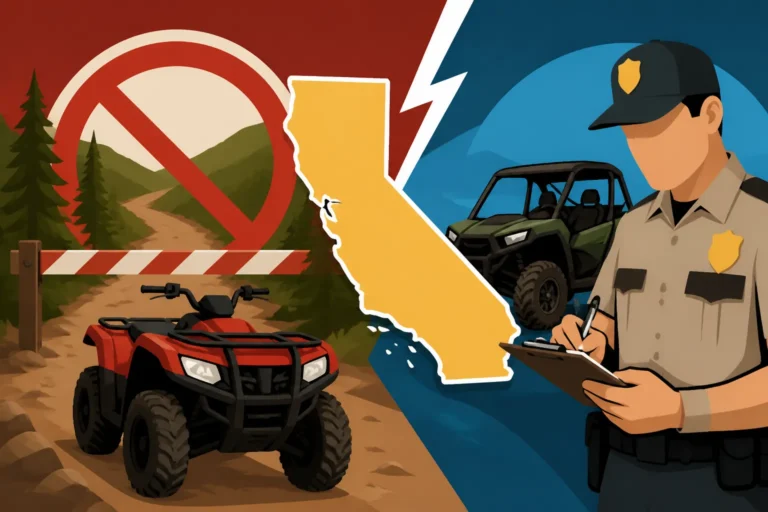
Let's get straight to the heart of the matter: California has a very distinct legal framework for vehicles, and it generally does not recognize off-highway vehicles as street-legal, regardless of how they're registered elsewhere. While states like Utah, Arizona, or Idaho have pathways to convert OHVs into street-legal machines, complete with license plates and all the required road-going accessories, California simply doesn't have an equivalent process for most UTVs and ATVs.
Think of it this way: your RZR, even with blinkers, a horn, and a rearview mirror, is primarily classified as an off-highway vehicle under California Vehicle Code. This classification means it's designed and intended for off-road use, not for traversing public highways and city streets. The California DMV does not offer a registration category that allows a typical OHV, like a Polaris RZR, to be re-titled and licensed as a street-legal vehicle for general road use. You might have seen other vehicles on the road that look similar, but these are almost always either purpose-built, street-legal vehicles from the factory (which are very rare for true UTVs), or they fall into entirely different classifications like Neighborhood Electric Vehicles (NEVs) or golf carts, which have their own extremely limited operating restrictions. This fundamental difference is where most out-of-state riders encounter trouble.
The state's regulations are designed to keep OHVs, with their often higher ground clearance, knobby tires, and lack of certain safety features common on traditional cars, off the same roads shared with conventional traffic. It's not about making things difficult for riders; it's about public safety and maintaining a clear distinction between vehicles designed for different environments. This means that any modifications you've made to your RZR using aftermarket parts from companies like SuperATV, while making it compliant for street use in Utah, don't change its core classification in California. Those modifications are fantastic for enhancing your off-road experience or making it road-ready in other states, but they don't grant street legality here.
Why Out-of-State "Street Legal" Plates Don't Translate to California Roads
This is the point that often causes the most confusion and frustration. You've gone through all the hoops in your home state—inspections, insurance, paperwork, and perhaps even upgraded your lighting or added a windshield—and you're proudly displaying a legitimate license plate from Utah, Arizona, or wherever. You feel confident that your machine is compliant, only to be pulled over by the California Highway Patrol (CHP) or a local sheriff. Why?
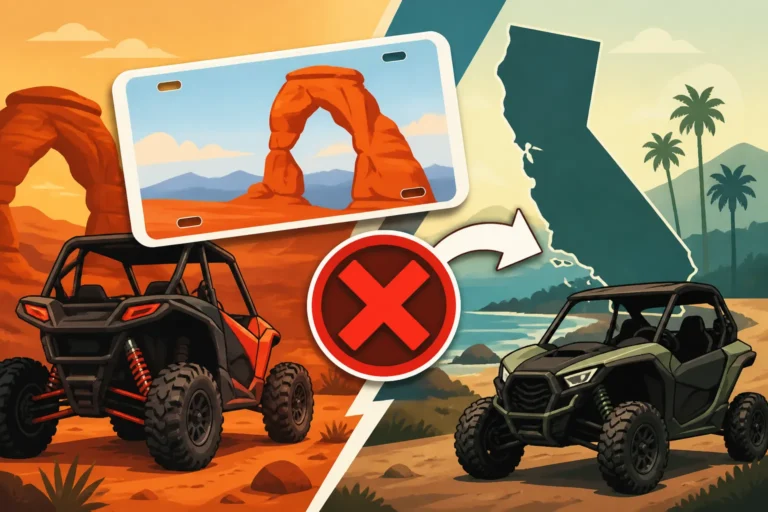
California's reciprocity laws, particularly concerning street-legal vehicle registration, primarily apply to vehicles that originated as street-legal vehicles. For instance, if you drive your street-legal pickup truck from Utah into California, it's generally recognized as street-legal. However, an OHV that has been converted to street-legal status in another state does not automatically gain that same recognition in California. The state views your RZR as an OHV first and foremost, and its out-of-state "street legal" conversion isn't something California's Vehicle Code has a mechanism to reciprocate for general public road use. [A Utah Plate That Means Nothing in California] for an OHV.
When a California law enforcement officer sees a RZR, or any similar UTV or ATV, on a public road with an out-of-state license plate, their primary reference point is California law. And under California law, that machine is still an off-highway vehicle, which means it cannot legally operate on most public roads, regardless of its registration status elsewhere. They are looking at the type of vehicle it is according to California's definitions, not necessarily the specific sticker or plate on it. This is why you might hear stories of riders being ticketed even when they have all their out-of-state paperwork in order. The officer isn't disputing the validity of your Utah registration; they are enforcing California's regulations that prohibit OHVs from general road use. [An Arizona Street-Legal UTV in California] faces the same challenges.
Essentially, California does not have a "street-legal conversion" program for OHVs like many other states do. While your RZR might have passed a stringent inspection in Utah and be fully compliant with their road laws, California's legal framework for what constitutes a street-legal vehicle is different and more restrictive in this specific regard. The state's system does not allow for a factory-built off-highway vehicle to be re-classified for general on-road operation.
| Feature/Requirement | Typical Street-Legal OHV (e.g., Utah) | California Public Road Requirements (for OHV) |
|---|---|---|
| License Plate | Yes, state-issued | No, unless factory street-legal (rare for OHVs) |
| Turn Signals | Required | Not applicable for general OHV road use |
| Horn | Required | Not applicable for general OHV road use |
| Windshield | Often required | Not applicable for general OHV road use |
| DOT Tires | Often required | Not applicable for general OHV road use |
| Vehicle Type | Classified as "Street Legal OHV" | Classified as "Off-Highway Vehicle" |
| Reciprocity | Generally accepted in reciprocal states | Not accepted for OHV conversions in California |
The Strict Reality of Combined-Use and Road Crossing in California
Now, this doesn't mean OHVs can never touch pavement in California. There are very specific, limited exceptions, but these are often misunderstood and do not include general street legality. These exceptions fall into two main categories: combined-use highways and crossing public roads.
First, let's talk about [California's Combined-Use Highways]. These are designated sections of public roads where OHVs are permitted to operate for a very short distance to connect two off-highway trails or to access services like fuel or lodging. Crucially, these are designated segments, meaning a specific local agency (like a county or the Director of California State Parks and Recreation) must have gone through a process, consulted with the CHP, and officially designated that particular road section for combined use. You can't just assume any random dirt road that connects to a paved road is a combined-use route. These routes are typically short, often limited to a maximum of three miles, and are signed appropriately. Without proper signage, or if you exceed the designated length, you are still in violation of the law. You can't just "drive through town" because you're on a combined-use route.
Even on these designated combined-use routes, there are still rules. You must have a valid [California OHV Registration for a UTV] (Green, Red, or Tan sticker) or a valid non-resident permit. Your OHV must meet all California's equipment requirements for off-highway use, such as having an approved spark arrester and meeting sound limits. And yes, you still need to follow all the rules of the road, including having appropriate lighting during certain hours. But again, this is a highly specific exemption for designated segments, not a blanket permission to make your RZR street-legal. [What CHP Looks for on a Combined-Use Route] is exactly this: proper designation, proper OHV registration, and adherence to all basic traffic laws.
The second exception is crossing a public road. California law allows OHVs to cross a paved public road at approximately a 90-degree angle to get from one section of an off-highway trail to another, provided the crossing is made safely and without undue delay. This is a quick "point A to point B" maneuver, not an opportunity to drive down the road a bit. You must yield to all traffic, cross at a safe location, and return immediately to the off-highway trail. You cannot drive along the shoulder, use it to bypass a traffic jam, or cruise down to the local diner. It's a precise and limited action.
The biggest takeaway here is that these exceptions are about facilitating off-highway recreation, not about allowing general street use for OHVs. Law enforcement in California is very well-versed in these distinctions, and they are quick to spot a UTV on a public road that doesn't meet the strict criteria for one of these limited exceptions. When they see a Utah-plated RZR driving on a main road, they're not looking at its out-of-state plate as permission; they're looking at its vehicle type and its current location, and they'll usually conclude it's in violation.
Avoiding a Citation: Practical Advice for Out-of-State Riders
So, what's a rider to do when visiting California with a machine that's street-legal in another state? The short answer is: don't plan on using it on California's public roads for general transportation.
-
Assume No Street Legality: Your best and safest bet is to assume that your out-of-state street-legal OHV is not street-legal in California. This means that if you want to ride it, you should do so exclusively within designated OHV parks, SVRAs (State Vehicular Recreation Areas), or on authorized off-highway trails. This will save you a world of trouble.
-
Trailer Your Machine: The most reliable way to get your RZR to and from riding areas is to [Trailering Instead of Riding in California]. This completely bypasses any street legality issues. Load your machine onto a trailer and transport it to the trailhead or staging area. This is what the vast majority of California riders do, even those with properly stickered OHVs.
-
Understand California's OHV Registration: While your out-of-state plate won't make your RZR street-legal, you do still need valid California OHV identification (Green Sticker, Red Sticker, or Tan Sticker) or a [California's Nonresident OHV Use Permit] to ride on public lands and in SVRAs. Don't confuse the lack of street legality with an exemption from needing an OHV permit or sticker for off-road use. Check out [California OHV Registration for a UTV] to learn more about getting your machine properly stickered for off-road fun.
-
Know the Local Rules: Before you head out, always research the specific riding area you plan to visit. Many OHV areas are close to towns or have specific access roads that might be designated for combined use. Check with the park rangers, the local BLM (Bureau of Land Management) office, or the forest service for maps and current regulations. These maps often clearly delineate any permissible combined-use routes. Stick strictly to these designated areas and follow all signage.
-
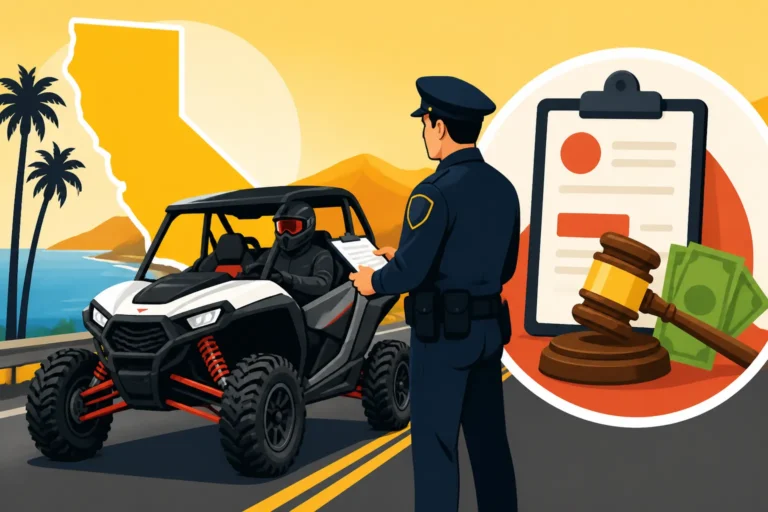
Be Aware of Penalties: Getting caught operating an OHV on a public road where it's not permitted can result in significant fines. [California Fines for Riding on a Highway] can quickly add up, and repeat offenses can lead to even harsher penalties. It's simply not worth the risk.
-
Consider [California OHV Insurance Requirements]: Even if your out-of-state insurance covers your machine for road use, make sure you understand California's requirements for OHV use on public land. It's always a good idea to ensure you're adequately covered for off-road incidents, especially if you're venturing into unfamiliar territory.
While it might feel unfair or confusing that a street-legal designation from another state doesn't carry over, understanding California's strict approach to OHV street legality is your best defense against unexpected citations. Plan your trips carefully, stick to designated riding areas, and always trailer your machine on public roads to ensure a smooth, enjoyable, and ticket-free adventure in California.
Disclaimer
This article is for general informational purposes only and does not constitute professional advice. Laws, prices and regulations vary by location and change over time. Consult a qualified professional for guidance on your specific situation.