Railroad Right of Way and California Riders
It's tempting, isn't it? You're out riding your ATV or UTV, exploring new terrain, and you come across what looks like an abandoned railroad track or a quiet stretch of railway property. It might seem like an open invitation, a path less traveled, but the truth is, riding on or along railroad rights of way in California is not only highly illegal but also incredibly dangerous. This guide is here to shed light on why you should steer clear, what the severe risks are, and where you can find legitimate, safe, and exciting places to ride your machine in the Golden State.
Understanding Railroad Rights of Way in California
When you see a railroad track, it's easy to assume it's just another piece of public infrastructure, perhaps even neglected. But this perception is far from the reality, especially when it comes to riding your off-highway vehicle (OHV). Understanding what a railroad right of way truly entails is the first step in appreciating why it's a no-go zone for recreational riding.
What Exactly is a Railroad Right of Way?
At its core, a railroad right of way is private property. It's owned and managed by railroad companies, or in some cases, by public transit agencies, and it's dedicated exclusively to the operation and maintenance of railway lines. This isn't just the tracks themselves; it includes a significant amount of land on either side of the tracks, often extending many feet, sometimes even hundreds, beyond the visible rails. This strip of land is vital for safe train operations, maintenance crews, and future expansion. It's not public land, and it's certainly not an open-access trail system for your quad or side-by-side.
Think of it like someone's backyard or a private ranch road. Just because it looks open doesn't mean you have permission to enter or use it. Railroad companies maintain these areas meticulously, even if they don't appear to be bustling with activity. They have a vested interest in protecting their infrastructure, ensuring public safety, and maintaining the integrity of their operations. Any unauthorized entry, including riding your OHV, is considered trespassing and can carry serious legal consequences. It's a fundamental misunderstanding to believe these areas are part of the broader public land network available for recreational use.
Why They're Not Open for OHV Riding
The reasons railroad rights of way are closed to OHV riding are twofold: legal and safety. Legally, as mentioned, it's private property. Riding there without explicit permission from the railroad company is a clear act of trespassing. Railroad police, along with local law enforcement, have the authority to enforce these laws rigorously, and they do. They understand the immense dangers involved and act to prevent accidents. You wouldn't drive your UTV into someone's fenced backyard, and while a railroad right of way might not always have a physical fence, the legal boundaries are just as strong.
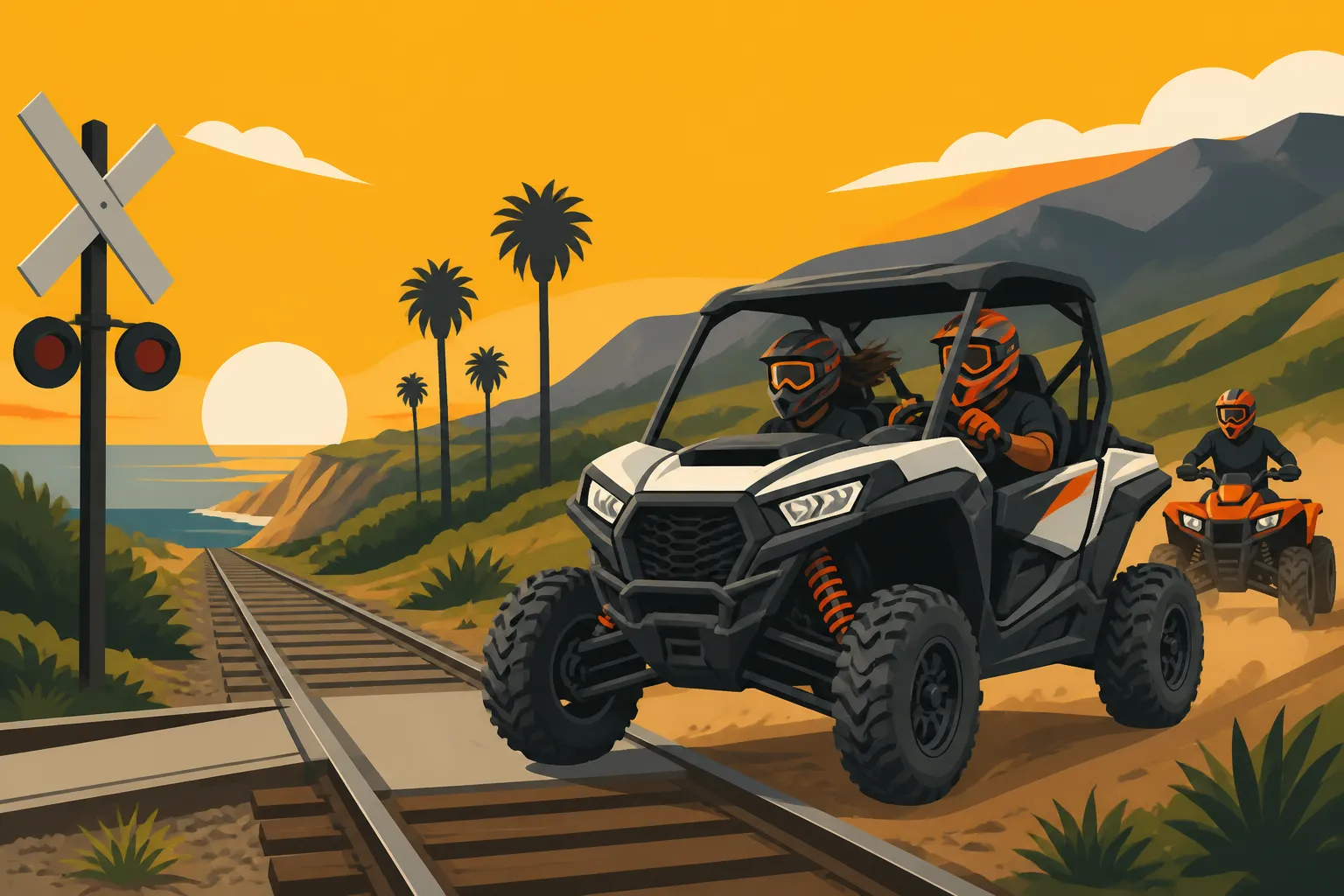
From a safety perspective, the dangers are perhaps even more compelling. Active train tracks are inherently hazardous environments. Trains are often quieter and faster than you might expect, especially freight trains, which can travel at high speeds and can take over a mile to stop once the brakes are applied. The uneven ballast that supports the tracks, the numerous ties, and the various pieces of railway equipment scattered along the right of way create incredibly unstable and dangerous riding conditions for any off-road vehicle. A simple mechanical issue, a punctured tire, or getting stuck in the ballast could put you directly in harm's way with little to no warning. It's a risk that no amount of thrill-seeking is worth taking.
The Serious Dangers of Riding Near Railroad Tracks
When we talk about the dangers of railroad property, we're not just discussing theoretical risks. These are very real, life-threatening hazards that have led to countless tragedies. Understanding these specific dangers is crucial for any responsible OHV rider.
Unpredictable Trains and High-Speed Hazards
Perhaps the most obvious, yet often underestimated, danger is the trains themselves. Modern trains, especially long freight trains, can approach with surprisingly little noise, particularly when riding along dirt paths next to the tracks. The rumble you might expect only becomes audible when they're very close, leaving you precious seconds, if any, to react. Consider this scenario: you're cruising along what you think is a disused section, perhaps you're looking down at your GPS or just enjoying the scenery, and you turn a blind corner only to see a locomotive bearing down on you. These machines weigh thousands of tons and cannot swerve or stop quickly. The sheer momentum makes any collision utterly catastrophic for a lightweight OHV and its occupants.
It's also a common misconception that trains run on predictable schedules. While passenger trains often do, freight train schedules are highly variable and can run at any time, day or night, and often without warning. Even tracks that appear "abandoned" might still be active or could be reactivated at any moment for maintenance or rerouting. Railroad companies prioritize safety above all else, but they operate on their own terms, not yours. Your perception of safety on their property is irrelevant to their operational needs, making every moment spent there a gamble with your life.
Hazardous Terrain and Debris
Beyond the trains, the ground itself within a railroad right of way is a minefield of potential hazards for an OHV. The ballast, those sharp, angular rocks that form the foundation of the track bed, is incredibly unstable and designed to drain water, not to be ridden on. It can easily bog down tires, cause loss of traction, and lead to rollovers, especially for ATVs and UTVs that thrive on more consistent terrain. Furthermore, the wooden or concrete ties can be rotting, cracked, or uneven, creating treacherous obstacles. There might be loose spikes, shards of metal, old tie plates, or discarded equipment hidden in the weeds, just waiting to puncture a tire, damage your suspension, or throw your machine violently off course.
Trying to navigate this kind of terrain puts immense stress on your machine, far beyond what it's designed for on a regular trail. You risk severe damage to tires, axles, suspension components, and even the frame of your OHV. While robust aftermarket parts from brands like SuperATV can significantly enhance your machine's durability for legitimate off-road challenges, they aren't designed to make railroad track riding safe. Repairing the damage from such a ride can be costly, making an already illegal activity even more painful on your wallet.
Electrical Hazards and Infrastructure Damage
Many railroad lines, particularly those used by commuter or high-speed trains, incorporate overhead electrical lines or third rails for power. These lines carry extremely high voltages – voltages that can be lethal with even indirect contact. Simply being too close to a downed power line or a damaged electrical component can result in severe burns, electrocution, or death. This is an invisible danger that OHV riders often don't consider when looking for a shortcut or an exciting new path.
Beyond direct electrical hazards, railroad rights of way contain a complex network of signaling equipment, communication cables, and other critical infrastructure. Driving an OHV over or near these components risks damaging them. Even a minor bump could disrupt vital communication or signaling systems, potentially leading to train delays, reroutes, or even catastrophic accidents involving actual trains. The legal and financial repercussions of causing such damage are astronomical, extending far beyond a simple trespassing fine. Railroad companies take these incidents extremely seriously, and rightfully so, as the safety of countless passengers and freight relies on the integrity of their infrastructure.
Legal Consequences You Face on Railroad Property
The thrill of riding where you shouldn't can come with a very steep price. Beyond the physical dangers, the legal ramifications of riding your OHV on railroad property in California are serious and can follow you for a long time.
Trespassing Fines and Criminal Charges
Make no mistake: railroad rights of way are private property, and entering them without permission is trespassing. In California, trespassing can lead to significant fines. You could be facing a hefty ticket, but it can escalate quickly. Railroad companies often have their own police forces, who are fully sworn law enforcement officers with the power to cite and arrest. Local sheriff's deputies and city police also patrol these areas and will enforce trespass laws. Imagine your OHV being impounded, requiring you to pay towing and storage fees on top of the fine. This can easily run into hundreds, if not thousands, of dollars.
In more egregious cases, or if you've been warned before, trespassing can even be a misdemeanor offense, leading to criminal charges on your record. A criminal record can impact future employment, housing, and even your ability to travel. It's simply not worth the risk. Many riders are caught because railroad police actively monitor their property using various methods, including patrols, cameras, and even drones. A brief ride that seems harmless could end up with a very public and embarrassing encounter with law enforcement. This is why understanding [California Trespass Rules for OHV Riders] is so important for any responsible enthusiast.
Civil Liability and Property Damage
The legal consequences don't stop at fines or criminal charges. If your OHV causes any damage to railroad property—be it tracks, signals, fences, or communication equipment—you will be held civilly liable for the cost of repairs. This isn't just a small dent; repairing railway infrastructure can be incredibly expensive, often requiring specialized equipment and crews. Imagine the cost if you derail a train or disrupt a vital signaling system, even accidentally. The financial burden could be devastating, potentially bankrupting an individual or family.
Furthermore, your OHV insurance, which is typically for accidents on approved riding areas, will almost certainly not cover any damages or liability incurred while illegally trespassing on private railroad property. When you sign those policy documents, they have clauses that exclude illegal activities. This means you would be personally responsible for every penny of the damages, with no insurance safety net. It's a risk that most people are completely unprepared for, highlighting why legal riding areas, where your machine is properly insured and maintained, are the only sensible option.
What Happens if There's an Accident?
This is the most grim consequence, but it's vital to address. If you are involved in an accident with a train while trespassing on railroad property, the railroad company has no legal liability for your injuries. As a trespasser, you are on their property illegally, and they are generally not responsible for your safety. This means that if you are seriously injured or worse, you and your family will bear the full financial burden of medical costs, rehabilitation, and lost income, with no recourse against the railroad.
Beyond the severe physical and financial toll, consider the emotional impact. Train engineers and crew members are often traumatized by accidents involving trespassers, a burden they carry for years. It's a horrific experience for everyone involved. The idea of seeking an adrenaline rush on railroad tracks is an incredibly selfish act when weighed against the potential for such widespread and lasting devastation. Responsible OHV riders prioritize safety and legality, not just for themselves but for the broader community and the integrity of the sport.
Finding Safe and Legal Riding Areas in California
Now that we’ve covered the serious risks and legal dangers of railroad property, let's pivot to the good news: California is an incredible state for OHV riding, offering a vast array of legal, safe, and exciting places to explore. You don't need to risk your life or your liberty to have an amazing time on your quad or UTV.
California's Designated OHV Parks and SVRAs
California boasts a fantastic network of State Vehicular Recreation Areas (SVRAs) that are specifically designed, maintained, and managed for off-highway vehicle recreation. These parks offer a diverse range of terrain, from challenging rock crawling and technical trails to open dunes and beginner-friendly routes. Places like Glamis (Imperial Sand Dunes Recreation Area), Hungry Valley SVRA, Hollister Hills SVRA, and Ocotillo Wells SVRA are world-renowned destinations, providing thousands of acres of legal riding. Each SVRA offers different experiences, from the iconic dunes of Glamis where you can test your skills on towering sand formations, to the rugged hills and varied trails of Hungry Valley near Gorman.
These SVRAs are not just open land; they come with amenities, designated camping areas, and rangers who are there to ensure safety and enforce park rules, not to catch you trespassing. Your California OHV registration fees contribute directly to the maintenance and improvement of these areas, ensuring a high-quality riding experience. By choosing to ride in an SVRA, you're supporting the sport, enjoying peace of mind, and ensuring your adventures are both thrilling and legitimate. Checking out [California's State Vehicular Recreation Areas] is a great first step to planning your next legal ride.
National Forests and BLM Land
Beyond the SVRAs, California has extensive National Forests and Bureau of Land Management (BLM) lands that offer legal OHV opportunities. These vast areas are often crisscrossed with designated trails, dirt roads, and open riding zones. However, unlike the SVRAs, riding here requires a bit more homework. It's absolutely crucial to consult Motor Vehicle Use Maps (MVUMs) for National Forests and travel management plans for BLM land. These maps clearly designate which routes are open to OHVs, which are closed, and which have specific restrictions. Riding off-designated trails in these areas can lead to fines for resource damage and trespassing.
Exploring [California OHV Areas in the National Forests] can be an incredible experience, offering stunning scenery, varied elevations, and a sense of true wilderness adventure. But always remember, respect the land, stay on marked trails, and adhere to all posted regulations regarding noise, spark arresters, and environmental protection. This is where your machine’s capabilities can truly shine in a responsible manner. Investing in a quality mapping device and knowing how to read a [Motor Vehicle Use Maps and Reading Them] are essential tools for responsible exploration.
Why Investing in Legal Riding Pays Off
Choosing to ride in legal, designated areas isn't just about avoiding trouble; it's about maximizing your enjoyment of the sport. When you're not constantly looking over your shoulder for law enforcement or worrying about an unexpected train, you can truly relax and immerse yourself in the ride. Plus, riding on legitimate trails helps you build real skills and confidence in diverse conditions. You can accessorize your machine for optimal performance and safety on real trails without worrying that your investment will be seized. For example, upgrading with robust suspension components or protective skid plates, like those from SuperATV, makes a huge difference when you're tackling legitimate rocky trails or fast desert sections, not dangerous railroad ballast.
Furthermore, riding legally means you're contributing to the sustainability of the sport. Your registration fees, along with any park entrance fees, directly fund trail maintenance, safety programs, and the creation of new riding opportunities. It fosters a positive image for OHV enthusiasts, rather than one associated with reckless behavior and disregard for the law. So, while a railroad right of way might seem like a tempting shortcut, the long-term rewards of responsible, legal riding far outweigh the fleeting, dangerous thrill of breaking the rules.
| Feature | Riding on Railroad Right of Way | Riding in Designated OHV Area (SVRA/BLM/National Forest) |
|---|---|---|
| Legality | Illegal (Trespassing) | Legal (Designated Routes) |
| Safety | Extremely High Risk (Trains, Debris, Electrified) | Managed Risk (Known Hazards, Safety Rules) |
| Consequences | Fines, Criminal Charges, Impoundment, Civil Liability, No Insurance Coverage, Severe Injury/Death | Minor Fines for Rule Violations, Enjoyment, Safety |
| Terrain | Unstable Ballast, Rotten Ties, Hidden Debris | Varied, Maintained Trails, Designated Play Areas |
| Support | Zero support, actively patrolled against | Rangers, Amenities, Trail Maps, Community |
| Environment | Undesignated, damaging, potential for severe impact | Managed, Sustainable, Conservation efforts |
| Experience | Stressful, Fearful, High Risk | Relaxed, Adventurous, Community-focused |
Disclaimer
This article is for general informational purposes only and does not constitute professional advice. Laws, prices and regulations vary by location and change over time. Consult a qualified professional for guidance on your specific situation.