How the 1-Mile Golf Course Radius Works
It's a common daydream, isn't it? You've just finished a round of golf, or you're heading to the local course, and you wish you could just hop in your ATV or UTV and cruise those short distances on public roads. California, however, has some very specific rules about what can and cannot legally be driven on its streets, and while there's an intriguing "1-mile golf course radius" rule, it's almost certainly not for your beloved off-highway machine. This guide will meticulously break down what that rule actually means, who it applies to, and why your ATV or UTV usually doesn't make the cut.
Understanding California's Golf Cart Rules on Public Roads
Navigating California's rules for off-highway vehicles (OHVs) and public roads can feel like trying to find your way through a dense fog. Most OHV owners quickly learn that their dirt bike, quad, or side-by-side isn't meant for cruising down Main Street. This general restriction often leads to confusion when people hear about exceptions, especially those involving golf courses. The key to understanding this particular rule lies in recognizing that California law makes a very clear distinction between a "golf cart" and virtually any other type of motorized vehicle, including ATVs and UTVs, even if they sometimes share similar appearances or low-speed characteristics.
The General Restriction on OHVs and Public Streets
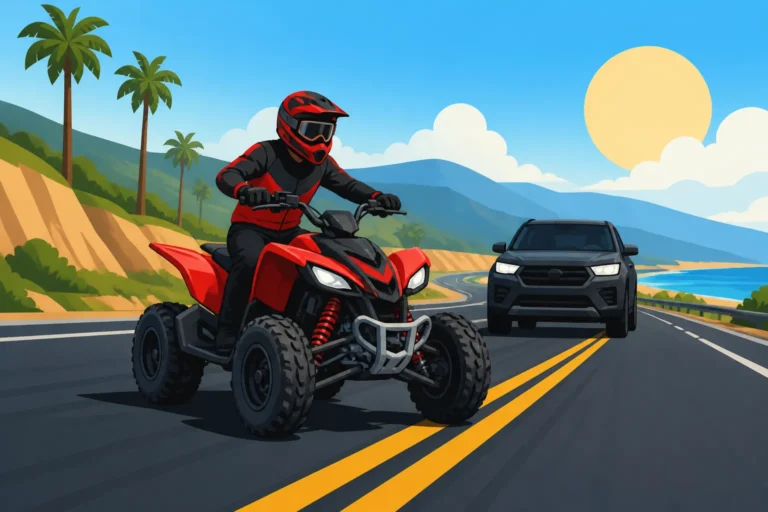
Let's start with the baseline: in California, ATVs and UTVs are classified as Off-Highway Vehicles. This means they are designed and intended for use off public roads, on designated trails, dunes, or private property. Taking an OHV onto a public street or highway is generally illegal and can carry significant penalties, including hefty fines and even impoundment of your machine. This isn't just a bureaucratic hurdle; it's a matter of public safety. OHVs lack many of the safety features required for street legal vehicles, such as turn signals, brake lights, mirrors, and specific tire ratings. Their suspension systems, seating, and overall design are optimized for rough terrain, not paved roads, making them less predictable and more dangerous in traffic. For most OHV enthusiasts, the excitement is found on the dirt, not alongside cars and trucks on asphalt. This foundational understanding is crucial before we even begin to discuss any exceptions.
What is a Golf Cart in California Law?
Before we dive into the "radius," we absolutely need to define what California considers a "golf cart" for street-use purposes. According to the California Vehicle Code (CVC), a "golf cart" is a motor vehicle having not less than three wheels, designed to be and is operated at not more than 15 miles per hour, and is designed to transport persons and equipment for sporting activities such as golf. Notice those specific parameters: "not more than 15 miles per hour" and "designed to transport persons and equipment for sporting activities such as golf." This is a critical distinction. A typical UTV, even if it's a small utility model, is usually capable of speeds far exceeding 15 mph and is often designed for broader recreational or utility purposes, not solely for golf. While you might see people using a UTV to carry golf clubs on a private course, that doesn't automatically reclassify it under state law. The physical characteristics, top speed, and manufacturer's intended use are all factors. Furthermore, golf carts often have specific braking, lighting, and reflective requirements that differ from an OHV. When you look at an average golf cart, it's clear it's built for a very specific, low-speed environment, not the diverse terrains an OHV is designed to conquer.
The Core of the 1-Mile Radius Rule
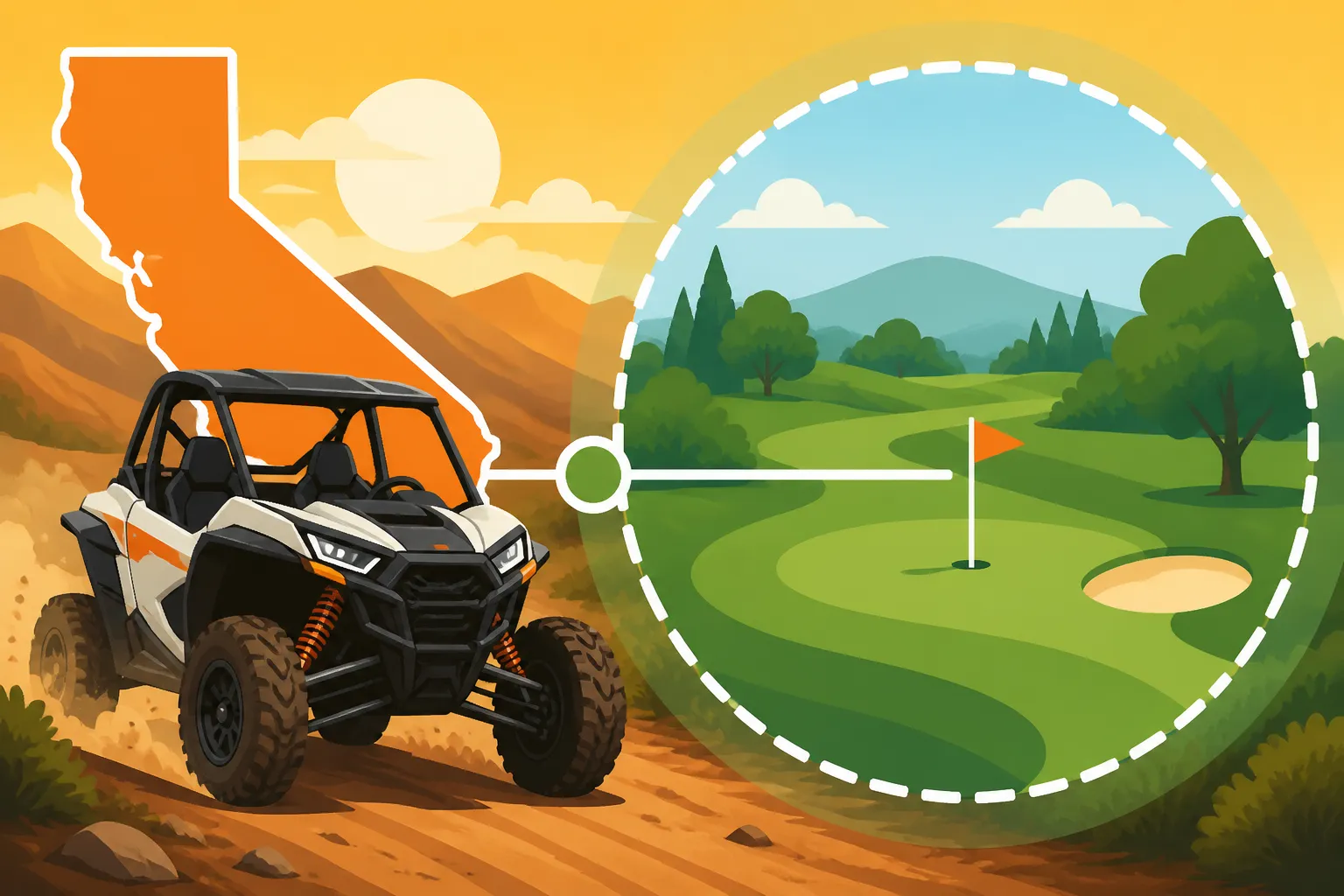
Now, let's get to the heart of the matter: the 1-mile golf course radius rule. California Vehicle Code Section 21115 allows cities and counties to establish ordinances permitting golf carts to be operated on public roads within one mile of a golf course. However, this isn't a blanket permission slip. There are stringent conditions that must be met:
- Local Designation: The specific streets or segments of streets must be formally designated by the local city or county authority. This isn't something you can just assume; there must be an official ordinance and signage indicating that golf carts are permitted on those particular roads. It's a localized decision, not a statewide free-for-all.
- Speed Limits: The designated public roads must have a maximum speed limit of 25 miles per hour or less. This ensures that golf carts, which are inherently slower and have less protection, are not mixing with fast-moving traffic.
- Purpose: The operation of the golf cart must be for the purpose of traveling to or from the golf course, or for related purposes like accessing a clubhouse or pro shop. It's not intended for general errands or recreational cruising around town.
- Safety Requirements: Any golf cart operating under such an ordinance must meet specific safety equipment requirements, which can include things like headlights, taillights, brake lights, turn signals, seat belts, and mirrors, even if the base vehicle isn't originally equipped with them. These are often stricter than what a typical OHV possesses.
So, while the rule does exist, it's a highly controlled and localized exception, specifically for vehicles that meet the narrow definition of a "golf cart" and only on specially designated, low-speed roads. It's designed to provide convenience for golfers, not to expand the operational area for recreational OHVs.
How This Rule Applies (and Doesn't Apply) to ATVs and UTVs
This is where the rubber meets the road, or more accurately, where your knobby tires don't quite meet the regulations. While the idea of easily zipping around near a golf course in your UTV might be appealing, the reality of California law draws a very firm line between what constitutes a golf cart and what is classified as an Off-Highway Vehicle. Understanding this distinction is paramount to avoiding legal trouble and ensuring your safety.
Why Your ATV/UTV Isn't a Golf Cart
The fundamental reason your ATV or UTV won't qualify for California's 1-mile golf course radius rule is simple: it's not a golf cart. As we detailed, a golf cart has a legal definition centered around its low top speed (15 mph max) and its design for golf activities. Your average ATV or UTV, whether it's a sport quad, a utility side-by-side, or a recreational desert machine, far exceeds that 15 mph speed limit. These machines are engineered for power, speed, and handling rugged terrain, often reaching speeds of 40-70 mph or more. They also typically have different emissions standards (or lack thereof for off-road use) compared to street-legal vehicles or even low-speed electric golf carts.
Even if you modify your UTV with a horn, mirrors, or turn signals (and many owners do, perhaps using parts from aftermarket suppliers like SuperATV for enhanced safety and trail utility), these additions generally do not magically transform it into a "golf cart" in the eyes of the law. The core design, engine, and intended use remain those of an OHV. Attempting to pass off a UTV as a golf cart on designated public roads is a recipe for a citation, and potentially worse. The spirit of the law for golf carts is for very slow, predictable movement in very specific, low-traffic areas, a world apart from the capabilities and common usage of an ATV or UTV.
Designated Combined-Use Highways (A Different Approach)
If you're looking for ways to legally get your OHV onto a public road in California, you'll need to look at an entirely different set of regulations: [California's Combined-Use Highways]. This is a completely separate program from the golf cart rules and applies to the very specific scenario where local authorities have designated certain county roads or road segments for shared use by both highway-licensed vehicles and properly registered OHVs.
The intent here is to connect OHV trails or trailheads, allowing riders to traverse short distances on public roads rather than having to trailer their machines every time. These combined-use segments often have a maximum speed limit, usually 35 mph or less, and typically involve roads in rural or undeveloped areas where traffic is minimal. Critically, there's often a [California's 3-Mile Combined-Use Cap], meaning you can only ride for a short distance to link trails, not for general transportation. To be eligible for these routes, your OHV must be properly registered with a valid California Green or Red Sticker (or an equivalent [California's Nonresident OHV Use Permit]), and you must follow all rules of the road, including wearing an approved helmet if riding an ATV, and often carrying insurance. This is a far cry from the golf cart rule, which is about slow-moving, purpose-built vehicles near golf courses. It's vital not to confuse the two; one allows very limited OHV road use for specific purposes, while the other is strictly for golf carts.
Local Ordinances and Exceptions
While the statewide golf cart rule is quite clear, it's worth noting that California allows local jurisdictions some leeway in managing low-speed vehicles. Cities like [Palm Desert's Golf Cart Lanes] have developed extensive networks of golf cart lanes, and others, like the city of Lincoln (mentioned in [Which Lincoln Streets Allow Neighborhood Electric Vehicles]), have embraced Neighborhood Electric Vehicles (NEVs) on specific streets. However, these are almost exclusively tailored to actual golf carts or NEVs, which are distinct vehicle categories under the CVC.
An NEV, for example, is a four-wheeled electric vehicle that has a maximum speed of 25 mph and generally conforms to the federal safety standards for low-speed vehicles. It's still a different beast from your typical UTV. These local ordinances are highly specific to the vehicles they designate and the routes they cover. It is exceedingly rare for any local ordinance to extend street-legal privileges to a standard recreational ATV or UTV, even if modified with aftermarket parts from reputable manufacturers. The legal and safety requirements for general road use are so comprehensive that a recreational OHV rarely, if ever, meets them without a complete and often cost-prohibitive overhaul that would fundamentally change its nature from an off-highway vehicle. Always remember, just because a city allows "golf carts" or "low-speed vehicles" on certain roads, that does not automatically include your ATV or UTV.
Navigating Local Rules and Potential Pitfalls
The complexities of California's vehicle codes can be a real head-scratcher, especially when you're trying to figure out where you can and cannot legally ride your off-highway vehicle. The frustration is understandable; you just want to enjoy your machine responsibly. However, misinterpreting these rules, particularly the golf cart radius, can lead to serious consequences. Being proactive and informed is your best defense against fines, impoundment, or even accidents.
Always Check Local Ordinances
When it comes to something as specific as street use for golf carts or other low-speed vehicles, generalized state law is just the starting point. Local jurisdictions – your specific city and county – have the authority to create their own ordinances that either enable or further restrict certain vehicle operations. This means that while the state allows the 1-mile golf course radius, it's entirely up to each local government to actually implement it. If you're near a golf course and wonder if you can use a golf cart on the road, your first step should always be to contact the local city hall or county administrative office. Ask specifically about "golf cart ordinances" and inquire about designated routes. Don't rely on anecdotal evidence or what you see others doing; local laws can change, and enforcement can vary. A quick call to the local police department's non-emergency line or a visit to the city's official website can usually provide the definitive answer you need. What might be allowed in Palm Desert is very different from what's permitted in an unincorporated area of Riverside County, so do your homework for your specific location.
Consequences of Misuse
Operating your ATV or UTV on a public road where it's not legally permitted, even for a short distance, carries significant risks. The consequences can range from inconvenient to severe. At a minimum, you're looking at a citation for operating an unregistered or non-street-legal vehicle on a highway. These [California Fines for Riding a Public Road] can quickly add up, easily costing you hundreds of dollars. Beyond that, your machine could be impounded, leaving you with additional towing and storage fees to retrieve it. This process can be a huge hassle and a drain on your wallet.
Even more critical are the safety implications. OHVs are not designed for road conditions, traffic speeds, or the quick maneuvers required in an urban environment. A simple fender bender on a paved road can lead to serious injuries, not only for you but for other motorists or pedestrians. If you're involved in an accident, your standard OHV insurance might not cover incidents on public roads, leaving you personally liable for damages. This could lead to massive financial burdens. It's simply not worth the risk for a convenience that isn't legally sanctioned.
Safety First, Legality Second
Ultimately, whether you're riding your OHV on a designated trail or considering any form of limited road use for an actual golf cart, safety should always be your absolute top priority. The rules and regulations, while sometimes frustrating, are largely in place to protect you and others. If you're riding an ATV, wearing an approved helmet is non-negotiable ([California Helmet Law for ATV Riders]). For UTVs, ensure all passengers are properly seated and belted, and that your machine is equipped with all manufacturer-recommended safety devices.
When considering any legal means of traversing public roads with an OHV (like those combined-use segments, not the golf cart rule), factors like visibility become critical. Bright colors, flags, and proper lighting are crucial, especially if you're sharing the road with cars. Always carry your registration documents and any permits required, and make sure you understand the nuances of [California OHV Insurance Requirements] to protect yourself in unforeseen circumstances. The bottom line is this: resist the temptation to take shortcuts. Always prioritize legal and safe operation of your OHV, and understand that specific rules like the 1-mile golf course radius exist for very particular types of vehicles and circumstances, not for general OHV use.
Golf Cart vs. ATV/UTV: Street Use Considerations
To make the distinctions clearer, here's a comparison of how golf carts, ATVs, and UTVs are typically viewed under California law regarding public road use, specifically in the context of the 1-mile golf course radius.
| Feature | Golf Cart (California Definition) | ATV (Off-Highway Vehicle) | UTV (Off-Highway Vehicle) |
|---|---|---|---|
| Primary Design | Transport for golf activities, low-speed utility | Single rider, recreational, off-road terrain | Multiple riders, recreational/utility, off-road terrain |
| Max Speed | Typically 15 mph (legal definition) | 40-70+ mph | 40-80+ mph |
| Engine/Power | Electric or small internal combustion | Internal combustion, various sizes | Internal combustion, various sizes |
| Street Legal Status | Conditional, via local ordinance on specific roads | Generally NOT street legal | Generally NOT street legal |
| 1-Mile Golf Course Radius Eligibility | YES (if designated by local ordinance) | NO | NO |
| Combined-Use Highway Eligibility | NO (not an OHV, though some NEVs might use specific routes) | YES (if properly registered and on designated routes) | YES (if properly registered and on designated routes) |
| Required Registration | None, unless registered as an NEV | [Registering an OHV in California] (Green/Red Sticker) | [California OHV Registration for a Side-by-Side] (Green/Red Sticker) |
| Safety Features | Basic lights, reflective tape, seat belts (often retrofitted) | Headlights, taillights (usually off-road spec), no turn signals (standard) | Headlights, taillights (usually off-road spec), no turn signals (standard) |
| Common Modifications | Enhanced lighting, street tires, safety glass (for NEVs) | Performance parts, tires, winches, accessories (e.g., from SuperATV) | Performance parts, cabins, winches, accessories (e.g., from SuperATV) |
| Street Use Purpose | Accessing golf courses or local amenities within specific zones | Connecting OHV trails/areas (very limited) | Connecting OHV trails/areas (very limited) |
Disclaimer
This article is for general informational purposes only and does not constitute professional advice. Laws, prices and regulations vary by location and change over time. Consult a qualified professional for guidance on your specific situation.