Keeping Plates Legible in Sand
There's nothing quite like hitting the open sand dunes or dusty desert trails of California on your ATV or UTV. But amid all that thrilling adventure, a common and often overlooked frustration can quickly turn into a headache: keeping your vehicle's identification plate clean and visible. Rangers at popular riding spots like Glamis, Oceano Dunes, or Ocotillo Wells are diligent about checking for legible plates, and getting a citation for a mud-splattered or sand-blasted tag is a real bummer. This guide will walk you through practical strategies to protect your OHV plate, ensure compliance, and keep your ride worry-free.
Why Legibility Matters on California Sand
When you're out carving up the dunes or tackling a challenging trail, the last thing on your mind might be the condition of your OHV's ID plate. But in California, whether you're on a dirt bike, a quad, or a side-by-side, that little plate is your vehicle's identification, and keeping it legible isn't just a courtesy—it's the law. Ignoring its condition can lead to a lot more than just a disapproving glance from a ranger; it can result in fines and cut short your riding day.
The Law and Enforcement
California Vehicle Code sections specifically address the display and legibility of license plates and identification devices for all vehicles, including off-highway vehicles. Essentially, your vehicle's ID plate needs to be clearly visible and readable at all times. This isn't just some obscure rule; it's actively enforced, especially in high-traffic OHV areas. Imagine rolling up to a popular checkpoint, perhaps at the entrance to Glamis, and a ranger waves you over. They're not just checking for your [California's Green Sticker Explained] or [California's Red Sticker Rules Today]; they're also looking at your ID plate. If it's caked in mud, obscured by dust, or so sand-blasted it's unreadable, you could be facing a citation.
These checks are common at gates, on popular trails, and even during random patrols. Rangers and law enforcement officials understand that riding off-highway means getting dirty, but they also expect riders to make a reasonable effort to maintain their vehicle's identification. They need to be able to quickly verify your machine's registration status and confirm it matches the paperwork you might be [Carrying Registration Paper on the Sand]. If they can't do that, it raises questions and can lead to unnecessary delays or, worse, a fine.
A hypothetical scenario: you’ve just spent an amazing morning at [Riding Oceano Dunes on a Red Sticker Machine], splashing through puddles and kicking up sand. You head back to your camp, only to find a ranger patrolling, and they spot your completely mud-obscured ID plate. Even if your registration is perfectly valid, the illegibility of the plate itself is a violation. It’s a frustrating situation because you’re not trying to evade anything, but the law is pretty clear on visible identification. This is why being proactive is so important.
The Challenges of Sand and Elements
The very nature of off-highway riding makes keeping an ID plate pristine a monumental challenge. Sandy environments, in particular, are notorious for their ability to quickly obscure any exposed surface. Think about how quickly your goggles get covered in dust or how the front of your UTV is plastered with mud after a single run. Your ID plate is no exception.
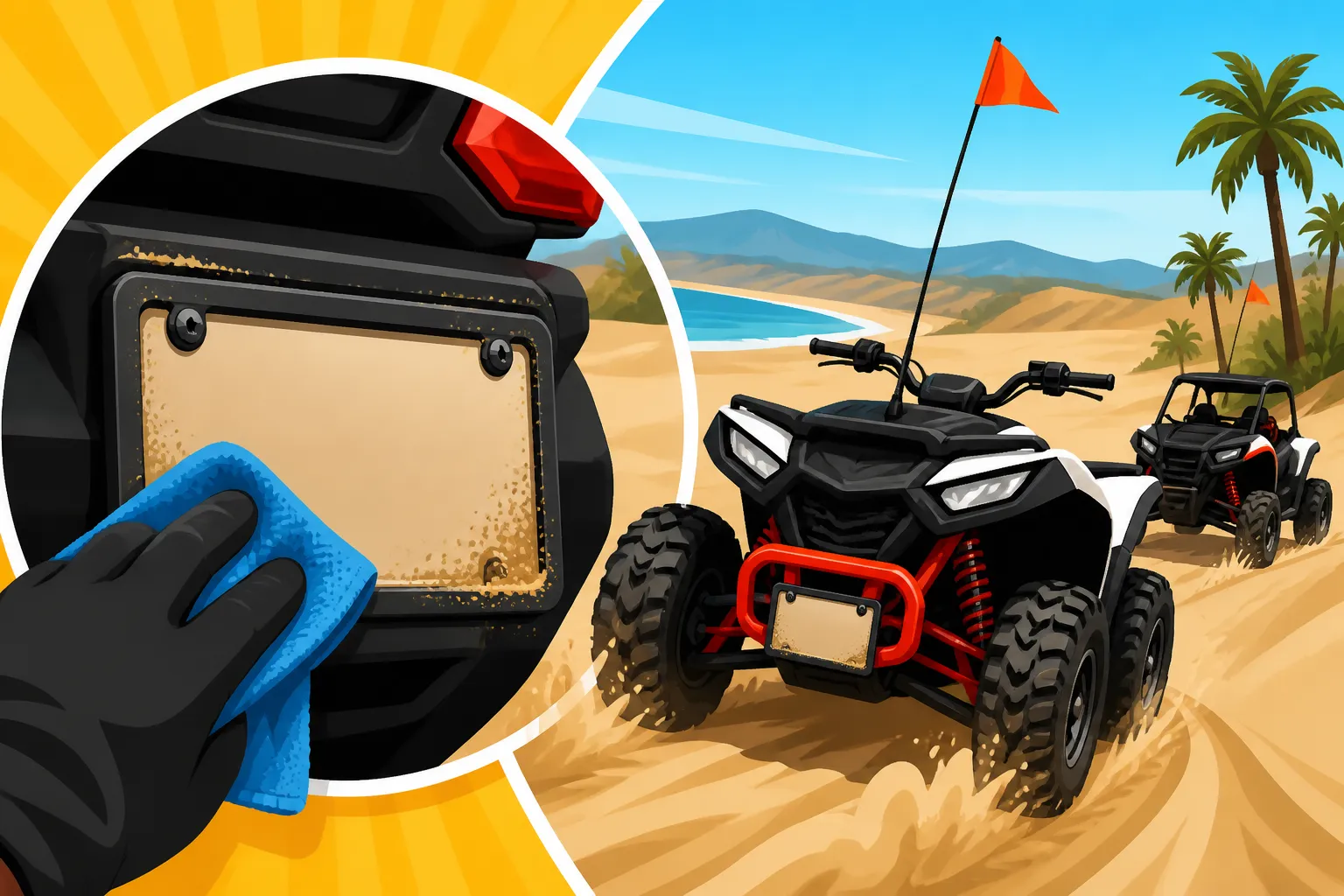
Sand-blasting is a real phenomenon in dune areas. As you ride, especially at speed, tiny particles of sand are constantly being kicked up by your own tires and those of other riders. This gritty storm acts like a natural abrasive, slowly but surely etching away at the plate's finish, dulling the numbers and letters, and making them increasingly difficult to read. On top of that, water splashes from puddles or river crossings can mix with sand and mud, creating a sticky, opaque layer that adheres stubbornly to the plate. This isn't just a cosmetic issue; that layer of grime effectively makes the plate invisible to anyone trying to read it.
Consider a popular spot like [Riding Glamis on a California Green Sticker]. The sheer volume of traffic means you're constantly in someone's roost, or kicking up your own. Combine that with potential morning dew or unexpected rain, and your plate can go from clean to caked in minutes. Even in drier, dustier desert trails, the fine powder can settle and stick, accumulating into a thick coating that renders the plate unreadable. The constant vibration from riding also contributes, as it can loosen dirt or even cause protective films to peel, leaving the plate vulnerable to the elements.
Practical Strategies for Protecting Your OHV Plate
Dealing with an illegible plate shouldn't be a constant battle. With a little forethought and some smart maintenance practices, you can significantly extend the life and legibility of your OHV's identification plate. It's all about creating a proactive routine, both before and during your ride, to combat the relentless assault of sand, mud, and dust that California's varied terrain throws your way.
Pre-Ride Preparation
Before you even load up your machine for a weekend adventure, dedicate a few minutes to preparing your ID plate. This small investment of time can save you a lot of hassle down the road. First and foremost, give the plate a thorough cleaning. Use soap and water, scrubbing gently to remove any lingering dirt, old grime, or caked-on residue. You want a perfectly clean surface for any protective applications. Remember, a clean start is a strong start.
Once the plate is spotless and dry, consider applying a clear protective coating. Many riders swear by clear vinyl film or laminates specifically designed for vehicle graphics. These films create a barrier against sand-blasting and scratching, while still allowing the plate's details to be seen. Think of it like a screen protector for your phone, but for your OHV plate. Another option is a clear spray-on coating, often found in automotive stores, which can add a layer of clear coat protection. The pros of these methods are durable protection; the cons can include potential bubbling if not applied correctly, or peeling over time. You might also consider applying anti-fog or anti-scratch sprays, typically used for helmet visors, to make it harder for mud and dust to adhere.
For some machines, especially quads, you might have limited options for plate placement. The [What the ID Plate Looks Like] is designed to be mounted in a specific location. However, if your machine allows for a slight adjustment that positions the plate further out of the direct line of roost or spray from your own tires, without violating mounting regulations, it's worth considering. Always ensure any relocation adheres to California's mounting regulations to avoid new issues. For example, some quad owners strategically mount the plate slightly behind a wheel well or under a grab bar, while ensuring it remains fully visible from the rear, as dictated by law.
During-Ride Maintenance
While pre-ride prep is crucial, the battle for legibility doesn't end once you hit the trails. Active, during-ride maintenance is just as important, especially on longer excursions or in particularly messy conditions. This doesn't mean stopping every five minutes, but rather incorporating quick checks into your routine stops.
Every time you pause for a break, a snack, or to check a map, take a quick glance at your ID plate. Is it starting to collect a significant layer of dust or mud? If so, and you have access to a damp cloth or even just a water bottle and a paper towel, give it a quick wipe down. Even a partial cleaning can make a huge difference in maintaining its readability. This is particularly effective if the grime is still fresh and hasn't had a chance to dry and harden. Many experienced riders will carry a small, dedicated rag or even a travel-size pack of wet wipes specifically for this purpose.
Another simple but effective strategy is to be mindful of how you ride around others. Avoiding "roosting" your buddies—kicking up a massive spray of dirt or sand directly onto their machine—is not only good riding etiquette but also helps protect their plate, just as you'd want them to protect yours. Likewise, if you're following another rider, try to maintain a distance that minimizes the amount of debris flung onto your own machine. In sandy washes or muddy sections, sometimes it's impossible to avoid, but conscious effort can reduce the impact. Remember, every bit of sand that lands on that plate contributes to its eventual illegibility, so minimizing exposure is key.
Post-Ride Care
Just as important as preparing for and maintaining during a ride is what you do after the adventure. Post-ride care for your OHV plate is an essential step in ensuring its longevity and readiness for your next trip. This is where you can undo the damage from the day and prepare for future outings.
As soon as you get home or back to your base camp, give your entire OHV a good wash, and pay special attention to the ID plate. Use a pressure washer carefully, or simply a hose and brush, to blast away all the accumulated sand, mud, and dust. Make sure to get into any crevices where dirt might hide. If you have a clear protective film on your plate, check its integrity. Is it peeling at the edges? Are there any significant tears or abrasions? If so, it might be time to remove the old film and apply a fresh layer before your next ride. This prevents moisture and grit from getting underneath and degrading the plate itself.
Beyond just cleaning, make it a habit to inspect your plate for any signs of damage. Are the numbers or letters becoming faded or chipped? Is the plate itself bent or cracked? Sometimes, despite your best efforts, rocks or debris can cause physical damage. Catching these issues early means you can address them before they become a bigger problem or lead to a citation. If the plate is looking significantly worn or damaged, it might be time to consider replacing it. This inspection is also a good time to check the mounting bolts to ensure they are still tight and secure, preventing the plate from falling off while you're out on the trails.
What to Do If Your Plate Becomes Illegible or Damaged
Despite your best efforts, sometimes things just happen out on the trail. A sudden downpour, an unexpected mud bog, or even a rogue rock kicked up by a passing vehicle can render your OHV plate unreadable or even damage it. When this happens, knowing how to react can make a big difference in avoiding further issues, like a citation from a ranger.
Roadside Remediation and Documentation
If you're out riding and notice your plate has become heavily obscured by mud or dust, the first thing to do is try to clean it on the spot. Pull over safely, grab that damp cloth or wet wipes you hopefully packed, and give it a good scrub. Even if you can't get it perfectly pristine, making a clear effort to clean it goes a long way. Many rangers appreciate the effort and are more likely to offer a warning or advice than a citation if they see you trying to comply. The goal is to make the [California OHV Plate Number Explained] legible again, even if temporarily.
Beyond cleaning, it's wise to carry proof of your current registration. While your ID plate is the primary visual identifier, having your paper registration with you provides a backup. If your physical plate is completely illegible or even lost, you can present your valid registration documents to a ranger. Some riders even take a photo of their clean, clearly legible plate with their phone before they head out, along with a photo of their current registration card. While not a foolproof defense against a citation for an illegible physical plate, this documentation can demonstrate your good faith and compliance if questioned by law enforcement. It shows you're not trying to hide anything, which can often smooth over a roadside interaction.
Replacing a Damaged or Lost Plate
Sometimes, cleaning isn't enough, or the plate might be physically damaged beyond repair, or even fall off during a vigorous ride. If you find yourself in this situation, you'll need to replace it. The process for replacing a California OHV ID plate goes through the California Department of Motor Vehicles (DMV) or a qualified private registration service. This is a common occurrence, as these plates are exposed to harsh conditions. You'll likely need to fill out specific forms, such as Form REG 343, Application for Title or Registration, and pay a replacement fee.
It’s important to act quickly once you realize your plate is missing or unreadable. Riding without a legible, properly displayed ID plate is a violation, and you don’t want to risk further issues. The DMV process will typically issue you a new plate with a new number, along with an updated registration card. You can find detailed information about the steps involved in articles like [Replacing a California ID Plate] and [Ordering a Replacement Plate]. Remember, this is about ensuring your machine is always legally identifiable, which is a key part of responsible off-highway riding in California. Having your [California OHV Registration Paperwork Checklist] handy might also speed up the process.
Long-Term Solutions and Best Practices
Maintaining the legibility of your OHV plate isn't just about quick fixes; it's also about implementing long-term solutions and adopting best practices that can prevent problems before they even start. By thinking strategically about how your plate is mounted, understanding its design, and practicing mindful riding, you can significantly reduce the wear and tear it experiences.
Mounting Considerations
How and where your OHV ID plate is mounted plays a critical role in its vulnerability to the elements. The law dictates that the plate must be mounted in a clearly visible location, typically on the rear of the vehicle. However, within those parameters, there can be slight variations in placement or mounting hardware that can make a big difference. For example, some stock mounting brackets might position the plate directly in the path of tire roost or behind exhaust pipes, where heat and soot can also contribute to deterioration. Reviewing [Where the ID Plate Mounts on a Quad] can offer insights into typical placements.
Consider using sturdy, corrosion-resistant mounting hardware to secure the plate. Loose bolts or flimsy brackets can lead to excessive vibration, which not only causes the plate to rattle but can also accelerate wear and tear on the plate itself, and even lead to it falling off. Reinforcing the mounting points with washers or even a small backing plate can distribute stress and help keep the plate securely in place, minimizing movement and exposure to direct impact. Some aftermarket solutions offer more robust and perhaps slightly better-protected mounting locations, but always verify that any non-stock placement still complies with California's visibility requirements. The goal is a secure mount that keeps the plate out of the most direct line of fire from sand, mud, and debris, without compromising its legal visibility.
Understanding Different Plate Types
It’s helpful to understand exactly what that "plate" is and how it relates to your OHV registration. In California, when we talk about the physical ID plate, we're referring to the metal tag with the alpha-numeric identification number that is issued by the DMV. This is distinct from the colored registration stickers—Green, Red, or Tan—which are typically affixed directly to the vehicle itself, often near the ID plate or on a fender. [How a California OHV Plate Differs From a Sticker] is a good resource for this distinction. While the stickers indicate your vehicle's registration validity and use restrictions, the physical ID plate is its unique identifier.
The physical characteristics of the ID plate itself are designed to be somewhat durable, but they are not indestructible. Knowing that it's the metal plate with the number that needs to remain legible helps you focus your protection efforts. While the stickers are also important and need to be visible (a ranger will check your sticker color, such as at [Sticker Checks at Ocotillo Wells]), they are generally more robust against typical grime than the etched numbers on a metal plate. This understanding reinforces why specific attention to the physical plate's legibility is paramount, as it’s the primary, long-term identifier for your machine.
General Riding Etiquette
Believe it or not, your riding style and general etiquette on the trails can indirectly contribute to the longevity and legibility of your ID plate. By being a thoughtful rider, you not only enhance the experience for everyone but also help protect your own equipment. For instance, if you're riding in a group, being mindful of kicking up excessive dust or mud (often referred to as "roosting") onto the rider behind you is just good manners. Less roost means less grime on their machine, and potentially less on yours if you're following someone else.
Choosing your lines carefully, especially through muddy sections or sandy washes, can also help. Sometimes a slightly different line can minimize the amount of water and grit you spray onto your own machine. While getting dirty is part of the fun of OHV riding, unnecessary abuse of your vehicle (and its ID plate) isn't. Responsible riding means not intentionally plowing through every puddle or mud pit if there's a clear, equally fun, and less messy alternative. This isn't about staying pristine, but about being aware of the impact of your actions on your vehicle's components, including that all-important ID plate.
| Protection Method | Pros | Cons | Best For |
|---|---|---|---|
| Clear Vinyl Film/Laminate | Excellent physical barrier, durable | Can bubble, peel, or be difficult to apply | Consistent, long-term protection |
| Spray-On Clear Coat | Easy application, good scratch resistance | Less impact protection, may need reapplication | Light duty, easy touch-ups |
| Regular Cleaning | Free, immediately effective | Needs frequent attention, reactive | Every ride, essential baseline maintenance |
| Strategic Mounting | Prevents initial exposure, passive | Limited options, requires compliance | Permanent, preventative measure |
| Dedicated Plate Cover | Highly protective, removable | May violate visibility rules, can collect dirt | Transport, very aggressive conditions (check laws) |
Disclaimer
This article is for general informational purposes only and does not constitute professional advice. Laws, prices and regulations vary by location and change over time. Consult a qualified professional for guidance on your specific situation.