Registering a Private-Land Machine in California
You've got an ATV or UTV that's practically part of the furniture on your expansive property in California. Maybe it's a trusty workhorse for hauling feed around your ranch in Sonoma County, or a fun way to explore your sprawling acreage in the foothills of the Sierra Nevada. You might think, "This machine never sees a public trail, so why on earth would I need to bother with California's OHV registration?" It's a common and completely understandable assumption, but the reality in our Golden State can be a bit more nuanced than you'd expect. This guide is here to untangle the confusion and help you understand when, and why, even a private-land machine might need to be registered in California.
Understanding California's OHV Registration Law
California's approach to Off-Highway Vehicles (OHVs) is designed to serve a few key purposes: funding, identification, and regulation of use, primarily on public lands. However, the reach of these laws can sometimes extend further than just the designated riding areas you might be familiar with, like Glamis or Ocotillo Wells. The core of the confusion often lies in the distinction between "private property" and "public roads," and how your machine's journey between them can trigger registration requirements.
The Intent Behind OHV Registration
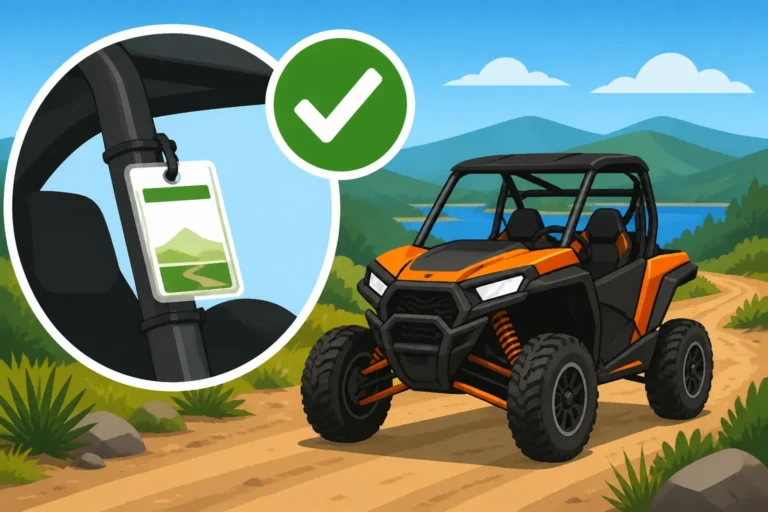
At its heart, California's OHV registration system, which includes the well-known Green, Red, and Tan Stickers, is about funding. A portion of the fees collected goes directly back into maintaining and expanding our beloved State Vehicular Recreation Areas (SVRAs), as well as supporting law enforcement and conservation efforts on other public lands. It's a user-pays, user-benefits model. The identification aspect is also crucial; having a unique ID plate allows authorities to track ownership, especially in cases of theft or accident. What often catches private landowners by surprise is that simply possessing an OHV within the state, even if its primary residence is private land, can sometimes necessitate a registration, especially if that machine ever 'touches' public infrastructure. You see, even if you never intend to ride at [Oceano Dunes: California's Only Sand Beach Ride] or [Hungry Valley SVRA North of Los Angeles], the state still wants to know about your machine if it ventures beyond the absolute confines of your property by certain means.
The Public Land Distinction and Its Nuances
The prevailing thought is, "If it's private land, it's private business." And largely, that's true for the riding itself. You can ride unregistered machines on your own private property all day long, assuming you own it outright, it's fully fenced, and there's no public access point or easement. The moment your machine interacts with public land, even in transit, the rules change. This could mean trailering your quad on a public highway from your property to a repair shop, or simply crossing a public road to get from one part of your ranch to another. These seemingly innocuous actions are where the line often blurs, turning what you thought was a purely private matter into something the DMV might be interested in. It's not about dictating what you do on your land, but rather about regulating its presence and movement within the broader public sphere.
When Private Land Use Requires Registration
So, when does a private-land machine cross the line into needing California OHV registration? It usually boils down to how the machine interacts with the world beyond your property lines. It's less about where you ride and more about where you go (or are capable of going) and how you transport your machine.
Transporting the Machine on Public Roads
This is perhaps the biggest trigger for registration requirements. Let's say you own a cabin deep in the Shasta-Trinity National Forest with a vast, private parcel of land. You've got a side-by-side that you use exclusively for moving firewood and checking fences on your property. However, to get that side-by-side to your cabin in the first place, or if you ever need to take it to a mechanic in the nearest town, you'll likely load it onto a trailer and haul it down public highways. In California, if your OHV is transported on a public road, highway, or right-of-way, it needs to be identified. The thinking here is that if it ever detaches from the trailer, if you get into an accident, or if it's stolen, the state needs a way to identify that machine. This means securing an [Registering an OHV in California] and ID plate or sticker. This is true even if the machine itself is never driven on the public road. The mere act of being transported on a public thoroughfare is enough to trigger the requirement. This is why many machines that spend 99% of their lives on private land still end up with a California OHV sticker.
Lending, Renting, or Selling the Machine
What if you decide to lend your quad to a friend for a weekend of riding on their private land, or you want to sell it? These scenarios also frequently necessitate proper registration. If you sell an OHV in California, the transfer of ownership typically involves the DMV, and a valid registration often makes this process smoother. The buyer will expect clear title and registration. Similarly, if you rent out your machine, even if only for use on a specific private property, the state wants to ensure it's a trackable asset.
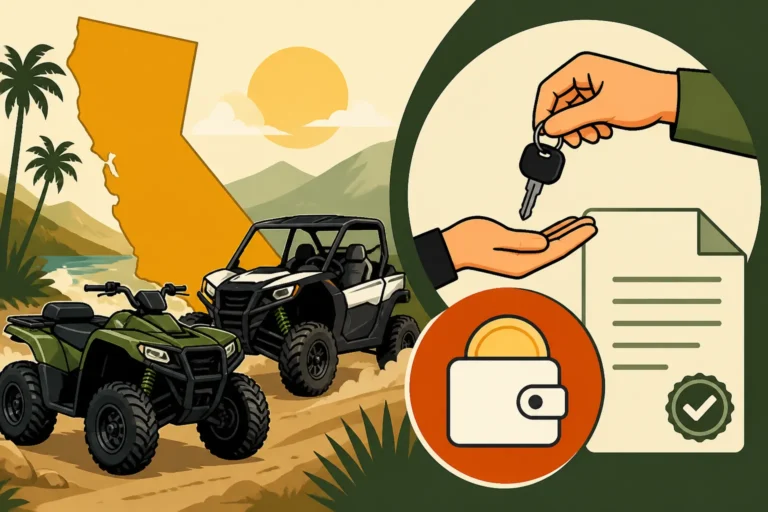
Consider a scenario where you're upgrading your UTV and want to sell your old one. You've got it listed online, and a potential buyer from Bakersfield is interested. They'll likely ask about the title and registration. While a bill of sale is important, especially one you can easily generate from a service like LawDepot, having current registration provides a clear chain of ownership and demonstrates that the machine has been properly accounted for within the state's system. It simply removes a layer of complication and makes the transaction more straightforward for both parties. For a comprehensive overview of the costs involved, you might want to read about [California OHV Registration Cost].
Crossing Public Roads or Easements
This is a specific, often overlooked detail. Your ranch might be divided by a small county road, or you might have a utility easement that grants public access through a portion of your property. If your OHV is driven across a public road, even if it's just a few feet, to access another section of your private land, it technically needs to be registered. There are very specific, narrow exceptions for crossing a highway directly, but these are for brief, perpendicular crossings and typically require the operator to stop and yield to traffic. They are not a loophole for regular transit on public roads. Similarly, if your "private" land includes a public easement, riding on that easement could be considered riding on public land, thus requiring registration. Always check your property deeds and local ordinances for any public easements or rights-of-way that might impact your OHV use. It's a small detail, but a critical one that can easily lead to a citation if overlooked.
Exemptions and Edge Cases for Private Machines
While the general rule leans towards registration for many private-land machines that interact with the public sphere, there are specific exemptions and particular situations where you might genuinely be off the hook.
Farm Quads and Commercial Operations
California law provides a specific exemption for OHVs "used exclusively in the conduct of agricultural operations." This is a big one for many farmers and ranchers. If your quad or UTV is solely used for chores like herding livestock, checking irrigation lines, or hauling tools on your private farm in the Central Valley, it might qualify for this exemption. The key here is "exclusively." If that same machine is then taken to the sand dunes at [Glamis and the Imperial Sand Dunes] on the weekend, or used for recreational riding on designated public trails, it loses that agricultural exemption.
It's not enough to simply own a farm; the machine's sole purpose must be agricultural. If you're using your UTV to check fences on your vineyard during the week, but then taking the kids for joyrides around the property on Sundays, and those joyrides could be interpreted as non-agricultural recreational use, the exemption could be challenged. It's a narrow gate, so if you rely on this, be certain your machine's use is strictly agricultural. For more detailed information, check out [Farm Quads and California Registration].
Machines Never Leaving Private Property
The most straightforward exemption is for a machine that genuinely never, ever leaves private property, and is never transported on public roads. Imagine a perfectly enclosed, massive private compound in the desert, like a private motocross track or a vast recreational area owned by a single entity. If an OHV lives its entire life within the confines of such a property, and is never trailered on public highways, never crosses a public road, and is never rented or sold to someone who would take it off that property, then, yes, it likely doesn't need to be registered.
However, this is a very strict definition. Even if your property is huge, the moment you put that machine on a trailer to take it to another private property, or to a shop, or sell it, you've likely triggered the registration requirement. The convenience of easy transport often outweighs the hassle of registration for most owners, so truly never leaving private land is a rare scenario for most.
Closed-Course Competition Machines
California also offers an exemption for OHVs used exclusively for organized competitive events on closed courses. These are often highly specialized machines, like dedicated motocross bikes or purpose-built desert racers that are only ridden on race tracks or designated competition venues. These machines might have a "Sanctioned Event Permit" rather than standard OHV registration. However, like the agricultural exemption, the "exclusively" part is critical. If a competition machine is also used for recreational riding on public lands or trails, it would need a standard Green or Red Sticker. This exemption is really for professional or serious amateur racers whose machines are purpose-built and used solely for their specific competitive discipline.
The Process of Registering a Private-Land OHV
If you've determined your private-land machine does indeed need registration, the process isn't as daunting as it might seem. It largely mirrors the registration process for any other OHV, with a few key forms and steps.
Essential Paperwork and Documentation
To register your OHV, even for primary private-land use, you'll need several documents. The main forms include:
- Application for Title or Registration (REG 343): This is the core document. It asks for information about the machine, its owner, and the type of registration requested. You'll fill out details about the Make, Model, VIN, engine size, and other identifying characteristics.
- Vehicle Verification (REG 31): This form confirms that the VIN and other identifying numbers on your machine match the documentation you're providing. A qualified person, such as a DMV employee, CHP officer, or a licensed vehicle verifier, must inspect your OHV and complete this form. This helps prevent fraud and ensures the machine you're registering is the one described on the paperwork.
- Proof of Ownership: This is usually a Manufacturer's Certificate of Origin (MCO/MSO) if it's a new machine, or a properly endorsed California Certificate of Title if you bought it used. If you bought it from a private party and don't have a title, you'll need a bill of sale. For this, a solid template from a service like LawDepot can be invaluable to ensure all necessary details are captured and legally sound, protecting both buyer and seller. Without clear proof of ownership, the DMV won't proceed with registration.
- Sales or Use Tax Documentation: Depending on how and where you acquired the machine, you might need to show proof that sales or use tax has been paid, or be prepared to pay it at the DMV.
For a detailed breakdown of what [What California's Form REG 343 Asks For] and [California Vehicle Verification on Form REG 31] entail, be sure to consult those specific guides. Gathering these documents beforehand will make your visit to the DMV much smoother.
Where to Register and Associated Fees
Once you have all your paperwork in order, you have a few options for registration:
- DMV Field Office: This is the most common route. You'll need to schedule an appointment. Be prepared for a wait, even with an appointment, as these offices can be busy. This is where your machine will typically undergo its physical verification (REG 31).
- Licensed Registration Service: Many private businesses are licensed to process vehicle registrations. They often charge a service fee but can sometimes offer a quicker, less crowded experience than the DMV.
- Mail: In some limited cases, renewals or specific transfers might be possible by mail, but for initial registration, a physical visit is almost always required due to the verification process.
Regarding fees, California's OHV registration has a few components. There's a base registration fee, a State Vehicular Recreation Area (SVRA) fee, and often a California Highway Patrol (CHP) fee. These fees contribute to the overall OHV program, even if your machine spends most of its time on private land. While specific amounts can change, it's typically a biennial (two-year) registration. You won't find specific dollar amounts here, but expect to pay a single, combined fee for the two-year period, which might include a few smaller, dedicated charges added together. If you're interested in the breakdown, [California's $54 OHV Registration Fee Broken Down] might provide more context. Remember, these fees are generally not prorated, so even if you register just a few months before the June 30 expiration, you'll pay the full two-year amount. [Why California Will Not Prorate Your Fee] explains this in more detail.
Green, Red, or Tan Sticker: What It Means for Private Land
When you register, your machine will typically receive either a Green Sticker, a Red Sticker, or, in very specific cases, a Tan Sticker. For machines used primarily on private land, this distinction might seem less critical, but it's still part of the registration process and important to understand if your machine ever does venture onto public land.
- Green Sticker: This is the most flexible sticker. It's for machines that meet California's emission standards and can be ridden year-round in all OHV recreation areas. Most modern OHVs, especially four-strokes, will qualify for a Green Sticker.
- Red Sticker: This sticker is for older, higher-emission two-stroke machines or certain four-strokes that don't meet the latest emission standards. Red Sticker machines have seasonal restrictions for riding on public lands in certain areas, generally designed to reduce emissions during peak ozone periods. However, recent changes mean that by January 2025, many Red Sticker machines will face new limitations or require a specific waiver for public land use. If your private-land machine eventually ends up on public land, this distinction could matter.
- Tan Sticker: This is a much rarer sticker, introduced for new machines (model year 2022 and newer) that are designed exclusively for closed-course competition. As discussed earlier, these machines have very strict usage limitations.
For a machine staying on private land, the sticker color itself doesn't impose restrictions on your property. But the type of sticker assigned is part of the state's classification system. If you ever contemplate taking your machine to a public OHV park, understanding [California's Green Sticker Explained] and [Red Stickers and What Changed in California] will be crucial.
Maintaining Your Registration for Private Use
Once you've gone through the initial registration process and secured your California OHV ID plate or sticker, the maintenance aspect is fairly straightforward. It's about keeping your registration current and your documentation handy.
The Biennial Renewal Cycle
California OHV registration operates on a biennial cycle, meaning it's valid for two years. All OHV registrations expire on June 30th of the expiration year, regardless of when you initially registered it. For example, if you register your quad in October 2024, your registration will still expire on June 30, 2025 (or 2026, depending on the current cycle). You'll receive a renewal notice in the mail well before the expiration date. Renewing is typically simpler than initial registration, often doable by mail or online if there are no changes or special circumstances. [California's June 30 Expiration] provides more context on this fixed date.
It’s easy to let registration lapse if you assume your private-land machine doesn't need it, but staying current is key. An expired registration, even if the machine stays mostly on private land, can cause issues if you need to transport it on public roads or sell it. You could face late penalties, which can add up quickly.
What Happens If Registration Lapses
If you let your OHV registration lapse, California assesses a late penalty. This penalty is often a fixed amount plus a percentage of the original registration fee, making it significantly more expensive to renew once it's expired. [California OHV Late Registration Penalty] goes into detail on what those charges look like. Beyond the financial penalty, a lapsed registration can complicate things if you suddenly need to transport the machine. Imagine you're trailering your unregistered, lapsed OHV to a friend's property, and you get pulled over for a separate traffic infraction. The officer might notice the expired OHV ID plate and issue a citation, adding another layer of headache and cost.
Keeping your registration current, even for a machine that rarely sees public roads, is a simple way to avoid these potential fines and administrative hassles. Think of it as peace of mind – you're compliant, and you won't get caught off guard.
Keeping Records and Proof of Ownership
Always keep a copy of your current registration certificate with your machine, or at least readily accessible. While the ID plate or sticker provides visual proof, the physical certificate is your official documentation. If you're pulled over while trailering, or if there's ever a question of ownership, having that paper on hand is crucial.
Beyond registration, always keep meticulous records of your machine's ownership. This includes the bill of sale (especially if you purchased it privately, and even better if drafted using a service like LawDepot), any previous titles, and maintenance records. These documents are vital if your OHV is ever stolen, if you need to file an insurance claim, or when you eventually decide to sell it. A clear paper trail proves ownership and makes every future transaction smoother. [Selling an OHV and Signing the California Title] provides excellent advice on preparing for a sale.
Potential Pitfalls and Misconceptions
Navigating OHV regulations can feel like walking through a minefield of potential fines and misunderstandings, especially when you think your machine is safely tucked away on private land. Let's tackle some common traps.
The "Private Land Means No Rules" Trap
This is perhaps the biggest pitfall. Many people assume that if their quad or UTV is on private land, it's completely exempt from state regulations. As we've discussed, this simply isn't true once the machine interacts with the public sphere, even in seemingly minor ways like being trailered on a public road. The state's interest kicks in for identification and revenue generation purposes that support the larger OHV program.
Another nuance: while registration might not be required for riding on your own fully enclosed private land, local ordinances (county or city) can still impose rules on noise, hours of operation, and even safety equipment. Just because the state isn't asking for a sticker doesn't mean your neighbors can't complain about excessive noise from your aftermarket exhaust at 11 PM. Always be a good neighbor and check local rules, even on your own property. Also, remember that all California helmet laws still apply to minors, even on private land. [California Helmet Law for ATV Riders] is a good resource here.
The Cost of Not Registering if You Cross the Line
The temptation to skip registration for a private-land machine is often rooted in saving money and avoiding bureaucracy. However, the potential costs of not registering, if your machine falls into one of the "needs registration" categories, can far outweigh the biennial fee.
Consider this scenario: You own a large property in a rural part of San Diego County. You have a UTV that you use for property maintenance. You've never registered it, assuming it's private land, private machine. One day, you need a specialized part from a shop 15 miles away. You load your UTV onto a trailer and head out. On the highway, you're pulled over for a minor traffic violation. The CHP officer notices your unregistered OHV on the trailer. You could be facing a citation for failure to register an OHV, which can include fines and potentially impoundment of the vehicle until it's properly registered. This fine will almost certainly be much higher than the two-year registration fee you would have paid. It's a classic case of saving pennies to spend dollars.
Verifying Ownership and Avoiding Headaches
When you buy a used OHV, especially from a private seller, the importance of proper paperwork cannot be overstated. Even if you plan to keep the machine solely on private land, you need clear proof of ownership. A simple handwritten note is usually not sufficient. A comprehensive bill of sale, like those found on LawDepot, provides a legally sound document detailing the transaction, the VIN, purchase price, and signatures of both parties. This protects you as the buyer and the seller. Without it, you could face issues if the machine turns out to be stolen, if there's a dispute over the sale, or if you eventually decide to register it or sell it yourself. Always make sure the seller provides a properly endorsed [California Issues a Certificate of Title] or an MCO. If the title is lost, the seller should replace it before the sale or provide you with the necessary forms and a notarized statement of facts so you can apply for a new one. [Buying a Used Quad in California] offers more advice on this critical step.
Here's a quick summary of when registration is typically needed versus when it might be exempt:
| Factor | Registration Likely Needed | Registration Likely Exempt |
|---|---|---|
| Transport on Public Roads | Loaded on a trailer on public highways/roads. | Never transported on public roads; stays exclusively on private land. |
| Crossing Public Roads/Easements | Driven across public roads (even briefly) or on public easements. | Stays entirely within a fully enclosed private property. |
| Sale/Transfer of Ownership | Selling or transferring to a new owner. | Machine remains with original owner, never sold. |
| Agricultural Use | Used for both agricultural and recreational purposes. | Used exclusively for agricultural operations. |
| Lending/Renting | Lent or rented out to others. | Only operated by the owner or immediate family on private land. |
| Public Land Intent | Any intent to ride on public OHV areas or trails. | No intent to ever leave private property. |
| New Machine Acquisition (Dealer) | Purchased from a dealer (they handle initial registration). | Purchased new and qualifies for a specific exemption (rare). |
| New Machine Acquisition (Private) | Purchased privately without prior California registration. | Purchased privately, never leaves private land, never transported. |
Remember, this table is a general guide. Always verify your specific situation with the California DMV or a qualified professional, especially if you believe you qualify for an exemption. It's always better to be safe than sorry when it comes to state regulations.
Disclaimer
This article is for general informational purposes only and does not constitute professional advice. Laws, prices and regulations vary by location and change over time. Consult a qualified professional for guidance on your specific situation.