How a California OHV Plate Differs From a Sticker
It's a common point of confusion for so many off-road enthusiasts in California: you've got this awesome ATV or UTV, you know you need to "register" it, but then you hear talk of both "stickers" and "plates." What's the deal? Are they the same thing? Do you need both? It can feel like navigating a maze, especially when you just want to hit the trails without worrying about fines. This guide is here to clear up that mystery, breaking down the distinct roles of California's OHV plates and stickers so you can understand exactly what each one means for your machine and your riding adventures.
Understanding the Basics: What's a Sticker, Anyway?
Let's start with the sticker, which is probably what most people think of first when it comes to off-highway vehicle registration. The sticker is your immediate, visible proof that your machine is currently registered to operate on California's public lands. Think of it like the little tag on your car's license plate that changes every year or two; it's a quick visual cue for anyone, especially law enforcement, that your registration fees are paid up and your machine is good to go for the current cycle.
The Purpose of the California OHV Sticker
At its core, the California OHV sticker serves as a readily identifiable symbol of active registration. It's a testament that you've paid your dues to the state's Off-Highway Motor Vehicle Recreation (OHMVR) Division, contributing to the very trails and areas you love to ride. These funds go towards maintaining and improving OHV parks and facilities, so that sticker isn't just a bureaucracy – it's an investment in your passion. The color of the sticker—Green, Red, or Tan—also tells a story about your machine's emissions compliance and, in the case of a Red Sticker, its potential seasonal riding restrictions. [California's Green Sticker Explained] goes into detail about the most common type.
Every sticker is issued for a specific two-year registration cycle, expiring on June 30th of the expiration year. This biennial cycle means you'll be renewing your registration and receiving a new sticker every other year. It's crucial to have the current sticker affixed properly because riding on public lands with an expired or missing sticker is a surefire way to get a citation. It really does boil down to proving you're legally permitted to be out there on the trails or dunes.
Where You'll Find Your Sticker
California law is very specific about where your OHV sticker needs to be displayed. It's not just a free-for-all; there's a method to the madness designed for easy visibility and verification by rangers and other enforcement personnel. For most ATVs, UTVs, and dirt bikes, the sticker must be permanently affixed and clearly visible on the left side of the vehicle, typically in a prominent location. On a quad or side-by-side, you'll often see it on the rear fender, the frame, or even on the ID plate itself if your machine is issued one.
The reason for this precise placement is purely practical. When a ranger pulls up alongside you, or even just observes your machine, they need to quickly confirm its registration status without having to search around. If your sticker is obscured by mud, hidden under a fender bag, or simply not there, it raises a red flag immediately. Always make sure your current sticker is clean, unpeeled, and in the correct, visible location before heading out. It saves everyone a lot of hassle and ensures you can enjoy your ride uninterrupted.
Deciphering the OHV Plate: More Than Just Metal
Now, let's talk about the OHV plate. This is where a lot of the confusion often comes in because it looks a bit like a license plate you'd find on a street-legal vehicle, but it functions differently. It's not a "license plate" in the same sense that it allows you to drive on public roads, but rather a permanent identification tag for your off-highway vehicle.
The Identity of the California OHV Plate
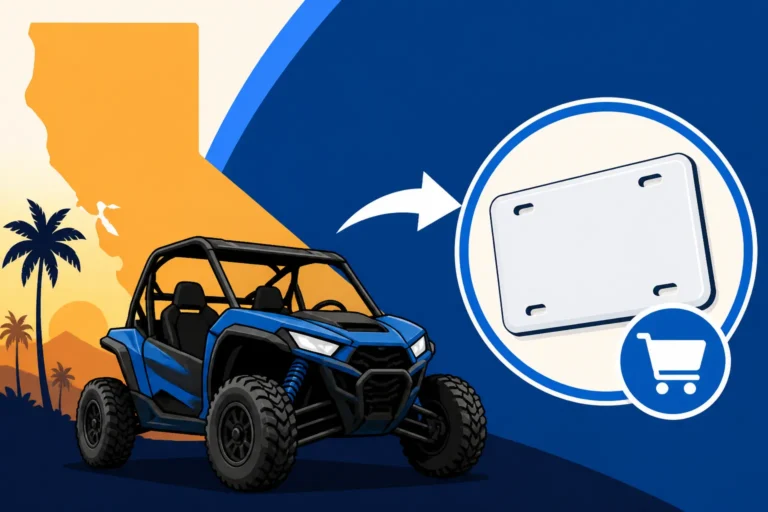
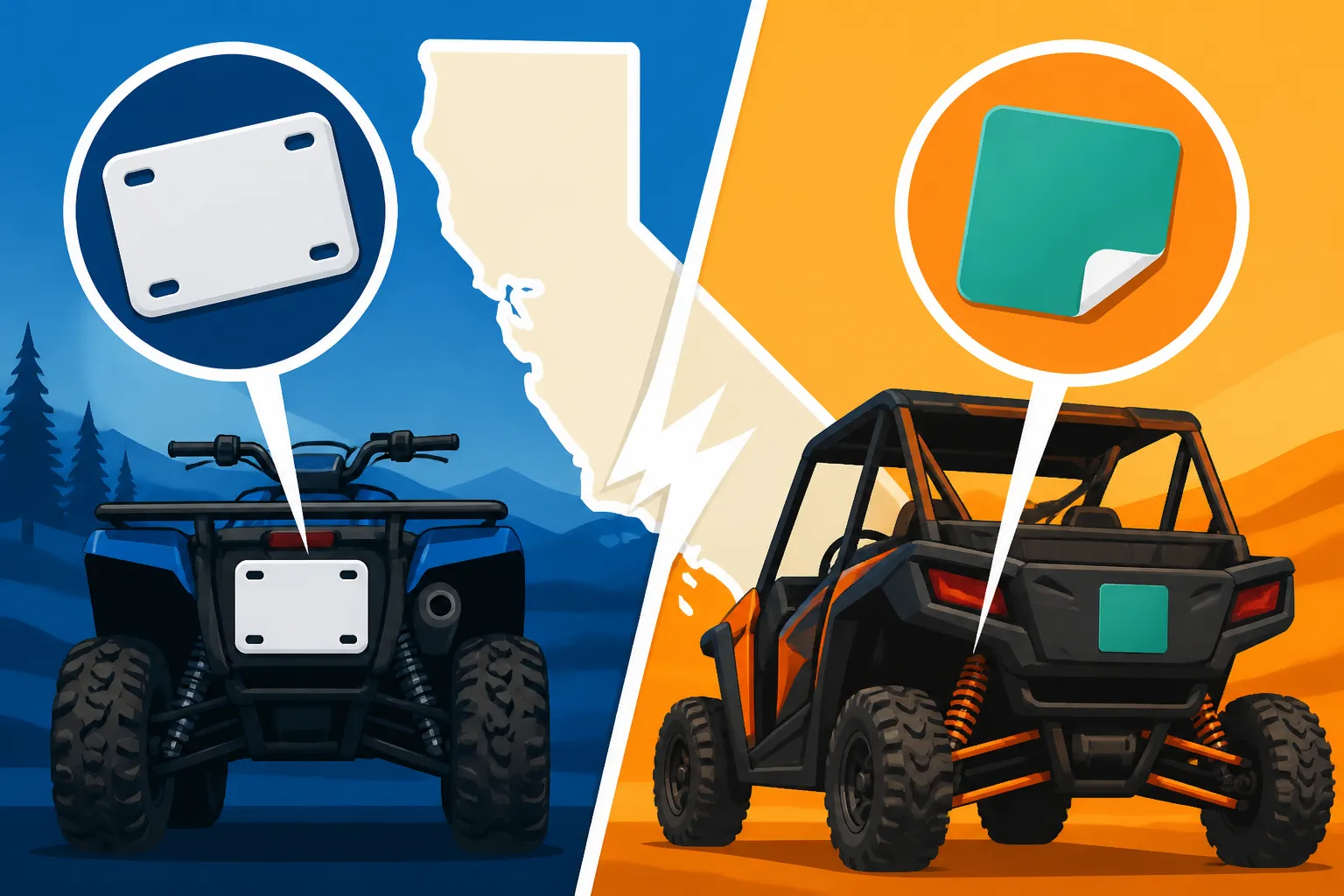
A California OHV plate is a permanent, stamped metal plate issued for specific types of off-highway vehicles, primarily quads (ATVs) and side-by-sides (UTVs). Unlike the sticker, which indicates current registration validity, the plate itself is the unique identifier for the machine throughout its lifespan of ownership. It typically features a unique series of numbers and letters, often prefixed with "CA" or similar, making it distinct from a standard street-legal license plate. The key here is its permanence; once a plate is issued to a vehicle, that plate number remains associated with that specific machine until it's retired or destroyed. [What the ID Plate Looks Like] offers more visual details.
This plate is tied directly to the vehicle's record with the California DMV and, crucially, to its title. When you register an OHV, especially one that meets the criteria for a plate, the plate number becomes part of that vehicle's permanent identity, much like a VIN. It’s what allows the state to track ownership, verify vehicle details, and maintain a comprehensive record of that specific machine. This distinction is vital for transfers of ownership, for instance, when you're buying or selling a used OHV.
The Role of the Plate in OHV Ownership
The OHV plate plays a critical role in establishing and proving ownership, which becomes particularly important during transactions or if your machine is ever stolen. When you purchase an OHV, the plate number, along with the VIN, is a key piece of information that will be recorded on your [California Issues a Certificate of Title]. This certificate is the ultimate proof that you legally own the machine. Without a clear chain of title and a corresponding plate (if issued), proving ownership can become a nightmare, making it difficult to sell or even recover a stolen vehicle.
For law enforcement, the plate is another crucial identifier. While the sticker shows current registration, the plate helps identify the exact vehicle. If a machine is reported stolen, the plate number (along with the VIN) is a primary piece of data used to track and recover it. It provides a consistent, physical identifier that doesn't change every two years, solidifying the machine's identity in state records. Therefore, maintaining a legible and properly mounted plate is not just a regulatory requirement; it's a safeguard for your investment and peace of mind.
The Critical Distinctions: Plate vs. Sticker
It's easy to see why these two distinct forms of identification can cause confusion. They both relate to your OHV and its legality in California, but their purposes and permanence are quite different. Understanding these core differences is key to staying compliant and avoiding issues when you're out riding.
Function and Permanence
The most fundamental difference between the plate and the sticker lies in their function and how long they're valid. The sticker is a temporary marker, indicating that your OHV's registration is current for a specific two-year cycle. It's like a membership card with an expiration date. You renew the registration, you get a new sticker. It's about active permission to ride on public land during that period. If you let your registration lapse, your sticker becomes expired, and you're no longer legally permitted to operate your OHV on public lands.
The plate, on the other hand, is a permanent identifier for the machine itself. Once issued, that plate number is permanently associated with that specific ATV or UTV. It doesn't expire, and you don't "renew" the plate. It's the machine's unique identity tag, independent of whether its registration is current or expired. Think of it this way: your car always has the same license plates, but you put a new registration sticker on them every year. Similarly, your OHV keeps its plate, but you affix a new, current sticker to show your registration is active.
Legal Implications and Enforcement
The different functions lead to different legal implications. If you're stopped by a ranger or other law enforcement officer on public lands, they're primarily looking for a current, valid sticker. Riding with an expired or missing sticker is akin to driving an unregistered car; it will almost certainly lead to a citation. [California Fines for No OHV Sticker] can be significant, so it's not something to overlook. The sticker is the immediate proof that you've paid your [California's $54 OHV Registration Fee Broken Down] and are cleared for public land use.
While the plate itself doesn't expire, its absence or illegibility can still cause problems. If your machine is required to have a plate and it's missing or unreadable, it could raise questions about the vehicle's identity or proper registration. More commonly, the issue arises when a current sticker is not properly displayed on the plate or machine. So, to be fully compliant, you need both: the permanent identification provided by the plate and the current validity indicated by the sticker. Rangers are trained to look for both, ensuring the machine is properly identified and currently registered.
How They Interact for Full Compliance
For most ATVs and UTVs in California, you absolutely need both the ID plate and a current, valid registration sticker to ride legally on public land. The plate provides the permanent identity, while the sticker confirms that the fees have been paid and the registration is active for the current two-year cycle. Often, the sticker is actually affixed directly onto the plate, making the plate a convenient, visible location for displaying your current registration.
When it's time to renew your OHV registration, you're not getting a new plate; you're receiving a new sticker to apply to your existing plate or designated area on the machine. [Renewing California OHV Registration] is a process focused on updating that sticker. This integrated system ensures that every OHV has a consistent, traceable identity (the plate) throughout its operational life, while also providing a simple, visual confirmation of its current legal status (the sticker). They work in tandem, each serving a distinct, yet complementary, purpose in California's OHV registration system.
Common Scenarios and Misunderstandings
Navigating the world of OHV plates and stickers can sometimes lead to tricky situations, especially when buying or selling, or if something goes missing. Knowing how these two elements interact in everyday scenarios can save you a lot of headaches.
Buying and Selling an OHV in California
When you're involved in buying or selling an off-highway vehicle in California, understanding the difference between the plate and the sticker is absolutely crucial. As a buyer, you need to verify that the machine has a permanent ID plate (if required) and that the number on the plate matches the number on the title. You'll also want to confirm that the current registration sticker is valid. An expired sticker isn't necessarily a deal-breaker, but it means you'll have to pay for the renewal yourself. Always ensure you receive a properly signed-off title from the seller, along with a bill of sale. For robust documentation, you might consider using a service like LawDepot to draft a comprehensive bill of sale, ensuring all details, including the plate and sticker information, are accurately recorded.
As a seller, you're responsible for signing over the title and, ideally, ensuring the registration is current or at least clearly communicating its status. The ID plate stays with the machine; it's the permanent identifier. What changes hands, besides the physical machine, is the title. Failing to properly transfer the title with the correct plate information can lead to complications down the line for both parties. [Buying a Used Quad in California] offers more specific tips for a smooth transaction.
What if Your Plate or Sticker is Lost or Damaged?
Losing an OHV plate or having a sticker peel off is incredibly frustrating, especially when you're geared up for a ride. The good news is, there are procedures to handle both. If your ID plate is lost, stolen, or becomes damaged beyond legibility, you'll need to apply for a replacement through the DMV. This usually involves filling out a specific form and paying a fee. Since the plate is a permanent identifier, replacing it means getting a new physical plate with the same identifying numbers/letters. The process for [Replacing a California ID Plate] typically requires a visit to a DMV field office or submitting documents by mail.
If your sticker is lost or damaged, you also need to replace it, but the process is generally simpler. Since the sticker represents your current registration period, you'd apply for a replacement registration sticker. This can often be done more easily than a plate replacement, as it's not about re-establishing the machine's identity, but simply replacing the proof of current validity. In both cases, make sure to address the issue promptly to avoid any potential citations while riding.
Why California Issues a Plate, Not a Decal
One common question is, "Why a metal plate when other states just use a decal?" California's decision to issue a permanent ID plate for certain OHVs, particularly ATVs and UTVs, stems from practical considerations regarding vehicle identification and enforcement. Unlike street vehicles that have dedicated, standardized locations for license plates, many OHVs (especially older models or those with unique designs) might not have an ideal spot for a traditional, permanent decal that would remain visible and intact through the rigors of off-road use.
The metal plate offers a more robust and permanent identifier that can withstand the mud, sand, and jostling common in off-road environments. It provides a consistent, standardized location on the vehicle for law enforcement to quickly identify the machine, verify its title, and cross-reference it with registration records. [Why California Issues a Plate, Not a Decal] delves deeper into the reasoning behind this policy. It simplifies record-keeping, aids in theft recovery, and provides a durable identifier that remains with the vehicle throughout its life, unlike a sticker which changes every two years. This system, while sometimes confusing at first, is designed to enhance safety, accountability, and the overall management of California's vast OHV recreation areas.
Plate vs. Sticker: A Quick Comparison
To help clarify the differences, here's a quick comparison of the key aspects of California OHV plates and stickers:
| Feature | OHV Identification Plate | OHV Registration Sticker |
|---|---|---|
| Purpose | Permanent unique identifier for the machine | Proof of current, valid registration and fee payment |
| Issued For | Primarily ATVs, UTVs, some off-road motorcycles | All registered OHVs operating on public land |
| Material | Stamped metal | Adhesive decal |
| Permanence | Permanent, stays with the machine throughout its life | Temporary, valid for a two-year cycle |
| Expiration | Does not expire | Expires June 30th of the second year after issuance |
| Renewal | Not renewed; only replaced if lost or damaged | Renewed every two years to maintain active status |
| Tie to Title | Directly linked to vehicle title and ownership records | Indicates active registration status for a period |
| Enforcement | Identifies vehicle for ownership, theft recovery | Primary visual check for current legal operation |
| Legal Status | Establishes machine's identity | Confirms permission to ride on public land |
| Where to Apply | Bolted securely to a visible part of the machine | Affixed to the left side of the machine, often on the ID plate |
Understanding these distinctions will help you stay compliant, whether you're navigating the process of [Registering an OHV in California] for the first time or simply ensuring your paperwork is in order before your next big ride. Remember, both play a vital role in ensuring your off-road adventures are legal and worry-free.
When preparing paperwork for your OHV, whether it's for initial registration or for selling your machine, double-checking all identifying numbers and dates is crucial. Many people find using standardized forms or checklists helpful. For example, a thorough bill of sale from a reputable source like LawDepot can ensure that both the plate number and the current sticker details are clearly documented during a private sale, protecting both the buyer and the seller. This attention to detail prevents future headaches, ensuring that the machine's identity and registration status are undeniably clear.
California's OHV system is comprehensive, and while it might seem a bit intricate at first glance, each component serves an important purpose. The plate gives your machine a lifelong identity, while the sticker grants it temporary permission to explore the incredible public lands we're so fortunate to have. By keeping both in order, you're not just avoiding fines; you're also contributing to the maintenance and future of off-road recreation in the Golden State.
Disclaimer
This article is for general informational purposes only and does not constitute professional advice. Laws, prices and regulations vary by location and change over time. Consult a qualified professional for guidance on your specific situation.