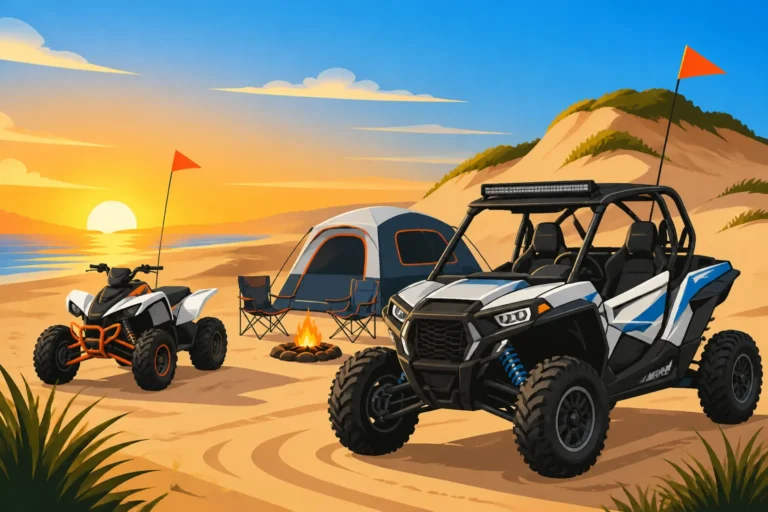
Hungry Valley’s Campgrounds and Quiet Hours
A weekend at Hungry Valley can go sideways when you arrive after dark, discover your preferred campsite is unavailable, or realize the riding noise carries farther than expected. A little planning makes camping more comfortable for your group and your neighbors. This guide explains what to expect at Hungry Valley SVRA campgrounds, how quiet hours affect your stay, and what to check before loading the trailer.
Camping at Hungry Valley SVRA
What to expect from the campgrounds
Hungry Valley State Vehicular Recreation Area is near Gorman, where Interstate 5 crosses the Tejon Pass between Los Angeles and Bakersfield. Its campgrounds put you close to the park’s off-highway vehicle trails, which is handy when your group wants to unload, ride, and return to camp without making a separate drive to the riding area. For a broader introduction to the park’s location and layout, see Hungry Valley SVRA North of Los Angeles.
Camping here is generally a rustic experience rather than a full-service RV resort. Do not assume your site will have water, electrical hookups, or a dump station just because you are camping in a developed area. Facilities and site conditions can differ, and park information or signs should guide your plans. If your trip depends on a particular amenity, confirm it before you leave home—and bring a backup plan if the park does not provide it.
The park has designated camping areas, including Smith Forks and Aliklik. Their location, access, and suitability can matter as much as the campsite itself: a large trailer, a family with young children, and a group carrying several machines may all need different things. Check the park’s current map and campground information to confirm which areas are open and how access works. Hungry Valley’s Designated Campgrounds is a useful related read when comparing where to set up.
Choosing between a campground and a campsite
A named campground can sound like every site will be a neatly marked, reservable pad. In practice, the layout and setup may feel more informal than at a conventional campground, and availability can change with demand, closures, or park operations. Before counting on a specific spot, check whether the area uses reservations, first-come access, or other rules. Do not treat an old trip report or a map saved on your phone as confirmation that a site is available today.
Think about the whole group’s footprint, not just the tent or RV. You may need space to park the tow vehicle and trailer, unload safely, store riding gear, and keep machines clear of other campers. If you are arriving with multiple vehicles, agree on a meeting point and a parking plan before the group separates. On a busy weekend, a simple plan can prevent the familiar frustration of one driver circling while everyone else waits with the gear.
For a side-by-side or quad trip, consider how you will move machines around camp without creating noise or dust for nearby visitors. Keep loading and unloading deliberate, and avoid treating the campsite as a place to test a machine or make repeated high-speed passes. If your group is new to the park, Hungry Valley Trails for Beginners can help you think through a suitable riding plan before you arrive.
| Planning question | Why it matters | What to do before the trip |
|---|---|---|
| Is the campground open? | Access or availability can change | Check park information and posted notices |
| Are reservations required? | Arrival plans may depend on how sites are assigned | Confirm the current camping process |
| What facilities are available? | Water, power, and restrooms should not be assumed | Verify amenities and pack accordingly |
| Can your trailer fit? | Tight access can complicate parking and unloading | Check the map, site details, and vehicle requirements |
| Are trails or roads closed? | A campground may be accessible while a route is not | Review current closures before choosing a route |
| What are the quiet hours? | Noise affects nearby campers and may be subject to park rules | Follow posted park and campground signs |
Quiet Hours and Respectful Camping
When quiet hours apply
Quiet hours are there so people can sleep, not just to stop music after a certain time. At a busy riding area, the sounds of camp can travel: a generator, raised voices, a vehicle door, or a machine starting nearby may carry across an otherwise quiet campground. Follow the hours shown on park signs or in current park rules. If you have seen a quiet-hour schedule in an older post or trip report, verify it rather than assuming it still applies.
Plan your evening so the group does not have to rush through noisy tasks at bedtime. Set up camp, organize helmets and riding gear, and make any necessary trailer adjustments earlier. If someone arrives late, ask them to park carefully and keep unloading to a minimum until morning. A few small choices can make the difference between a neighbor settling in comfortably and an entire row of campers waking up.
Quiet hours do not necessarily mean every sound stops, and they should not be confused with the hours when riding is allowed. Check park-specific rules for both camping and vehicle use. A campsite is not permission to ride wherever you like or at any time; stay on authorized routes and observe closures and operating restrictions. For trip planning that includes changes in access, see California Trail Closures to Check First.
Generators, music, and late-night arrivals
Generators can be especially disruptive in a rustic campground because their steady sound carries after other activity has stopped. If you need one, use it only as permitted, keep it as far from neighboring campers as practical, and turn it off during posted quiet hours. Consider whether batteries or a lower-noise power option can cover basic overnight needs. Plan refrigeration, lighting, and phone charging before your trip so you are not running a generator simply because the group forgot to charge equipment.
Keep music and conversations at a level that stays within your own campsite. A group can feel pleasantly quiet from inside a trailer while still being loud outside, especially late at night. If children are playing, explain campground expectations before bedtime rather than waiting until another camper complains. And if your group is celebrating, choose a plan that does not depend on noise continuing after quiet hours begin.
Late arrivals deserve a little extra thought. If your convoy is split between vehicles, share directions and a meeting plan in advance so drivers are not calling across the campground or repeatedly driving around to find one another. A downloaded map can help when cellular service is limited. onX Offroad can be useful for organizing trail and route information before you travel, but check park signs and official maps for the rules that apply on the ground. A navigation app is a planning aid, not permission to use a closed or unauthorized route.
Preparing for a Smooth Riding and Camping Trip
Check access, weather, and trail conditions
Conditions can affect both the ride and the campsite. Rain may make some routes difficult or lead to closures, while dry, windy conditions can mean more dust around camp. Check for park notices before departure and again when you arrive. If you are planning a visit after a storm, California OHV Areas After a Storm offers relevant context for thinking about changing trail conditions.
Choose routes that fit the least experienced rider in your group, not just the person who knows the park best. Hungry Valley offers a range of terrain, and a trail that looks manageable on a screen may feel very different to someone on a new machine. Set a conservative turnaround point, agree on how the group will regroup if separated, and avoid riding beyond daylight or your group’s comfort level. onX Offroad may help you review route options before the trip, but use the park’s posted trail information to confirm where riding is allowed.
Before you leave, make sure every driver knows the meeting location and what to do if a vehicle or machine has a problem. Carry water, basic tools, and any machine-specific supplies you normally need for a day on the trail. Keep your registration or required identification accessible, rather than buried under camping equipment. If you are bringing a wide side-by-side or towing a large trailer, check that the planned access and parking arrangement are appropriate for your setup.
Pack for a rustic stay
The best packing list depends on the facilities available and your group’s needs. Start by confirming whether you need to bring drinking water, a way to manage waste, lighting, and power. A headlamp for each person is useful when someone needs to move around camp after dark; it is less disruptive than lighting up the whole area with vehicle headlights. Pack warm layers too, since the temperature can feel very different after sunset than it did during the afternoon ride.
Keep food and riding gear organized so evening chores do not turn into a noisy search through the trailer. Separate dusty equipment from sleeping areas, and bring bags or containers for dirty clothes and gloves. If you are camping with children, decide in advance where they can play and where machines and tow vehicles will move. Clear boundaries help prevent both accidents and unnecessary disturbance to nearby campers.
Make a short arrival checklist: confirm your camping area, park vehicles without blocking access, review posted rules, and identify the nearest facilities. Before bedtime, secure loose gear, turn off equipment that should not run overnight, and make sure your group knows the morning departure plan. onX Offroad can help with advance route organization, while a downloaded park map and on-site signs are important for campsite and access details.
Planning Your Visit Around Other Campers
Busy weekends and considerate timing
Crowds can change the feel of a trip. On popular weekends, a campground may have more trailers, longer waits, and less flexibility about where everyone can park. Arriving with a clear plan helps, but do not assume an open-looking patch is an authorized campsite or parking area. Use designated locations and follow instructions from park staff. For an idea of how a busier visit can affect your plans, read Hungry Valley on a Weekend.
If possible, coordinate arrival times so the group does not have to keep vehicles moving around camp after dark. Establish a meeting point before entering, share directions in advance, and tell everyone what to do if the convoy gets separated. Avoid saving essential decisions—like who is towing which trailer or where the group will meet—until you are already navigating a crowded entrance or campground.
A quieter trip can also be easier for first-time visitors, but weekday availability, access, and operating conditions still need to be checked. Compare your intended visit with park notices rather than relying on assumptions about a particular day being calm or open. If you are driving from the Los Angeles area, Driving From Los Angeles to Hungry Valley SVRA can help you think about the approach and trip logistics.
A practical before-you-go checklist
Use this checklist a few days before departure, then confirm key details again before leaving:
- Confirm campground access and camping rules. Check which designated areas are available and whether you need a reservation or should expect another access process.
- Verify facilities. Do not assume hookups, potable water, or other services are available at your chosen campsite.
- Review posted quiet hours. Share them with everyone in the group, including anyone arriving separately.
- Check trail information and closures. Plan only routes that are open and permitted for your machine.
- Match the plan to your group. Consider rider experience, vehicle size, trailer access, and the needs of children or first-time visitors.
- Pack for self-sufficiency. Bring what you need for water, lighting, food storage, and basic machine care based on the facilities confirmed.
- Download maps and directions. Do not rely on a live phone connection to navigate or find your group.
- Plan a quiet arrival and departure. Organize gear early, limit late-night vehicle movement, and keep noise down during posted quiet hours.
If you are comparing Hungry Valley with other state recreation areas, California SVRA Camping Reservations and California OHV Camping With Hookups can help you explore related camping considerations. Always confirm the details for the specific park and campground you plan to use. The most comfortable trip is usually the one where the group knows the rules, brings what the site does not provide, and leaves enough room—literally and figuratively—for other campers to enjoy their stay.
Disclaimer
This article is for general informational purposes only and does not constitute professional advice. Laws, prices and regulations vary by location and change over time. Consult a qualified professional for guidance on your specific situation.