Camping at Gecko Road
Camping at Gecko Road puts you close to the Glamis dunes, but the open desert can make a simple overnight stay feel more complicated than expected. You’ll need to plan for uneven sand, busy access routes, limited services, and changing conditions. This guide covers what to expect, how to choose a campsite, what to bring, and how to ride responsibly from camp.
What Camping at Gecko Road Is Like
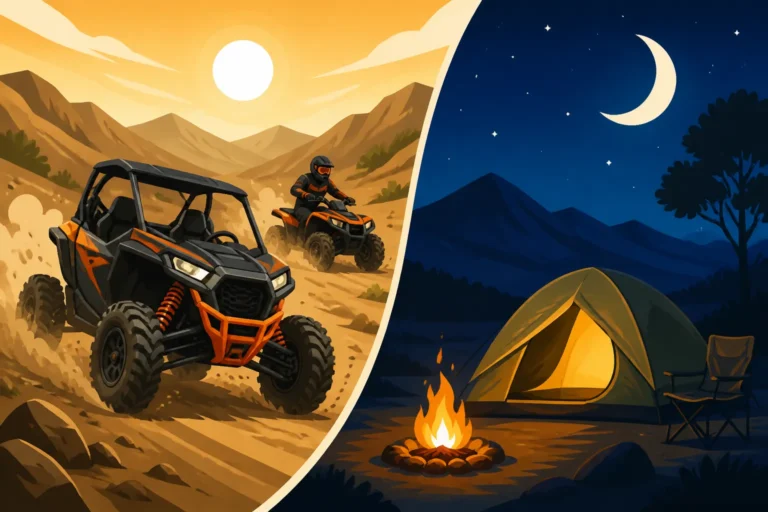
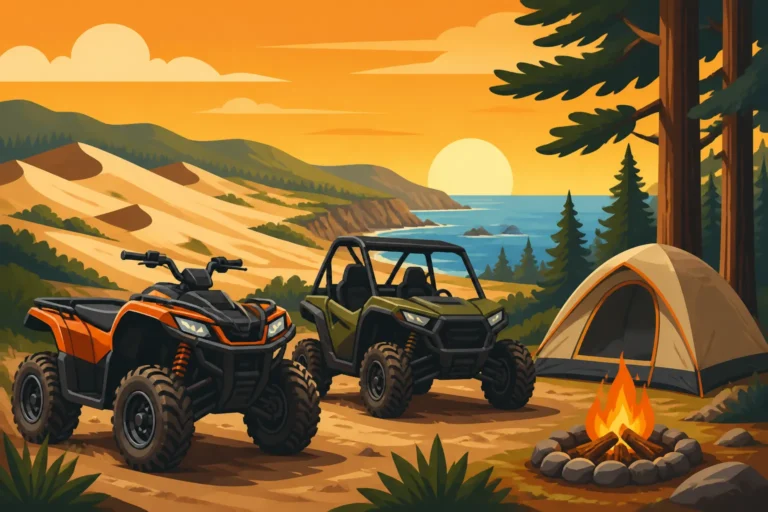
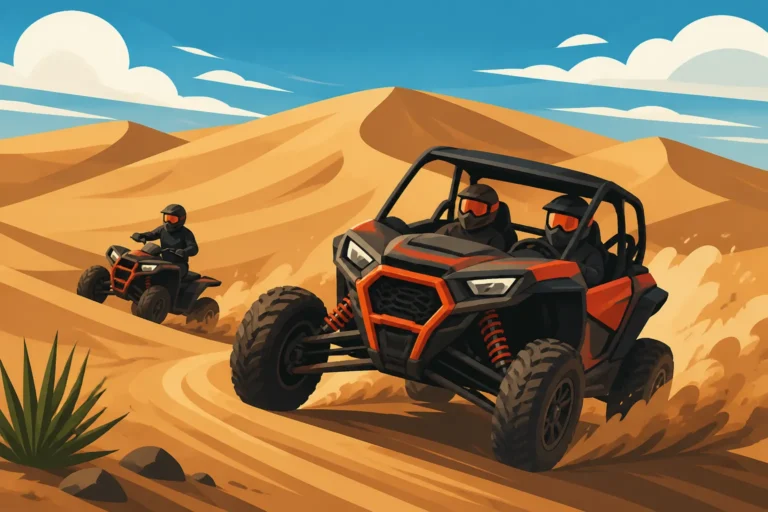
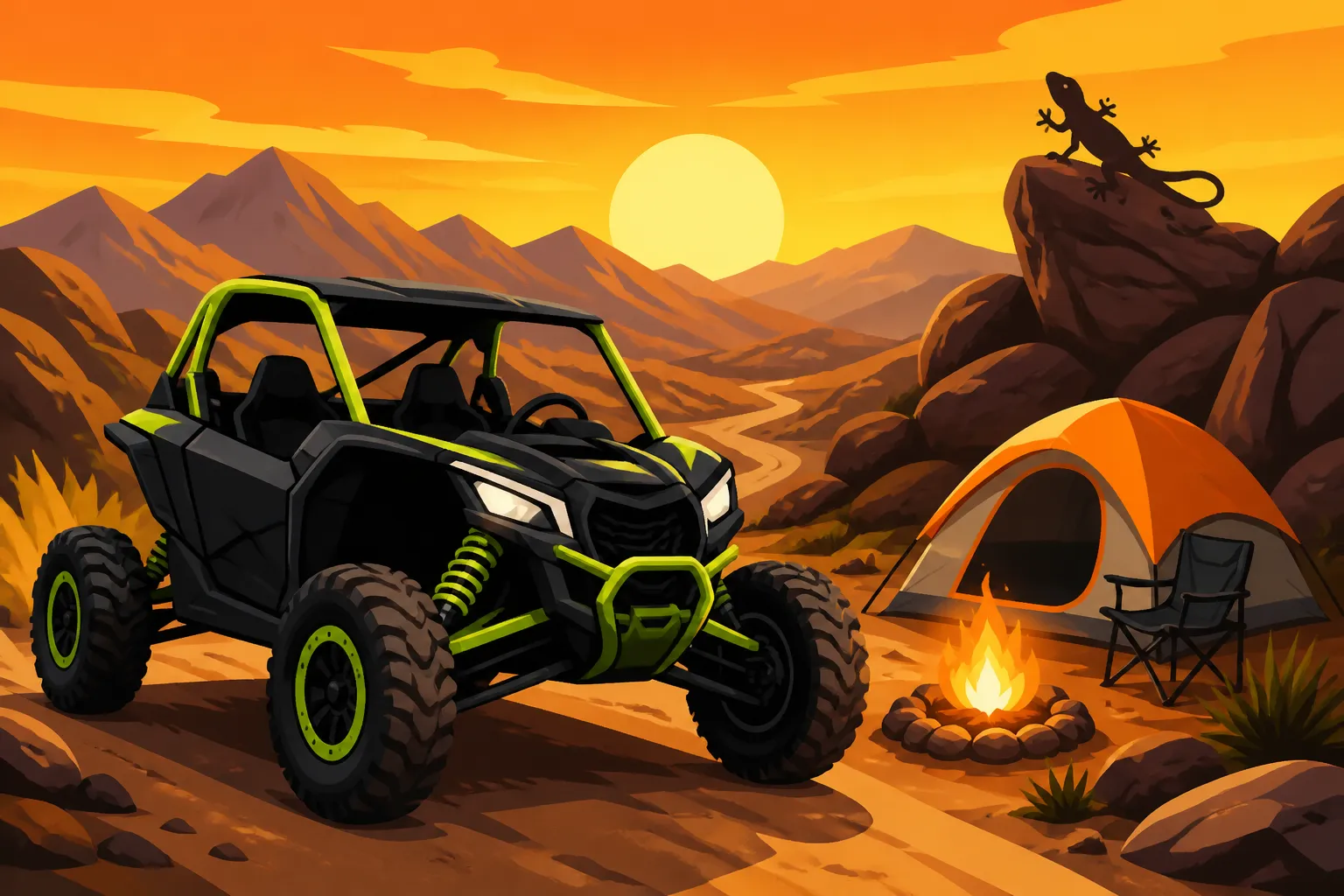
A desert camp near the Glamis riding area
Gecko Road is one of the familiar access points for the Imperial Sand Dunes Recreation Area, often called Glamis. Camping here is generally a desert experience rather than a traditional campground stay: expect open surroundings, limited separation between groups, and few or no familiar amenities such as electrical hookups, showers, or water at your site. Bring what you need instead of counting on finding it nearby.
The main draw is proximity to the dunes. You can set up camp, unload your machines, and spend less time driving between a distant lodging area and the riding zone. That convenience comes with a tradeoff: Gecko Road and nearby staging areas can be busy, particularly during popular riding weekends. Engine noise, headlights, dust, and traffic may be part of the experience, so a quiet, secluded campsite is not something to assume.
If you’re deciding whether Gecko Road is the right base, compare it with other parts of the Imperial Sand Dunes. Glamis and the Imperial Sand Dunes gives a broader sense of the riding area, while Camping at Gordon’s Well covers another well-known camping option in the dunes. Each location has its own feel and access considerations, so it’s worth choosing based on your group’s riding plans and comfort with crowds.
Open desert camping means fewer built-in conveniences
Treat your campsite as a self-contained base. Bring drinking water, food, lighting, sanitation supplies, a first-aid kit, and enough fuel for your tow vehicle and riding machines. Even if you expect to visit nearby services during the trip, don’t plan around a last-minute supply run; a full weekend or a busy holiday can make basic errands less straightforward.
The ground and surroundings may also differ from what you’re used to at a developed campground. Sand can shift under tires and stabilizers, and a level-looking spot may not feel level once you park a large trailer. Take time to assess the area before backing in. Keep the access path clear, avoid blocking other campers, and position your tow vehicle so you can leave without needing to make a difficult maneuver in soft ground.
Think about what “camping” means for your setup. A small tent, a toy hauler, and a large group of trucks and trailers have different space and access needs. Don’t spread gear across a route or assume a particular spot will remain unoccupied. If you need room to turn around, unload, or set up a generator, choose a location that leaves enough space for those tasks without encroaching on other visitors.
Rules and access can change
Before leaving home, confirm current access, closures, camping rules, and permit requirements through the responsible land manager. Conditions and restrictions can change, and a familiar route or camping arrangement may not be available every time you visit. California Rules for Riding Imperial Sand Dunes is a useful companion for understanding the broader rules that apply to riding in the area.
Also check what permissions apply to each vehicle you bring. A camping plan does not replace the registration, identification, or permit requirements that may apply to machines used on public land. ISDRA Permits and California’s October Season explains the dune permit context, while Carrying Registration Paper on the Sand covers an easily overlooked part of getting your documents in order.
Choosing a Campsite and Getting Set Up
Pick a spot with access and visibility in mind
When you arrive, pause before committing to the first open-looking patch of ground. Look for firm, reasonably level terrain and enough room to park, unload, and turn around. Stay out of marked closures and keep away from routes where people are regularly traveling. Avoid setting up where your vehicle, trailer, or gear could narrow an access lane or block another group’s path.
Visibility matters, especially when people are moving around camp after dark. Park and arrange equipment so visitors can see where vehicles and trailers are located. Use practical lighting around your own campsite, but aim lights down and avoid directing bright beams into neighboring camps. At night, riders and drivers may be tired, and dust can make it harder to see a person or obstacle than expected.
It helps to arrive with a flexible plan. If the first location is crowded, dusty, or poorly suited to your trailer, be prepared to move rather than forcing a setup that creates problems for everyone. Talk through a simple arrival routine with your group: one person can guide the tow vehicle, another can watch the surrounding traffic, and a third can help keep children and pets at a safe distance.
| Camping consideration | What to plan for |
|---|---|
| Water and food | Bring enough for your whole stay, plus a reserve |
| Power and lighting | Plan for self-contained power and considerate nighttime lighting |
| Parking and turning | Leave room to unload and exit without blocking access |
| Waste | Pack out trash and manage sanitation responsibly |
| Navigation | Save maps and key locations before entering areas with weak signal |
| Conditions | Recheck closures, weather, and land-manager instructions before departure |
Make navigation useful, not a substitute for posted rules
Desert landscapes can look deceptively similar, and it’s easy to lose track of which road or staging area you used. Save your campsite location and the route back to it before riding. A navigation app such as onX Offroad can help you keep track of your position and plan a route, especially if you prepare your maps before service becomes unreliable.
Use onX Offroad as a planning aid, not as permission to travel anywhere a line appears on a map. Check official maps and on-site signs for closures, boundaries, and permitted routes. Conditions can also change after mapping information is recorded. If a route is signed closed or a land manager gives a direction, follow that instruction rather than relying on a screen.
Before you set out, agree on a few simple navigation habits with your group. Choose a meeting point, make sure everyone knows how to return to camp, and tell riders not to split off without communicating. If someone becomes separated, repeatedly riding around in search of them can create more confusion. A clear plan—such as returning to camp or another agreed location—makes it easier to regroup.
onX Offroad may also help you mark practical waypoints, such as your camp, a vehicle staging point, or a planned turnaround. Keep a charged phone or GPS device available, and carry a backup plan that does not depend on cellular service. A paper map or a saved offline map can be useful if a device battery runs low, a phone is damaged, or your group needs to orient itself away from camp.
Set camp up for wind, dust, and nighttime traffic
Dust is part of desert riding, but your setup can make it less miserable. Keep food, bedding, and clean clothes covered when they are not in use. Store sensitive gear inside a vehicle or sealed containers, and avoid leaving loose items where a gust can scatter them. If a dust storm or strong wind is affecting visibility, secure equipment and pause riding until conditions improve. Dust Storms in the Imperial Valley provides more context on a hazard that deserves particular attention around the dunes.
Plan for quiet, too. Generators, music, vehicle movement, and late-night conversations can carry farther across open ground than expected. Follow posted quiet-hour rules where they apply, and keep noise considerate even when there is no nearby campground boundary. A little courtesy goes a long way when neighboring groups are trying to sleep before an early ride.
Riding From Camp Safely and Responsibly
Prepare the machine and the rider before setting out
A short ride from camp still calls for preparation. Check your machine before each outing: tires, controls, fuel, lights, and any safety equipment should be in usable condition. Carry water and a basic repair kit suited to your machine. If your group plans to ride far from the staging area, agree on a route and a turnaround point rather than letting the day stretch on without checking fuel, fatigue, or daylight.
Make sure riders understand the area’s rules before they head out. That includes knowing which routes are open, what vehicle identification or permits are required, and which safety rules apply to the machine and rider. Younger riders may need additional supervision or documentation, so check the requirements rather than assuming that rules are the same for every age or vehicle type.
Riding with a group also means thinking about spacing and communication. Keep enough room between machines to see and react to changing terrain. Don’t follow so closely that dust from the rider ahead blocks your view. Agree on signals or stopping procedures before you start, and make sure the least experienced rider feels comfortable asking the group to slow down or turn back.
Keep campsite traffic separate from riding decisions
A campsite can be close to a riding area without every road or open stretch being a permitted riding route. Follow signs and designated access instructions, and avoid riding through other camps. Children, pedestrians, dogs, and people backing trailers may be moving around unexpectedly, especially when groups are setting up or packing down.
If you’re towing a machine between camp and a staging area, secure it correctly and check your route before moving. Don’t assume a track that appears wide enough will safely accommodate a truck and trailer. For crowded weekends, be especially patient around entrances and parking areas; a few extra minutes are better than rushing into a tight turn or creating a bottleneck.
Before leaving camp on a ride, consider telling someone where the group plans to go and when you expect to return. Carry the supplies you would need if a machine becomes disabled or your group has to wait. If weather, visibility, or fatigue changes the plan, turn back early. The most enjoyable ride is not necessarily the longest one.
Be considerate of other visitors and the land
The dunes are a shared public recreation area. Keep your campsite compact, use established access where directed, and take out your trash and belongings. Don’t leave broken parts, food scraps, or disposable items behind. If you see a closure or a route marker, respect it; riding around a barrier can damage the area and create trouble for other visitors.
Noise and speed deserve particular care near camps. Move slowly where people are walking, unloading, or maneuvering trailers, and don’t use a neighboring campsite as a shortcut. Keep children and pets close to camp, and make sure they know not to approach moving machines without permission. These small habits reduce the chance of a collision and help keep a busy weekend manageable.
For additional trip-planning context, California OHV Areas in the National Forests can help if your plans include riding elsewhere in the state, while Camping Near a California OHV Area offers broader considerations for choosing a place to camp near a riding destination.
A Practical Gecko Road Trip Checklist
Before you leave home
Start with the essentials: confirm access and camping guidance, check permit and registration requirements, and plan your route. Save your campsite and key waypoints offline, and share the plan with everyone traveling in your group. Check that your tow vehicle, trailer, and machines are ready for the drive and the conditions you expect to encounter.
Pack in categories so you’re not searching for everything after dark. Keep documents together, put repair and recovery supplies where they are easy to reach, and store drinking water separately from equipment that could leak or become dirty. Bring enough food, protective gear, and basic medical supplies for the full stay, not only for the first day.
If you’re using onX Offroad, download the relevant map area before you go and confirm that your device can display it without a connection. Mark camp and any planned meeting points. Then check official information and signs when you arrive, since a pre-trip map should not override a closure or instruction on the ground.
On arrival and before departure
On arrival, look over the area before unloading. Confirm that your chosen spot is permitted and suitable, check the surrounding traffic, and leave clear access for others. Set up lighting and equipment so they stay within your camping area. Keep the campsite organized enough that you can find essential items quickly if the weather changes or you need to leave.
Before your first ride, review the route and safety plan with the group. Confirm that each rider knows where camp is, what to do if separated, and when to return. After riding, inspect machines and put away gear so it cannot blow away or become a hazard overnight.
When it’s time to leave, pack out all waste and do a final walk-through. Check around the trailer, under parked vehicles, and near cooking or repair areas for small items that are easy to miss. Leaving the site clean helps protect the area and makes it more welcoming for the next group.
Disclaimer
This article is for general informational purposes only and does not constitute professional advice. Laws, prices and regulations vary by location and change over time. Consult a qualified professional for guidance on your specific situation.