California OHV Registration Lookup
Trying to figure out the history of an Off-Highway Vehicle (OHV) in California can feel like you're playing detective, especially when paperwork is missing or you're looking at a machine someone else owned. It's frustrating when you're ready to hit the trails but can't get clear answers about its registration status or legal standing. This guide is here to walk you through the process of performing a California OHV registration lookup, helping you uncover the essential details you need to buy, sell, or simply renew with confidence.
The Mystery of Your OHV's Past: Why You Might Need a Registration Lookup
It’s a common scenario out here in California: you're either looking to purchase a "new-to-you" dirt bike, quad, or side-by-side, or maybe you've had a machine for years and somehow the original paperwork has gone missing. In either case, not having a clear picture of its registration status can throw a wrench in your plans to ride legally on California's fantastic public lands. Knowing how to perform a California OHV Registration Lookup can save you a ton of headaches, time, and potentially, money.
Buying a Used Machine: The Buyer's Dilemma
Picture this: you've found a great deal on a used quad, the seller seems legitimate, and the machine looks perfect for your weekend adventures. But then you realize they don't have the current registration card or maybe even the title. It's easy to get swept up in the excitement of a good find, but buying an OHV without verifying its registration status or lien history is like buying a house without checking for a clear title – it’s a recipe for future problems. You need to know if the machine has active registration, if there are any outstanding fees, or if it was ever reported stolen. Without this information, you could end up with a machine you can't legally ride or register. This is where a registration lookup becomes absolutely critical for any savvy buyer.
Lost or Missing Paperwork: The Frustration of Renewal
Even if you’re the original owner, life happens. Registration cards get lost, titles get misplaced during a move, or perhaps you just can’t remember when you last renewed. California's OHV registration operates on a [California OHV Registration Two-Year Cycle], and sometimes those two years fly by in a flash. Trying to renew your registration without the proper documentation can be a significant hurdle. A lookup can help you retrieve vital information like your OHV’s identification number, current registration status, and even remind you of the sticker type (Green, Red, or Tan) it carries. This information is key to navigating the renewal process smoothly, especially if you want to avoid penalties like the [California OHV Late Registration Penalty].
Verifying Ownership and Compliance: Peace of Mind for All
Beyond buying and renewing, a registration lookup offers peace of mind. For buyers, it verifies that the person selling the OHV is indeed the legal owner. For sellers, being able to provide proof of current registration and a clean history can significantly boost buyer confidence and streamline the sale process. It also helps confirm that the machine is compliant with California’s environmental standards, like having the correct sticker for its model year and emissions rating. This compliance is essential for riding on designated public lands without running into trouble with rangers checking for valid identification at gates like those found at [Glamis and the Imperial Sand Dunes].
How to Uncover the Details: Your Options for a California OHV Registration Lookup
So, you've realized you need to dig into an OHV's past. The good news is that California does provide avenues to do this, though it might require a bit of legwork. It’s not as simple as looking up a street vehicle online due to privacy concerns, but with the right approach and information, you can get the answers you need.
Starting with the VIN: Your First and Best Clue
The Vehicle Identification Number (VIN) is the alphanumeric DNA of your OHV. It's typically stamped on the frame and is your most important piece of information for any lookup. With a VIN, the California Department of Motor Vehicles (DMV) can usually identify the machine.
If you’re a prospective buyer, always insist on getting the VIN from the seller before you even consider meeting them. You can then use this VIN to conduct a preliminary check. While the DMV may not give you detailed personal information about the current owner without proper authorization, they can often confirm if the VIN belongs to a registered OHV, if it's been reported stolen, or if there are any outstanding liens. This is a great first step to protect yourself. Additionally, you might use a service like LawDepot to draft a preliminary bill of sale that includes the VIN, creating a paper trail even before the full transfer.
The California DMV Field Office Visit: Face-to-Face Assistance
For the most comprehensive information, especially if you're the current owner or have a legitimate reason to request detailed records (like a purchase agreement), a visit to a California DMV field office is often necessary. This is where you can present your case and fill out the required forms.
When you head to the DMV, be prepared. Bring the VIN, any existing paperwork you have (even if it's expired registration or a partial title), and a valid form of identification. If you're buying, bringing a signed bill of sale (even one you prepared using a template from a service like LawDepot) and a copy of the seller's ID can help establish your interest in the vehicle. Remember, the DMV's primary concern is protecting personal information, so they won't just hand over details to anyone who asks. You'll likely need to fill out a "Request for Record Information" form (Form INF 70), detailing why you need the information. Making a [California OHV Registration Appointment at the DMV] can save you significant wait time, as walk-ins can sometimes lead to hours in line.
Leveraging Official Forms and Requests: The Paper Trail
The DMV has specific forms designed for requesting vehicle information. The most common one for a record lookup is the Form INF 70, Request for Record Information. On this form, you'll need to provide the VIN and clearly state your reason for requesting the information. Valid reasons might include:
- Verifying ownership for a potential purchase: This often requires a signed statement from the current owner or a notarized bill of sale.
- Replacing lost documents: If you're the registered owner but lost your [Replacing a Lost California OHV Title] or registration card.
- Legal or insurance purposes: Such as a police investigation or an insurance claim.
It's important to be as specific as possible on the form. If you're trying to purchase an OHV and the seller has lost the title, you might need to request a record of who the last registered owner was to ensure the seller has the authority to sell it. Remember, these requests can take some time to process, so don't expect instant answers, especially if you mail in the form. For documents like a bill of sale or power of attorney that might aid your request, resources like LawDepot can provide standard templates.
Here’s a quick overview of what you might need depending on your situation:
| Scenario | Key Information Needed | Primary Action | Supporting Documents |
|---|---|---|---|
| Buying a Used OHV | VIN | DMV field office visit / INF 70 request | Bill of sale, seller's ID copy |
| Lost Registration Card | VIN, Your ID | DMV field office visit | Proof of ownership (old title, purchase agreement) |
| Lost Title | VIN, Your ID | DMV field office visit | Proof of ownership, vehicle verification (Form REG 31) |
| Verifying Lien Status | VIN | DMV field office visit / INF 70 request | Purchase agreement, power of attorney |
What Information You Can Expect to Find (and What You Can't)
Understanding what details are accessible and what remains confidential is crucial for managing your expectations during an OHV registration lookup. The DMV is very strict about privacy, so you won't be able to get certain personal details about other individuals without a very strong legal reason.
Key Details from a Successful Lookup
If your lookup is successful and you've established a legitimate need, here's what you can typically expect to uncover about the OHV itself:
- Current Registration Status: Is the machine actively registered, expired, or non-operational? This is vital information, especially if you're trying to renew or transfer ownership.
- Identification Number (ID) Plate Number: Every registered OHV in California gets a unique [California OHV Plate Number Explained], which will be tied to the VIN.
- Expiration Date: You'll see when the current registration cycle ends, which is always June 30th of the expiration year for all OHVs in California, regardless of when it was initially registered. You can learn more about [California's June 30 Expiration] if you're curious about why.
- Sticker Type: The lookup can confirm if the machine is a Green, Red, or Tan Sticker eligible vehicle. This determines when and where you can ride. Knowing this is critical, as a [California Red Sticker Rules Today] machine has different seasonal access than a [Riding Glamis on a California Green Sticker] one.
- Last Registered Owner's Name: With proper justification (like a signed bill of sale for purchase), you might get the name of the last registered owner, which is essential for transferring the title.
- Lienholder Information: If there’s an outstanding loan on the OHV, the lookup will often reveal the financial institution holding the lien. This is critical for buyers, as you don't want to buy a machine with a bank still having a claim on it.
- Vehicle Description: Details like make, model, year, and engine size can be confirmed against what the seller is telling you.
Privacy Limitations: Why You Won't Get Everything
Here's what you generally won't get without a court order or other specific legal authority:
- Current Owner's Address or Contact Information: Unless you are law enforcement, a court, or have explicit permission, the DMV will not release personal contact information due to privacy laws.
- Detailed Driving Record: This is largely irrelevant for OHVs but worth noting if you're used to looking up street-legal vehicle histories.
- Previous Owners' Information: While you might get the last registered owner, a full chain of previous ownership isn't typically provided through a standard lookup.
These privacy protections are in place to safeguard individuals' information, even for OHV owners. So, if you're buying, make sure the seller is cooperative in providing the necessary information to complete the transfer.
Decoding the Sticker and Plate: Visual Clues
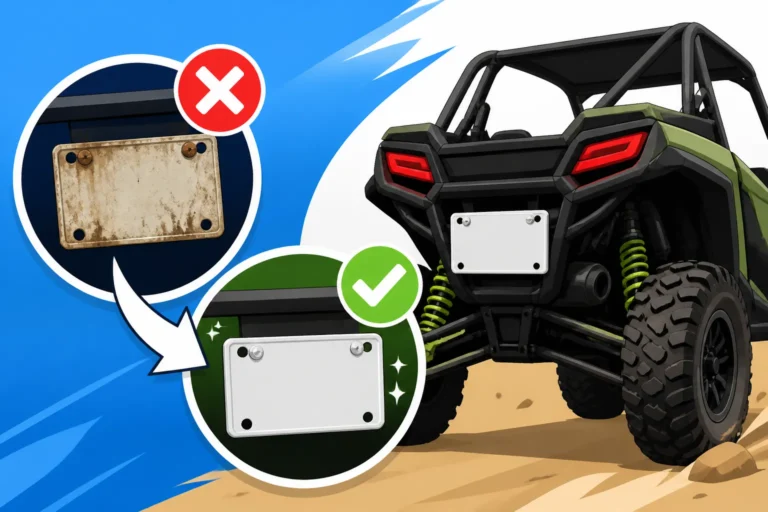
Sometimes, a quick visual check can give you some initial clues before you even start a formal lookup. Every registered OHV in California will display an ID plate, typically on the left rear fender for dirt bikes or the left side of the machine for quads and side-by-sides. This plate will have a unique number, typically 7 characters, and will often include the current sticker color and expiration year.
- Green Sticker: Indicates machines that meet California's emission standards and can be ridden year-round in most OHV areas. You can learn more about [California's Green Sticker Explained].
- Red Sticker: For machines that don't meet California's emission standards for year-round use and have restricted riding seasons and areas. These rules are particularly important if you are interested in [Riding a Red Sticker Machine Year Round in California].
- Tan Sticker: A temporary sticker for competition-only vehicles that allows limited use at sanctioned events. If you see a machine with a tan sticker, check out [California's Sanctioned Event Permit Explained] for more details.
While the sticker and plate give you a snapshot, they don't replace the need for a formal lookup if you're trying to confirm ownership, liens, or if the registration is truly current. Always double-check with the DMV, especially for large purchases.
Avoiding Pitfalls and Next Steps After Your Lookup
Completing a registration lookup is a crucial step, but it's not always the end of the road. Sometimes the information you find creates more questions, and sometimes it confirms exactly what you need to do next. Being prepared for these scenarios will make your OHV journey much smoother.
When the Information Doesn't Match
Imagine you performed a lookup on an OHV you're considering buying, and the VIN comes back to a different make or model than what the seller is advertising. Or perhaps the sticker color indicated in the DMV's records doesn't match the one currently on the machine. This is a huge red flag!
- Mismatch in Vehicle Description: If the VIN lookup provides details that don't align with the physical OHV, walk away. This could indicate a stolen vehicle, a tampered VIN, or fraudulent activity. It's simply not worth the risk.
- Discrepancy in Registration Status: If the seller claims the registration is current, but your lookup shows it's expired or non-operational, press for an explanation. There might be a legitimate reason (like they forgot to renew), but it could also be a sign they're trying to pass off a machine with hidden fees or issues. Be aware of the [California OHV Registration Cost] and potential penalties before committing.
- Lienholder Not Disclosed: If the lookup reveals a lienholder that the seller didn't mention, this is another major warning sign. Never purchase an OHV if there’s an undisclosed lien; you could end up paying for a machine that legally still belongs to a bank.
Your diligence here protects your investment and ensures you don't inherit someone else's problems. Always verify, verify, verify!
Registering a Quad Bought With a Lost Title
One of the most common dilemmas for OHV buyers is encountering a machine for sale where the seller has lost the title. While it's generally best to avoid these situations, sometimes a deal is too good to pass up, or it's a family hand-me-down. A registration lookup is your first step here, as it can confirm the last registered owner.
If you proceed with buying a quad with a lost title, you'll need the seller to sign a bill of sale, and ideally, fill out a "Statement of Facts" (Form REG 256) explaining why the title is missing. You will then likely need to apply for a duplicate title at the DMV. The DMV will require a [California Vehicle Verification on Form REG 31] to confirm the VIN and other details of the machine. This verification must be done by an authorized person, such as a DMV employee, CHP officer, or a licensed vehicle verifier. Without the title, the process to [Registering a Quad Bought With a Lost Title] can be more complex, often requiring additional forms and possibly a bond if the machine's value is high.
Protecting Your Investment: The Importance of Due Diligence
Ultimately, the California OHV registration lookup is a powerful tool in your due diligence arsenal. Whether you’re a seasoned rider or new to the world of ATVs and UTVs, taking the time to understand your machine's history and legal status is paramount.
After a successful lookup and a smooth transfer, make sure you keep all your new documents in a safe place. California law requires you to carry proof of registration when operating your OHV on public lands. [Carrying Registration Paper on the Sand] is not just a good idea, it's a legal requirement. Consider making copies or even taking photos of your current registration card and storing them digitally, just in case the paper version gets lost or damaged on the trail.
And remember, if you ever need to document any part of this process, whether it's a bill of sale, an affidavit of lost title, or even a general power of attorney to handle DMV matters for someone else, reliable legal document services like LawDepot can provide customizable templates to ensure you're using legally sound paperwork. It all comes back to being prepared and informed, so you can focus on the fun part: enjoying the incredible OHV trails California has to offer!
Disclaimer
This article is for general informational purposes only and does not constitute professional advice. Laws, prices and regulations vary by location and change over time. Consult a qualified professional for guidance on your specific situation.