California OHV Registration Paperwork Checklist
Navigating the California Department of Motor Vehicles (DMV) can feel like trying to ride a quad through quicksand – one wrong move and you're stuck, wasting precious hours. For anyone trying to register their off-highway vehicle (OHV) in California, the sheer volume of required paperwork, combined with the nuances of different scenarios, can be incredibly frustrating. This guide is designed to cut through that confusion, providing you with a definitive checklist and the insider tips you need to ensure a smooth and successful registration process for your ATV, UTV, dirt bike, or sand rail.
Why a Checklist is Your Best Friend for California OHV Registration
When you're eager to hit the dunes of Glamis or the trails of Hungry Valley, the last thing you want is a bureaucratic roadblock. A comprehensive checklist isn't just about ticking boxes; it's about saving you time, money, and the immense headache of multiple trips to the DMV.
Navigating the DMV Maze for Your Quad or Side-by-Side
Let's be real, the DMV isn't exactly known for its speedy, seamless operations. You might walk in with what you think is everything, only to be told you're missing a single, obscure document. This can mean waiting in line again, getting another appointment, or worse, having your vehicle's registration expire while you're still gathering papers. For enthusiasts who just want to ride, this is incredibly demoralizing. Having a clear, itemized list of what you need for your specific situation ensures you're prepared for the intricacies of California's OHV registration process. It helps you anticipate potential issues before you even set foot in a field office.
Think of it like preparing for a big ride: you wouldn't just throw your helmet and boots in the truck and hope for the best. You'd check your fuel, tire pressure, and ensure your machine is in top shape. The same goes for DMV visits – preparation is key to a successful outing.
The Cost of Missing Documents
Beyond the sheer frustration, incomplete paperwork can hit your wallet. If you miss a crucial document, your registration process can be significantly delayed. California has very specific deadlines, and late registration can incur penalties. For instance, if you're trying to transfer ownership after buying a used machine, there's a strict window, and missing paperwork could lead to a significant fine. You could also end up paying additional fees just because you had to reschedule an appointment or couldn't complete the process on time.
Furthermore, if your registration lapses while you're still trying to gather documents, you could be cited for riding an unregistered OHV on public lands. That's a surefire way to turn a fun weekend into a costly ordeal. Avoiding these pitfalls starts with knowing exactly what to bring.
The Core Paperwork Every California OHV Registration Requires
Regardless of whether your OHV is brand new, used, or coming from out of state, certain documents form the bedrock of any successful registration in California. Getting these fundamental pieces in order is your first and most critical step.
The Application for Title or Registration (Form REG 343)
This is the cornerstone document for nearly all OHV transactions at the California DMV. Form REG 343 is where you, as the applicant, provide all the essential information about yourself and your vehicle. It covers everything from your personal details to the specifics of the OHV itself, including its make, model, year, and vehicle identification number (VIN). You'll also declare how you acquired the vehicle and whether you're applying for a new title, registration, or both.
Accuracy is paramount when filling out this form. Any discrepancies between what's on the REG 343 and your other supporting documents could lead to delays. Be sure to use legible handwriting, or even better, fill it out electronically and print it. Pay close attention to sections regarding the vehicle's purchase price (for sales tax purposes), lienholder information if applicable, and any declared weight or usage details. You can find detailed guidance on [What California's Form REG 343 Asks For] to ensure every box is checked correctly.
Vehicle Verification (Form REG 31)
California takes vehicle identification seriously, and for good reason. To prevent fraud and ensure proper classification, your OHV must undergo a physical inspection, and the results are recorded on Form REG 31, the Vehicle Verification form. This isn't just a casual glance; a certified verifier will meticulously check your OHV's VIN, engine number, and often the emissions label to confirm they match your ownership documents.
Who can perform this verification? It's usually done by DMV employees, authorized private vehicle verifiers, or law enforcement officers (like the California Highway Patrol). For vehicles brought in from out of state, or if there's any doubt about the VIN, a CHP verification might be required. Make sure the verifier clearly marks all relevant numbers and confirms the vehicle's make, model, and year. Without a properly completed REG 31, your registration application will go nowhere. Read more about [California Vehicle Verification on Form REG 31] to understand what to expect.
Proof of Ownership (Title, Bill of Sale, MCO)
Proving you legally own the OHV is, naturally, non-negotiable. The specific document you need depends on how you acquired the machine:
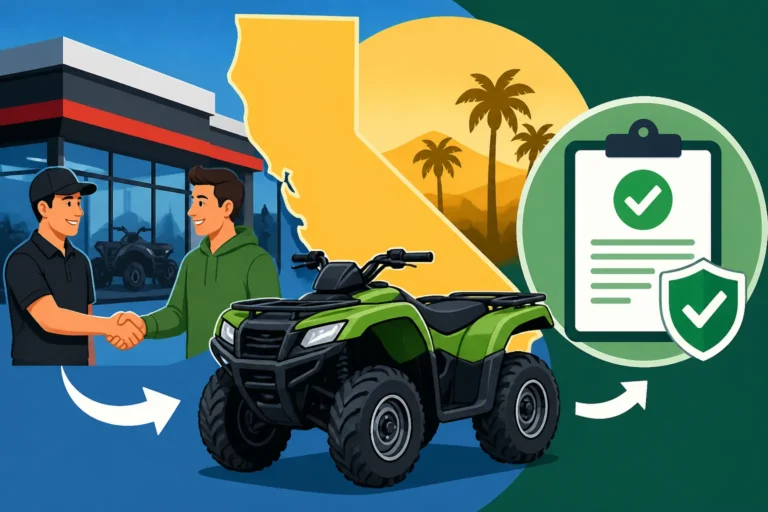
- New Machine (from a California dealer): You'll typically receive a Manufacturer's Certificate of Origin (MCO) or a Manufacturer's Statement of Origin (MSO). The dealer will usually handle the initial registration paperwork, but you'll still need to verify everything is in order.
- Used Machine (from a private seller in California): The original California Certificate of Title, properly signed off by the previous owner, is essential. This title needs to show a clear chain of ownership, meaning any previous transfers should be correctly recorded. A Bill of Sale is also highly recommended, even if not strictly required by the DMV, as it provides a clear record of the transaction. You can often find reliable Bill of Sale templates online, including from services like LawDepot, which can help ensure all the necessary legal details are included for your peace of mind. Check out [California OHV Bill of Sale Requirements] for more details on what should be included.
- Used Machine (from an out-of-state seller): You'll need the out-of-state title (or equivalent ownership document) and a Bill of Sale. The DMV will use these to issue a new California title and registration. This process can have its own unique twists, which we'll delve into shortly. [Titling an Off-Highway Vehicle in California] provides a broader overview of title processes.
Always ensure that any titles or ownership documents are free of alterations, smudges, or incomplete information, as these can trigger suspicion and significant delays. If the title is lost, the seller will need to apply for a replacement before they can transfer ownership to you, or you might need specific forms to get it done yourself with an affidavit. [Replacing a Lost California OHV Title] is a helpful resource if you run into this particular snag.
Emissions Compliance Documentation
California's strict environmental regulations extend to OHVs, dictating whether your machine qualifies for a Green, Red, or Tan sticker. This isn't usually a separate physical document you bring, but rather a characteristic of your vehicle that will be noted during the verification process.
- Green Sticker: Generally for OHVs that meet California's emission standards, usually those manufactured in 2003 or later (with some exceptions) and any machine manufactured prior to 2002. These machines can ride year-round in all open OHV areas. The presence of the proper emissions label from the manufacturer is what the verifier will be looking for. [California's Green Sticker Explained] goes into greater detail.
- Red Sticker: Typically applies to OHVs manufactured in 2003 or later that do not meet California's emission standards for year-round riding. These machines have seasonal riding restrictions in certain areas. The specific emissions label on the machine will determine its Red Sticker status. It's crucial to understand [Red Stickers and What Changed in California], especially with upcoming rule changes.
- Tan Sticker: A newer category for model year 2022 and later competition machines that may not have a California-compliant emissions label, but are registered for use only at sanctioned competitive events.
The key here is that the vehicle verifier will inspect your OHV for the manufacturer's emissions label. This label indicates whether the vehicle is California-compliant or federal-compliant (which may fall under Red Sticker rules). Be aware of your machine's model year and emissions compliance, as it directly impacts where and when you can legally ride.
Additional Documents You Might Need (Scenario-Specific)
While the core documents cover most situations, certain scenarios require extra paperwork. Being aware of these can save you a world of trouble.
Sales Tax or Use Tax Proof
California mandates that sales tax be paid on most OHV purchases.
- Dealer Purchase: If you bought your OHV from a licensed California dealer, they would have collected sales tax at the time of purchase. You'll need the sales contract or invoice that clearly shows the sales tax paid.
- Private Party Purchase: When buying from a private seller, you are responsible for paying the sales tax directly to the DMV when you register the vehicle. The purchase price stated on your Bill of Sale (and sometimes verified by market value) will be used to calculate this.
- Out-of-State Purchase (Use Tax): If you purchased an OHV out-of-state and are bringing it into California, you'll generally be subject to California's use tax. This is essentially the sales tax on items bought outside the state for use within California. You'll pay this directly to the DMV during registration.
Ensuring you have the correct documentation for sales or use tax payment, or proof that it's already been paid, is crucial. The DMV won't complete your registration until this financial obligation is met. Learn more about [California OHV Registration and Sales Tax] to understand the specifics.
Out-of-State Machines
Bringing an OHV from another state to California involves a few extra steps. Beyond the out-of-state title and a Bill of Sale, you might encounter specific verification requirements.
Often, the vehicle verification for an out-of-state machine will be more stringent, sometimes requiring a California Highway Patrol (CHP) inspection to ensure the VIN and engine numbers are legitimate and that the vehicle hasn't been stolen. You'll also need to ensure the vehicle meets California's emissions standards, or that you understand the implications if it doesn't (i.e., Red Sticker restrictions). This is a common point of confusion for new California residents, so it's wise to be over-prepared. For a deeper dive, read [Registering an Out-of-State Machine in California].
Lienholder Information
If you financed your OHV, your lender (the lienholder) has a vested interest in the vehicle until the loan is paid off. The DMV needs to record this information on the title. You'll typically need to provide the full legal name and address of the lienholder. In these cases, the physical title may be sent directly to the lienholder by the DMV, rather than to you. Make sure you have all the precise details from your financing agreement to avoid any holdups.
Power of Attorney
In situations where the registered owner cannot personally handle the registration process, a Power of Attorney (POA) form is necessary. This legal document authorizes another individual to act on their behalf. The DMV has its own specific POA form (REG 260), but a general POA form can sometimes be accepted if it explicitly grants authority for vehicle transactions. If you need a robust, legally sound Power of Attorney for specific purposes, general document services like LawDepot can often provide templates or guidance to ensure it meets legal standards, though you'd still need to ensure it's acceptable to the DMV. Always confirm with the DMV which version they will accept before your appointment.
Special Situations (e.g., Inherited, Homemade)
Less common but equally important are unique scenarios that require specialized documentation:
- Inherited OHV: If you've inherited an OHV, you'll need a certified copy of the death certificate, potentially a copy of the will or trust documents, and a completed "Statement of Facts" (REG 256) explaining your right to the vehicle.
- Homemade OHV (e.g., dune buggy or custom sand rail): This is one of the more complex situations. You'll need receipts for all major components, a completed Statement of Construction (REG 124), a smog certification if applicable, and a detailed inspection by the CHP or a qualified verifier to assign a VIN if one doesn't exist. This process requires meticulous record-keeping.
- Transferring a California OHV Registration: If you're simply taking over an existing registration, you'll still need the signed title and potentially a bill of sale, ensuring the previous owner's information is correctly transferred to you. Be aware of the deadlines for [The $28 Transfer Penalty in California] if you delay this process.
Tips for a Smooth Registration Process
Having all your documents is half the battle; the other half is approaching the DMV process strategically. A little preparation goes a long way in ensuring a quick and painless experience.
Organize Before You Go
Before you even think about heading to the DMV, gather all your documents. Create a dedicated folder for your OHV registration paperwork. Make copies of everything – original documents should be presented, but having copies for your records (and in case something goes missing) is smart. Double-check every form for completeness and accuracy. If you're unsure about a section on a form, it's often better to leave it blank and ask a DMV representative than to fill it out incorrectly.
Consider using a physical checklist you can actually mark off as you go, ensuring nothing is overlooked. A structured approach, like one might use for legal documents, perhaps even generated through a platform like LawDepot for general organizational purposes, can truly simplify what often feels like a daunting task.
Make an Appointment and Be Prepared
Walk-in visits to the DMV can mean long wait times. Save yourself the headache by scheduling an appointment online in advance. Most DMV field offices offer this service, and it significantly cuts down on waiting. When your appointment day arrives, aim to get there a few minutes early to collect yourself and review your documents one last time. Being prepared means bringing a pen, any necessary payment methods (check, credit card, cash), and a positive attitude (which can sometimes make all the difference!). For specific guidance, see [California OHV Registration Appointment at the DMV].
Utilizing Online Resources (Carefully)
While you cannot complete the entire OHV registration process online in California – the physical inspection and submission of original documents are mandatory – the DMV website is still an invaluable resource. You can download most of the necessary forms (like REG 343 and REG 31), read instructions, and even find answers to frequently asked questions. Use these resources to get a head start on filling out forms and understanding the requirements. However, always remember that [Why You Cannot Register an OHV Online] is a reality, and a physical visit is ultimately required for most transactions.
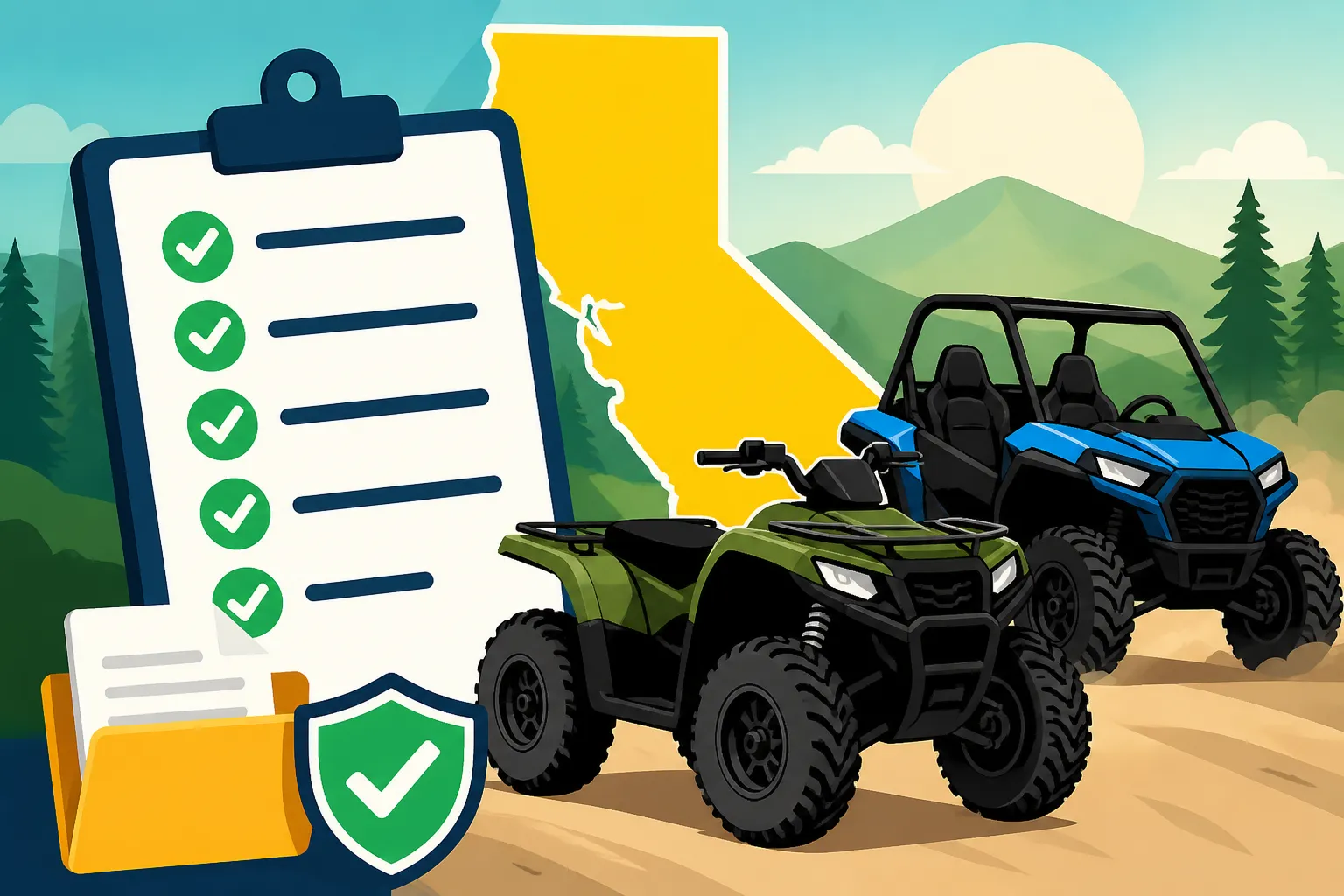
Here’s a handy checklist to help you visualize what you'll need:
| Document | Purpose | When It's Needed |
|---|---|---|
| Application for Title or Registration (REG 343) | Your formal request for OHV registration/title | All new registrations, title transfers, or major changes |
| Vehicle Verification (REG 31) | Physical inspection of VIN, engine, emissions label | All new registrations, transfers, or vehicles from out of state |
| Proof of Ownership (MCO/MSO, Title, Bill of Sale) | Establishes legal ownership | Required for all registrations and title transfers |
| Emissions Compliance (Label on OHV) | Determines Green, Red, or Tan sticker eligibility | All new registrations |
| Sales/Use Tax Documentation | Proof of sales tax paid or calculation of use tax owed | New purchases (private or dealer) or vehicles brought from out of state |
| Out-of-State Title/Registration | Proof of prior registration/ownership from another state | Registering an OHV previously registered out-of-state |
| Lienholder Information | Details of financing company | If your OHV is financed |
| Power of Attorney (REG 260 or legal) | Authorizes another person to act on your behalf | If someone else is processing your registration |
| Death Certificate/Will | Proof of rightful inheritance | Inherited OHV registration |
| Receipts for Parts/REG 124 | Proof of components and construction | Registering a homemade OHV |
| California ID (Driver's License/ID Card) | Proof of identity for the applicant | Required for all in-person transactions |
| Proof of Residency | Utility bill, rental agreement, etc. (sometimes requested) | May be requested for new residents or specific situations |
Getting your OHV registered in California doesn't have to be a trial by fire. By understanding the specific paperwork required for your situation and meticulously organizing everything in advance, you can breeze through the process and get back to what you truly love: riding. Happy trails!
Disclaimer
This article is for general informational purposes only and does not constitute professional advice. Laws, prices and regulations vary by location and change over time. Consult a qualified professional for guidance on your specific situation.