California Seat Belt Rules in a UTV
It can be incredibly confusing to figure out all the different rules when you're gearing up for a UTV adventure in California, and seat belt regulations are a big one. You've got the manufacturer's recommendations, the state laws, and then the practicalities of making sure everyone, especially the kids, is safe and properly buckled in. This guide is here to untangle all that, giving you a clear picture of California's seat belt rules for UTVs so you can ride confidently and legally.
Understanding California's UTV Seat Belt Mandates
When you're out on the trails or exploring the vast expanses of California's public lands, safety should always be your top priority. And right up there with helmets is your UTV's seat belt system. The rules around seat belt use in side-by-sides (UTVs) are pretty clear in the Golden State, but often, riders don't realize how strictly they apply once you leave private property.
The Basic Requirement on Public Lands
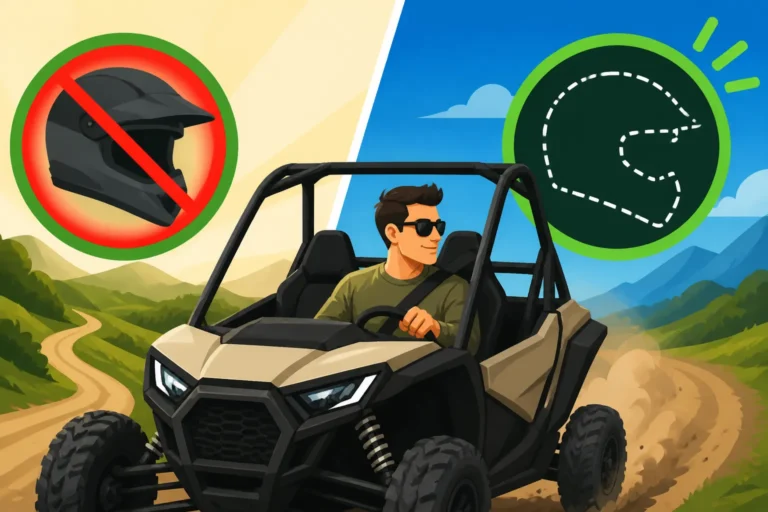
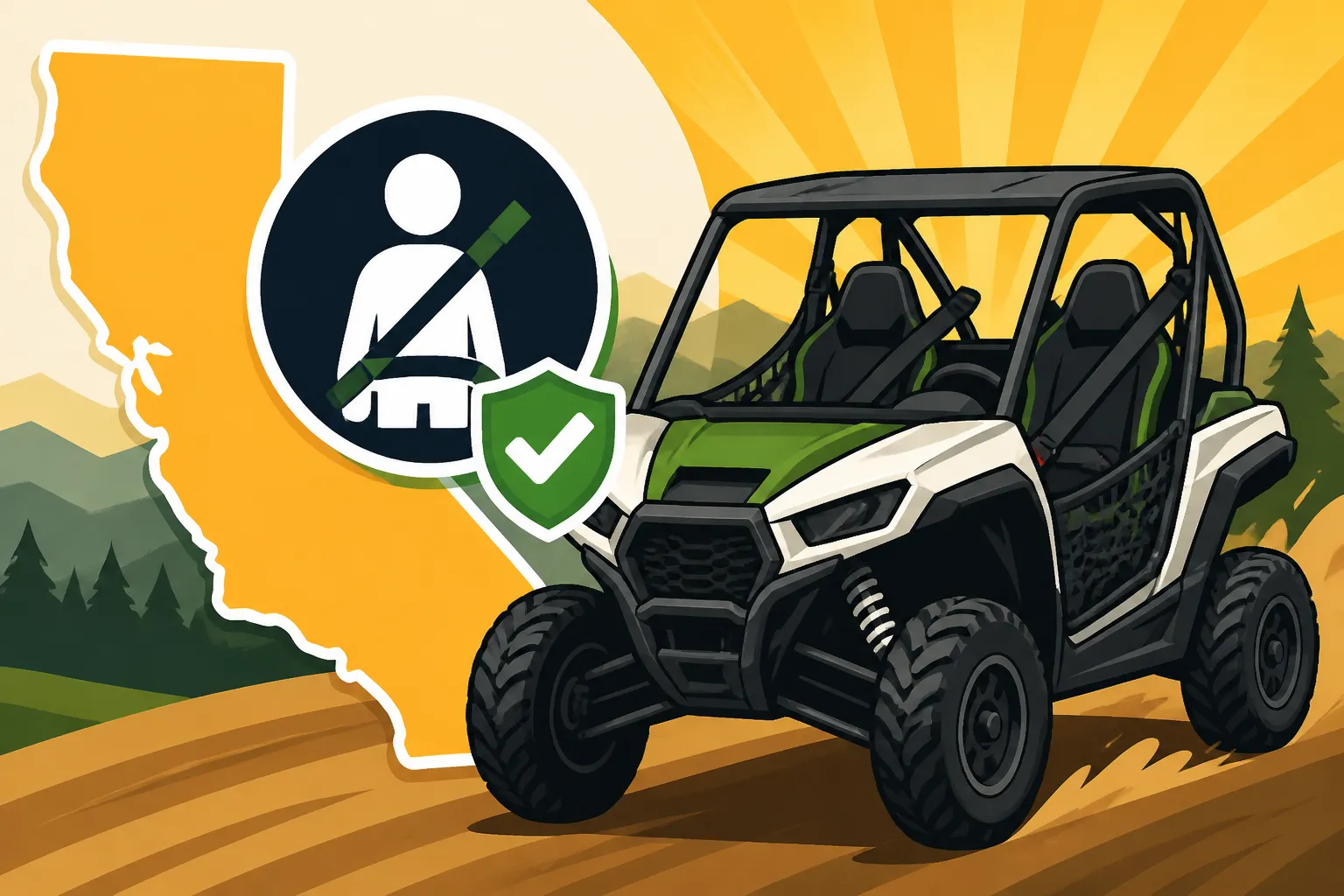
Let's cut right to it: if your UTV came from the factory with seat belts, you and all your passengers must wear them when operating on public lands in California. This isn't just a friendly suggestion from the rangers; it's a legal mandate outlined in the California Vehicle Code (CVC) 38600. This code specifically states that any person operating or riding in an off-highway motor vehicle (which includes your UTV or ROV) on public lands or within the State Vehicular Recreation Areas (SVRAs) must wear a seat belt, if the vehicle is equipped with one.
What does "equipped with one" mean in practical terms? It means virtually every modern UTV sold today. Manufacturers design these machines with seat belts as an integral part of their safety system. So, whether you're tackling the dunes at Glamis or cruising the trails at Hungry Valley, those belts need to be buckled. This law is in place for a very good reason: UTVs, while incredibly fun and capable, can be prone to rollovers or unexpected impacts. Seat belts are your primary line of defense, keeping you secured within the protective cage of your vehicle and significantly reducing the risk of ejection or serious injury.
Distinguishing Between Public and Private Land
One of the biggest areas of confusion for UTV owners revolves around where these seat belt laws actually apply. It's a valid question, because the distinction between public and private land is crucial.
On private property, the state laws concerning seat belt usage in UTVs generally don't apply. This means if you're strictly riding on your own ranch, a friend's private land, or a designated private riding park that doesn't fall under state jurisdiction, you might not be legally required to wear a seat belt by state law. However, even in these scenarios, it's incredibly important to wear your seat belt anyway. Beyond the obvious safety benefits, it can also play a role in liability should an accident occur. Most responsible private land owners or event organizers will still strongly encourage, if not outright require, their use.
The real shift happens when you transition from private land to public trails or designated riding areas. This can happen quite suddenly—one minute you're on a dirt road connecting to your property, the next you're on a trail managed by the Bureau of Land Management (BLM) or within an SVRA. The moment you cross that invisible line onto public land, California's seat belt laws kick in. It's vital to be aware of your route and ensure everyone is properly buckled before you enter these areas. Furthermore, if you're participating in a sanctioned event, even one held partially or entirely on private land, the event organizers almost universally have their own safety protocols that include mandatory seat belt use. These event rules can often be even stricter than state law, and you'll want to be familiar with them, especially if you're pursuing something like a [California's Sanctioned Event Permit Explained].
Operator Responsibility and Passenger Rules
Beyond just the requirement to wear seat belts, California law places significant emphasis on who is responsible for ensuring compliance, particularly when passengers are involved. This isn't just about personal safety; it's also about understanding your role as the operator of the UTV.
Who is Responsible for Seat Belt Use?
As the driver and operator of a UTV, you hold a substantial amount of responsibility for the safety of everyone in your vehicle. In California, the operator is generally responsible for ensuring that all occupants, particularly minors, are properly restrained with seat belts. This means that if you're pulled over by a ranger or law enforcement officer on public land and your passengers aren't belted in, you could be the one receiving the citation, not just the unbelted passenger.
While adult passengers also bear a degree of responsibility for their own compliance—they should know to buckle up—the operator often faces the initial legal consequences for non-compliance within their vehicle. It's a good practice to make a quick "seat belt check" part of your pre-ride routine, just like you would check fuel levels or tire pressure. The consequences of not complying aren't trivial. Getting cited for seat belt violations on an OHV can result in fines, which can certainly add up and put a damper on your riding plans. Think about it: a ticket for an unbuckled passenger is a frustrating way to end an otherwise great day on the trails, and it’s a situation that is entirely avoidable. These [California Fines for Riding a Public Road] can be a real headache.
Specific Rules for Child Passengers
Bringing kids along for the ride in a UTV is one of the joys of off-roading, but it also brings a heightened level of responsibility, especially regarding seat belts. California doesn't have a specific car seat law that directly applies to UTVs in the same way it does for passenger cars on public roads. However, the general safety principles for children are paramount, and they absolutely must be able to properly fit within the UTV's seat belt system.
The most critical thing is to always adhere to the UTV manufacturer's guidelines for child passengers. These guidelines often specify minimum ages, weights, or heights for children to safely occupy a particular seating position. A seat belt that doesn't fit properly—for example, if the shoulder strap crosses their neck instead of their shoulder, or the lap belt rides up over their stomach—can actually cause more harm than good in a crash. For smaller children, while not legally mandated for UTVs, using an appropriate booster seat can be a smart way to ensure the factory seat belts fit them correctly, positioning the lap and shoulder belts as they would in a car. You might want to review what we've covered on [Booster Seats in a Side-by-Side].
It's also important to differentiate UTVs from ATVs. Side-by-sides are designed for multiple passengers and have dedicated seats and seat belts for each occupant. This means that when you have a side-by-side, every single person, regardless of age, must be properly secured in their own seat with their own belt. This is a key distinction from California's [California ATV Passenger Ban Explained] which applies to most quads. So, whether it's a toddler in a proper booster or a teenager, everyone needs to be buckled. When it comes to [Side-by-Side Passengers and California Rules], it's all about ensuring everyone has a designated, belted seat.
Maintaining and Modifying UTV Seat Belt Systems
Just like any other critical safety component on your UTV, seat belts aren't a "set it and forget it" item. They require regular inspection and, occasionally, replacement or modification to ensure they remain effective.
Inspecting and Replacing Factory Belts
Your UTV's seat belts endure a lot of abuse in the off-road environment. They're constantly exposed to dirt, dust, UV rays from the sun, moisture, and friction from regular use. All these factors contribute to wear and tear over time. It's crucial to make a habit of regularly inspecting your seat belts for any signs of damage. Look for fraying, cuts, tears in the webbing, or excessive stretching. Check the buckles to ensure they latch securely with a satisfying click and release smoothly. Any stiffness or difficulty in latching/unlatching is a red flag.
Beyond regular wear, seat belts have a specific job in an impact. They're designed to stretch and absorb energy during a crash, protecting the occupant. Because of this, after any significant impact, rollover, or accident—even if the belts look fine—they should always be replaced. The webbing may have stretched or been compromised internally, reducing its effectiveness in a future incident. Think of it like a bicycle helmet: once it's taken a hard hit, it's done its job and needs replacing, even if it appears intact. Visible damage, stretching, or a faulty buckle are clear indicators that it's time for new belts. Replacing them is a small investment in your safety and the safety of your passengers.
Aftermarket Harnesses and Modifications
Many UTV enthusiasts, especially those who participate in more aggressive riding, racing, or rock crawling, choose to upgrade from factory seat belts to aftermarket harness systems. These often include 4-point, 5-point, or even 6-point harnesses, which offer significantly enhanced safety and occupant retention compared to standard 3-point belts. They're designed to keep you much more securely planted in your seat, preventing you from being jostled around or, worse, partially ejected during dynamic maneuvers or impacts.
If you decide to go this route, the most critical factor is proper installation. An aftermarket harness system is only as good as its installation. This often means carefully mounting the harnesses to the UTV's frame or roll cage using appropriate hardware and reinforced mounting points. Many riders opt to have these systems professionally installed to ensure they meet the highest safety standards. Improper installation can, in fact, be more dangerous than relying on factory belts. Reputable brands like SuperATV, for instance, offer a wide range of aftermarket harnesses and mounting solutions specifically designed for popular UTV models. These products are engineered for off-road use and can provide a much more secure and comfortable ride, especially for spirited driving. While SuperATV provides excellent instructions and guides for DIY installation, if you ever feel unsure about modifying such a critical safety component, it's always best to consult with a professional off-road shop. The legal compliance aspect is generally straightforward: if you have a properly functioning, securely installed aftermarket harness, it fulfills the legal requirement of having a seat belt system in the vehicle.
Real-World Scenarios and Enforcement
Understanding the rules is one thing, but knowing how they play out in real-life riding situations and how they're enforced can save you a lot of grief. California takes OHV safety seriously, and that includes seat belt usage.
Riding in California's SVRAs and Public Lands
If you've ever spent time at one of California's amazing State Vehicular Recreation Areas (SVRAs) like Oceano Dunes, Hungry Valley, or Ocotillo Wells, you've likely seen rangers or law enforcement officers patrolling. A significant part of their job is to ensure rider safety and compliance with state regulations, and seat belt use is high on their checklist. At entrance gates, during random patrols, or even at popular staging areas, it's common for officers to perform visual checks. If they see an unbelted occupant, it's an immediate reason for a stop. We've talked about [Sticker Checks at Ocotillo Wells] before, and seat belt checks are just as common. They're not just looking for registration; they're looking for basic safety compliance.
The rules don't just apply to the main trails; they also extend to any designated routes, including combined-use roads where OHVs are permitted to share with street-legal vehicles. Even if you're only on a short segment connecting a trail to a campsite, the seat belt law is still in effect. California has specific regulations for these types of routes, and the same safety standards apply. For instance, if you're riding a [California's Combined-Use Highways], or navigating a route where [What Happens When You Hit the 3-Mile Limit] might come into play, your seat belt remains mandatory. It's a simple visual check for a ranger, and an easy citation to issue if you or your passengers aren't buckled up. Always make sure everyone is properly secured before you even think about putting the UTV in gear on public land. It's also important to carry your registration paper on the sand, as it's another common check.
Common Misconceptions and Best Practices
There are always a few common thoughts or habits that can lead to problems. Let's tackle some of those and establish some best practices for UTV seat belt use.
One common misconception is the "just a short ride" excuse. Riders often think, "Oh, I'm just moving the UTV 100 yards to another spot at the campsite," or "I'm only going to the bathroom, it's super close." The law, however, doesn't differentiate between a short trip and a long one. If you're on public land (or an SVRA, which is public land), and your UTV has belts, you and your passengers must wear them, period. This is a common way for riders to get caught off guard and receive a citation.
Another point that often comes up is comfort. Let's be honest, stock UTV seat belts, especially after a long day of riding, aren't always the most comfortable things. They can dig in, or feel restrictive. While this is a valid comfort concern, safety absolutely takes precedence. If comfort is a significant issue, consider aftermarket comfort pads for the shoulder straps or explore upgrading to a harness system that often distributes pressure more evenly. Never compromise on safety for a perceived increase in comfort.
As the operator, you are also a role model. If you're riding with younger passengers, especially, setting a good example by consistently buckling up yourself is crucial. Kids learn by observation, and if they see you always buckling up, they'll be much more likely to do the same without argument. Finally, make a quick pre-ride briefing a habit. Before you start the engine, a simple verbal reminder to all passengers to "Buckle up!" can go a long way. It's a quick, easy, and incredibly effective safety measure that reinforces compliance and reminds everyone of the importance of being secured.
Here's a quick reference for seat belt considerations in different UTV seating positions:
| Seating Position | Primary Rule (CA Public Land) | Key Consideration | Operator Responsibility |
|---|---|---|---|
| Driver | Must wear factory or approved aftermarket seat belt | Proper fit, accessibility of controls | Ensure own compliance, set example for passengers |
| Front Passenger | Must wear factory or approved aftermarket seat belt | Proper fit, no obstruction of driver's view or controls | Ensure passenger compliance, especially minors |
| Rear Passenger | Must wear factory or approved aftermarket seat belt | Age/size appropriateness, adequate restraint for kids | Ensure passenger compliance, especially minors |
| Child Passenger (General) | Must wear factory or approved aftermarket seat belt | Must properly fit the belt; booster seats if necessary | Strict enforcement of fit and use for all children |
| Adult Passenger | Must wear factory or approved aftermarket seat belt | Personal comfort, awareness of UTV dynamics | Ensure compliance, inform passengers of rules |
Disclaimer
This article is for general informational purposes only and does not constitute professional advice. Laws, prices and regulations vary by location and change over time. Consult a qualified professional for guidance on your specific situation.