California OHV Registration Address Change
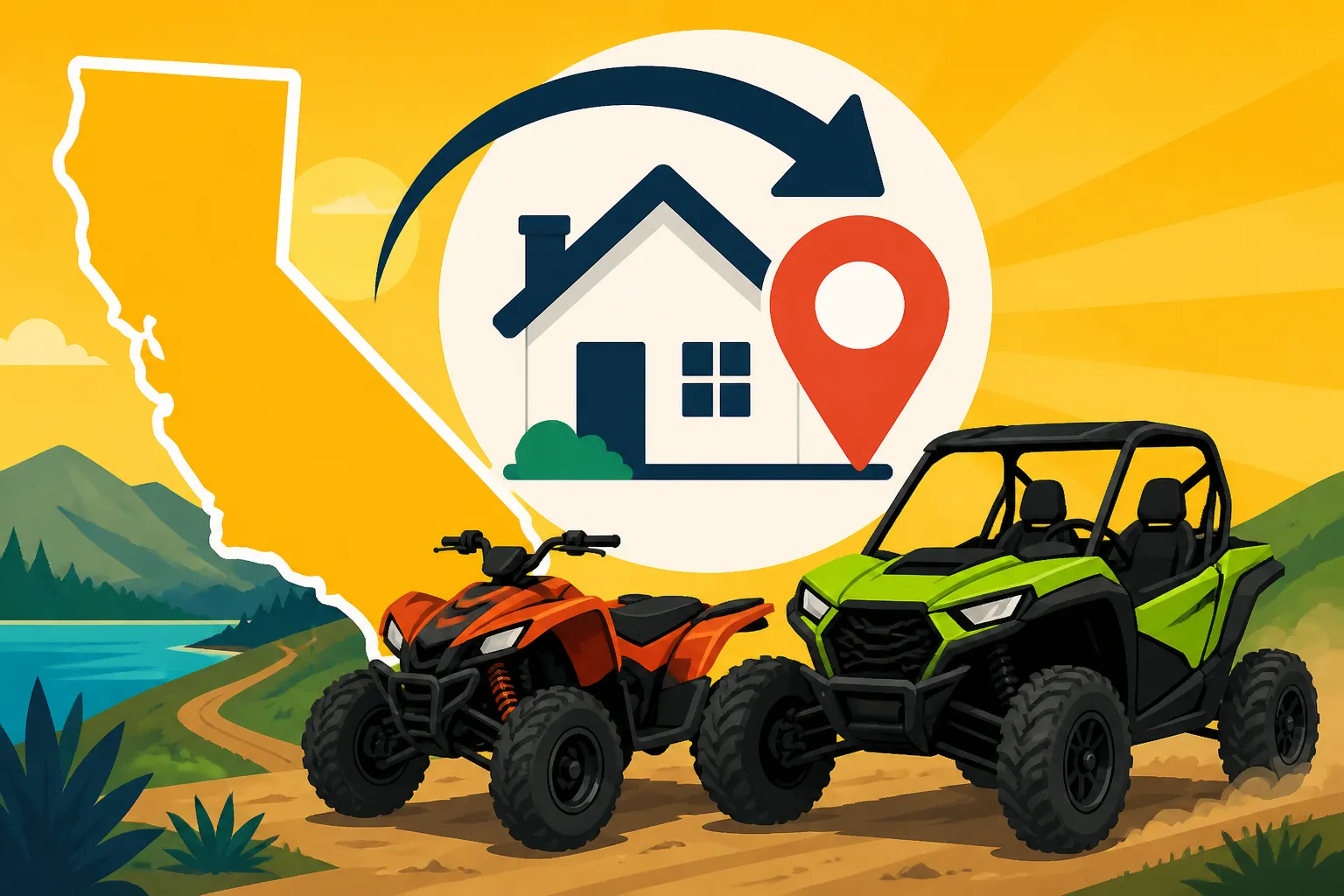
Moving your residence is one of those life events that's equal parts exciting and totally overwhelming. Amidst the boxes, utility transfers, and new routines, it's easy for little details to slip through the cracks. But for us off-road enthusiasts here in California, one critical detail you absolutely cannot afford to overlook is updating your address on your Off-Highway Vehicle (OHV) registration. Ignoring this seemingly small task can lead to a heap of headaches, from missed renewal notices to potential run-ins with law enforcement. This guide is here to walk you through exactly why and how to change your OHV registration address in the Golden State, making sure your adventure machine stays legal and your mailbox stays full of the right stuff.
Why Your Address Matters for California OHV Registration
When you're out carving trails in the Anza-Borrego desert or tackling the dunes at Glamis, the last thing on your mind is probably your mailing address. But believe me, for the folks at the California Department of Motor Vehicles (DMV) and the Off-Highway Motor Vehicle Recreation (OHMVR) Division, your address is a pretty big deal. It's the primary way they communicate with you, and keeping it current is crucial for a smooth OHV ownership experience.
Keeping Your Records Accurate with the DMV
Think of your OHV registration as a contract with the state. Just like any important agreement, both parties need accurate contact information. The California DMV uses your address for all official correspondence related to your off-highway vehicle. This isn't just about sending you junk mail; we're talking about critical notices concerning your registration status, changes to fees, important safety recalls, or even updates on riding areas. If your address is outdated, these vital communications will go to an old address, leaving you in the dark and potentially out of compliance.
For those of us who appreciate the freedom of the open trail, it can be easy to forget that there's a detailed bureaucratic system underpinning it all. The state meticulously tracks OHVs, tying your personal identity (and current address) directly to your machine's unique record. This connection is not just administrative; it's fundamental for legal purposes, ensuring that the registered owner can be reached for any reason pertaining to the vehicle. So, keeping your address pristine in their system is less about bureaucracy and more about safeguarding your enjoyment of the sport.
The Importance of Up-to-Date Mailing Information
Beyond official notices, your mailing address is absolutely essential for receiving your biennial registration renewal notices. Imagine missing that critical piece of mail because it went to your old apartment. Next thing you know, your [California OHV Registration Two-Year Cycle] has rolled around, and you're suddenly facing an expired registration and scratching your head wondering why. If you miss that notice, you could easily end up riding with an expired sticker, which is a big no-no.
Any significant changes in OHV regulations, updates from the OHMVR Division about trail closures, or even new opportunities for grants in OHV areas often come by way of official mail. Missing these could mean you're unaware of a new rule that impacts your riding, or that your favorite trail might be temporarily closed. Furthermore, if you ever lose your OHV title or your ID plate goes missing during a particularly spirited ride, any replacement documents or plates will be mailed directly to the address on file. You certainly don't want those valuable papers landing in someone else's mailbox! The frustration of dealing with a [California OHV Late Registration Penalty] is something none of us want to experience, and an outdated address is a prime culprit for that.
How to Change Your OHV Registration Address in California
Okay, so you've moved, and you know you need to update your address. The good news is, California offers a few straightforward ways to get this done. No need to haul your quad to the DMV for this one! The process is designed to be as hassle-free as possible, ensuring you can quickly get back to planning your next adventure.
Understanding Your Options: Online, Mail, or In-Person
When it comes to updating your address, the California DMV provides flexibility:
- Online: For many, this is the quickest and most convenient option. You can typically change your mailing address for your driver's license, vehicle registration, and OHV registration all at once through the DMV's online portal. It's a user-friendly system, and you'll usually get an immediate confirmation. This saves you a trip to a field office and lets you update your information from the comfort of your new home.
- Mail: If you prefer the traditional route, you can submit an address change by mail. You'll typically use the Change of Address Form (DMV 14). This form allows you to update your address for all your DMV-related records simultaneously. Simply fill it out accurately and mail it to the address provided on the form. While it's not as instantaneous as the online method, it's a perfectly valid and secure way to update your details.
- In-Person: While perhaps not necessary just for an address change, you can always visit a California DMV field office if you need to handle other business or prefer face-to-face interaction. If you do go this route, it's highly recommended to make an appointment beforehand. This can save you significant wait time, as walk-ins can sometimes mean a long stay. While you don't need to bring your OHV for an address change, remember to bring identification and any relevant OHV registration documents. For more complex situations or if you need help with other OHV paperwork, visiting a field office can be very helpful. If you plan to visit, check out tips for [Taking an OHV to a California DMV Field Office] (even if you're not bringing the machine, the advice on appointments and what to bring applies to any visit).
What Information You'll Need to Provide
Regardless of the method you choose, you'll need to have some key pieces of information handy to ensure a smooth address change:
- Your Full Name: The name exactly as it appears on your current California Driver's License or ID card.
- Your Driver's License or ID Card Number: This is how the DMV links you to all your associated records.
- The OHV's ID Plate Number: This is the unique identifier for your off-highway vehicle, often what people refer to as the "plate number" even though it's technically an identification plate, not a street-legal license plate. Have your current OHV registration card nearby to quickly find this number.
- Your Old Address: So the DMV can locate your previous record.
- Your New Address: The shiny new address where you want to receive all future communications.
- Vehicle Identification Number (VIN): While often tied to the ID plate number, it's always good to have your OHV's VIN available, just in case. It’s the ultimate identifier for your machine.
Having your current OHV registration card and your driver's license or ID card right next to you will make the process incredibly easy. This ensures all information you provide matches the DMV's existing records, preventing any potential delays or complications. If you're creating new personal records after a move, platforms like LawDepot can be useful for organizing vital documents and ensuring all your information is consistent across various forms.
Timing Your Address Change for Smooth Transitions
The best advice when it comes to changing your address for your OHV registration is simple: do it as soon as possible after you move. Don't put it off! Waiting can lead to problems, especially when your biennial registration renewal comes around.
California OHV registrations all expire on June 30th of the second year of the cycle. For example, if your current registration expires on June 30th of an even-numbered year, your renewal notice would typically be mailed a few months before that date. If you move in April and don't update your address until July, you've likely missed that crucial renewal notice, leading to an expired registration before you even realize it. For more details on the timeline, you can look up [When California OHV Registration Expires].
By updating your address promptly, you ensure that your next [California OHV Registration Renewal Fee] notice, along with any other important communications, arrives at your new home without a hitch. It's a simple step that avoids a lot of potential hassle and keeps your OHV riding legal and worry-free.
What Happens If You Don't Update Your Address
"It's just an address change, what's the big deal?" you might think. But trust me, as someone who's seen riders run into problems, neglecting to update your OHV registration address in California can turn into a surprisingly big deal. It can affect everything from your wallet to your ability to legally enjoy the trails.
Missing Important Notices and Renewal Information
The most immediate consequence of not updating your address is missing important mail from the DMV. As we discussed, renewal notices are absolutely critical. If that notice goes to your old address, you won't get the reminder to renew your registration. Before you know it, your registration will have expired, and you'll be riding an unregistered OHV. This could easily lead to an [California OHV Late Registration Penalty] on top of the regular renewal fee, which nobody wants to pay just for forgetting a mailing address.
Beyond renewals, you could miss out on vital information about changes to OHV laws, new safety requirements, or even important recalls on your specific make and model. Imagine discovering a safety recall months late because the notification never reached you. This isn't just an inconvenience; it can pose a real safety risk. The state relies on your updated address to keep you informed and safe, so not providing it creates a void in that communication. Even if you try to [Renewing Without Going to a Field Office] online, having your records accurate beforehand just makes the whole process smoother.
Potential Complications with Enforcement and Future Sales
Riding an OHV with an expired or unregistered identification plate on public land in California can lead to citations and fines. If a ranger or law enforcement officer stops you at a trail gate or during a patrol, one of the first things they'll check is your registration. If their records show an expired status because you never received the renewal notice, you could be facing a ticket. Even if you explain you never got the mail, the responsibility to ensure your registration is current ultimately falls on you.
Furthermore, an outdated address can complicate things significantly if you decide to sell your OHV down the road. When you sell a machine, you need to properly transfer the title and registration to the new owner. If your address on file with the DMV doesn't match your current address, it can raise questions or create extra hurdles in the transfer process, making an already complex transaction even more difficult. The buyer might be hesitant, or you might need to jump through extra hoops to prove your identity and ownership. In such scenarios, having proper documentation like a comprehensive bill of sale, which you can often create using resources like LawDepot, becomes even more critical to ensure a smooth and legally sound transaction, with all parties clearly identified by their correct current addresses.
Common Questions and Special Scenarios
Life has a funny way of throwing curveballs, and sometimes an address change isn't as simple as moving down the street. Let's look at a few common questions and special scenarios that might arise when dealing with your California OHV registration address.
Moving Out of State with Your California OHV
This is a common one! You've loved your California riding, but now a new job or a change of scenery is taking you to Arizona, Nevada, or beyond. What happens to your California OHV registration? Simply put, California's OHV registration does not transfer to other states. When you establish residency in a new state, you will need to register your OHV in that state according to their specific laws and regulations. Each state has its own system, and California's unique green, red, or tan sticker system won't apply there.
However, if you plan to visit California occasionally for riding, you'll then be considered a nonresident. In that case, you may need to obtain a California Nonresident OHV Use Permit to legally ride on designated public lands. Some states, like Oregon and Nevada, have reciprocity agreements with California, meaning their valid OHV registrations are honored here, but many do not. So, before you load up and head back for a holiday weekend, it's worth checking out [Do Nonresidents Need California OHV Registration?] to ensure you're compliant.
Handling PO Boxes or Rural Route Addresses
"Can I just use my PO Box?" is a question I hear a lot. The good news is that the California DMV generally accepts Post Office (PO) Boxes for your mailing address. This can be super convenient, especially if you live in a rural area where direct mail delivery might be inconsistent, or if you simply prefer to receive all your mail at a secure PO Box.
However, it's important to understand the distinction between your mailing address and your physical residence address. While your PO Box is fine for receiving mail, the DMV typically also wants to know your actual physical residential address for their records. This is for legal identification purposes and can be relevant in certain situations. When filling out forms like [What California's Form REG 343 Asks For], you'll usually find separate fields for mailing and physical addresses. Always provide both if requested, ensuring complete and accurate information for the state.
What if You Don't Own the OHV Anymore?
Let's say you changed addresses, but then shortly after, you sold your OHV. Do you still need to update your address with the DMV? Technically, once you sell your OHV, it becomes the new owner's responsibility to transfer the registration and title into their name. You, as the seller, should report the sale to the DMV within a specific timeframe.
However, if your address changes before the sale is officially processed and registered by the new owner, it's still a good practice to update your address for your general DMV records. This helps ensure that any lingering communications or issues related to your time as the owner reach you at your current location. It provides an extra layer of protection against potential problems down the line. When selling, using a reliable template for a bill of sale from a service like LawDepot can help document the transaction properly and ensure both parties have clear records of the date of sale and the respective addresses. This helps clarify when your responsibility as the registered owner ends.
Disclaimer
This article is for general informational purposes only and does not constitute professional advice. Laws, prices and regulations vary by location and change over time. Consult a qualified professional for guidance on your specific situation.