What the ID Plate Looks Like
If you've recently purchased an off-highway vehicle (OHV) or are new to riding in the Golden State, you might be scratching your head about what exactly a California OHV ID plate is. It’s a common point of confusion, as it’s quite different from a standard license plate and even from the familiar green or red stickers. This guide is here to demystify the California OHV ID plate, walking you through its distinct appearance, its crucial purpose, where it needs to be mounted, and what to do if it ever gets lost or damaged.
The California OHV ID Plate: More Than Just a Sticker
When you register your off-highway vehicle in California, you don't just get a colorful sticker; you also receive a physical metal plate. This isn't just a quirk of California's system; it's a deliberate choice with significant implications for how you identify and use your machine on public lands. Many riders, especially those new to the state or those transitioning from areas where only decals are issued, find this distinction a bit puzzling at first.
Why California Opts for a Plate Over a Decal
California's decision to issue a physical ID plate, rather than just a decal, comes down to several practical reasons centered on durability, visibility, and enforcement. Think about the harsh conditions many OHVs face: extreme temperatures, heavy mud, relentless dust, and the occasional impact. A simple sticker might peel, fade, or get scraped off, rendering your registration unidentifiable. The metal plate offers a much more robust and long-lasting solution, designed to withstand the rigors of off-road adventures.
This robust design isn't just for your convenience; it's crucial for the agencies that manage public lands. Rangers and law enforcement officials need to be able to quickly and clearly identify registered vehicles. A plate provides a consistent, durable point of identification that's less prone to becoming unreadable. It’s part of a broader system designed to ensure compliance and safety across California's vast network of riding areas. If you're curious about this specific policy, you can delve deeper into [Why California Issues a Plate, Not a Decal] for more background.
The Purpose and Significance of Your OHV ID Plate
At its core, your California OHV ID plate serves as definitive proof that your off-highway vehicle is legally registered with the state. It’s a physical manifestation of your compliance with California Vehicle Code and acts as a unique identifier for your specific machine within the Department of Motor Vehicles (DMV) and the Off-Highway Motor Vehicle Recreation (OHMVR) Division's records. Without a properly displayed and current ID plate (along with the appropriate sticker), your machine isn't considered legal for use on public lands.
Beyond mere identification, the ID plate is intrinsically linked to the funding that supports California's OHV recreation areas. The fees collected through registration, including the issuance of these plates, are vital for maintaining trails, developing new riding opportunities, and ensuring safety on public lands. These funds are reinvested into the very places you love to ride. To understand more about where your registration dollars go, explore [What California OHV Fees Pay For]. While the color of your registration sticker (green, red, or tan) dictates your seasonal riding access, the ID plate itself is the constant, foundational element that signifies your machine is part of California's official OHV system. For instance, whether you have a [California's Green Sticker Explained] or a Red Sticker, the underlying metal plate remains the same.
Decoding the Appearance: What to Look For
When you first receive your California OHV ID plate, you'll notice it has a distinct look that sets it apart from other vehicle plates you might encounter. It's designed to be clearly visible and easily recognizable, adhering to specific state standards. Understanding these visual elements is key, especially if you're buying a used machine and want to verify its identification, or simply to ensure your own plate is correctly displayed.
Key Visual Elements: Colors, Numbers, and Lettering
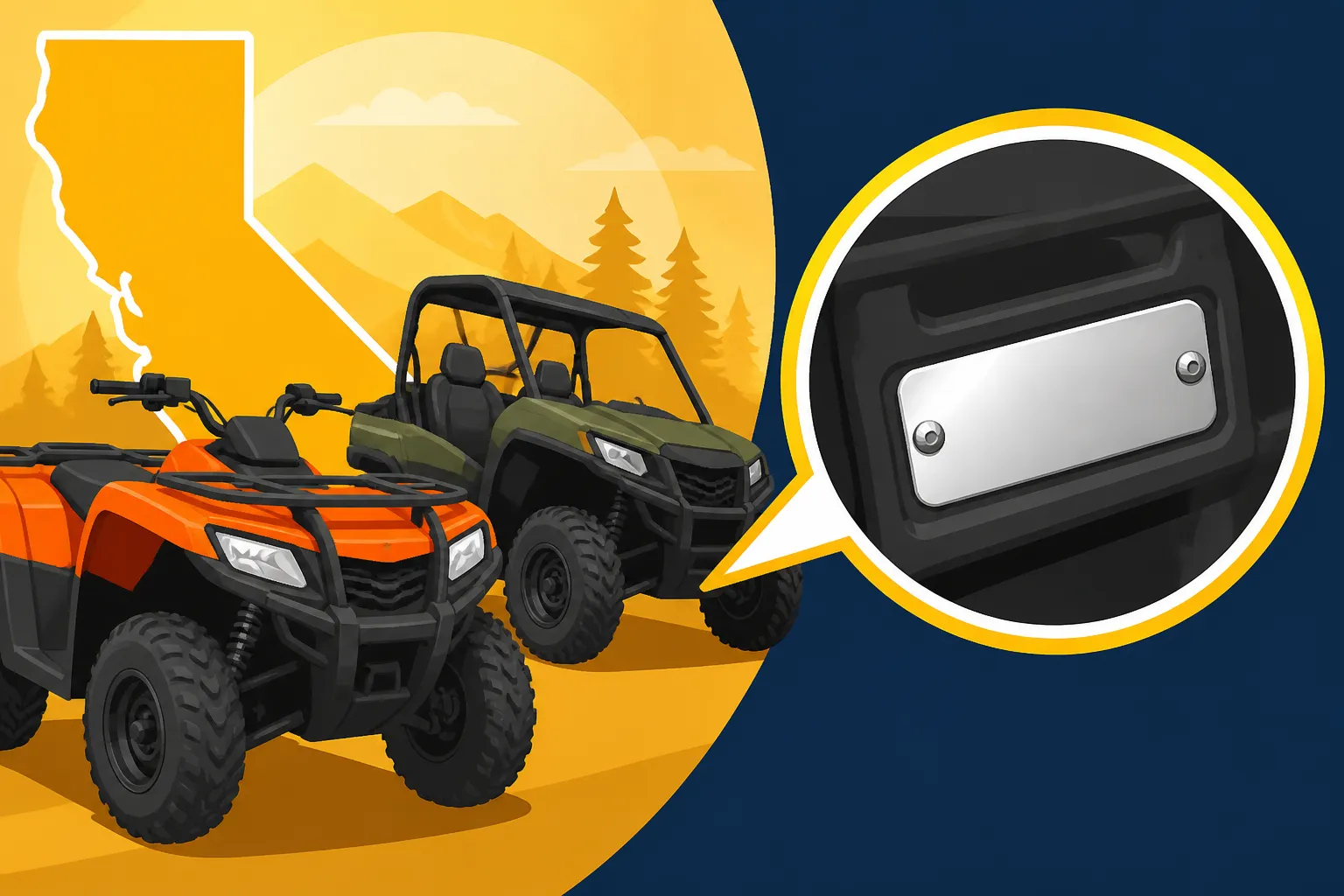
The California OHV ID plate is typically a rectangular piece of sturdy metal, designed to be robust enough for off-road environments. Its most distinguishing feature is its color scheme: a white background with green numbers and letters. This green-on-white palette is consistent across all OHV ID plates, regardless of the year your machine was manufactured or what color registration sticker it might display. It’s important not to confuse the plate’s color with the green, red, or tan sticker that indicates your riding season eligibility; the plate itself is always green on white.
The alphanumeric format on the plate is also specific to OHVs. You'll typically see two letters followed by four or five numbers, often concluding with a small "CA" or "CAL" indicator. For example, it might read "AB1234 CA" or "CD56789 CAL". This unique numbering system helps distinguish it from standard automobile or motorcycle license plates. When you fill out official documents, like [What California's Form REG 343 Asks For], you'll be asked for this exact ID plate number, so knowing its format is incredibly helpful. This consistent design ensures that even at a distance or in challenging conditions, the essential identification information is readily apparent to anyone checking compliance.
Distinguishing Your OHV ID Plate from a Street-Legal License Plate
It’s crucial to understand that your California OHV ID plate is not a standard street-legal license plate, and it does not grant you the same privileges as one. This is a significant point of confusion for many riders, especially those new to OHVs or moving from other states with different regulations. The most obvious difference is the absence of a direct expiration date on the plate itself. Unlike a street plate, which has a small, month/year sticker affixed to it, the OHV ID plate relies on the separate, larger annual (or biennial) registration sticker to indicate its currency. The plate is essentially a permanent identifier for the machine, while the sticker denotes active registration.
Beyond the lack of an expiration decal, the numbering and lettering patterns are entirely distinct. A street-legal vehicle might have a combination of numbers and letters in a different sequence, and its primary purpose is to identify a vehicle for highway use. An OHV ID plate, by contrast, is specifically for off-highway vehicles and indicates that it has met the state’s registration requirements for off-road use only. Having an OHV ID plate absolutely does not mean your quad or side-by-side is legal to ride on public streets or highways. For more clarity on this, you can check out resources like [Are ATVs Street Legal in California?].
To help illustrate the key differences, here's a quick comparison:
| Feature | California OHV ID Plate | Standard California Vehicle License Plate |
|---|---|---|
| Primary Purpose | Identifies registered Off-Highway Vehicle for off-road use. | Identifies street-legal vehicle for on-road use. |
| Color Scheme | White background with green characters. | White background with blue/red characters (current design). |
| Character Format | Typically 2 letters, 4-5 numbers, then "CA" or "CAL". | Varies (e.g., 1 number, 3 letters, 3 numbers for cars). |
| Expiration Indicator | No expiration date on plate itself; relies on separate sticker. | Small month/year sticker affixed to the plate. |
| Street Legal Status | Does not grant street legal privileges. | Required for street legal operation. |
| Issuing Authority | California DMV (via OHMVR Division). | California DMV. |
| Typical Placement | Rear of the vehicle. | Front and rear of the vehicle. |
Proper Mounting and Display: Keeping Your Plate Visible and Secure
Once you have your shiny new California OHV ID plate in hand, the next critical step is to mount it correctly on your machine. This isn't just about aesthetics; it's a legal requirement to ensure your vehicle is compliant when riding on public lands. Improperly mounted or obscured plates can lead to citations, so understanding the rules and best practices is essential before you hit the trails or dunes.
Where Your ID Plate Must Be Mounted for Compliance
California law specifies that your OHV ID plate must be securely attached to the rear of your vehicle in a position that makes it clearly visible from behind. This means no accessories, mud flaps, gear bags, or even excessive mud should obscure the plate number or the accompanying registration sticker. The goal is unambiguous identification for enforcement officials, even when they're simply observing from a distance.
The exact spot on the rear can vary slightly depending on your specific type of OHV. For ATVs (quads), it's commonly mounted on the rear grab bar or directly onto the fender. For side-by-sides (UTVs), you'll often find a designated spot on the rear bumper or frame. Dirt bikes typically have it attached to the rear fender. The key is to ensure it's reasonably horizontal and fully legible. For more specific guidance on different vehicle types, you might find information like [Where the ID Plate Mounts on a Quad] particularly helpful. Always aim for maximum visibility to avoid any potential hassle with rangers or law enforcement.
Best Practices for Securing Your Plate
Given the rough and tumble nature of off-road riding, simply dangling your ID plate with a flimsy wire isn't going to cut it. It needs to be securely fastened to withstand vibrations, bumps, and whatever else the trail throws at it. The most common and recommended method is to bolt the plate directly to a sturdy part of your vehicle's rear. Using rust-resistant bolts, washers, and locking nuts is a smart move to prevent the hardware from loosening up over time and causing your plate to rattle off on a bumpy ride.
Imagine tackling a particularly gnarly section of trail or blasting through deep whoops at Glamis; you don't want your ID plate becoming another piece of litter in the desert. Many riders opt for reinforcement plates or custom brackets to ensure an even more secure fit. You can find more detailed advice on proper fastening techniques in resources like [Bolting the ID Plate to a Quad]. Remember, a lost plate means your machine is no longer legally identifiable, which can cut your riding day short and lead to the additional hassle of replacement. Taking a few extra minutes to secure it properly at the outset can save you a world of trouble later on, especially when trying to maintain legibility in sandy conditions, as discussed in [Keeping Plates Legible in Sand].
Maintaining and Replacing Your California OHV ID Plate
Your California OHV ID plate is built to last, but the challenging environments where you ride can still take a toll. Between mud, dust, sand, and accidental impacts, it's not uncommon for plates to become unreadable or even go missing. Knowing how to maintain your plate and what steps to take if it needs replacement is crucial for uninterrupted legal riding.
Keeping Your Plate Legible Through Wear and Tear
Regular cleaning is your first line of defense against an illegible ID plate. After a muddy ride, a trip through dusty trails, or a session in the sand, your plate can quickly become obscured. A simple rinse with water and a quick wipe-down will usually suffice to keep the green characters clear and visible against the white background. Neglecting to clean it means that rangers might not be able to read your ID number, which can lead to questions or even citations at checkpoints or trail entrances.
Beyond dirt, the elements themselves can cause wear. Prolonged sun exposure can fade the green lettering over many years, and continuous exposure to moisture can lead to corrosion, especially if you're riding near coastal areas or in frequent wet conditions. While the plates are durable, they aren't indestructible. It’s a good practice to periodically inspect your plate for any signs of fading, corrosion, or physical damage. A clean, clearly readable plate ensures a smoother experience when entering parks or being observed by law enforcement on public lands.
What to Do If Your Plate is Lost, Stolen, or Damaged
Despite your best efforts, sometimes an ID plate can get lost, stolen, or simply become too damaged to read. If this happens, your first priority should be to initiate the replacement process, as riding without a valid, visible ID plate and current sticker can result in a citation. If the plate was stolen, it's often wise to file a police report, which can be helpful documentation for the DMV process.
To replace a lost or damaged California OHV ID plate, you'll need to contact the California DMV or the OHMVR Division. The process typically involves completing specific forms, such as a duplicate plate application, and potentially providing proof of ownership, like your [California Issues a Certificate of Title]. There will be a fee associated with obtaining a replacement, and the new plate will be mailed to you. You can find detailed instructions and the necessary forms by looking up how to get [Replacing a California ID Plate].
Ensuring you have a clear paper trail, from your original purchase with a detailed bill of sale (which you can often create using resources like LawDepot) to your current title, is critical for any DMV transaction, including plate replacement. Having all your documentation in order before you even visit the DMV can make the process significantly smoother. If you lack a clear bill of sale for your machine, you might consider using a reputable template provider like LawDepot to draft one for your records, ensuring all future transactions are well-documented. Remember, prompt action on replacing a lost plate means you’ll be back on the trails legally and safely in no time.
Disclaimer
This article is for general informational purposes only and does not constitute professional advice. Laws, prices and regulations vary by location and change over time. Consult a qualified professional for guidance on your specific situation.