California OHV Insurance Requirements
One of the most common questions off-highway vehicle (OHV) enthusiasts in California have is whether they need insurance for their ATV or UTV. It’s a completely valid question, and honestly, the answer isn't a simple "yes" or "no," which can be super frustrating when you just want to hit the trails! This guide is here to untangle the complexities and clearly lay out when insurance is absolutely required, when it’s strongly recommended, and what kind of coverage makes the most sense for your riding adventures.
The General Rule: No Insurance for Pure Off-Highway Use
Let's start with the most common scenario for many riders: enjoying your ATV or UTV strictly on designated off-highway trails and parks. In these situations, the direct answer is often a pleasant surprise for some.
Riding Exclusively on Designated Trails and SVRA Land
For the vast majority of off-highway vehicle riding in California, if you're sticking to the designated trails, State Vehicular Recreation Areas (SVRAs) like Glamis, Hungry Valley, or Oceano Dunes, or other sanctioned off-road parks, the State of California does not mandate that your OHV carry liability insurance. It might sound counter-intuitive, especially when we're so used to needing insurance for every other vehicle we own, but it's true for machines used purely off-pavement.
What California does require for these machines is proper registration through the Department of Motor Vehicles (DMV) and the Off-Highway Motor Vehicle Recreation (OHMVR) Division. This typically means you'll have either a [California's Green Sticker Explained], [California Red Sticker Rules Today], or a Tan Sticker, depending on your machine's model year and emissions compliance. This registration process is primarily for identification, funding the OHMVR program, and ensuring environmental stewardship, not as proof of financial responsibility for accidents. So, while you definitely need that sticker affixed to your machine, you won't be asked for an insurance card at the gate of an SVRA if you're only riding off-road.
Private Property Riding and Your Personal Exposure
What about riding on private property, say, a friend's ranch or land you own yourself? The same general rule applies here: the State of California does not mandate OHV insurance for machines ridden exclusively on private land. You won't get a ticket from the state for not having it.
However, this is where the conversation shifts dramatically from what's required by law to what's simply smart for your own protection. Imagine a scenario where you're riding on private land, and an accident occurs – perhaps you collide with someone else's vehicle or property, or worse, someone gets injured. Without dedicated OHV liability insurance, you are personally on the hook for any damages or medical bills that arise. Your homeowner's insurance policy might offer some very limited liability coverage for recreational vehicles, but it often comes with significant exclusions, strict limits, or might not cover powerful, purpose-built off-road machines, especially if the incident happens away from your primary residence or involves a high-value claim. Relying solely on a homeowner's policy can leave huge gaps in your protection, turning a fun day into a financial nightmare.
When California OHV Insurance Becomes a Must-Have
While the general rule for off-highway use is "no state mandate," there are crucial exceptions that every California OHV owner needs to understand. Ignoring these can lead to significant fines, legal troubles, and financial hardship.
Driving on Combined-Use Highways and Public Roads
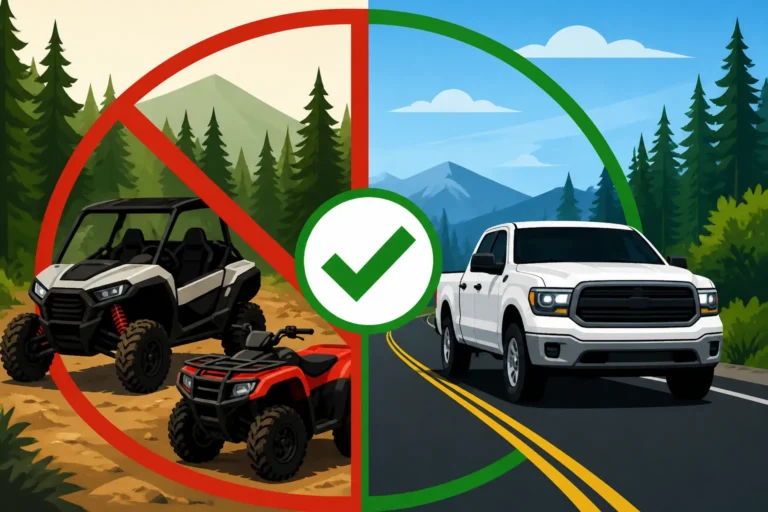
This is the absolute most critical area where insurance becomes a non-negotiable requirement. While California has extremely strict rules about making ATVs and UTVs truly "street legal" – generally, it's not possible to register most OHVs for full road use – there are specific, limited circumstances where OHVs are permitted to operate on public roadways. These are known as [California's Combined-Use Highways] or designated connecting roads.
If your OHV is being operated on any of these approved public road segments, even if it's just to connect one trail to another for a mile or two, it must meet the minimum liability insurance requirements for street-legal vehicles in California. This isn't optional; it's a legal mandate under the California Vehicle Code. Law enforcement officers, whether it's the CHP or a local sheriff, have every right to stop you on these segments and ask for proof of insurance. If you can't provide it, you're looking at a citation for operating an uninsured vehicle on a public roadway, which can carry hefty fines and other penalties. It's a fundamental aspect of [California Insurance Rules for OHV Road Use], ensuring that if you cause an accident on a public road, there's a mechanism to cover the damages you inflict on others.
Other Scenarios Requiring Proof of Financial Responsibility
Beyond combined-use roads, several other situations will necessitate proof of OHV insurance, often for different reasons. It's important to be aware of these so you're not caught off guard.
When you're looking to rent an ATV or UTV for a day of fun in California, whether at Oceano Dunes or a desert rental outfit, the rental company will almost certainly require you to be covered by insurance. This isn't just a suggestion; it's a standard business practice to protect their valuable fleet. Most rental agreements include a mandatory insurance purchase or require you to show proof of your own liability coverage before you can even touch the handlebars. This coverage helps protect their asset (the machine) from damage and covers you, the renter, from liability if you cause an accident. If you're planning on [Renting an ATV in California], factor this insurance cost into your budget, as it's typically non-negotiable.
Additionally, some organized events, races, or special group rides, especially those taking place on private land or requiring a [California Sanctioned Event Permit Explained], may require all participants to show proof of liability insurance. Event organizers do this to mitigate their own risk and ensure that all riders are financially responsible in case of an incident. It helps cover potential injuries to other riders, spectators, or damage to event property. Always check the specific requirements of any event you plan to attend well in advance.
Finally, if you financed your ATV or UTV purchase, the lender (or lienholder) will invariably require you to carry full coverage insurance. This means both collision and comprehensive coverage. From their perspective, they own a significant portion of that machine until your loan is paid off. They need to protect their investment against damage, theft, or other losses. This is no different than how a bank requires full coverage on a car loan. If you have a [California OHV Registration for a Machine With a Lien], expect this to be a condition of your financing agreement.
Types of Coverage to Consider for Your California OHV
Understanding when you need insurance is one thing, but knowing what kind of insurance to get is just as crucial. OHV policies offer various layers of protection, and selecting the right mix can save you immense heartache and financial strain down the line.
Liability Coverage: Protecting Others
Liability coverage is the bedrock of any insurance policy, and it's what the state mandates when your OHV is on a combined-use highway. It’s designed to protect other people and their property if you are at fault in an accident. There are two main components to liability:
- Bodily Injury Liability: This covers medical expenses, lost wages, and pain and suffering for anyone you injure in an accident. A serious injury can lead to astronomical medical bills, so it's critical to have sufficient limits here.
- Property Damage Liability: This covers the cost of repairing or replacing other people's property that you damage in an accident. This could be another OHV, a fence, a parked car on a combined-use road, or even someone's personal belongings.
While the state-mandated minimums for liability might seem sufficient, they are often woefully inadequate in the event of a severe accident. Experienced riders often recommend carrying higher liability limits than the minimums, purely for peace of mind. The difference in premium for higher limits can be surprisingly small compared to the immense financial exposure you face if you're underinsured. Remember, if you're driving on those combined-use roads or trails that briefly merge with public access, this coverage isn't just smart; it's legally required.
Collision and Comprehensive: Protecting Your Investment
Beyond protecting others, most riders want to protect their own machine, especially given the significant investment modern ATVs and UTVs represent. This is where collision and comprehensive coverage come into play.
- Collision Coverage: This pays for damage to your ATV or UTV if it collides with another vehicle, an object (like a tree or a rock), or rolls over, regardless of who was at fault. If you can't afford to repair or replace your machine out-of-pocket after an accident, collision coverage is absolutely essential. It's often required by lenders if your OHV is financed.
- Comprehensive Coverage: This covers damage to your OHV from non-collision events. Think of things like theft, vandalism, fire, natural disasters (like floods or hail), or hitting an animal. Given how much our machines are often stored outdoors or transported, and how easily they can become targets for theft, comprehensive coverage is incredibly valuable. Many riders customize their machines with expensive aftermarket parts, perhaps a heavy-duty bumper or a full skid plate kit from SuperATV, and comprehensive coverage helps protect those investments from non-accident related losses.
Additional Protections for Peace of Mind
There are several other types of coverage that can add significant layers of protection and give you even greater peace of mind when you're out riding.
- Uninsured/Underinsured Motorist (UM/UIM): This coverage is particularly relevant if you're ever operating your OHV on a combined-use highway. It protects you and your passengers for bodily injuries and, in some cases, property damage, if you're involved in an accident with another driver who either has no insurance or insufficient insurance to cover your costs. Since you're dealing with street-legal vehicles on these segments, the risk of encountering an uninsured driver is real.
- Medical Payments (MedPay): This coverage helps pay for medical expenses for you and any passengers injured in an accident, regardless of who was at fault. It can kick in quickly to cover deductibles or co-pays from your health insurance, or cover expenses if you don't have health insurance. When you're thinking about [California Helmet Law for ATV Riders] and [California ATV Passenger Ban Explained], remember that injuries can still happen, and MedPay can be a valuable safety net.
- Accessory Coverage: Many standard OHV insurance policies only cover the factory-stock machine. If you've poured money into customizing your ATV or UTV with upgrades like a lift kit, a sound system, upgraded tires and wheels, or specialized cargo racks, you absolutely need to ensure these accessories are covered. Companies like SuperATV offer a huge range of aftermarket parts that significantly increase the value of your machine. When you get a quote, be sure to declare these modifications and ask about specific accessory coverage to ensure your investment is protected. Otherwise, if your machine is damaged or stolen, you might only get compensated for the stock value.
- Roadside Assistance/Towing: Breaking down far from civilization can be a major headache and an expensive tow. Some OHV policies offer roadside assistance or towing coverage, which can be a lifesaver if your machine conks out on a remote trail or you suffer a flat tire far from your truck and trailer.
Why Insurance is a Smart Choice Even When Not Required
Even when California law doesn't explicitly mandate OHV insurance for your riding activities, it remains an incredibly smart financial decision. It's about protecting yourself, your family, and your investments.
Mitigating Financial Risk and Protecting Assets
Let’s be realistic: off-roading, while exhilarating, carries inherent risks. Accidents can and do happen. Even a minor incident can result in thousands of dollars in medical bills, property damage to someone else's machine, or legal fees if a lawsuit is involved. If you don't have insurance, you are personally responsible for all these costs. This means your savings, your home equity, and other personal assets could be on the line. For many of us, our ATV or UTV is a significant investment – often rivaling the cost of a used car. Comprehensive OHV insurance protects that investment. It ensures that if your prized possession is stolen, totaled in an accident, or catches fire, you're not left without a machine and a hole in your bank account. Without insurance, one bad day on the trail could derail your financial future, and that’s a burden no one wants to carry.
Peace of Mind for You and Your Passengers
Riding should be an escape, a source of fun and adventure, not a constant worry about potential financial catastrophe. Having robust OHV insurance allows you to focus on the trail, the scenery, and the camaraderie of your riding group, rather than fretting over "what if" scenarios. You can enjoy your time on the sand dunes of Glamis or the trails of Hollister Hills with the confidence that you're prepared for unforeseen circumstances.
This peace of mind also extends to your passengers. While [California ATV Passenger Ban Explained] for ATVs, UTVs often carry multiple passengers. If a friend or family member is injured while riding with you, even if you’re riding responsibly on private land or a designated off-highway trail, having medical payments and liability coverage ensures that their medical bills and any potential claims are handled, protecting your relationships and your wallet. It's about taking responsible steps to protect everyone involved in your adventures.
Customization and Aftermarket Parts
One of the greatest joys of owning an ATV or UTV for many riders is the ability to customize it to their exact preferences and riding style. Whether you’re adding a high-performance exhaust, a winch, LED light bars, or heavy-duty suspension components, these upgrades add significant value to your machine. Many riders turn to aftermarket leaders like SuperATV for durable, high-quality parts that enhance capability and appearance.
However, as mentioned, a standard OHV policy might only cover the factory value of your machine. If you've invested thousands of dollars in aftermarket parts, and your machine is stolen or totaled, you could be left with a reimbursement that only covers a fraction of what you actually put into it. This is why discussing accessory and customization coverage with your insurance provider is so important. You’ll typically need to declare these modifications and their value to ensure they are adequately protected. This way, if something happens, you can replace those specialized components and get your machine back to its custom glory.
Here’s a quick overview to help clarify when OHV insurance is typically required or highly recommended in California:
| Scenario | State-Mandated Insurance? | Recommended Coverage | Notes |
|---|---|---|---|
| Riding in a California SVRA (e.g., Glamis) | No | Liability, Collision, MedPay | [Registering an OHV in California] is required for the machine. Insurance protects you from personal liability and machine damage. |
| Riding on Private Property | No | Liability, Collision, MedPay | Homeowner's policy may offer limited liability, but dedicated OHV insurance offers better protection. Essential for peace of mind if an accident impacts others. |
| Driving on a Designated Combined-Use Highway | YES (Liability) | Liability, Collision, MedPay | Required by law for any street operation. Your OHV must meet all vehicle code requirements for street use (e.g., lights, brakes, etc., if applicable to the route, per [What California's CVC 38026 Lets an Agency Designate]). |
| Rented ATV/UTV | YES (Liability/Damage) | Included in Rental Agreement | Rental companies typically require you to purchase their coverage or verify your own. |
| Financed ATV/UTV | YES (Full Coverage) | Liability, Collision, Comp. | Lender requires full coverage to protect their asset. |
| Organized Event/Race | Often Yes (Liability) | Liability, MedPay | Event organizers may require proof of insurance for participants. |
Disclaimer
This article is for general informational purposes only and does not constitute professional advice. Laws, prices and regulations vary by location and change over time. Consult a qualified professional for guidance on your specific situation.