An Arizona Street-Legal UTV in California
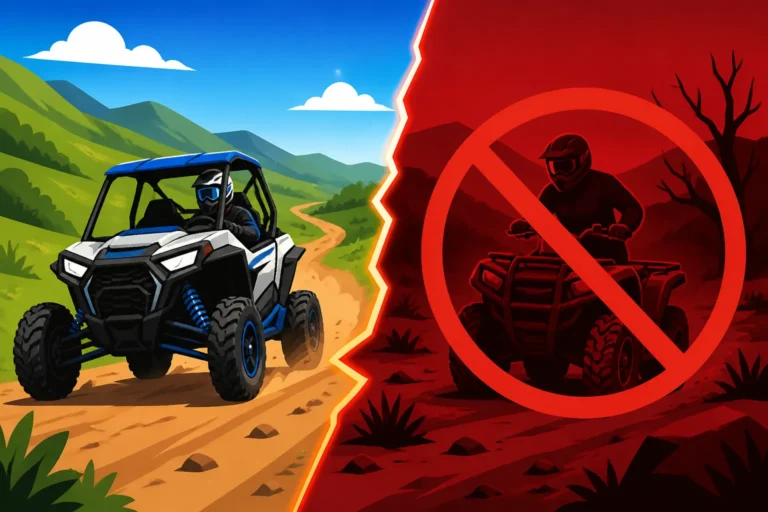
It's a common scenario: you've lovingly outfitted your UTV for street legality in Arizona, enjoying the freedom of riding from your driveway to the trails. Then, the California trip comes up, and you naturally assume your "street legal" status will carry over. Unfortunately, that's where many riders hit a wall, facing confusion, potential fines, and a lot of frustration. This guide is here to untangle the complex web of California's OHV laws, specifically addressing why your Arizona street-legal UTV isn't street-legal here, and what you need to know to ride safely and legally.
The Core Disconnect: Why Arizona's Rules Don't Apply in California
The biggest misconception out-of-state riders bring to California is the idea of "reciprocity" for street-legal OHVs. In plain language, just because your UTV is street-legal in Arizona doesn't mean California will honor that designation for general road use. California has its own incredibly specific and, frankly, quite strict rules when it comes to off-highway vehicles (OHVs) and public roads.
Different Definitions of "Street Legal"
Think of "street legal" like a regional dialect. In Arizona, converting your UTV to be street-legal often involves adding a horn, turn signals, mirrors, a license plate, and perhaps ensuring basic headlight/taillight compliance. Once done, you can often drive it on many public roads, just like a car, sometimes with speed restrictions. It's a fantastic system that grants a lot of freedom for local riding.
However, California speaks a completely different language. For a vehicle to be "street legal" in California, it must meet California Vehicle Code (CVC) standards for a highway vehicle from the ground up. This typically means it was manufactured and certified for on-highway use, like a car, truck, or motorcycle. An off-highway vehicle, by its very definition in California law, is not built for highway use, regardless of what modifications you've made or what another state's DMV says. The fundamental classification of your UTV as an "off-highway vehicle" in California means it operates under a separate set of rules, completely distinct from street-legal automobiles.
This difference isn't just a technicality; it's the core of why an Arizona street-legal UTV isn't recognized for general street use in California. It's not about lacking specific equipment; it's about the vehicle's initial designation and whether it meets California's stringent federal motor vehicle safety standards (FMVSS) for highway operation.
California's Strict Vehicle Codes for On-Highway Use
California's Vehicle Code (CVC) is a thick book, and its rules for what constitutes a street-legal vehicle are incredibly detailed. For an OHV to be legally driven on a California highway, it would essentially need to be reclassified and recertified as a highway vehicle, which is a process that simply doesn't exist for most UTVs. This isn't just about adding a windshield or wipers; it's about crash-worthiness, emissions, and safety features designed for highway speeds and traffic that OHVs, by their nature, are not built to provide.
California distinguishes very clearly between "highway vehicles" and "off-highway vehicles." When you see a UTV driving on a paved road in California, it's almost certainly doing so under very specific, limited exceptions, not because it has been converted to "street legal" in the way Arizona permits. These exceptions are critical to understand to avoid trouble. For instance, the robust aftermarket support from companies like SuperATV can provide fantastic accessories for off-road performance and safety, but these parts don't magically confer street-legal status in California. They enhance the off-road experience, but the state's vehicle code is unyielding on the fundamental classification.
The Reciprocity Reality: What California Honors (and Doesn't)
California's reciprocity for OHVs is incredibly narrow, essentially limited to two states: Oregon and Nevada. If your UTV has a valid, current OHV registration from either Oregon or Nevada, California will recognize that permit for off-highway riding purposes. This means you don't need to purchase a [California's Nonresident OHV Use Permit] for riding on designated trails and public lands.
However, and this is crucial, this reciprocity does not extend to street-legal status. Even if your Oregon or Nevada-registered UTV is considered street-legal in its home state, that still won't allow you to drive it on California's general public roads. It solely applies to the requirement for an OHV identification (sticker) for off-highway use.
For Arizona, Utah, Idaho, or any other state outside of Oregon and Nevada, California does not recognize your home state's OHV registration or street-legal status. If you plan to ride your Arizona-registered UTV on California's public off-highway lands, you must purchase a California Nonresident OHV Use Permit. This permit is explicitly for off-highway use only and provides no street-legal privileges whatsoever. It’s a permit that allows you to ride on California trails, not a pass to cruise down the highway. For a clearer picture, check out [A Utah Plate That Means Nothing in California], which explains a very similar situation.
What California Allows (and Restricts) for OHVs on Paved Roads
So, if your Arizona street-legal UTV isn't generally street-legal in California, what can you do with it on paved roads? California's Vehicle Code provides very specific, limited scenarios, and understanding these is key to avoiding citations.
Limited Combined-Use Highway Segments
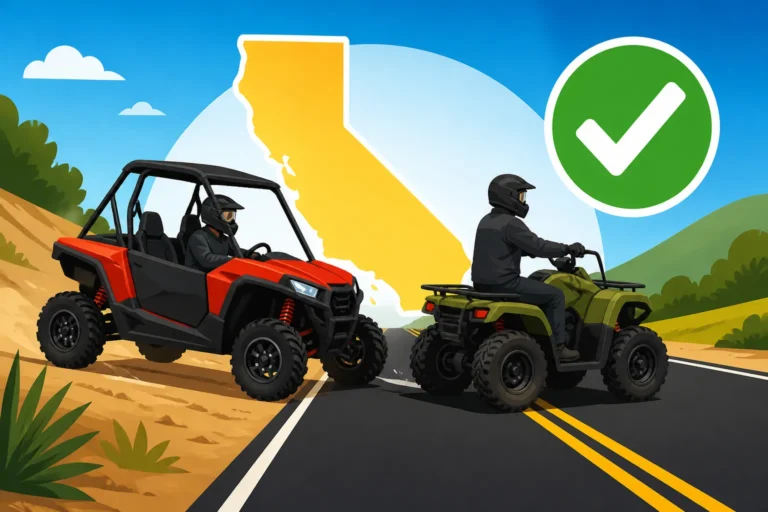
California's approach to OHVs on public roads is highly restrictive. The primary exception that allows an OHV to be on a paved road is a "combined-use highway" designation. These are very specific, short segments of public roads, usually within or adjacent to designated OHV recreation areas, that have been explicitly approved and signed by a local authority (like a county or city, with CHP approval). These segments are intended to connect trails, campgrounds, or staging areas.
The maximum length for such a segment is typically three miles, and often they are much shorter. You can't just assume any road leading into a riding area is a combined-use highway. They are clearly marked, and often you'll see signs indicating the specific hours or conditions for OHV use. Riding on an undesignated road segment, even if it's just a short stretch connecting two trails, is illegal and can result in a significant fine. You must stay on the designated route, and usually, you're expected to use these segments as a means of transit, not for leisurely cruising. It's a far cry from the general freedom of movement an Arizona street-legal UTV enjoys. More details can be found in [California's Combined-Use Highways].
Crossing Public Roads Legally
Beyond combined-use segments, California allows OHVs to cross public roads under very strict conditions. This isn't about driving on the road, but across it. The CVC allows an OHV to cross a highway if:
- The crossing is made at an angle of approximately 90 degrees to the highway.
- The crossing is made at a place where a quick and safe crossing can be accomplished.
- The OHV comes to a complete stop before crossing and yields to all traffic.
- The driver has an unobstructed view of at least 200 feet in both directions.
- The crossing is made in an area not within an established speed zone of 35 mph or more.
- The crossing is not made within a freeway.
This is a very specific maneuver, meant to get you from one side of a trail to another, not to travel any distance down the road. It requires extreme caution and adherence to all traffic laws, including those for stopping and yielding. It's a quick, perpendicular dash, not a drive. For comprehensive details on this, refer to [California Rules for Crossing a Public Road].
The Impossibility of Converting an OHV to Street Legal in California
Many riders, after realizing the limitations, wonder if they can simply apply for California street-legal registration for their UTV. The short answer, and one that often catches people off guard, is no. California explicitly does not allow the conversion of an off-highway vehicle into a street-legal vehicle. This is a fundamental policy difference compared to states like Arizona.
The state's Department of Motor Vehicles (DMV) and the Off-Highway Motor Vehicle Recreation (OHMVR) Division classify OHVs as exactly that: vehicles intended for off-highway use. No amount of aftermarket parts—even top-tier components from SuperATV that enhance safety and performance for trails—will convince the California DMV to issue a street-legal license plate for a UTV. The state maintains this distinction for a variety of reasons, including emissions control, highway safety standards, and ensuring OHV funding remains dedicated to off-highway programs. This is a topic so important, it has its own detailed explanation in [Why California Will Not Convert a UTV].
Essentially, if you want a street-legal side-by-side in California, it needs to be one that was manufactured by an automaker (not an OHV manufacturer) to meet all federal and California highway vehicle standards from the factory, and titled and registered as such from day one. These are very rare, specialized machines, distinct from the vast majority of UTVs on the market.
Navigating California's OHV Identification System for Visitors
So, if your Arizona plates don't mean much on California pavement, what does your UTV need to ride off-highway in the Golden State? California has its own OHV identification system, and visitors from most states need to comply with it.
California's Nonresident OHV Use Permit
If you're bringing your UTV from Arizona to ride on California's public lands (like State Vehicular Recreation Areas, BLM land, or National Forests), you absolutely must obtain a [California's Nonresident OHV Use Permit]. This is a special permit issued by the California OHMVR Division specifically for out-of-state OHVs. It's akin to the Green, Red, or Tan Stickers that California-registered OHVs display, signifying that you've paid your share to support the state's OHV program.
You can often purchase these permits online, and it's highly recommended to do so before your trip to avoid any delays or issues at the entry gates of popular riding areas like Glamis or Ocotillo Wells. The permit is typically valid for two years and must be prominently displayed on your UTV, usually on the left side of the machine, where a California OHV sticker would normally go. Without this permit (or valid reciprocity from Oregon/Nevada), you will be cited if caught riding on public lands.
What an Out-of-State Plate Does and Doesn't Mean
Let's reiterate: an Arizona license plate on your UTV signifies its street-legal status in Arizona. In California, that plate doesn't grant you any street-legal privileges. When a ranger or law enforcement officer in California sees your Arizona-plated UTV, they are primarily looking for two things for off-highway use:
- A California Nonresident OHV Use Permit: If you're from Arizona, this is what you need for trail riding.
- Compliance with California's OHV rules: This includes spark arresters, sound limits, helmet laws, and other safety requirements, regardless of your home state's rules.
Your Arizona plate will only be seen as an indicator of where the vehicle is registered for street use, but it doesn't bypass California's specific OHV identification and usage laws. It's a common mistake for riders to flash their Arizona plate at a California ranger, expecting it to be enough. It won't be.
Exemptions for Oregon and Nevada
As mentioned, California has a limited reciprocity agreement with Oregon and Nevada. If your UTV is currently registered and displaying a valid OHV permit from either of these two states, you are generally exempt from purchasing the California Nonresident OHV Use Permit for off-highway riding. This is a rare exception in California's often stringent regulations.
It's important to carry your home state's registration paperwork with you as proof. However, even with Oregon or Nevada reciprocity, the rule about street legality remains firm: your UTV is not street-legal on California's general public roads. It's a green light for the trails, but a red light for the pavement. For more specific details on this, please see [California OHV Reciprocity: Only Two States].
Understanding California's Enforcement and Penalties
California Highway Patrol (CHP), local law enforcement (sheriff's departments, city police), and land management agency rangers (BLM, Forest Service, State Parks) are all authorized to enforce OHV laws. They are well-versed in the nuances of out-of-state registrations and the specific restrictions on OHV use.
Common Roadside Stops and Checks
If you're caught driving your Arizona street-legal UTV on a California public road that isn't a designated combined-use segment, or crossing a road improperly, you can expect to be pulled over. Law enforcement officers are vigilant, especially near popular OHV areas where they frequently encounter out-of-state visitors.
During a stop, they will likely check:
- Your driver's license: You still need a valid driver's license to operate any motorized vehicle, including an OHV, on roads (even crossing or combined-use).
- Your OHV registration/permit: For out-of-state riders, this means checking for your California Nonresident OHV Use Permit or valid Oregon/Nevada reciprocity.
- Proof of ownership: This typically means your title or registration from Arizona.
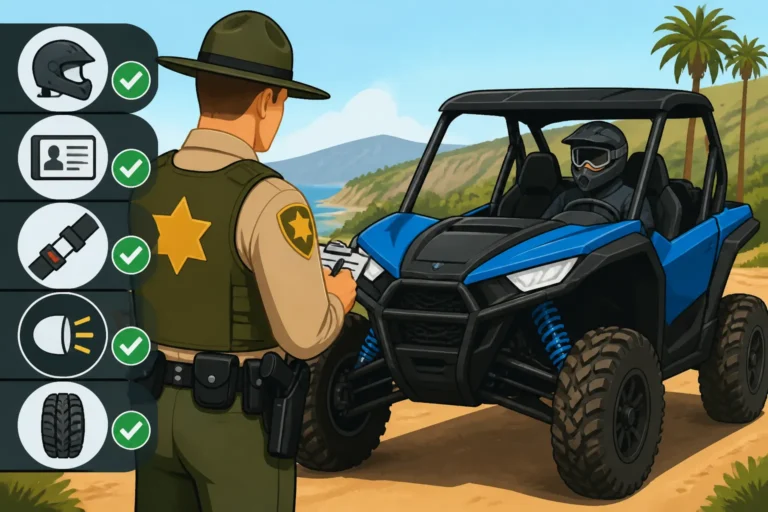
- Compliance with OHV safety requirements: This includes checking for helmets (mandatory for all riders and passengers, with limited exceptions for ROVs with certain safety features), spark arresters, and sound limits.
They understand that visitors might be unaware of California's unique laws, but ignorance of the law is rarely an excuse.
Fines for Riding on Unauthorized Public Roads
The penalties for operating an OHV on an unauthorized California public road can be substantial. Fines can range from hundreds to thousands of dollars, depending on the specific violation, whether it's a first offense, and the discretion of the officer and the court. You could be cited for multiple infractions, such as:
- Operating an unregistered off-highway vehicle (if you lack the California Nonresident OHV Use Permit).
- Operating an OHV on a highway.
- Lacking proper safety equipment.
- Exceeding noise limits.
These fines can quickly add up, making that "street-legal" convenience from Arizona a very expensive mistake in California. It's far cheaper and less stressful to adhere to California's rules. For a breakdown of potential costs, see [California Fines for Riding on a Highway].
Vehicle Impoundment and Other Consequences
In more severe cases, or for repeat offenders, law enforcement has the authority to impound your vehicle. Imagine your UTV being towed away, leaving you stranded and facing not only significant fines but also towing and storage fees. This can quickly turn a fun riding trip into a logistical nightmare and a huge financial burden.
Furthermore, any citations can go on your driving record, potentially affecting your insurance rates or even leading to points on your license, even if the primary violation relates to OHV operation. It's simply not worth the risk. The goal is to educate riders so they can make informed decisions and enjoy California's incredible off-road opportunities without legal repercussions.
Practical Advice for Arizona Riders Visiting California
Coming from Arizona, where street-legal UTVs offer so much freedom, California's rules can feel incredibly restrictive. But don't despair! California boasts some of the best OHV riding areas in the world. With a little planning and understanding, you can still have an amazing, legal, and safe trip.
Plan Your Routes: Trailer or Stick to Designated Areas
The golden rule for Arizona riders in California: Assume your UTV is not street-legal on any paved road unless explicitly marked as a combined-use highway. This means trailering your UTV to and from all riding areas. Do not plan to drive it from your hotel, campground, or staging area down a county road to reach the trails, unless you have confirmed it's a legal combined-use segment and you meet all the conditions.
California offers world-class riding in diverse environments, from the vast dunes of Glamis in the Imperial Sand Dunes Recreation Area to the technical trails of Hungry Valley SVRA or Hollister Hills. Each of these [California's State Vehicular Recreation Areas] and other public lands typically has designated staging areas where you can unload your UTV safely and legally begin your off-highway adventure. Use tools like Motor Vehicle Use Maps (MVUMs) for National Forests or specific park maps to identify designated trails and access points. When considering a modification or upgrade, like those available from SuperATV, always prioritize how they enhance your off-highway performance and safety for these specific riding environments.
Essential Gear and Permits for Public Land Riding
Beyond trailering, here’s a checklist for Arizona riders:
- California Nonresident OHV Use Permit: Purchase this online before your trip and display it properly.
- Safety Certificates: All OHV operators under 18 must possess a California OHV Safety Certificate or an equivalent from another state. While adults generally don't need one to operate an OHV, if you're supervising a minor, you'll need to meet specific certification requirements.
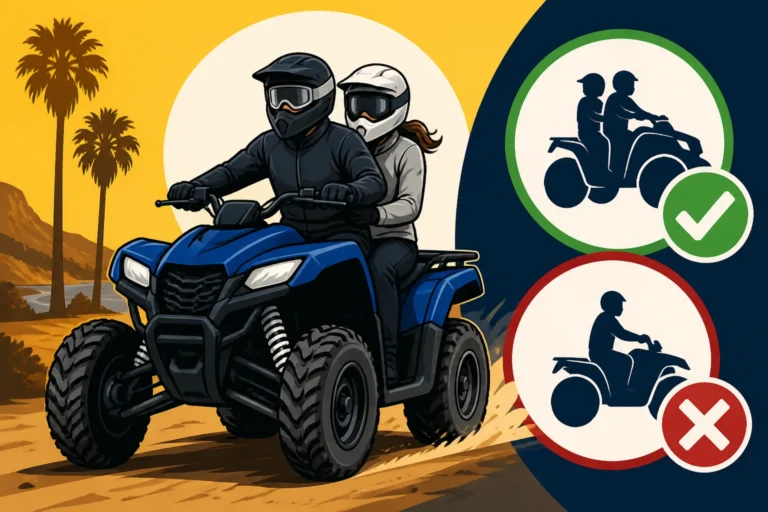
- Helmets: Mandatory for all ATV riders and UTV passengers, regardless of age, on public lands, with very limited exceptions for ROVs with certain safety structures and seatbelts for adult operators. Always wear one.
- Spark Arresters: Every OHV must be equipped with a US Forest Service approved spark arrester to prevent wildfires, especially in brush-covered areas.
- Sound Limits: California has strict sound limits for OHVs. Ensure your exhaust system is compliant (typically 96 dBA for machines manufactured after 1998, 101 dBA for older machines). Aftermarket exhaust systems, while often boosting performance, can easily exceed these limits if not specifically designed and tested for California compliance.
- Whip and Flag (for dunes): If you plan to ride in dune areas like Glamis or Oceano Dunes, an 8-foot whip with a 6×12 inch flag near the top is mandatory for visibility.
- Fire Extinguisher: Recommended for all OHVs, and sometimes required depending on the land management agency.
- Tire Pressure Gauge and Air Compressor: Essential for adjusting tire pressure for different terrains (e.g., lower for sand) and reinflating for trailering.
- Navigation: Carry physical maps or reliable GPS devices. Cell service can be spotty in remote riding areas. For tips on navigating trails, look at [Riding a Forest Road Legally in California].
Where to Ride Legally in California
California offers an incredible array of off-highway experiences. Here are some of the most popular and well-regulated areas where you can legally enjoy your UTV:
- State Vehicular Recreation Areas (SVRAs): These are state-run parks dedicated specifically to OHV recreation. Examples include Oceano Dunes (the only beach riding in California), Glamis (part of the Imperial Sand Dunes), Hungry Valley, Hollister Hills, Ocotillo Wells, Prairie City, Carnegie, Clay Pit, and Heber Dunes. These areas are well-maintained, offer diverse terrain, and have clear rules.
- Bureau of Land Management (BLM) Land: Vast stretches of desert in Southern California are open to OHV use on designated trails and open riding areas. Popular BLM spots include the Imperial Sand Dunes (Glamis), Johnson Valley (home of King of the Hammers), and many areas around Barstow and Ridgecrest.
- National Forests: Many National Forests in California, like the San Bernardino National Forest or the Sierra National Forest, offer miles of designated OHV trails and forest roads. Always consult a Motor Vehicle Use Map (MVUM) for the specific forest to ensure you are on an open and legal route.
Before heading out, always check the website of the specific riding area or land management agency for current conditions, closures (especially during fire season or after heavy rains), and any unique local rules. This preparation will ensure your Arizona UTV adventure in California is filled with thrilling rides, not unexpected legal headaches.
| Feature/Action | Arizona Street-Legal UTV | California Usage for an AZ Street-Legal UTV |
|---|---|---|
| On-Highway Use | Generally permitted on most public roads (check local ordinances) | Strictly limited to designated combined-use segments, explicit crossings, or private land |
| OHV Registration for Off-Highway Riding | Arizona state registration for street legality covers off-road use in AZ | California Nonresident OHV Use Permit required for public off-highway land (unless from OR/NV) |
| Street Legal Conversion | Common and generally straightforward via state-specific process | Legally impossible for OHVs in California to obtain street-legal registration |
| Insurance | Typically requires standard automotive insurance for road use | OHV insurance recommended; often required for specific riding areas or road crossings |
| License Plate | Displays an Arizona license plate | California does not recognize out-of-state OHV street plates as valid for general on-road use; only for identification of the vehicle |
| Reciprocity | Generally honored by neighboring states for off-road use | California only honors OHV registration for off-highway use from Oregon & Nevada |
| Fines for Non-Compliance | Varies by local ordinance; usually traffic violations | Significant fines, potential vehicle impoundment, points on driving record (can be hundreds to thousands of dollars) |
Disclaimer
This article is for general informational purposes only and does not constitute professional advice. Laws, prices and regulations vary by location and change over time. Consult a qualified professional for guidance on your specific situation.