A Montana LLC Plate in California
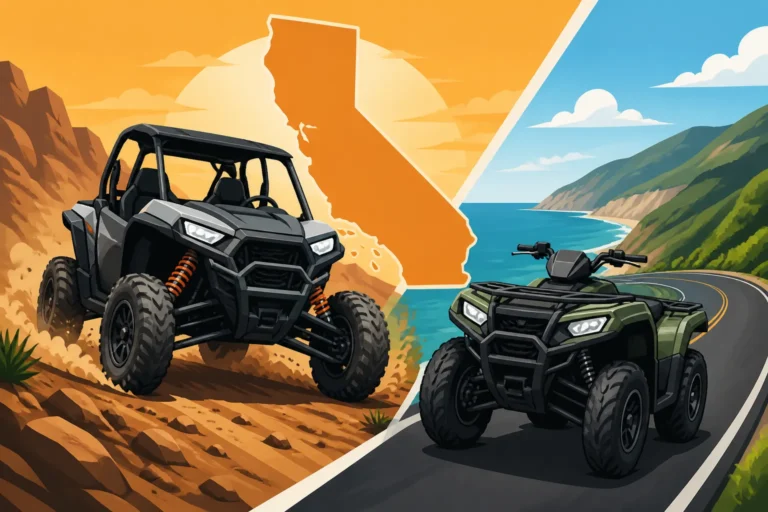
The dream of easily cruising your ATV or UTV from your driveway directly to your favorite trails, perhaps even stopping for a quick bite in town, is a powerful one for many California off-road enthusiasts. Unfortunately, California's stringent vehicle laws often make this vision feel out of reach, leading many to search for creative solutions. One common strategy people investigate is using a Montana LLC to register their off-highway vehicle (OHV) and obtain a "street-legal" license plate. This guide will meticulously break down the allure of the Montana LLC, how it generally works, and, most importantly, the stark reality of how California views such registrations when it comes to making your OHV street legal within its borders.
The Allure of the Montana LLC for Californians
It’s no secret that California has some of the most comprehensive and often complex vehicle regulations in the country. For off-highway vehicle owners, this complexity can be a source of constant frustration. You've invested in a powerful, versatile machine, and you just want to enjoy it without feeling like you're constantly navigating a legal minefield.
Why Californians Look for Alternatives
The primary reason Californians explore options like a Montana LLC is the perceived impossibility of making an ATV or UTV truly street legal within the state. Our state's Department of Motor Vehicles (DMV) and the California Air Resources Board (CARB) have very specific definitions and requirements for what constitutes a "highway-legal" vehicle, and most factory-built ATVs and UTVs simply don't meet those standards. Many riders feel hemmed in by the designated OHV areas and the limitations of trailering their machines everywhere. The idea of being able to simply hop on their side-by-side and drive a few miles to a gas station or meet up with friends before hitting the dirt sounds incredibly liberating.
Beyond convenience, there's often a financial incentive. Montana is known for not having a state sales tax, which can be a significant draw for those purchasing high-value OHVs. When you combine the perceived street legality with potential tax savings, the Montana LLC route can seem like a no-brainer for those looking to bypass California's rules. This often stems from a misunderstanding of how California's use tax applies, even if you buy out of state.
The Promise of "Street Legal"
The fundamental promise that draws Californians to the Montana LLC is the idea of transforming their off-highway machine into a fully street-legal vehicle. Imagine buying a brand-new, powerful UTV, setting up a Montana LLC, registering it there, and receiving a legitimate Montana license plate. To many, that plate signifies full compliance, allowing them to ride on any public road, just like a car or motorcycle. They envision an end to worrying about [California's 3-Mile Combined-Use Cap] or the limited number of roads an OHV can actually use. This perception, while strong, often clashes directly with California Vehicle Code. The allure is strong because it addresses a deeply felt need for greater freedom and convenience in enjoying their off-road passion.
How the Montana LLC System Works (Generally)
To truly understand why the Montana LLC approach often falls short in California, it helps to first grasp the general mechanics of how it's intended to work in the first place. This isn't a uniquely OHV-specific strategy; it's been used for everything from exotic cars to RVs, allowing owners to register vehicles in a state with different tax and registration laws.
The Montana LLC Basics
The core idea behind a Montana LLC is to establish a legal entity—a Limited Liability Company—in Montana. This LLC then becomes the legal owner of your vehicle. Why Montana? Primarily because Montana does not levy a state sales tax, which can result in substantial savings on the purchase of expensive vehicles. Additionally, Montana generally has simpler registration processes and fewer inspection requirements than many other states. You hire a registered agent in Montana who handles the LLC's mail and provides a physical address, fulfilling the state's requirement for a local presence. This structure allows individuals from any state to technically "own" a vehicle through their Montana LLC and register it under Montana's laws.
For people owning multiple high-value vehicles, or those looking to avoid sales tax on a new purchase, this strategy can appear very attractive on paper. The LLC acts as a shield, separating the individual's personal residence from the vehicle's registration state. However, the legal and practical implications of this setup become significantly more complex when you intend to use that vehicle in a different state, especially one as particular as California.
Registering an OHV Out-of-State
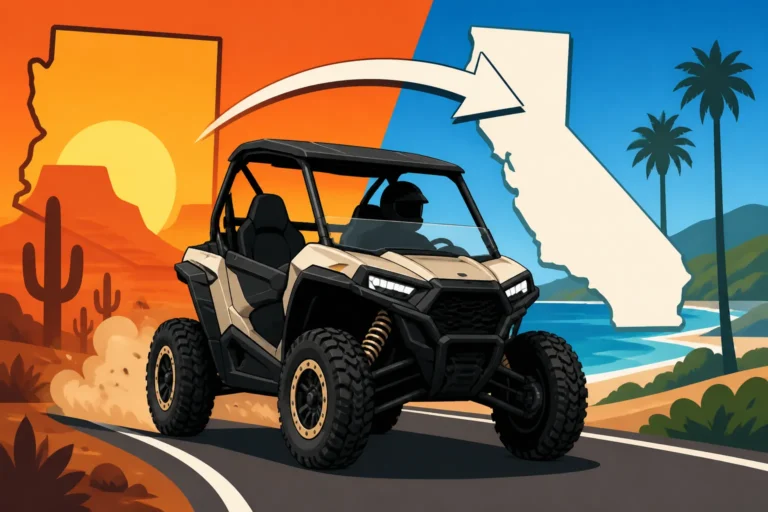
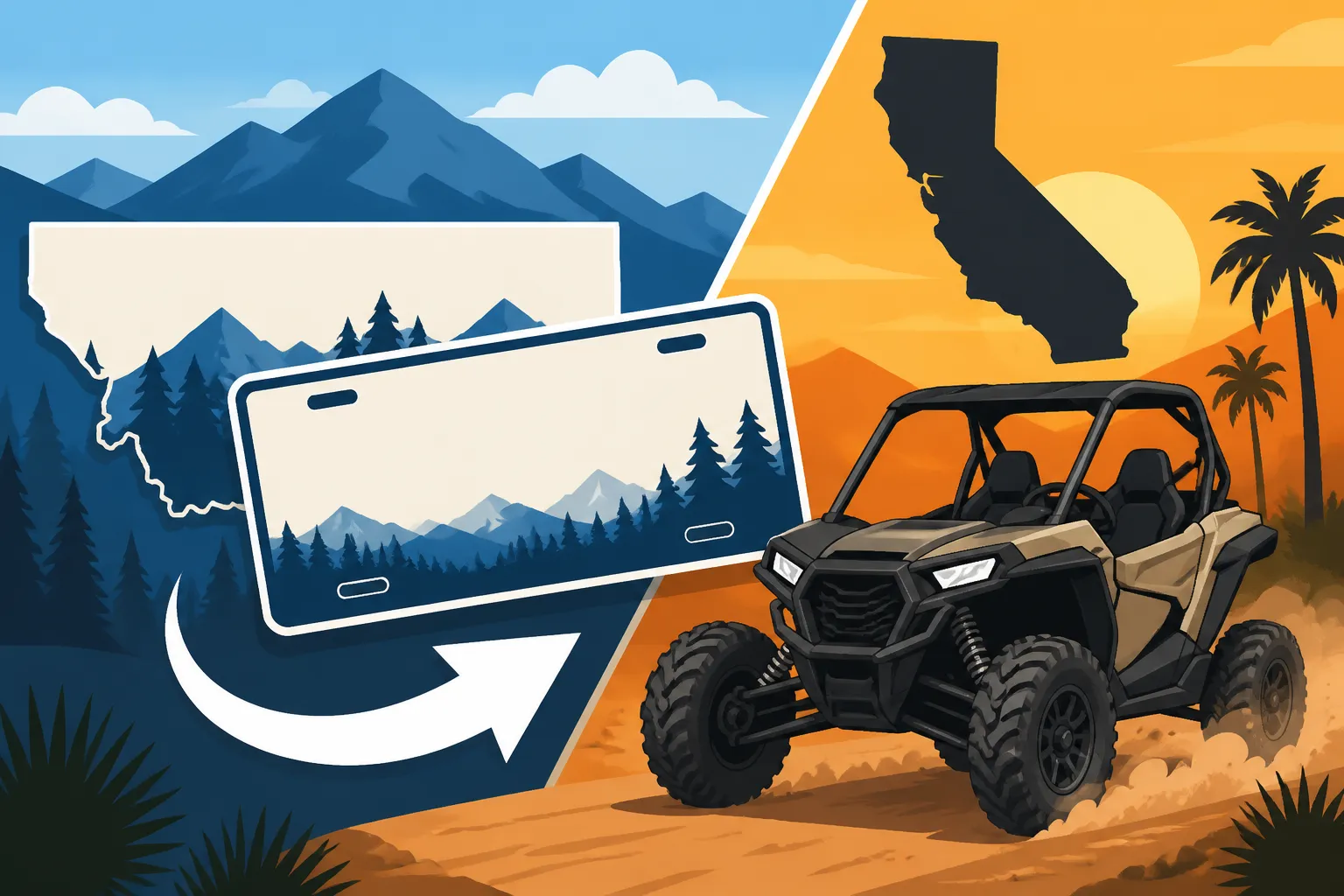
The process typically involves forming the LLC, then having the LLC purchase the OHV. Once the LLC owns the vehicle, it applies for a Montana title and registration through the appropriate county office in Montana. This usually involves submitting the bill of sale, the LLC's formation documents, and paying the Montana registration fees. Because Montana considers the LLC to be a resident, it can issue a standard Montana license plate for the vehicle. This plate, in theory, signifies that the vehicle is legally registered in Montana and therefore, by extension, should be recognized as street-legal in other states under the principles of reciprocity.
However, this is where the critical distinction arises, particularly for off-highway vehicles. A Montana plate confirms registration in Montana, but it does not magically transform an OHV into a vehicle that meets the federal motor vehicle safety standards (FMVSS) or California's specific equipment requirements for street legality. An OHV, by its very design, is built for off-road use and typically lacks features like DOT-approved tires, windshields, specific lighting configurations, and emissions certifications that are mandatory for highway travel in California. The out-of-state registration process doesn't retrofit these requirements onto the machine.
The Reality in California: Legal Standing and Enforcement
This is where the rubber meets the road, or more accurately, where the off-road tires meet the asphalt in California. While a Montana LLC can secure a legitimate license plate for your OHV in Montana, that plate does not grant you carte blanche to cruise California's public roads. The disconnect between Montana's registration laws and California's operating laws for OHVs is significant.
California's Perspective on Out-of-State Plates
California law enforcement and the Department of Motor Vehicles (DMV) are quite clear on how they treat vehicles registered out-of-state, especially when those vehicles appear to be "garaged" or primarily used within California by a California resident. For a vehicle to be considered street-legal in California, it must meet California's specific vehicle codes, not just hold a valid out-of-state registration. The California Vehicle Code (CVC) has very distinct definitions for what constitutes an "off-highway motor vehicle" and what qualifies as a "motor vehicle" for highway use. These are not interchangeable.
A critical point is that California does not honor all [Out-of-State Plates California Will Not Honor] for OHVs if they do not meet California's standards for highway use. If you, as a California resident, primarily operate a vehicle registered to a Montana LLC within California, the state views that vehicle as being subject to California's registration and use tax laws. This can lead to serious issues, including being cited for improper registration or even for operating an unregistered vehicle. The state scrutinizes vehicles that spend an extended period within its borders, and a Montana plate alone won't bypass these rules for a California resident and an OHV that doesn't meet street-legal criteria here.
Why a Montana Plate Won't Make Your OHV Street Legal in California
Here's the fundamental truth: A Montana license plate on your ATV or UTV does not make it street-legal in California. California has a strict set of regulations for vehicles operating on public roads, and most OHVs simply do not meet them. These regulations cover everything from emissions standards set by CARB to safety equipment mandates for turn signals, headlights, brake lights, mirrors, windshields, and DOT-approved tires, among other things. A UTV, even one equipped with aftermarket turn signals and a horn, is still fundamentally an OHV unless it was manufactured and certified to meet federal motor vehicle safety standards for on-road use. [Why a Stock UTV Cannot Be Plated in California] goes into even more detail about this.
California's vehicle code is designed to ensure vehicles on public roads are safe for highway speeds and conditions, and that they meet environmental standards. An OHV is designed for rugged, low-speed, off-road conditions. Simply obtaining an out-of-state registration for an OHV does not alter its fundamental design or its compliance status with California's highway regulations. It’s essentially attempting to apply one state's registration rules to another state's operating laws, and California's laws supersede the out-of-state registration when it comes to operating the vehicle on its public roads.
Enforcement and Consequences
The belief that a Montana plate provides immunity from California's OHV laws is a costly misconception for many. California law enforcement agencies, including the California Highway Patrol (CHP) and county sheriffs, are increasingly aware of the Montana LLC strategy. They routinely conduct checks, especially in popular OHV areas or on roads leading to them. If you are stopped while operating an OHV with a Montana plate on a non-designated public road in California, you are highly likely to face citations.
[What a California Sheriff Checks Roadside] can include everything from your personal residency to the vehicle's actual compliance with California's equipment standards. You could be cited for operating an unregistered vehicle, lacking proper safety equipment, or violating emissions laws. [California Fines for Riding a Public Road] can be substantial, often in the hundreds of dollars, and could even lead to your vehicle being impounded. Furthermore, if you, as a California resident, are found to be primarily "garaging" or operating a vehicle registered to an out-of-state LLC, California's Franchise Tax Board or DMV could assess retroactive sales tax, use tax, and penalties. The initial savings you hoped for can quickly be dwarfed by fines and back taxes.
| Feature | Perceived Montana LLC Benefit in CA (Misconception) | Actual California Legal Standing |
|---|---|---|
| Street Legality | Full access to all public roads | Generally NOT street-legal; limited to specific OHV areas/routes. |
| Sales Tax | Avoids California sales tax | California use tax still applies if primarily used/garaged here. |
| Registration Fees | Lower Montana fees | Must still meet CA OHV registration or face penalties/citations. |
| Inspections | No inspections required | CA vehicle code requires specific safety/emissions for highway use. |
| Enforcement Risk | Minimal, due to valid plate | High risk of citations, fines, or impoundment. |
| Compliance | Assumed compliance | Non-compliant with CA Vehicle Code for highway use. |
Understanding California's Actual Street-Legal Options (Limited for OHVs)
Given the reality of the Montana LLC plate, it's crucial to understand what truly constitutes street-legal operation for OHVs in California. The answer, for most ATVs and UTVs, is that it's extremely limited, if not outright impossible, under typical circumstances.
Combined-Use Highways and Designated Routes
California does offer very specific and limited exceptions for OHV use on certain public roads, known as combined-use highways or designated routes. These are typically short segments of county roads, often unpaved, that connect two legal OHV trails or allow access to services like fuel or lodging from an OHV area. These routes are explicitly designated by local authorities, with approval from the California Highway Patrol, and signs must be clearly posted. The law, [California's Combined-Use Highway List], allows for segments, and historically, these segments are often limited in length, with [California's 3-Mile Combined-Use Cap] being a common figure.
Even on these designated routes, strict rules apply. Riders must possess a valid driver's license, wear a helmet (if on an ATV), and the OHV itself must still adhere to specific equipment requirements such as having working headlights, taillights, brake lights, a muffler, and a spark arrester. Moreover, these routes are not blanket street-legal status; they are specific, controlled corridors. Riding outside these very narrow parameters is still illegal. It's a far cry from the freedom people mistakenly believe a Montana plate grants.
Exceptions: Farm Vehicles, Government Use, etc.
There are certain statutory exemptions in California Vehicle Code that allow for the limited operation of otherwise off-highway vehicles on public roads. These exceptions are highly specific and do not apply to the general public using their recreational OHVs for personal enjoyment. For instance, [Farm Quads and California Registration] rules might allow an ATV to be operated on a highway for agricultural purposes between fields, within a very short distance, and often with specific signage. Similarly, vehicles owned and operated by government agencies (like law enforcement or land management) might have different allowances for on-road operation related to their official duties, as detailed in [California OHV Registration for a Government Machine].
These are not loopholes for the average rider. They are narrowly defined exemptions for specific vocational or official uses, reflecting a balance between agricultural or public service needs and general public safety on highways. Attempting to claim one of these exemptions for recreational riding would not hold up under scrutiny by law enforcement.
What Makes a Vehicle Truly Street Legal in California
For a vehicle to be truly street-legal in California, meaning it can be registered with the DMV as a "motor vehicle" and legally operate on public highways without special restrictions, it must meet several rigorous criteria. This includes:
- Federal Motor Vehicle Safety Standards (FMVSS): The vehicle must have been manufactured and certified to meet all applicable federal safety standards for highway use. This includes crashworthiness, lighting, braking systems, and more. Most ATVs and UTVs are specifically designed and labeled "for off-road use only" and do not meet these standards.
- California Emissions Standards: The vehicle must be certified by CARB to meet California's stringent emissions requirements for on-road vehicles. Again, most OHVs do not have this certification for street use.
- Required Equipment: The vehicle must be equipped with all necessary safety features for highway operation, including DOT-approved tires, proper lighting (headlights, taillights, brake lights, turn signals, license plate light), mirrors, a horn, and often a windshield with wipers. While some aftermarket accessories can add these, they don't change the underlying FMVSS and emissions compliance. [Are ATVs Street Legal in California?] and [Can You Make a UTV Street Legal in California?] further explain why this is practically impossible for most machines.
In essence, a vehicle is either designed and certified for highway use from the factory, or it is not. The Montana LLC route attempts to circumvent California's operating laws by using another state's registration process, but it fundamentally fails to address the actual vehicle compliance requirements for safe and legal highway operation within California.
The Financial and Practical Risks
Beyond the legal citations and potential impoundment, pursuing a Montana LLC plate for your California OHV carries several significant financial and practical risks that often outweigh any perceived benefits. It's not just about avoiding a ticket; it's about the broader implications for your finances and your ability to truly enjoy your machine.
Cost of Setting Up and Maintaining an LLC
While the appeal of avoiding California sales tax is strong, remember that setting up and maintaining a Montana LLC isn't free. You'll incur fees for forming the LLC, which can vary depending on whether you use a service or do it yourself. More significantly, you'll need to pay for a registered agent service in Montana, which typically involves an annual fee. These fees, while not exorbitant individually, add up over time. If you decide to consult with legal or tax professionals to ensure everything is above board, those costs will further increase. Over several years, these recurring expenses can diminish any initial sales tax savings, especially if you also end up paying [California Use Tax on an Out-of-State Quad] and penalties.
Insurance Implications
This is a critical, often overlooked, risk. Your insurance policy is designed to cover your vehicle based on its legal status and intended use. If you register your OHV through a Montana LLC and then operate it illegally on California roads, you could inadvertently void your insurance coverage. Most standard OHV insurance policies are tailored for off-road use, not for highway operation. If you get into an accident on a public road where your OHV is not legally permitted, your insurance company could deny a claim, leaving you personally liable for damages, medical bills, and legal fees. This financial exposure can be catastrophic, far outweighing the cost of a legitimate registration or even a sales tax bill.
Resale Value and Future Issues
Trying to sell an OHV that has been registered via a Montana LLC while primarily used in California can also present challenges. Potential buyers in California might be wary of a vehicle with a non-California title or registration history, especially if they understand the legal complexities involved. They might face the same issues you did regarding California's use tax and registration, potentially leading to a lower resale value or difficulty finding a buyer altogether. You could also run into issues with the California DMV when attempting to transfer the title or register it correctly in California if it was improperly registered in Montana while being primarily used in California. This could involve dealing with back taxes, penalties, and extensive paperwork.
The Reputable Alternative
Instead of navigating a risky and often non-compliant path for street-legal status, a more responsible and enjoyable approach is to focus on equipping your OHV for its intended purpose: off-road adventures. Investing in high-quality accessories that enhance safety, performance, and comfort on the trails is a much better use of your resources. For example, brands like SuperATV offer a vast range of products, from robust winches that can get you unstuck, to superior lighting systems for night riding off-road, and durable protection like bumpers and skid plates. These types of upgrades make your riding experience safer and more enjoyable where it's actually legal, without the legal and financial headaches associated with trying to make your machine something it's not in California.
Conclusion
The allure of a Montana LLC plate for your ATV or UTV in California is understandable. The desire for freedom, convenience, and potentially avoiding sales tax is a powerful motivator for many off-road enthusiasts. However, the reality is that this strategy does not make your off-highway vehicle street-legal in California. Our state's comprehensive vehicle code, emissions standards, and safety regulations are designed to govern what can legally operate on public highways, and a Montana plate simply does not bypass these requirements for a vehicle primarily used by a California resident within the state.
The risks associated with this approach—including significant fines, potential impoundment, retroactive tax assessments, insurance nullification, and future resale difficulties—far outweigh any perceived benefits. Instead of chasing a street-legal dream that largely doesn't exist for most OHVs in California, embrace the state's vast network of dedicated off-highway trails and parks. Invest in legitimate California OHV registration, equip your machine with high-quality, compliant off-road accessories from trusted brands, and enjoy your passion responsibly and legally.
Disclaimer
This article is for general informational purposes only and does not constitute professional advice. Laws, prices and regulations vary by location and change over time. Consult a qualified professional for guidance on your specific situation.