An Oregon Permit on California Sand
An Oregon ATV permit can usually satisfy California’s out-of-state OHV identification requirement, but it does not grant access to every riding area or cover every fee. That distinction matters on California sand, especially at the Imperial Sand Dunes. Here’s how to check whether your Oregon permit applies, what else you may need, and what to sort out before you unload.
Does California accept an Oregon ATV permit?
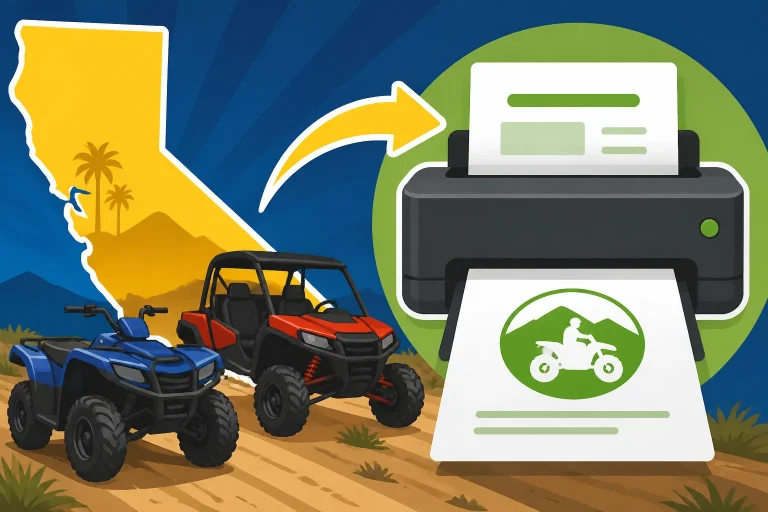
Generally, yes. California recognizes valid off-highway identification from Oregon and Nevada for qualifying nonresident machines. If your Oregon ATV permit is current, applies to the machine you’re bringing, and is displayed as required, it can serve in place of a California nonresident OHV use permit for the vehicle’s OHV identification requirement.
That reciprocity is narrow. It is not a general agreement that makes every Oregon document equivalent to California registration, and it does not make an Oregon machine a California-registered vehicle. The important document is the state-issued OHV permit or identification applicable to your vehicle—not simply proof that you own it, a title, or a receipt for a permit application.
California’s reciprocity is limited to Oregon and Nevada. Riders from many other states need to obtain a California nonresident OHV use permit unless another specific exemption applies. For the wider rules, see California OHV Reciprocity: Only Two States and California’s Nonresident OHV Use Permit.
| What you have | What it may do in California | What it does not do |
|---|---|---|
| Current Oregon ATV permit that applies to your machine | Satisfy the OHV identification requirement under California reciprocity | Pay a separate recreation-area or dunes permit |
| Oregon title or bill of sale | Help establish ownership | Substitute for an OHV permit or registration |
| Oregon highway plate | Show highway registration status | Automatically establish that an off-highway permit requirement is met |
| California nonresident OHV use permit | Provide California OHV identification for an eligible visiting machine | Replace area-specific permits, entry charges, or riding rules |
| Imperial Sand Dunes permit | Meet the applicable ISDRA recreation-permit requirement for the covered vehicle | Replace the state OHV identification requirement |
The exact result depends on whether the Oregon identification is valid for the machine and the kind of riding you plan to do. Oregon’s ATV system uses machine categories, and the permit requirements can differ by vehicle type and use. If you are unsure which Oregon permit covers your quad, dirt bike, or side-by-side, check with the Oregon agency that issued it before travelling.
California’s nonresident permit rules are explained further in Why Only Oregon and Nevada Count in California. The useful takeaway is simple: a qualifying Oregon OHV permit can remove the need to buy California’s nonresident OHV permit, but only for the vehicle identification part of the trip.
Check the permit, not just the paperwork folder
Before leaving, confirm that the Oregon permit is:
- Current and valid for the dates of your trip.
- Issued for the machine you plan to ride.
- The correct type of off-highway identification for that machine.
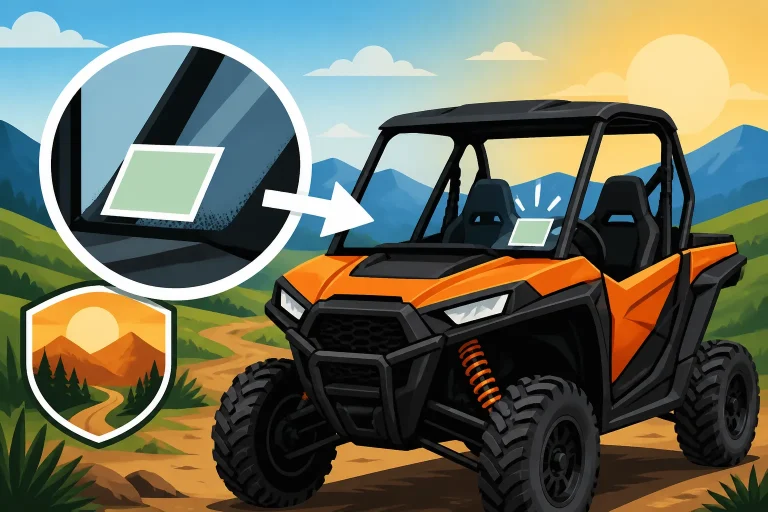
- Properly displayed on the vehicle, if the permit rules require a decal.
- Readable and attached securely enough to stay in place through sand, water, washing, and vibration.
A title, registration card, sale receipt, or phone photo of an application does not necessarily replace the required display. Keep the paperwork as backup, but do not assume that paperwork alone will satisfy a check if the permit is meant to be shown on the vehicle.
If you bought the machine recently, make sure the permit has been handled for the new owner and is not still associated with the seller in a way that affects its validity. A permit that was valid for the previous owner’s machine or use may not be a safe assumption for your trip.
An Oregon permit does not cover every California sand permit
“California sand” can mean very different riding areas. The Imperial Sand Dunes Recreation Area, often called Glamis, is federal land with its own recreation-permit system. State Vehicular Recreation Areas and other riding places have their own access rules and charges. There is no single dunes permit that covers every California sand destination.
At the Imperial Sand Dunes, the Oregon permit and the ISDRA permit serve different purposes. The Oregon permit addresses OHV identification reciprocity. The ISDRA permit addresses use of the dunes area. If you ride a machine in the area where an ISDRA permit is required, you may need both: the Oregon OHV permit displayed on the machine and the applicable ISDRA permit displayed as directed.
The area permit is not a California registration sticker, and it does not fix a missing or expired state OHV permit. In the other direction, your Oregon decal does not pay for entry or satisfy the dunes permit requirement. Think of them as separate checks, not alternative versions of the same sticker.
| Destination or situation | Oregon OHV permit | Separate area check |
|---|---|---|
| Imperial Sand Dunes Recreation Area | Can satisfy qualifying OHV identification requirements under reciprocity | Check current ISDRA permit rules for each vehicle entering or riding in the permit area |
| California SVRA | Can provide qualifying nonresident OHV identification | Check the SVRA’s admission, vehicle, and operating rules |
| Other public riding land | May satisfy the state OHV identification requirement if valid for the machine | Check the land manager’s access, closure, and permit rules |
| Private riding property | California public-land identification rules may not apply in the same way | Follow the property owner’s requirements and any applicable local rules |
For a trip to Glamis, start with California Rules for Riding Imperial Sand Dunes and ISDRA Permits and California’s October Season. Confirm the current permit system with the land manager before you travel. Permit types, purchase channels, display instructions, and the boundaries where a permit is required are details worth checking close to departure rather than relying on an old trip checklist.
Do not confuse the tow vehicle with the OHV
A truck towing a quad and the quad itself are separate vehicles. The Oregon ATV permit belongs to the off-highway machine; it does not cover the truck. Likewise, a dunes permit requirement can apply to a vehicle driven into the recreation area, even if that vehicle is normally used only for towing.
If your truck stays on a public road or in a designated parking area, the requirements may differ from those for a vehicle driven into the dunes. Check the area’s rules for where the permit applies, and do not assume that leaving the trailer at camp or parking the tow vehicle nearby automatically settles the question. Why Your Tow Vehicle Needs a California Dune Permit explains why this distinction catches riders off guard.
What can make an Oregon permit unsuitable?
The most common problem is treating “Oregon registration” as one interchangeable document. Oregon has different vehicle and permit categories. A highway plate, title, Oregon ATV permit, and permit receipt are not automatically equivalent. California’s reciprocity applies to qualifying OHV identification; it is not a blanket promise to accept any document issued in Oregon.
The machine category does not match
A permit must apply to the type of vehicle being ridden. A two-wheeler, quad, and side-by-side may fall under different classifications or requirements. If the permit was issued for one machine and you bring another, do not assume that the decal transfers.
This matters when a family owns several machines or borrows one for a trip. Check the permit for every vehicle, including youth machines and machines with a different configuration from the one described on the Oregon paperwork. If you have a UTV, a dirt bike, and a quad on the same trailer, confirm each one separately.
The permit is expired, missing, or hard to read
A permit that expired before your trip is not made valid by an old receipt or a photo of the previous year’s decal. A sticker that has peeled away, been damaged, or become unreadable can also create a roadside problem. Renew or replace a questionable permit through the issuing agency before you leave.
If you carry documents on your phone, treat them as backup. Battery problems, poor reception, a locked screen, or a ranger’s requirement to inspect the actual displayed permit can make a phone image inconvenient. A clear waterproof document pouch from an outdoor store or Amazon can protect paper copies and receipts, but it does not replace a required vehicle decal.
You rely on an Oregon highway plate alone
A highway plate and an OHV permit address different kinds of vehicle use. If your machine is registered for highway use, that may affect what rules apply in a particular situation, but do not assume that the plate automatically replaces the OHV identification required for riding on public off-highway land.
This can be especially confusing for side-by-sides that have been modified or registered for road use in another state. California has separate rules for road use and off-highway use. The fact that a vehicle can legally use some roads elsewhere does not establish that it may use California trails or dunes, nor that a highway plate will satisfy every OHV identification requirement. See Why a Street-Legal Plate Does Not Substitute for the distinction.
You have an Oregon safety card, but not the vehicle permit
Operator qualifications and vehicle identification are separate. A safety card or course certificate relates to the person operating the machine; an OHV permit identifies or authorizes the vehicle. Having one does not automatically replace the other.
California also has rules that can apply to younger riders and operators of particular vehicle types. Do not assume that an Oregon course card automatically meets every California requirement. Check California’s rules for the rider’s age, machine, and riding location before the trip, and keep any required certificate available.
Plan the trip by riding area, not just by state
An Oregon permit can be useful across the border, but the rules that shape a ride depend on the particular place. A good plan starts with the destination and then checks the permit, access, and operating requirements that apply there.
For example, the Oregon OHV permit may satisfy California’s OHV identification requirement at a public riding area, but the land manager can still close routes, limit vehicle access, or require an additional permit. A state park may have its own entry procedures. A federal recreation area may have a separate area permit. Weather, fire conditions, wildlife protections, and seasonal restrictions can change where riding is allowed.
At the Imperial Sand Dunes, the relevant questions include whether the ISDRA permit is required for each vehicle, where it must be displayed, and what current rules apply to the portion of the dunes you plan to visit. The Oregon permit does not answer those questions. For broader California permit details, see California OHV Permit for Out-of-State Riders and Carrying Paperwork on the Sand.
Use this pre-trip sequence
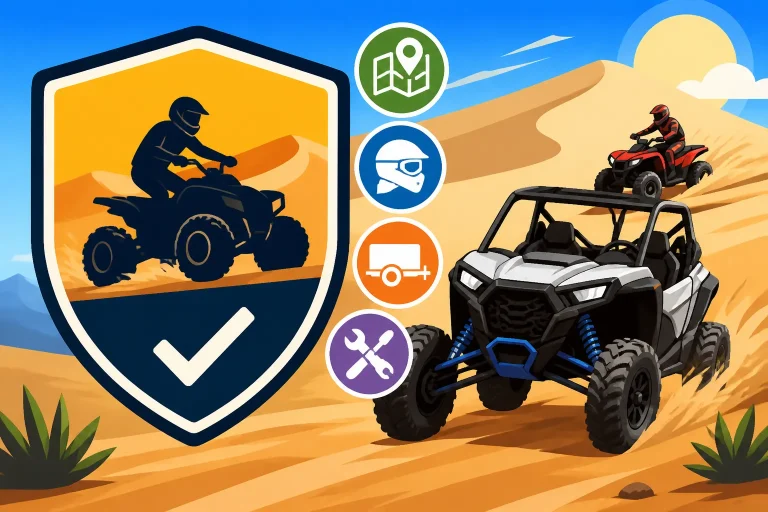
- Identify every machine. Write down the make, model, vehicle type, and Oregon permit details for each dirt bike, quad, or side-by-side.
- Confirm the Oregon permit applies. Check its expiration, vehicle category, and display requirements with the issuing agency if anything is unclear.
- Check the California reciprocity rule. Confirm that the permit is the kind of Oregon OHV identification California recognizes. Do not rely only on an Oregon plate, title, or application receipt.
- Name the exact riding area. “The dunes” is not specific enough. Confirm whether you are going to the Imperial Sand Dunes, an SVRA, or another location.
- Check for a separate area permit. For the ISDRA, verify the current permit requirement and instructions with the land manager. Check whether the rule applies to your tow vehicle or any other vehicle you plan to drive into the area.
- Review operating rules. Check route access, closures, age and safety requirements, equipment rules, and any restrictions for your machine.
- Prepare proof and display. Attach the permit as required, keep supporting documents available, and carry a backup copy of key information.
For equipment, an Amazon listing may be a convenient way to find a document pouch or replacement mounting hardware, but product descriptions are not official guidance. A pouch protects papers; it does not make an incorrectly displayed decal compliant. At the dunes, a flag and whip may also be required, so verify the applicable specifications with the official rules rather than choosing an item based only on a marketplace listing. An Amazon tire gauge can be handy for sand riding, but tire pressure is a setup choice—not a permit requirement.
If your Oregon permit is missing or does not qualify
If the permit has expired, does not match the machine, or cannot be verified as qualifying Oregon OHV identification, resolve that before arriving at the riding area. The usual alternative for a nonresident rider is to obtain the California nonresident OHV use permit, if the machine and use are eligible. Check the current application process and display instructions through the official California program. Do not wait until a checkpoint or park entrance to find out that your Oregon paperwork is not accepted.
A California nonresident permit still does not replace the ISDRA recreation permit or any other destination-specific requirement. If you are travelling to Glamis, plan for both layers. If you are going elsewhere, check that site’s requirements rather than assuming the dunes rules apply.
If you discover the problem on the road, avoid unloading and riding until you have confirmed what is required. A quick call or official online check can be much less costly than being turned away, having to trailer the machine back out, or receiving a citation. Where internet access may be poor, save the relevant official instructions and your purchase confirmation before leaving home.
Also keep the machine’s condition and setup in mind. A correct Oregon permit does not excuse riding on closed routes, operating a machine that violates applicable equipment rules, or failing to follow California safety requirements. If you are preparing for a Glamis trip, California Dune Flag Requirements and California Spark Arrester Requirement Explained cover two equipment topics that are separate from permit reciprocity.
The practical answer is: a valid Oregon OHV permit can count in California for a qualifying machine, but it is not a universal pass. Verify that the permit matches your vehicle, display it correctly, and check the riding area’s separate access rules. At the Imperial Sand Dunes, treat your Oregon identification and the ISDRA permit as two distinct requirements.
Disclaimer
This article is for general informational purposes only and does not constitute professional advice. Laws, prices and regulations vary by location and change over time. Consult a qualified professional for guidance on your specific situation.