Riding Etiquette on a Busy Dune
A crowded dune can turn a fun ride into a stressful one fast: blind crests, roosting sand, parked machines, and riders heading in every direction leave little room for mistakes. Good etiquette helps everyone see hazards, keep moving safely, and enjoy the dunes without turning another group’s ride into a close call.
Before You Ride Into a Busy Dune Area
Know the riding area and its routes
Dune systems can look open and uncomplicated, but not every patch of sand is available for riding. Boundaries, closed areas, camps, access routes, and terrain can vary. Before unloading, check the rules and maps for the specific area you plan to visit. If you are headed to the Imperial Sand Dunes, for example, review California Rules for Riding Imperial Sand Dunes and the guidance for Imperial Sand Dunes, California’s Biggest Dune Field.
A route-planning app such as onX Offroad can help you orient yourself and understand the surrounding terrain. Treat it as one planning aid, not as permission to ride anywhere the screen appears to show. Compare what you see with official land-manager maps and signs, and obey posted closures and boundaries. Conditions on the ground can change, and a line that looks open on a screen may lead toward a closed or unsuitable area.
Before the group starts moving, agree on a meeting point and a simple plan for getting back to camp. Pick a landmark that is easy to recognize, and make sure everyone knows what to do if the group gets separated. “Meet at the truck” may not be clear when dozens of similar vehicles are parked across a wide area.
Prepare your machine and make yourself visible
A machine that is difficult to see or has a problem with its controls is a bigger concern in a crowded riding area. Check your tires, brakes, throttle, steering, lights, and safety equipment before leaving camp. Secure loose items so they do not fall onto a route, and make sure everyone knows where the key controls are. A passenger should understand how to hold on and what to do if the driver stops suddenly.
Visibility matters especially where dunes conceal what lies beyond a crest. Use the required whip and flag for the area, and make sure they are attached securely and remain visible. Requirements can differ by location, so check California Dune Flag Requirements and Why Dune Riders Need an 8-Foot Whip and Flag before heading out. A flag is not a substitute for riding cautiously, but it can help other riders spot your machine sooner.
Keep your registration or permit documents accessible if the area requires them, and review any local rules before riding. If you are still choosing a destination, California Dune Riding Areas can help you compare places to ride and plan around the kind of terrain your group is comfortable with.
How to Share Dunes Without Creating Close Calls
Slow down near crests, intersections, and parked groups
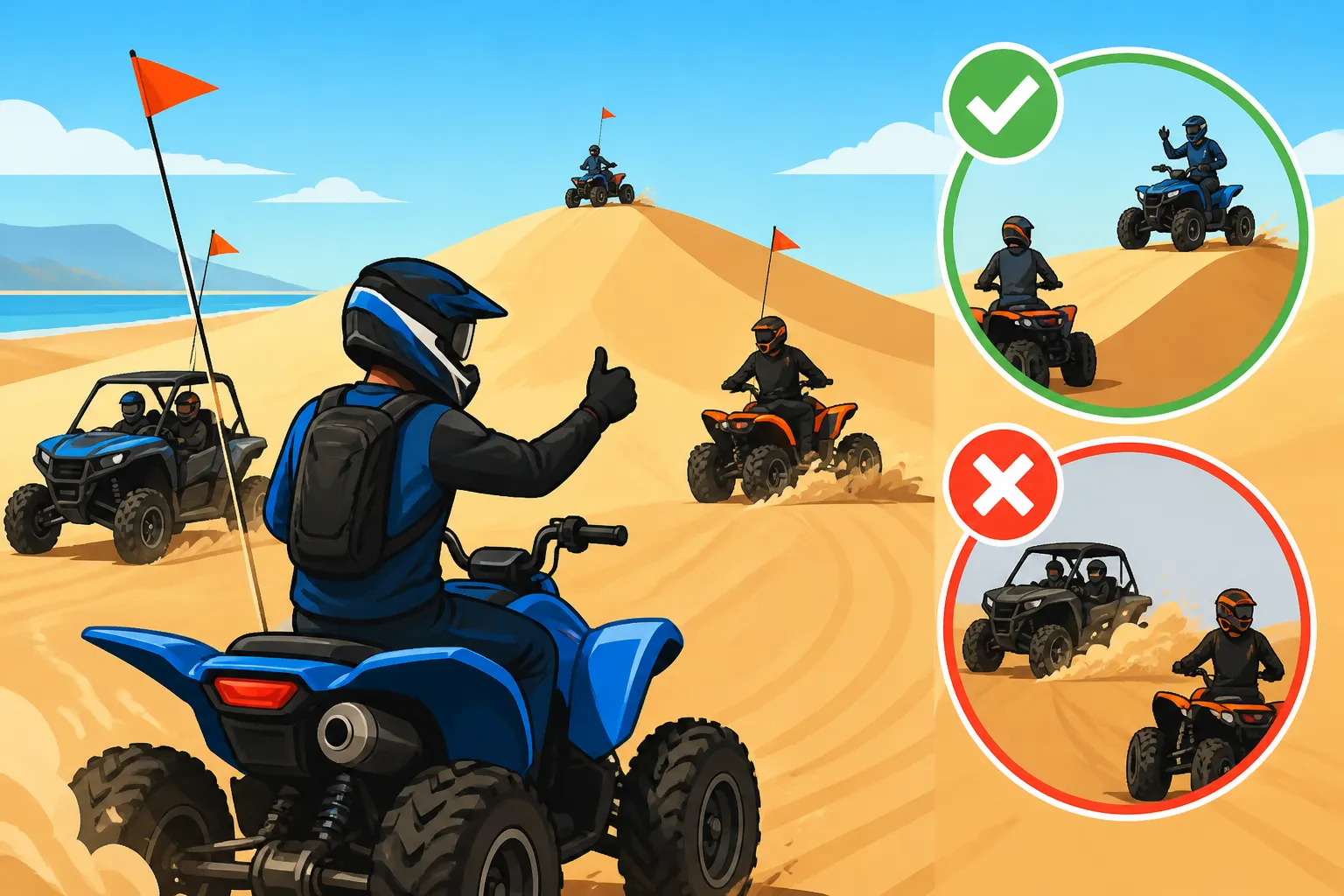
The most important habit on a busy dune is to assume someone or something may be hidden from view. A crest can conceal another machine, a person walking, or a stopped rider. Slow before reaching the top, approach in a way that gives you time to react, and do not charge over a blind ridge as if the other side must be clear.
Be just as cautious where riding lines converge or where people are stopping to regroup. Look ahead for flags, tire tracks, parked machines, and riders changing direction. If the view is blocked, do not guess. Wait for a clear opportunity or choose a safer route with better visibility. A few seconds of patience is far less costly than a collision or a damaged machine.
Busy areas can also create pressure to keep up with faster riders. Resist it. Ride at a speed that lets you control your machine and respond to what you can actually see. A group should travel at a pace suitable for its least experienced rider, not the most confident one. If you are new to dunes, tell the group before setting out so the plan can include easier terrain and regular check-ins.
Leave space and avoid surprising other riders
Give other machines plenty of room, especially when approaching from behind or passing. Sand can shift under tires, and riders may make sudden adjustments when they hit a soft patch or find an unexpected slope. Passing close can startle someone or leave them with nowhere safe to move. If there is not enough space to pass comfortably, wait.
Avoid cutting across another rider’s line or dropping into the space in front of them. Make your direction predictable, and leave a generous gap when following. This matters even more when riding behind a side-by-side or a group with children, because the driver may have limited visibility and may be focused on keeping passengers secure.
If you need to stop, move well out of active riding lines and choose a spot where approaching riders can see you. Do not park just beyond a crest, in a narrow passage, or in a place where others are likely to turn or descend. When stopping with a group, pull off together only if there is room for everyone to be clearly visible and safely out of the way.
Courteous Riding Habits That Make a Real Difference
Keep sand, noise, and speed under control
Roosting sand can hit people, vehicles, tents, and equipment. Avoid spinning your tires or accelerating hard near other riders, camps, parked machines, or spectators. If someone is close by, ease off and give them room rather than throwing sand in their direction. This small act of consideration can prevent a minor annoyance from becoming a damaged windshield, an eye injury, or an argument.
Keep your riding controlled around camp and in areas where people are walking. A machine may feel slow and manageable to its driver but still be intimidating to a person standing nearby. Do not use camp areas or access paths as places to show off, practice aggressive turns, or test how quickly your machine can accelerate. Save spirited riding for open terrain where it is appropriate and where you can see what lies ahead.
Noise is another part of sharing the dunes. A loud machine can be exhausting for nearby campers and can make it harder to hear approaching vehicles or people. Respect posted rules and quiet areas, and avoid unnecessary revving—especially near camps and during rest periods. The goal is not to remove the fun from riding; it is to avoid making everyone else absorb the consequences of your fun.
Help without creating more risk
If you see a rider stopped or in trouble, first make sure you can stop in a safe, visible place. Do not rush across an active riding line or park where another blind approach could put you in danger. Once stopped safely, check whether the rider wants help and whether anyone is injured. If a machine is disabled, think about visibility and traffic before attempting a recovery.
A simple check-in can be useful when a rider is alone or separated from their group. But do not crowd someone who is already managing a problem. Give them room to work, and ask before touching their machine or gear. If the situation involves an injury or a serious hazard, use the appropriate local emergency or park contact rather than relying on an informal group response.
When someone makes a mistake, stay calm. A shouted warning may be necessary to prevent immediate harm, but insults or confrontation rarely improve safety. Once everyone is out of danger, a brief, respectful explanation is more likely to help the other rider understand what happened. Everyone has a responsibility to learn, including experienced riders who may be moving too quickly for crowded conditions.
A Simple Plan for a Safer, More Pleasant Ride
Agree on group rules before starting
A short conversation at camp can prevent confusion later. Decide who leads, who follows, where the group will stop, and what riders should do if they lose sight of one another. Make sure less experienced riders know they can ask to slow down or take a break without being teased or pressured.
| Situation | Considerate response | Avoid |
|---|---|---|
| Approaching a blind crest | Slow down and proceed only when you can respond safely | Accelerating over the top without a clear view |
| Catching up to another machine | Leave space and pass only when there is room | Tailgating or cutting across its path |
| Stopping to regroup | Pull completely clear of active riding lines | Stopping just beyond a crest or in a narrow route |
| Riding near camp | Keep speed and tire spin controlled | Roosting sand toward people, tents, or vehicles |
| Getting separated | Use the agreed meeting point and regroup plan | Searching randomly through crowded terrain |
| Seeing a rider in trouble | Stop somewhere visible and ask what help is needed | Blocking a route or attempting a risky recovery |
For navigation, onX Offroad may help your group discuss routes and identify nearby features before leaving camp. Review the map together, but agree that official signs and land-manager instructions take priority. It also helps to download or otherwise prepare for the possibility of poor cell service rather than assuming everyone will have a working signal.
Adjust for weather, visibility, and fatigue
A crowded dune is harder to navigate when wind blows sand across sightlines or glare makes it difficult to distinguish terrain. Dust and wind can make flags harder to spot and can hide vehicles that would otherwise be visible. If you cannot clearly see where you are going, slow down or stop in a safe place until conditions improve. For a broader preparation checklist, see Wind and Visibility on the Dunes and California Desert Riding Safety.
Heat and fatigue can quietly affect judgment. Riders may become impatient, miss hazards, or take unnecessary risks when they are tired, thirsty, or overheated. Plan breaks, carry water, and pay attention to how the whole group is doing—not only the person who says they are fine. Heat Risk on Desert Sand offers additional context for planning around demanding desert conditions.
A useful final check is to ask whether each rider can still see the person ahead, control their machine comfortably, and make a safe stop if needed. If not, regroup and adjust the pace or route. A good dune day is not measured by how much ground the group covers. It is one where everyone returns to camp with their machine, their gear, and their good mood intact.
Disclaimer
This article is for general informational purposes only and does not constitute professional advice. Laws, prices and regulations vary by location and change over time. Consult a qualified professional for guidance on your specific situation.