Clay Pit After the Rains
Rain can turn Clay Pit’s normally firm routes into slick clay, deep ruts, and sticky patches that are hard on both riders and machines. The tricky part is knowing whether the area is open, what the ground will be like, and when conditions are too wet to ride responsibly. This guide explains how to check conditions, prepare your ATV or UTV, and make a safer plan.
What rain changes at Clay Pit
Clay can be slippery, sticky, and uneven
Clay Pit SVRA, near Oroville, is known for terrain that can change noticeably with weather. After rain, the surface may feel firm in one spot and slick or soft just a short distance away. Even when the ground looks dry from the parking area, shaded sections, low points, and places where water collects can remain muddy.
That mix can catch riders off guard. An ATV may slide sideways on a slope or spin its tires in a soft patch. A UTV can feel stable until one side drops into a rut or the tires lose traction on a wet turn. Mud packed into tires and wheel wells can also make handling less predictable, especially if it builds up during the ride.
Avoid assuming that a light shower has had no effect. The amount of rain, the time since it fell, temperature, shade, and drainage all matter. A stretch of sunny weather may help some areas firm up while leaving other sections soft. For an overview of the area and its riding setting, see Clay Pit SVRA at Oroville, California.
A closure is different from a challenging trail
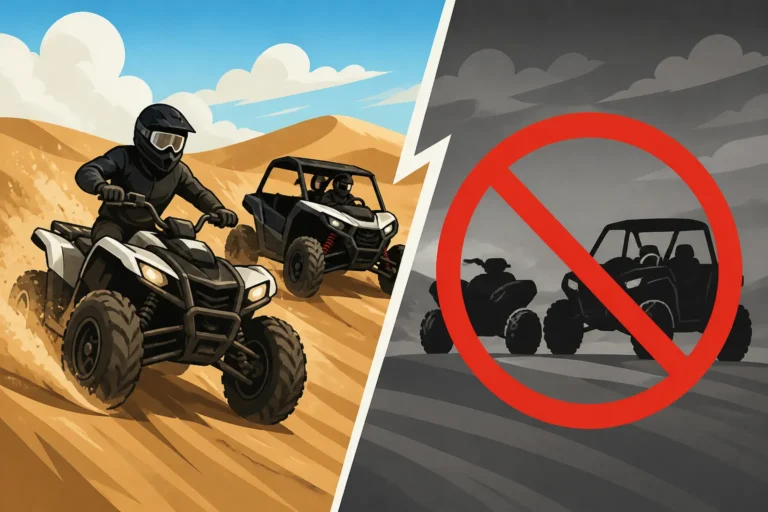
Wet ground is not just a riding inconvenience. Tires can cut into soft soil, deepen existing ruts, and damage trail edges. When a park closes routes or the riding area because of conditions, treat that closure as a firm boundary—not an invitation to find a way around it.
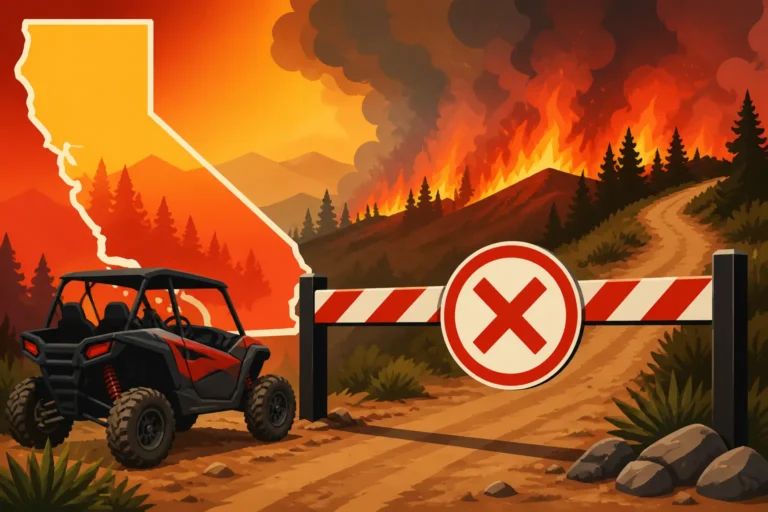
Clay Pit’s season and operating conditions can vary, so do not rely on an old trip report or a past visit to decide whether it is open. Check current park notices before loading up, and look again before you leave home. A gate sign or closure notice at the park takes priority over what a map app or an older online post appears to show. The broader considerations are covered in California Trail Closures After Rain and California OHV Areas After a Storm.
A closure may also apply to only part of an area, or access may be limited for reasons beyond visible mud. Follow posted signs, barriers, and staff directions. Riding around a closed section can cause damage and create safety problems for other visitors, even if the detour looks passable.
Conditions can vary across one ride
A wet route is not necessarily uniformly wet. One open stretch may have enough traction for careful travel, while a low section nearby holds water or has a slippery layer over harder ground. Hills, turns, and places where riders repeatedly accelerate or brake can be especially unpredictable.
Use the first part of a ride to assess the conditions conservatively. If tires begin spinning, the machine slides unexpectedly, or the surface starts deforming under repeated passes, stop before the damage gets worse. Do not keep testing the same soft patch with more throttle. Turning around early is often the least frustrating choice, particularly when the alternative is digging out a machine or making a rut deeper.
How to check whether Clay Pit is rideable
Confirm current access before making the drive
Start with the park’s current operating information and any closure notices. Look for updates that specifically mention wet weather, route restrictions, or temporary closures. If the information is unclear, contact the park or managing agency before setting out rather than assuming that a route is open because it appears on a map.
This check matters because the drive to the park can be a substantial part of the day. A family towing a trailer from the Sacramento area, for example, may prefer to postpone rather than arrive to find limited access or conditions unsuitable for riding. Keep a backup plan in mind, but check that any alternative area is open and appropriate for your machine before redirecting the trip.
The area’s operating window is another reason to plan ahead. Clay Pit and Its Short Season offers useful context, while California Riding in Winter can help you think through the wider seasonal conditions that affect riding plans.
Use maps as planning tools, not permission to ride
A trail map can help you understand the layout and plan where to go, but it cannot reliably tell you whether a specific route is open or firm enough after recent rain. Map information may also differ in age or detail from signs posted on site. Review the park’s official map and notices, then follow signs and any instructions at the entrance.
Digital mapping tools such as onX Offroad can be useful for organizing a trip and understanding your general position. Before you head out, download or save the information you may need in case mobile coverage is limited. Still, treat the app as a planning aid: it does not replace official closure notices, posted boundaries, or instructions from park staff.
If you use onX Offroad or another mapping app, compare what it shows with official park information and the signs you see at the site. Do not use a route drawn on a phone to justify crossing a barrier, leaving a designated route, or riding into an area that appears closed. For more on preparing with maps, see California Trail Maps and Where to Get Them.
Make a simple go-or-no-go decision
Before unloading, take a few minutes to observe the entrance area and any open ground you can see without riding into it. Look for standing water, deep tire impressions, fresh mud, or signs that vehicles are cutting around soft spots. Ask staff about current conditions if they are available. If the surface appears fragile or an official notice recommends staying off it, postpone.
A practical decision can be based on three questions:
- Is the park and the route you plan to use officially open? If not, do not ride there.
- Does the ground appear firm enough to support your machine without spinning or cutting ruts? If not, choose another day.
- Can you turn around safely if conditions worsen? If not, do not proceed into a route that could leave you stuck or create a difficult recovery.
There is no need to prove that a machine can get through a muddy section. If the route is deteriorating, stopping early protects the area and reduces the chance of a mechanical problem or recovery situation.
Preparing your ATV or UTV for wet conditions
Check the machine before unloading
Mud can hide issues and add weight, so do a basic inspection before and after riding. Check tires for damage and suitable inflation according to the manufacturer’s guidance. Look over brakes, steering, lights, belts where applicable, and any exposed electrical connections. Make sure the machine is in good working order before setting off; wet, low-traction ground leaves less room for a small maintenance issue to remain small.
Bring equipment suited to your machine and the conditions, including basic recovery gear if you know how to use it safely. A tow strap is not a complete recovery plan by itself: attachment points, terrain, other vehicles, and the people involved all matter. Avoid improvised pulls from bumpers or other parts not intended for recovery, and do not put anyone in the path of a tensioned strap.
A UTV and an ATV may respond differently in mud, but neither should be treated as unstoppable. A heavier vehicle can sink or become difficult to recover, while a lighter quad can still lose traction on a slick slope. Choose routes and riding speeds that leave you room to react rather than relying on momentum.
Carry the right essentials
A wet-weather ride can become uncomfortable quickly if you have no dry layer or a way to clean mud from essential controls. Pack clothing that can handle changing conditions, water, basic first aid, a charged phone, and a way to keep important items dry. If you ride with others, agree on a meeting point and a simple plan for what to do if someone becomes separated.
Bring registration and any required identification or permits for your machine and riding situation. Requirements can depend on the vehicle and where it is registered, so check the relevant rules before the trip rather than leaving paperwork to chance. The California OHV Registration Paperwork Checklist is a helpful starting point for sorting out documents.
For route difficulty and machine suitability, read available signs and use published trail information rather than judging solely by appearance. California Trail Ratings and What They Mean can help explain how to interpret route ratings. A route that feels manageable in dry conditions may be much more demanding when wet.
Keep your ride low-impact
If the park is open and conditions are suitable, ride smoothly. Sudden acceleration and repeated wheelspin can tear up soft surfaces. Avoid sharp turns on fragile ground, and do not create a new line around a muddy patch. If you cannot pass without leaving the designated route or damaging the surface, stop and turn back.
Give other riders room, particularly on slopes and narrow sections. A machine sliding or spinning may move in an unexpected direction, so avoid crowding someone who is trying to proceed carefully. If you see a route becoming rutted or unsafe, do not add more passes just because it was open earlier in the day. Conditions can change as traffic and weather affect the ground.
When you return, clean mud from tires, footwells, wheel wells, and other areas where it could affect controls or maintenance. Check for loose debris and inspect the machine for damage. If you have crossed a wet area, allow time for a more thorough cleaning before storing the vehicle; packed mud can hide wear or interfere with moving parts.
Planning a successful post-rain visit
Use this quick conditions guide
The table below is a practical planning aid, not a substitute for park notices or on-site instructions. When in doubt, wait for conditions to improve.
| What you notice | What it may mean | Sensible response |
|---|---|---|
| Park notice says closed | Access is restricted, regardless of what a map shows | Do not enter or ride around barriers |
| Standing water or very soft ground | The surface may be vulnerable to ruts or machine damage | Postpone or stay out of affected areas |
| Tires spin or slide during a cautious test | Traction is poor and the surface may be deteriorating | Stop, turn around, and avoid repeated attempts |
| Main routes look firm but shaded areas remain wet | Conditions vary across the park | Ride conservatively and avoid questionable sections |
| No visible mud, but recent rain fell | Surface conditions may still differ below the top layer | Confirm access and watch carefully for soft spots |
| Ruts are forming under normal traffic | The route is being damaged or may become unsafe | Leave the area or stop using that route |
Build flexibility into the day
A useful plan has a clear alternative: reschedule, choose a different activity, or visit another riding area only after checking its conditions and access rules. Avoid driving from one park to another on the assumption that all areas have the same weather or closure status. Rainfall can vary over short distances, and local managers may make different decisions based on their land and trail conditions.
If you have traveled with children or a group, explain beforehand that the ride may be shortened or canceled. That conversation can prevent pressure to ride in conditions that are not suitable. A relaxed backup plan is better than trying to make a wet day work at any cost.
For a first visit, keep the route conservative and give yourself time to orient at the park. A digital map such as onX Offroad may help with general trip planning, but compare it with official information and on-site signs throughout the visit. Be prepared to change the plan if the ground is softer than expected.
Know when to come back
Waiting can be disappointing, especially after preparing the trailer, arranging time off, and getting everyone excited. But a delayed ride is usually easier to deal with than a damaged machine, a recovery problem, or harm to the trails. Give the ground time to dry and check access information again before returning.
On the next visit, do not assume conditions are perfect just because the park has reopened. Reopening means access is allowed under the posted conditions; it does not guarantee that every section has identical traction or that the ground will remain unchanged throughout the day. Start cautiously, stay on designated routes, and turn around when conditions call for it.
Clay Pit can be a rewarding place to ride when access and ground conditions line up. Checking before you go, respecting closures, and choosing not to force a ride through soft terrain are all part of making the area enjoyable for the next visit as well.
Disclaimer
This article is for general informational purposes only and does not constitute professional advice. Laws, prices and regulations vary by location and change over time. Consult a qualified professional for guidance on your specific situation.