Clay Pit SVRA at Oroville, California
Clay Pit SVRA offers a compact off-highway riding destination near Oroville, but its clay soil and changing seasonal conditions can make a short visit feel very different from a ride in the desert or on a forest trail. This guide explains what to expect, how to plan your route and equipment, and what to check before you leave home.
What to expect at Clay Pit SVRA
A small, varied riding area near Oroville
Clay Pit State Vehicular Recreation Area is in Butte County, close to Oroville and the western foothills of the Sierra Nevada. It is smaller than many California OHV destinations, so it can suit riders who want a local day trip rather than a sprawling backcountry expedition. The compact footprint also means terrain and trail conditions can change quickly over a short distance.
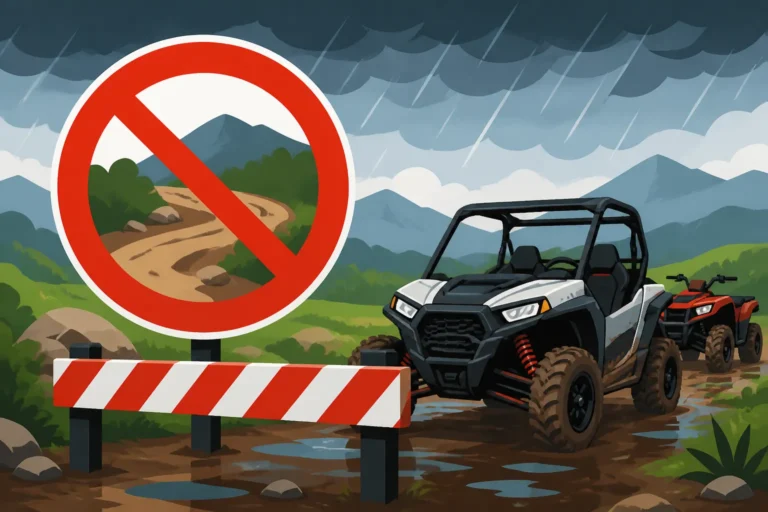
The riding experience is shaped by the ground beneath your tires. Clay can be firm and predictable when dry, but slick, sticky, or deeply rutted after rain. That contrast is a big part of Clay Pit’s character—and a reason not to assume that a route you rode comfortably on a dry afternoon will be manageable after a wet spell.
Clay Pit is part of California’s network of public off-highway recreation areas. For a broader look at how these parks differ from other riding destinations, see [California's State Vehicular Recreation Areas] and [Where to Ride an OHV in California]. Each site has its own mix of terrain, access rules, facilities, and seasonal considerations, so it’s worth checking a park’s specific information rather than planning from a general OHV-area checklist alone.
Why the landscape rewards a measured pace
Clay Pit’s compact size makes it tempting to ride quickly through a route and move on. A more enjoyable approach is to treat the first lap as a scout: pay attention to the surface, sightlines, intersections, and any signs that conditions have changed. That extra caution is especially useful if you’re riding with a group whose members have different levels of experience.
Clay-heavy ground can also put extra demands on a machine. Mud may pack around tires, fenders, and guards, and wet ruts can pull a vehicle off its intended line. Give yourself room to slow down and choose a path rather than relying on speed to carry you through an uncertain section. If a climb or turn looks beyond your comfort level, stopping to assess it is a sensible part of riding, not a failure.
The park’s scale can be an advantage for newer riders who want to practice basic trail habits without committing to a long remote route. It can also be a useful outing for experienced riders who want a shorter session. In either case, keep the group together at junctions and agree on a meeting point before anyone heads out of sight.
Conditions, seasons, and choosing a riding day
Why the calendar matters at Clay Pit
Clay Pit is known for a season that can be shorter or more weather-sensitive than riders expect. Wet conditions may affect both the quality of the ride and whether certain areas are open. Park operating schedules, closures, and access can change, so check the official park information before making the drive. For details focused on the seasonal pattern, read [Clay Pit and Its Short Season].
A sunny forecast in Oroville does not necessarily tell the whole story. Recent rainfall, overnight temperatures, and the amount of time the ground has had to dry can all affect traction. If you are traveling from Sacramento, Chico, or farther away, check for recent park notices as well as the day’s weather before you load the trailer. It’s frustrating to arrive with a full crew only to find that the conditions don’t match what you pictured, but a quick check can help avoid that situation.
Riders sometimes assume that a little rain makes a clay trail more fun. Sometimes it does; sometimes it makes the surface uncomfortably slippery or causes damage that prompts restrictions. Be prepared to change plans, postpone the trip, or choose another riding area if the ground is too wet. The park’s own guidance should take priority over a visitor’s guess based on a brief look at the weather.
What rain can do to clay trails
After rain, clay can cling to tires and reduce the grip you rely on for steering and braking. A shallow-looking rut can hide a slick edge, and a gentle slope can feel much steeper when the surface is greasy. If conditions are wet, ride slowly enough to respond to changes in traction and avoid abrupt throttle, braking, and steering inputs.
The ground can also hold water in places that look dry from a distance. Before entering a muddy section, consider whether you can turn around safely and whether your machine has the clearance and traction for the route. If you get stuck, avoid spinning the tires in a way that digs a deeper hole or damages the trail. Take a moment to assess the situation, ask for help from your group, and follow park rules for recovery.
For a closer look at how wet weather changes a visit, see [Clay Pit After the Rains]. It’s also useful to check [California Trail Closures to Check First] before setting out. Those checks are not just about avoiding wasted travel: trail closures help protect the riding surface and reduce the chance of an avoidable incident.
Planning your route and getting oriented
Start with park information and a realistic ride plan
Before leaving home, confirm the park’s current access information, operating status, permitted vehicle types, and any notices affecting the routes you plan to use. Then make a simple plan based on your group’s experience, the time available, and the condition of the ground. At a compact riding area, a conservative plan is usually easy to adjust once you see the terrain.
If your group includes a beginner, a child, or someone who has not ridden clay before, agree on a comfortable pace and a way to regroup. Pick a meeting point that is easy to recognize, and make sure every rider knows what to do if they become separated. Riders can feel pressure to keep up, especially when more experienced friends are riding ahead. Make it clear that anyone can ask to slow down or stop.
Use a map as a planning aid, not as a substitute for posted signs or park instructions. Tools such as onX Offroad can help you review routes and understand the area before you arrive. Compare what the map shows with information from the park, and follow signed closures even if a digital map appears to show a route as open. For more general planning advice, see [California Trail Maps and Where to Get Them].
How to use a digital map without over-relying on it
A mapping app can help you see where routes appear to connect and estimate how much riding you might fit into a visit. Before the trip, save or download what you need if the app offers offline access, and learn how to locate your position without relying on a strong cell signal. Signal coverage can vary, and a map that loads easily at home may be less convenient once you are riding.
onX Offroad is one option riders use to explore off-highway routes and plan trips. Treat its information as a helpful reference, then confirm access and closures with the park. A map cannot tell you whether a clay section has become slick overnight, whether a route has been temporarily closed, or whether a sign at an intersection changes your intended route.
It can also help to share the route plan with someone who is not on the ride. That person should know when you expect to be back and where you are riding. This is a simple precaution, particularly if your group is visiting from out of town and is unfamiliar with the Oroville area. Keep your phone protected from dust and moisture, but do not let it distract you while operating a vehicle.
A quick comparison for trip planning
| Planning question | Why it matters at Clay Pit | Practical approach |
|---|---|---|
| Has it rained recently? | Wet clay may have much less traction than dry ground | Check recent weather and park notices before traveling |
| Is the area open? | Seasonal schedules or closures may affect access | Confirm the park’s official information before departure |
| Who is riding? | Skill levels and vehicle types shape a safe route plan | Choose a pace and route suited to the least experienced rider |
| Will you have cell service? | Coverage can vary and should not be your only navigation plan | Review maps in advance and carry a backup plan |
| What is your turnaround time? | A short outing can still run late if conditions slow you down | Set a regroup point and return time before riding |
Vehicles, registration, and ride preparation
Match your machine to the outing
Clay Pit visits may involve different kinds of off-highway vehicles, but each machine has its own handling characteristics and limitations. An ATV is compact and nimble, while a side-by-side is wider and has a different turning and braking feel. Whatever you ride, stay on routes open to your vehicle and follow posted restrictions rather than assuming that every path suits every machine.
If you are riding a dirt bike or quad, inspect the tires, controls, brakes, chain or drive components, and fuel before you leave home. For a side-by-side, check the tires, steering, brakes, belts, doors or nets, and any required safety equipment. Clay can add weight to tires and components, so allow time to clean and inspect the vehicle after the ride as well.
Registration and identification requirements depend on the vehicle and how it is used. California’s OHV rules include different requirements for different machines and circumstances, so check the guidance that applies to your vehicle before you go. The reference guides [California OHV Registration for a Dirt Bike] and [California OHV Registration for a Side-by-Side] can help you identify the right questions to resolve before a trip.
Pack for changing traction and a shorter day
The basic goal is to be ready for the ride you planned and for a small change in conditions. Bring a helmet and other protective gear appropriate to your machine and the rules that apply. Gloves, eye protection, durable clothing, and sturdy footwear can make a meaningful difference in comfort, especially when clay, dust, or brush is part of the ride.
Carry water, a first-aid kit, basic tools, and a way to communicate with your group. For a day trip, it’s easy to underestimate how much water you’ll want or how long it may take to deal with a minor mechanical problem. Keep supplies secured so they do not interfere with controls or become a hazard if the machine jolts.
A pre-ride check is worth doing even if the vehicle was used recently. Look for loose hardware, leaks, tire damage, and anything that may have shifted during transport. If the ground is wet, think about what you’ll need to clean mud from the vehicle afterward and how you’ll avoid tracking it into the tow vehicle or trailer. A little preparation at home can save a tiring cleanup at the end of the day.
Riding responsibly and making the most of a visit
Trail etiquette in a compact area
On a smaller riding area, riders may encounter one another frequently. Slow down near intersections, blind corners, and places where sightlines are limited. Give other riders space, follow signs, and avoid cutting across vegetation or creating new lines around a difficult section. If a route is crowded, waiting briefly is usually safer than squeezing past someone on uncertain ground.
Keep your group’s pace consistent and avoid leaving a less experienced rider behind. When you stop, move out of the way of the route if it is safe to do so. Before restarting, check that everyone is ready and that no one is approaching from behind. These simple habits can prevent a lot of confusion when several vehicles are sharing a compact trail network.
Noise, dust, and trail damage can affect other visitors and the park. Keep equipment in good working order, ride only where permitted, and take all litter with you. If you see a closure sign or a damaged section, do not treat it as an invitation to find a way around. Respecting restrictions helps preserve access and makes the area more enjoyable for the next group.
Build the day around the conditions
A good Clay Pit outing does not have to mean riding every available route. Take time to assess the surface when you arrive, and be willing to shorten the ride if traction or visibility is not what you expected. A relaxed first lap can give you a better feel for the ground and help you decide whether to continue, take a break, or head back.
If Clay Pit is not suitable on your planned day, consider another destination after checking its own rules and conditions. Riders coming from the Sacramento region can explore the wider range of options in [California OHV Areas Near Sacramento], while remembering that different areas may have different terrain, access requirements, and seasonal closures. Don’t assume that an alternative park will automatically be open or suitable for your vehicle.
If you are using onX Offroad to compare route options, keep the park’s official information in the loop and make your decision based on the actual conditions. One last look at the forecast, operating notices, and your group’s readiness can help turn a frustrating change of plan into a safer day. For a Clay Pit trip, flexibility is not wasted effort—it is part of planning well.
Disclaimer
This article is for general informational purposes only and does not constitute professional advice. Laws, prices and regulations vary by location and change over time. Consult a qualified professional for guidance on your specific situation.