Why an NEV Is Not an OHV
It’s a common frustration many off-road enthusiasts face: trying to figure out California’s complex vehicle classifications. You might see a sleek electric vehicle on a city street and wonder if your UTV, with its beefed-up suspension and roll cage, could ever be street legal in the same way. The truth is, a Neighborhood Electric Vehicle (NEV) and an Off-Highway Vehicle (OHV) are fundamentally different in California's eyes, governed by separate rules and intended for entirely distinct purposes. This guide will cut through the confusion and clearly explain why an NEV is not an OHV, and what that means for how and where you can ride.
Understanding the Core Differences: NEVs vs. OHVs in California
The confusion between Neighborhood Electric Vehicles (NEVs) and Off-Highway Vehicles (OHVs) often stems from their shared appearance of being "not quite a car" or "not quite a motorcycle." However, under California law, their design, purpose, and legal standing are miles apart. Understanding these foundational differences is crucial for any rider navigating the state's diverse landscapes.
What Exactly is a Neighborhood Electric Vehicle (NEV)?
Imagine a golf cart, but one that's been given a significant upgrade and permission to venture onto certain public roads. That's essentially what a Neighborhood Electric Vehicle, or NEV, is. These aren't just any electric carts; they are specifically designed and manufactured to meet federal safety standards for low-speed vehicles. This means they come equipped with features you'd expect on a regular car, such as headlights, taillights, turn signals, brake lights, mirrors, seat belts, and even a vehicle identification number (VIN).
Their key defining characteristic is their speed limit. NEVs are restricted to a maximum speed of 25 miles per hour. This limitation dictates their intended use: short-distance travel within communities, often serving as convenient transportation for errands, commuting within planned residential areas, or getting around large campuses. You'll commonly see them in places like Palm Desert, where [Palm Desert's Golf Cart Lanes] are a standard sight, or in cities like Lincoln, where local ordinances allow them on specific streets. They operate exclusively on public roads with a posted speed limit of 35 mph or less, and are strictly prohibited from freeways or faster routes. Because they meet specific safety and operational criteria, they are considered street-legal vehicles and require standard DMV registration and a license plate, just like any car.
What Defines an Off-Highway Vehicle (OHV) in California?
Now, shift your focus to a vehicle built for an entirely different world: the rugged, unpredictable terrain beyond paved roads. An Off-Highway Vehicle (OHV) is precisely what it sounds like—a machine engineered for off-pavement use. This broad category includes a wide array of vehicles that capture the spirit of adventure: ATVs (all-terrain vehicles), UTVs (utility terrain vehicles, often called side-by-sides), dirt bikes, sand rails, and even specialized off-road buggies.
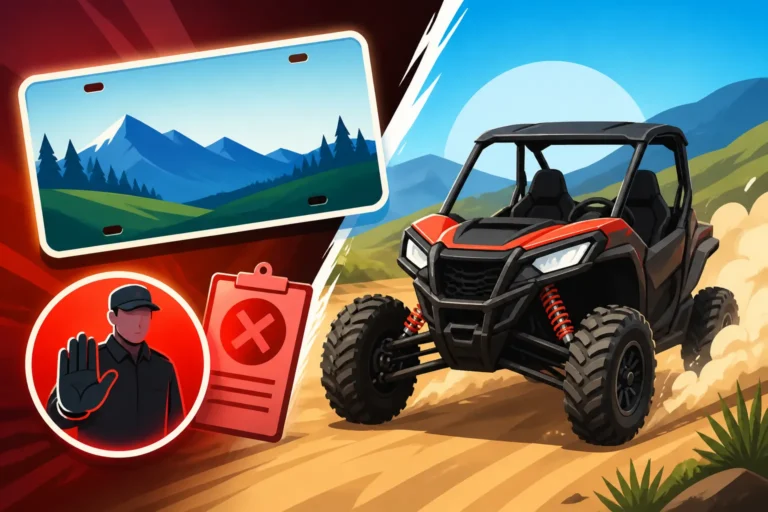
The primary purpose of an OHV is recreation and utility in off-road environments, whether that's tearing through the Imperial Sand Dunes, exploring trails at Hungry Valley SVRA, or navigating technical rock crawling routes. Unlike NEVs, OHVs are generally not street-legal by default. They lack many of the safety features required for highway use, and their design prioritizes ground clearance, suspension travel, and power for challenging conditions. Instead of standard license plates, OHVs in California operate under a distinct registration system managed by the Department of Motor Vehicles (DMV) in conjunction with the Off-Highway Motor Vehicle Recreation (OHMVR) Division. This system involves displaying a specialized ID plate and an annual or biennial "sticker" – either a Green, Red, or Tan sticker – which indicates when and where the machine can be ridden. Learning about [Registering an OHV in California] is step one for any new rider. These stickers, like [California's Green Sticker Explained], are paramount for legal off-road access.
The Legal Framework That Separates Them
The biggest reason an NEV is not an OHV, and vice-versa, comes down to the precise legal frameworks that govern each. California has dedicated sections of its Vehicle Code for each type of vehicle, laying out strict definitions, operational requirements, and restrictions that reflect their intended use. This legal separation isn't just bureaucratic; it dictates everything from how you register your machine to where you can actually take it.
Different Governing Laws and Agencies
In California, Neighborhood Electric Vehicles fall under the umbrella of "low-speed vehicles" within the broader Vehicle Code. This means they're treated much like miniature cars when it comes to registration, insurance, and traffic laws. They register directly with the DMV, receive a standard license plate, and their operation is subject to the same rules of the road as any other street-legal vehicle, albeit with specific speed and road-type restrictions. The state's general traffic laws apply, and local municipalities often have further ordinances that designate specific routes or areas for NEV use, such as those governing [California's First Neighborhood Vehicle Plan] in cities like Lincoln.
Off-Highway Vehicles, however, live in a different legal world. They are governed by distinct sections of the California Vehicle Code specifically pertaining to off-highway use. While the DMV still handles their registration, the overarching regulatory body is the OHMVR Division, part of California State Parks. This division is responsible for developing and managing OHV recreation areas, enforcing environmental regulations, and ensuring the safety of riders. This dual administration means OHVs have their own unique registration process, which involves obtaining an ID plate and one of the famous California OHV stickers (Green, Red, or Tan).
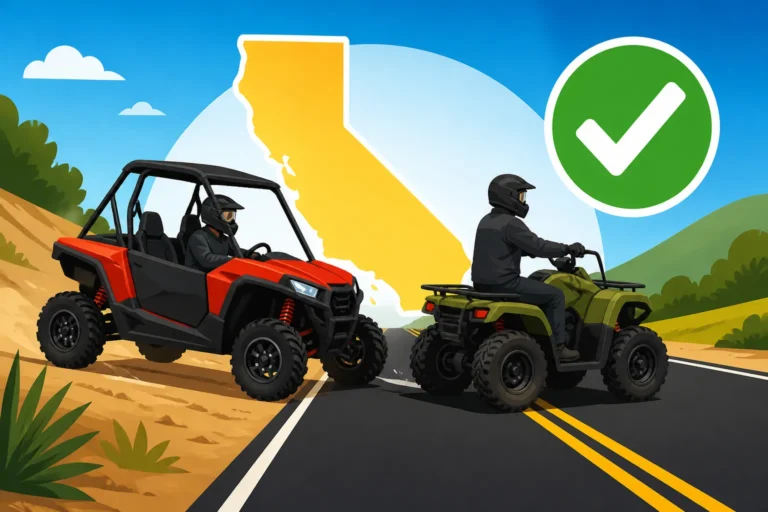
Crucially, California has a long-standing and very firm stance against converting OHVs into street-legal vehicles for general road use. Unlike some other states where you might see a UTV with a regular license plate, California explicitly does not allow it. If you've heard stories about riders trying to make their UTV street-legal, understand that [California Will Not Convert a UTV] to be fully street-legal for statewide highway use. Even with extensive modifications and aftermarket parts from a company like SuperATV—designed to make your UTV an absolute beast on the trails—they will not pass California's requirements for street legality.
Road Access and Where You Can Legally Ride
This is perhaps the most tangible difference for owners. An NEV is designed for road access, albeit limited. As discussed, NEVs can operate on public roads where the posted speed limit is 35 mph or less, provided there are no local prohibitions. You'll find entire communities like Palm Desert that have embraced NEVs as a primary mode of transport, even designating specific lanes. For example, [Which Lincoln Streets Allow Neighborhood Electric Vehicles] are clearly defined, giving residents clear guidance on where they can operate their NEVs. You can take your NEV to the grocery store, to a friend's house, or to a local park, all on public streets, within its speed limitations.
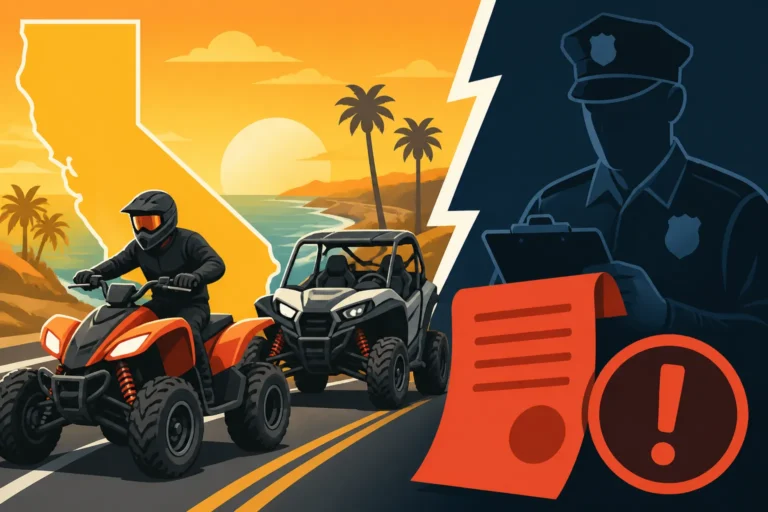
An OHV, by contrast, is restricted from most public roads. Its natural habitat is the dirt, the sand, the rocks, and the designated trails within SVRAs, National Forests, or BLM land. Taking an OHV onto a paved public road not specifically designated for OHV use can lead to significant penalties. We’re talking about serious [California Fines for Riding on a Highway]. The exceptions are extremely limited. California does have designated [California's Combined-Use Highways], which are very short segments of public roads that connect one off-road trail to another, or provide access from a staging area to a riding area. These segments are few and far between, usually capped at three miles, and are specifically approved by agencies as allowed under [What California's CVC 38026 Lets an Agency Designate]. Even on these limited routes, there are strict rules, such as carrying your registration and potentially wearing a helmet. It’s essential to remember that these are rare exceptions to the general rule that OHVs are not permitted on public roads.
Practical Implications for Owners and Enthusiasts
The legal distinctions between NEVs and OHVs translate directly into how these vehicles are built, equipped, and ultimately, how they can be enjoyed. For anyone considering purchasing either type of machine, or just trying to understand the nuances of California's regulations, these practical implications are critical.
Equipment, Safety, and Modification Realities
When you look at an NEV, you'll notice it's built to conform to low-speed street vehicle standards. This includes things like Department of Transportation (DOT) approved tires, automotive-style windshields, functional headlights, taillights, turn signals, and seat belts. Modifications for an NEV typically revolve around comfort, aesthetics, or minor utility enhancements – perhaps a better stereo, more comfortable seats, or a small cargo bed. Any changes must adhere to street-legal requirements, ensuring the vehicle maintains its road-worthiness and compliance with traffic laws.
OHVs, however, are a different breed entirely. They are engineered for durability, performance, and safety in challenging off-road conditions. Think robust roll cages, long-travel suspension systems, specialized off-road tires, and powerful engines. The aftermarket industry for OHVs, featuring companies like SuperATV, thrives on providing components that enhance performance, protection, and capability in the dirt. Whether it's heavy-duty axles, lift kits, skid plates, winches, or specialized lighting, these accessories are designed to help your machine conquer tougher trails and improve the off-road experience. However, it's crucial to understand that installing a full SuperATV lift kit or an aggressive tire package, while fantastic for a weekend at Glamis, does not miraculously make your OHV street-legal in California. In fact, some modifications might even make it harder to pass sound tests or other OHV compliance checks at an SVRA entrance gate.
Safety gear is another key differentiator. While NEVs require seat belts, helmets are generally not mandated for occupants in enclosed NEVs on public streets. For OHVs, it's a completely different story on public land. California has very strict helmet laws for riders and passengers. For instance, [California Helmet Law for ATV Riders] dictates that anyone operating an ATV on public land must wear a helmet, regardless of age. Similarly, [California Helmet Law for UTV Passengers] often requires helmets, especially for younger riders, although there are exceptions for adults in fully caged and belted side-by-sides. This emphasis on robust safety gear for OHVs underscores the inherent risks of off-road riding compared to low-speed street driving.
Why the Confusion and What to Remember
It's completely understandable why people get these two categories confused, especially with the evolution of modern UTVs. Many contemporary side-by-sides come from the factory with features that look like they belong on a street-legal vehicle: full doors, roofs, windshields, side mirrors, and even basic turn signals. This gives them a more "car-like" appearance than the traditional open-frame ATV. Because of this, many enthusiasts, particularly those from other states with more lenient street-legal conversion laws, hope to achieve the same in California.
However, California's regulations are famously stringent. You might see discussions online or hear anecdotes about folks trying to register their UTV as street-legal in another state, hoping that a street-legal plate from, say, Utah or Arizona, will allow them to ride on California roads. But this is a common trap. The reality is that [A Utah Plate That Means Nothing in California] for street-legal purposes, and even [An Arizona Street-Legal UTV in California] will likely get you a ticket from the California Highway Patrol. California honors very limited reciprocity with other states for OHV permits, but not for street legality. If your machine isn't built to California's street-legal standards for cars, it's not going on the pavement, regardless of what another state's plate says.
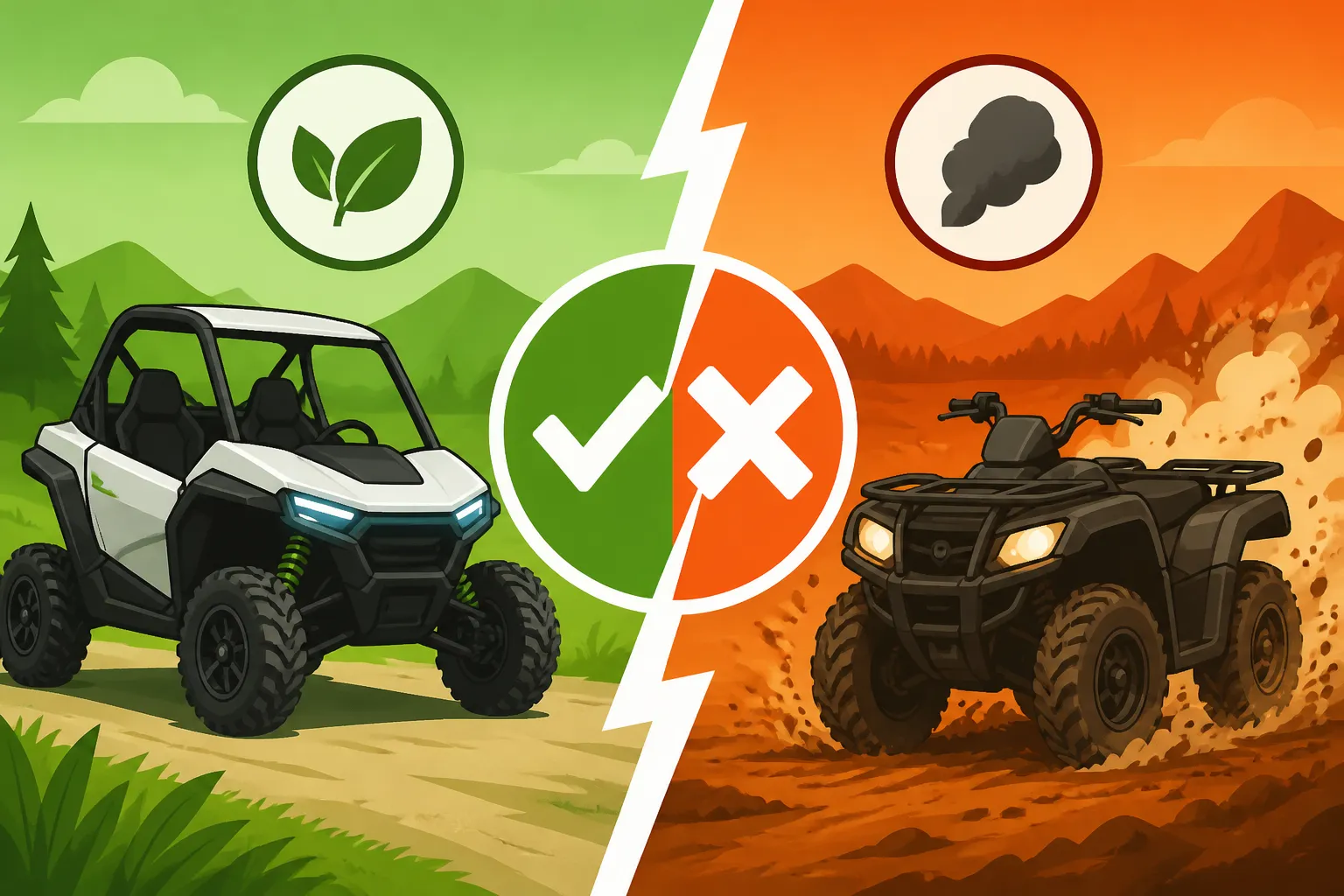
The golden rule to remember is this: A Neighborhood Electric Vehicle is a purpose-built, low-speed street vehicle for limited public road use. An Off-Highway Vehicle is a purpose-built off-road recreational machine designed for trails, dunes, and SVRAs. They are not interchangeable, and California's legal framework maintains a clear division between them. If your passion is tearing up the trails or conquering the dunes, an OHV is your machine. If you need a quiet, low-speed electric ride for neighborhood errands, an NEV fits the bill. Just don't expect one to do the job of the other in California. Always consult the latest California Vehicle Code sections or the official OHMVR Division website to ensure you're compliant with all regulations.
| Feature | Neighborhood Electric Vehicle (NEV) | Off-Highway Vehicle (OHV) |
|---|---|---|
| Primary Purpose | Low-speed street travel, golf courses, planned communities | Off-road recreation, trails, dunes, SVRAs |
| Top Speed | Typically 25 mph (max) | Varies wildly by model, often much higher |
| Fuel Type | Electric only | Gasoline (mostly), some electric |
| Registration | Standard street vehicle registration, license plates | OHV registration (Green, Red, Tan sticker), ID plate |
| Road Access | Permitted on roads up to 35 mph speed limit (with local ordinances) | Restricted from most public roads, limited combined-use routes |
| Safety Gear | Seat belts required; helmets generally not mandated on street | Helmets often required on public land; seat belts in UTVs |
| Governing Authority | DMV (street vehicle code) | DMV & OHMVR Division (off-highway vehicle code) |
| Common Types | Golf carts modified for street, small electric cars (LSVs) | ATVs, UTVs (side-by-sides), dirt bikes, sand rails, buggies |
Disclaimer
This article is for general informational purposes only and does not constitute professional advice. Laws, prices and regulations vary by location and change over time. Consult a qualified professional for guidance on your specific situation.