Two Machines on One California Trailer
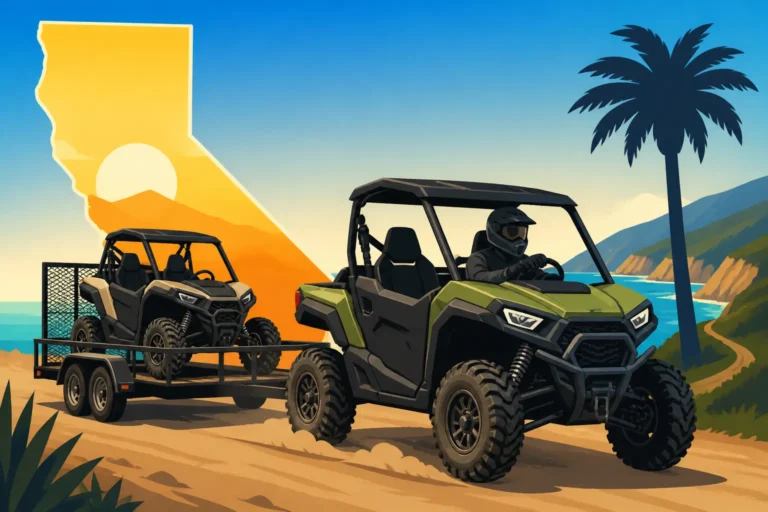
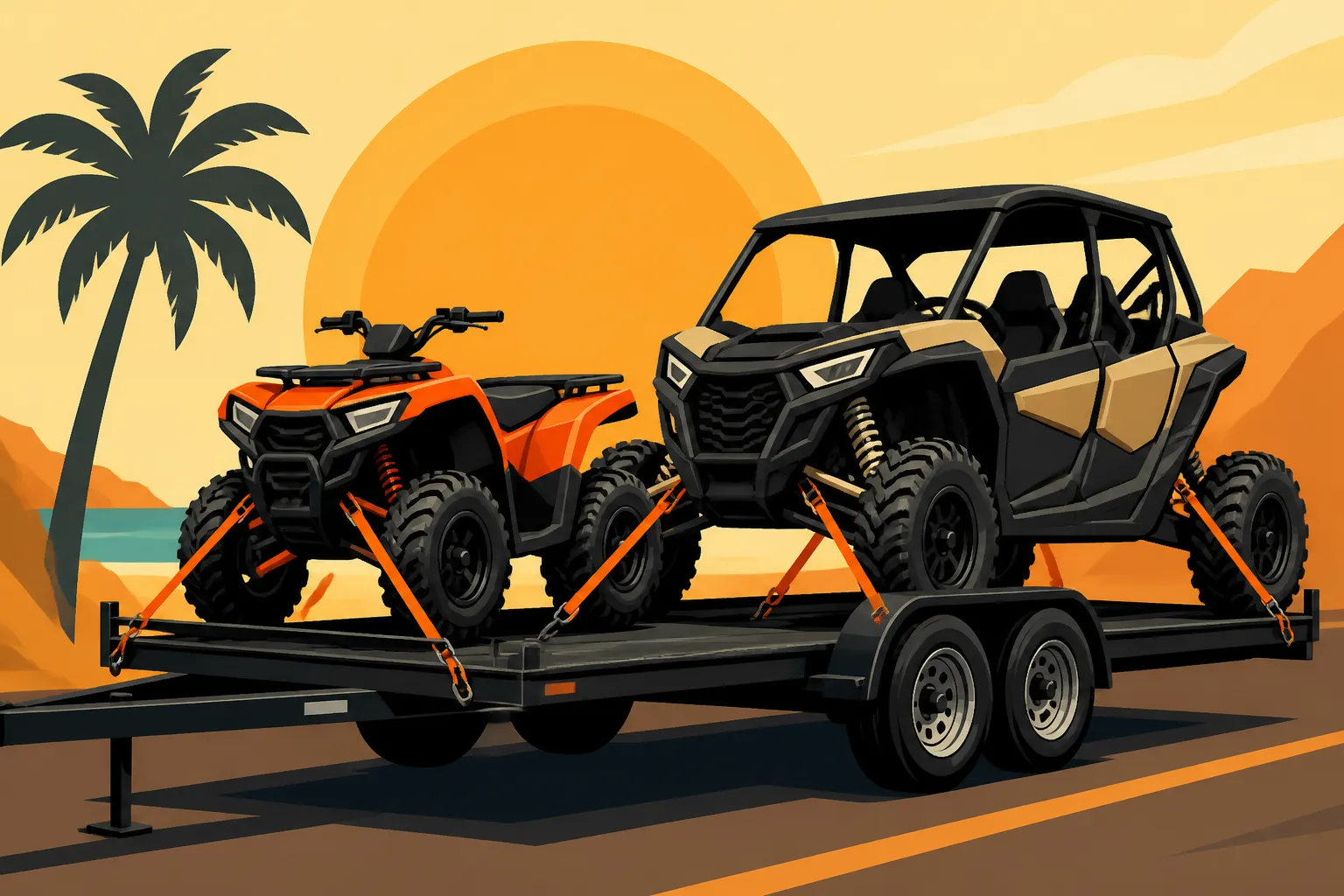
You've got a couple of awesome machines, perhaps a zippy ATV and a powerful UTV, and you're itching to get them both out to the trails or dunes in one trip. The thought of loading two off-highway vehicles onto a single trailer can seem like a convenient way to save time and fuel, but it often brings a heap of practical challenges and legal considerations you might not anticipate. This guide will walk you through everything you need to know to safely and legally transport two machines on one trailer across California's diverse landscapes.
The Core Challenge: Why Hauling Two Machines Isn't Just Doubling Up
Loading two off-highway vehicles (OHVs) onto a single trailer isn't as simple as just finding enough floor space. There's a delicate balance of weight distribution, legal dimensions, and securement that needs to be considered. Many riders get caught off guard, assuming their existing single-OHV trailer can simply accommodate a second machine, only to find themselves with a wobbly setup or, worse, on the wrong side of the law.
Understanding Weight: Trailer, Cargo, and Tow Vehicle
The first hurdle to overcome is understanding the combined weight. It's not just the weight of your trailer and your machines; it's also your gear, spare fuel, tools, and anything else you're hauling. Every trailer has a Gross Vehicle Weight Rating (GVWR), which is the maximum loaded weight it can safely carry. Your tow vehicle also has a Gross Combined Weight Rating (GCWR), which is the maximum allowable weight of the fully loaded tow vehicle and the fully loaded trailer combined. Exceeding any of these ratings isn't just a risk for a breakdown; it's a serious safety hazard and can lead to hefty fines from the California Highway Patrol (CHP).
Imagine you have a utility trailer with a GVWR of 3,500 pounds. Your UTV might weigh 1,800 pounds, and your ATV another 700 pounds. Add in ramps, spare tires, a cooler, and your tool kit, and you could easily be pushing 2,800-3,000 pounds. That leaves very little margin, and if your trailer itself weighs 1,000 pounds empty, you're already over. It's crucial to know the curb weight of your machines and estimate the weight of your gear. Don't guess; if possible, take your loaded rig to a public scale before a long trip. This granular understanding of weight ensures you're operating within safe limits and helps you avoid unexpected issues on the highway.
The Dynamics of Tongue Weight and Balance
Proper weight distribution on a trailer is paramount for safe towing. This brings us to "tongue weight," which is the downward force exerted by the trailer coupler onto the hitch ball of your tow vehicle. For most conventional trailers, the ideal tongue weight should be between 10% and 15% of the total loaded trailer weight. Too little tongue weight can cause the trailer to sway violently, leading to a loss of control, especially at highway speeds or in crosswinds. Too much tongue weight can overload your tow vehicle's rear axle and potentially lift the front wheels, impairing steering and braking.
When you're loading two machines, it's incredibly easy to get this wrong. You might load one machine too far forward and the other too far back, or place both heavy machines predominantly behind the trailer axles. The goal is to distribute the weight evenly over the axles of the trailer, with just enough weight forward of the axles to achieve that 10-15% tongue weight. For example, if you place your heavier UTV slightly forward of the trailer's axles and then position your lighter ATV behind it, you'll need to carefully adjust to maintain balance. Some riders even load one machine facing forward and the other facing backward to better balance the load. Getting this right takes practice and careful planning, but it's essential for a smooth, safe journey to [California OHV Areas Near Los Angeles] or any other destination.
Trailer Dimensions and California Law
California has specific laws regarding trailer dimensions, including width, length, and height. While most recreational trailers designed for OHVs will fall within these limits, it's especially important to double-check when you're trying to fit two machines. The maximum width for a trailer in California is generally 102 inches (8 feet 6 inches), including any load projections. This means if you have two wide side-by-sides, or even one UTV and an ATV with very wide axles, you could quickly bump against this limit. Many side-by-sides, especially those with aftermarket suspension components from brands like SuperATV, can be 64-72 inches wide or more. Two of these side-by-side might require a specially designed trailer.
Beyond width, overall length can also become an issue. If your trailer, with two machines loaded, creates a combination that's too long, you could face legal trouble. Always consult the California Vehicle Code (CVC) for the most current regulations. Being pulled over by a California Sheriff for an oversized load is not how you want to start your riding weekend. When planning to haul two machines, make sure your trailer provides adequate space without infringing on legal limits, and remember that any load projecting beyond the sides or rear of your trailer might require flags or lights. This is especially true for UTVs, which tend to be bulkier and can consume more real estate on your trailer bed.
Trailer Capacity and Configuration: Getting the Right Fit
Once you understand the basic challenges, the next step is ensuring your trailer is up to the task – or acquiring one that is. Simply put, not all trailers are created equal, and a single-machine utility trailer is rarely suitable for two full-sized OHVs.
Types of Trailers for Multiple OHVs
There are several types of trailers that can accommodate two OHVs, each with its own advantages and disadvantages.
- Open Utility Trailers with Tandem Axles: These are probably the most common. A flatbed utility trailer with two axles provides better weight distribution and stability than a single-axle trailer, especially with heavier loads. Look for one with a robust frame, plenty of tie-down points, and a high enough GVWR to handle both your machines plus gear. Some have a V-nose or dovetail ramp for easier loading.
- Deck-Over Trailers: These trailers have a deck that extends over the wheels, maximizing width for loading. This can be ideal for fitting two wider UTVs side-by-side, or a UTV and an ATV. The trade-off is often a higher deck height, which means steeper loading ramps.
- Toy Haulers (Enclosed Trailers): While often larger and more expensive, a toy hauler offers the ultimate in protection and convenience. Your machines are shielded from the elements and secure from theft. Many toy haulers also offer living quarters, turning your transport rig into a base camp. The interior space and tie-down points must be carefully considered for two machines.
- Dedicated Multi-OHV Trailers: Some manufacturers specialize in trailers designed specifically to carry two ATVs, two UTVs, or a combination. These often feature staggered loading positions or clever ramp systems to optimize space and balance. If you regularly haul two machines, investing in one of these could be worth it.
When selecting a trailer, always err on the side of over-capacity. A trailer that's rated slightly higher than your anticipated maximum load will perform better and last longer. You might even consider renting a suitable trailer for a specific trip if purchasing one isn't in the cards.
Calculating Needed Space and Weight Ratings
Before you even start looking at trailers, grab a tape measure and document your machines. Measure the length, width, and height of each ATV and UTV. Pay close attention to the widest points, which might be the tires, fenders, or aftermarket accessories like a wide A-arm kit or a roof-mounted light bar from SuperATV. Add any extra length for bumpers or winches.
Then, sketch out how you plan to load them. Will they be side-by-side? One in front of the other? Angled? For side-by-side loading, you'll need a trailer significantly wider than the sum of their widths, allowing for clearance and tie-down access. For front-to-back loading, you'll need a much longer trailer. Remember, you need room to walk around them slightly to secure your straps.
| Feature | Single ATV Trailer | Dual ATV/UTV Trailer (Typical) |
|---|---|---|
| Axles | Single | Tandem (Recommended) |
| GVWR | 1,500 – 2,500 lbs | 3,500 – 7,000+ lbs |
| Bed Width | 60 – 72 inches | 80 – 102 inches |
| Bed Length | 8 – 12 feet | 14 – 24 feet |
| Tie-Down Points | 4 – 6 | 8 – 12+ |
| Ramp Type | Single, Fold-up | Multiple, Fold-down/Side-load |
| Stability (Loaded) | Moderate | High |
Once you have your dimensions and a loading plan, calculate the combined weight of your machines and all your gear. Add in the empty weight of the trailer itself. This total number must be less than the trailer's GVWR. Also, ensure your tow vehicle's hitch rating and towing capacity (GCWR) can handle this combined weight. Always check your vehicle's owner's manual for its specific towing limits. Neglecting these calculations can put you, your precious cargo, and other drivers at serious risk.
Trailer Enhancements and Accessories
To make dual OHV hauling safer and easier, consider a few key accessories:
- High-Quality Ramps: If your trailer doesn't have an integrated ramp, invest in strong, wide, and non-slip ramps with sufficient weight capacity. Arched ramps can help prevent machines from bottoming out.
- Extra Tie-Down Points: Many stock trailers don't have enough tie-down points for two machines. You can add D-rings or E-track systems to your trailer frame, ensuring they are securely bolted to structural members.
- Spare Tire and Jack: A flat tire on the side of the highway, especially with a heavy, unbalanced load, is no fun. A spare for your trailer and the tools to change it are indispensable.
- Brake Controller: If your trailer has electric brakes, a brake controller in your tow vehicle is a must. It allows you to adjust the trailer brakes independently, improving stopping power and control. Most trailers capable of carrying two large OHVs will have surge or electric brakes.
- LED Lighting: Upgrade to brighter, more durable LED trailer lights, especially if you do a lot of night driving. [What a California Sheriff Checks Roadside] often includes ensuring all your trailer lights are functional and visible.
Remember, a little investment in the right gear goes a long way in ensuring your machines arrive safely and you stay compliant with California's road rules.
Securing Your Precious Cargo: Straps, Chocks, and Best Practices
Once you've got the right trailer, the most critical step is ensuring your machines are absolutely locked down. A loose ATV or UTV on a trailer can quickly turn into a dangerous projectile, especially during emergency braking or evasive maneuvers. Proper cargo securement isn't just a suggestion; it's a legal requirement in California.
Choosing the Right Tie-Downs
Don't skimp on tie-down straps. Cheap straps can stretch, fray, or break, leading to catastrophic failure. Look for heavy-duty ratchet straps with a high Working Load Limit (WLL) – not just the breaking strength. The WLL is typically one-third of the breaking strength. For most ATVs and UTVs, straps with a WLL of at least 1,000 to 1,500 pounds each are a good starting point, and you'll want to use multiple straps per machine.
- Ratchet Straps: These are the gold standard for securing OHVs. They allow you to apply significant tension to firmly hold your machines in place. Always ensure the ratchet mechanism is fully engaged and locked.
- Wheel Chocks: While straps hold machines down, wheel chocks prevent forward and backward movement. These can be particularly useful for keeping machines from shifting during loading or if a strap were to slightly loosen. Some specialized trailers integrate wheel chocks.
- Soft Ties/Axle Straps: These are straps designed to loop around an axle, frame member, or A-arm, protecting painted surfaces or suspension components from direct contact with the ratchet strap hooks. They create a secure, non-damaging attachment point.
Always inspect your straps before each use for cuts, frays, or damaged hardware. If a strap looks compromised, replace it immediately. It's also a good idea to carry a few extra straps as backups.
Strategic Tie-Down Points and Techniques
Where you attach your straps is almost as important as the straps themselves. You want to create opposing forces to prevent movement in all directions (forward, backward, and side-to-side).
- Compression Over Suspension: The goal is to compress the suspension of your OHV slightly, which helps prevent it from bouncing and potentially loosening the straps. If you don't compress the suspension, the machine can "walk" on the trailer during bumps and turns.
- Front and Rear: Use at least two straps at the front, pulling forward and slightly outward, and two straps at the rear, pulling backward and slightly outward. This creates an "X" pattern that locks the machine in place.
- Frame or Axle: Attach straps to the sturdy frame members, axles, or lower A-arms of your ATV or UTV. Avoid attaching to handlebars, plastic fenders, or suspension components like shocks, which can be damaged or fail under stress. Accessories like those from SuperATV that widen your machine's stance might give you more robust points to tie down.
- Diagonal Pull: If possible, attach straps diagonally from the corners of the machine to the opposite corners of the trailer's tie-down points. This maximizes stability.
- Triple Check: After loading and strapping both machines, walk around the trailer and give each strap a firm tug. Rock the machines. They should feel absolutely solid and unmoving.
For example, on your UTV, you might use soft ties around the front lower A-arms, with two ratchet straps pulling forward to the trailer's front tie-downs. Then, at the rear, two more straps from the rear suspension/frame pulling backward to the trailer's rear tie-downs. Your ATV could be secured similarly, paying careful attention to ensure its straps do not interfere with the UTV's straps or rub against either machine. This meticulous approach to securing your cargo will help prevent the scenario of a machine shifting on the trailer, which can affect your tongue weight and overall stability.
Pre-Trip Checklist for Dual Hauls
Before you pull out of your driveway, perform a comprehensive pre-trip inspection. This is even more critical when you have two machines loaded, as the stakes are higher.
| Item | Check |
|---|---|
| Tow Vehicle Connection | Hitch ball securely latched, safety chains crossed and hooked, electrical connection plugged in. |
| Trailer Lights | Brake lights, turn signals, running lights all working correctly. |
| Tires (Tow Vehicle & Trailer) | Correct pressure, no visible damage, good tread depth. Spare tire ready. |
| Wheel Lug Nuts | Tight on both tow vehicle and trailer. |
| Cargo Securement | All OHVs firmly strapped, no visible slack, suspension compressed. |
| Loading Ramps | Stored securely, not rattling or projecting unsafely. |
| Tongue Weight | Visually check tow vehicle squat; it should be level or slightly lower. |
| Clearance | No part of the load obstructing tow vehicle's rear visibility or lights. |
| OHV Registration/Stickers | [California's Green Sticker Explained] and [California OHV Registration Cost] are current for all machines. |
| Personal Gear | All loose items (coolers, gear bags) secured inside OHVs or tow vehicle. |
| Trailer Brakes | Test if applicable, ensure brake controller is functioning. |
A quick run-through of this list can prevent many headaches and potential fines. Remember, officers at [What a California Sheriff Checks Roadside] will often focus on basic safety and compliance, including proper lighting, tire condition, and, critically, cargo securement.
California Road Rules and Safety for Dual Hauls
Driving with any trailer requires extra caution, but hauling two heavy OHVs demands even greater diligence. California has specific regulations that apply to all vehicles towing trailers, and awareness of these rules is key to a smooth journey.
Speed Limits and Lane Restrictions for Trailers
One of the most common mistakes drivers make is forgetting that speed limits are different when towing a trailer in California. On most highways, vehicles towing trailers are restricted to a maximum speed of 55 miles per hour. This applies even if the posted speed limit for cars is higher. Exceeding this limit can result in a speeding ticket, which can carry significant penalties.
Furthermore, vehicles towing trailers are generally restricted to the right-hand lanes on multi-lane highways. On a highway with four or more lanes in one direction, you must drive in the two right-most lanes. If there are fewer than four lanes, you must drive in the right-most lane or in a lane designated for slower traffic. Be mindful of these restrictions; it's not just about avoiding a ticket, but about maintaining safe traffic flow and reducing hazards for yourself and others. This slower speed and lane discipline also provide more time to react to unexpected road conditions.
Pre-Trip Prep: Documentation and Machine Readiness
Before you even hitch up, ensure all your OHVs are legally ready for California public land, if that's where you're headed. This means having current registration and any required permits. [California OHV Registration Paperwork Checklist] can help you get organized. Each machine should have its current California Green Sticker (or Red/Tan sticker, depending on model year and emissions compliance) properly displayed. If you're coming from out-of-state, be aware of California's nonresident OHV permit requirements.
Beyond legal documentation, ensure your machines themselves are trail-ready. Are your tires properly inflated? Do you have your [California Spark Arrester Rules] compliant exhaust? For dune riding, do you have your [California Dune Flag Requirements] met? While these aren't directly related to trailering safety, they are often checked at riding area entrances and are part of responsible OHV ownership. Making sure your machines are in good mechanical order before loading them also reduces the risk of issues once you're on the trail, which could mean less need to tow a broken-down machine back home.
Defensive Driving with a Heavy Load
Driving a tow vehicle with two OHVs on a trailer dramatically changes the handling characteristics of your rig. You need to adjust your driving style accordingly.
- Increased Braking Distance: Your combined weight is significantly higher, meaning it takes much longer to stop. Maintain a much greater following distance than you would normally, especially when approaching intersections or heavy traffic.
- Wider Turns: The trailer will cut corners more tightly than your tow vehicle. Always make wider turns, especially at intersections or when navigating tight parking lots. Practice in an empty lot before heading out.
- Lane Changes and Merging: Lane changes require more space and time. Signal well in advance and check your mirrors thoroughly. Be aware of the blind spots created by your trailer.
- Wind and Road Conditions: Crosswinds, passing semi-trucks, and uneven road surfaces can cause trailer sway. Slow down and maintain a firm grip on the steering wheel. If sway starts, gently apply the trailer brakes (if you have a controller) or slowly reduce speed; do not suddenly hit your tow vehicle's brakes.
- Fuel Economy: Expect a significant drop in fuel economy. Plan your fuel stops accordingly, especially if you're heading to remote riding areas where gas stations are few and far between.
It's also a good idea to consider your [California OHV Insurance Requirements] before hitting the road. While your tow vehicle's insurance may cover the trailer itself, it's wise to confirm your OHVs are covered against damage or theft while in transit.
Taking the time to understand these nuances, from the specific weight ratings of your trailer and tow vehicle to the precise way you secure your precious cargo, ensures your journey is as smooth and safe as the trails you're heading for. Being prepared and following all California regulations will get you and your machines to your destination ready for adventure.
Disclaimer
This article is for general informational purposes only and does not constitute professional advice. Laws, prices and regulations vary by location and change over time. Consult a qualified professional for guidance on your specific situation.