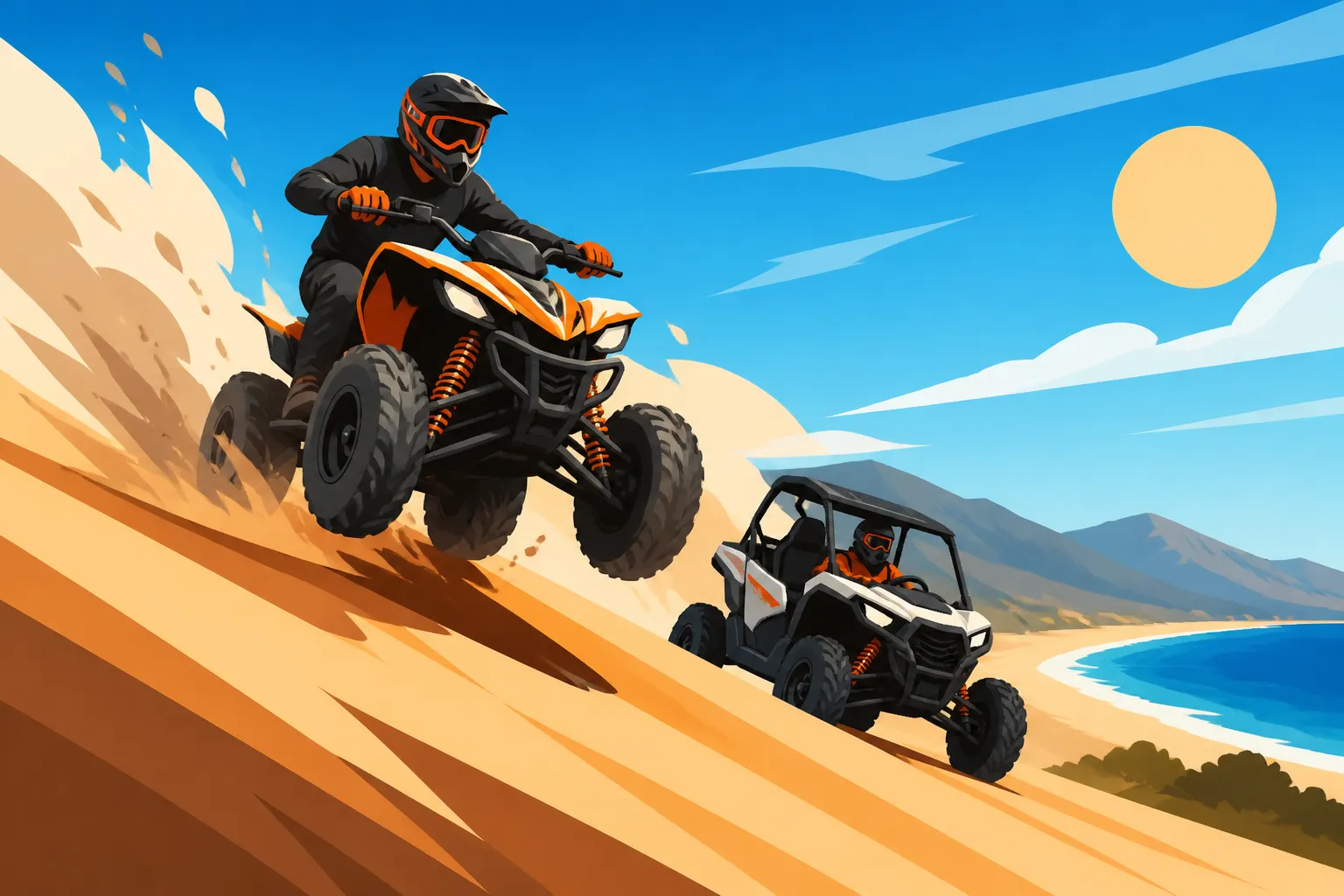
Riding the Sand Ramp at Grand Avenue
Getting your ATV or UTV onto the sand at Oceano Dunes can feel like navigating a chaotic, soft-sand obstacle course, especially if you're tackling the main entry at Grand Avenue. This guide will walk you through everything you need to know, from preparing your machine to mastering the entry techniques and understanding the unique rules, ensuring a smooth and safe start to your incredible California dune adventure.
The Grand Avenue Sand Ramp: Your Gateway to Oceano Dunes
Oceano Dunes State Vehicular Recreation Area (SVRA) is a jewel in California's off-road crown, offering a truly unique experience: direct beach and dune access for off-highway vehicles. While there are a couple of ways into the main riding area, the Grand Avenue sand ramp is often the primary and most direct route for many, particularly those coming from the south or accessing the main staging and camping areas. It’s where the pavement literally ends and the adventure begins, but it's also where the rules and the reality of soft sand quickly become apparent.
What Makes Grand Avenue Unique?
Think of Grand Avenue as the main arterial highway onto the sand. Unlike the Pier Avenue approach, which often involves navigating a bustling commercial strip with numerous rental shops and foot traffic, Grand Avenue feels more like a dedicated entry point for off-highway vehicles. This means you’re often in a line of trucks with trailers, campers, and all sorts of OHVs, all pointed towards the same goal: getting tires in the sand. The sheer volume of traffic can be surprising, especially on busy weekends or during peak season, which runs roughly from October through April. The ramp itself is a wide, often heavily rutted incline of soft sand that transitions from a paved road. It’s not just a flat drive onto the beach; it’s an immediate test of your preparation and driving technique. Many a rider has watched someone else struggle or get stuck right at this critical transition, so a little planning goes a long way.
Navigating the Entry Point and Fee Booths
Before you even touch the sand, you'll encounter the fee booths. This is your first official checkpoint, and rangers are diligent about ensuring everyone pays their day use or camping fees. It's best to have your payment method ready to keep the line moving. These fees are crucial for the park's operation and maintenance, including providing essentials like restrooms and trash services. For first-timers, it can feel a bit overwhelming, especially with the anticipation building. It's not uncommon for there to be a short queue, particularly during popular times, so patience is key. Beyond the financial transaction, this is also where rangers perform initial checks. They'll often look for visible signs of compliance, such as your OHV registration stickers, proper [California Dune Flags and Whips], and a spark arrester on your exhaust. Don't be surprised if they also do a quick visual check on your tire pressure; it’s a major safety and environmental concern. Having all your paperwork in order, including your current registration, is paramount. You might be asked to show proof of your [California OHV Registration Paperwork Checklist] at this point.
Essential Gear and Checks Before You Hit the Sand
Successfully navigating the Grand Avenue sand ramp, and indeed the entire Oceano Dunes SVRA, boils down to preparation. It’s not just about having a powerful machine; it’s about having a properly equipped and inspected machine, ready for the unique challenges of sand riding. Skipping these crucial checks can quickly turn an exciting day into a frustrating one, possibly even requiring an embarrassing tow out of the soft stuff.
Tire Pressure and Why It's Critical
This is, without a doubt, the most important pre-ride check for sand. I’ve seen countless riders get bogged down right at the Grand Avenue entrance, not because their machine lacked power, but because their tires were still at street pressure. High tire pressure (typically 12-20 PSI for street use) makes your tires act like narrow knives, digging into the soft sand rather than floating over it. You want your tires to spread out, creating a larger contact patch for flotation.
For ATVs, dropping your tire pressure down to around 4-6 PSI is a common recommendation, sometimes even lower for very soft conditions or heavier riders. For UTVs, especially larger, heavier models, 8-10 PSI is often a good starting point, but some riders will go as low as 6 PSI. The exact optimal pressure can vary based on your machine's weight, tire size, and the specific sand conditions, which can change throughout the day. You’ll know you’re too high if your machine feels like it’s constantly fighting to get traction, or if you’re just sinking in.
It’s absolutely critical to air down before you drive onto the sand. There are usually designated areas near the Grand Avenue entrance for airing down, and many riders carry portable air compressors to air back up before they leave. Don't underestimate the difference this makes. For a deeper dive into the physics of it all, check out [Soft Sand and Tire Pressure]. If you've got an aftermarket cage or accessory setup, like a robust SuperATV roll cage, you'll want to make sure your whip mount is compatible and securely fastened, as you'll be checking this setup at the entry.
Whips, Flags, and Safety Requirements
Visibility is non-negotiable on the dunes, and California has strict rules to ensure it. Every ATV, UTV, dirt bike, and sand rail operating in the dunes must be equipped with a safety whip and flag. This isn't just a suggestion; it's a legal requirement designed to prevent collisions in an environment with constantly shifting terrain and blind spots. The flag must be 6×12 inches, fluorescent, and visible from all directions. More importantly, the top of the flag must be at least eight feet from the ground when your machine is sitting level. This height requirement is crucial because it allows your flag to be seen over dune crests, even if your machine itself is out of sight. The flag also needs to be within ten inches of the top of the whip mast. Many riders opt for quick-release whip mounts, which can be super convenient. If you're running any kind of custom setup or accessories, ensure your whip placement is unimpeded. Non-compliance here can lead to a citation, and it's something rangers actively look for at the entry gates. Don't risk it; your safety and the safety of others depend on it. Find all the specifics in [California Dune Flags and Whips].
Machine Readiness: Stickers, Spark Arresters, and Noise
Beyond tire pressure and flags, your machine itself needs to be compliant with California's OHV regulations. First, let's talk stickers. California uses a color-coded sticker system to designate compliance with emissions standards and permissible riding times:
- Green Sticker: These are for machines that meet California's emission standards and can be ridden year-round in all designated OHV areas. Many modern ATVs and UTVs fall into this category.
- Red Sticker: This applies to older machines or those that don't meet California's stricter emission standards. Red sticker machines have seasonal restrictions on when and where they can be ridden, though at Oceano Dunes, they generally can be ridden year-round. It's always wise to double-check the current regulations for the specific SVRA you're visiting.
- Tan Sticker: This newer sticker is for competition-only machines that are exempt from typical emission requirements but can only be ridden at sanctioned events. You typically won't be using a tan sticker machine for general recreation at Oceano.
Understanding which sticker applies to your machine is vital. For a full breakdown, see [Green, Red and Tan: California's Three Stickers]. Regardless of your sticker color, a properly functioning spark arrester is an absolute must. This device prevents sparks from escaping your exhaust and potentially igniting dry vegetation – a huge concern in California. Most factory exhausts come with one, but if you have an aftermarket exhaust, ensure it's US Forest Service-approved. Rangers will check for this, especially on brush-covered lands, but it's a requirement on dunes too. Riding without one is an expensive ticket and a fire hazard. Learn more about the specific requirements in [California Spark Arrester Requirement Explained].
Finally, noise. California has decibel limits for OHVs. While Oceano Dunes might feel wide open, noise complaints are real, and rangers do conduct sound checks, especially if your exhaust seems excessively loud. Most stock machines are fine, but if you've modified your exhaust, be aware of the 96-decibel limit for most newer machines (or 101 dB for older models). An aftermarket exhaust from a reputable brand like SuperATV will usually specify if it's within legal sound limits, but always verify. Getting a ticket for excessive noise is a rude awakening to an otherwise fun day. Get the details on what's allowed in [California Noise Rules at an SVRA Gate].
Driving onto the Sand: Techniques and Tips
Alright, you've made it through the gate, your machine is checked, and you're staring down that sand ramp. This is the moment where theory meets practice. It can be intimidating, especially if you're new to dune riding, but with the right approach, you'll be floating over the sand in no time. The key is understanding how your machine interacts with soft, shifting terrain.
Conquering the Soft Stuff: Entry Strategies
The Grand Avenue ramp at Oceano is notoriously soft, often churned up by hundreds of vehicles before you. The biggest mistake beginners make is approaching it too timidly or stopping midway. Momentum is your best friend when hitting soft sand. You want to carry a steady, moderate speed – not a flat-out sprint, but definitely not crawling – as you transition from the pavement. For UTVs, engage 4WD before you hit the sand. This gives you maximum traction from the start.
Once you’re on the sand, try to maintain a consistent throttle. Avoid sudden, jerky movements, either with the throttle or the steering wheel. Sharp turns at speed in soft sand can cause the front end to dig in, potentially leading to a rollover or at least getting stuck. Look ahead, scan for ruts and other vehicles, and pick a smooth line. If you feel your tires starting to dig, try to gently back off the throttle slightly and steer to a firmer patch, or keep a bit more speed if you can. If you do find yourself slowing down too much, sometimes a quick, light blip of the throttle can help you power through a sticky spot. This requires practice, but it's a fundamental dune riding skill.
What to Expect Immediately After Entry
Once you clear the immediate ramp area, you'll be on the main section of the beach that leads to the primary riding and camping zones. This area is typically very wide but also very busy. Expect a mix of vehicles: other ATVs and UTVs, dirt bikes, trucks pulling campers, and even day-use vehicles heading to specific beach spots. Speed limits are usually posted and enforced in these high-traffic corridors, so don't treat it like an open race track. Pay close attention to signage.
Many riders will immediately begin looking for a spot to set up camp, which at Oceano often means finding a flat area right on the sand. Navigating through the initial throng can be a bit chaotic, so stay alert, keep an eye out for children and pets, and be mindful of people setting up their beach day. If you're planning to camp, have an idea of where you want to go. For more details on setting up your stay, consult [Camping on the Sand at Oceano]. Remember, the entire area is dynamic; what was a clear path yesterday might be rutted or have a small dune today.
Common Pitfalls and How to Avoid Them
Even experienced riders can get stuck; it's part of the fun of dune riding. But being prepared can minimize the hassle. The most common pitfall, as mentioned, is inadequate tire pressure. Next is getting into a situation where you lose momentum in very soft, deep sand, especially going uphill. If you feel yourself losing momentum, try to stay calm. Instead of flooring it and digging deeper, ease off the throttle, try to wiggle the handlebars or steering wheel gently to free the tires, and then apply power again smoothly. If you have 4WD, this is where it shines.
Always carry recovery gear. A shovel is invaluable for digging out sand from around your tires. A tow strap is essential, but make sure you know how to use it safely, attaching it to a strong point on the frame, not an axle or suspension component. If you're riding with a group, designating a "recovery buddy" is a smart move. When adding a winch to your machine, many riders rely on systems from brands like SuperATV for their reliability and durability in tough conditions.
Another significant pitfall at Oceano is the tide. If you venture too close to the waterline, you run the risk of getting stuck in wet, heavy sand, or even worse, having your machine swamped by an incoming tide. Always be aware of the tide schedule. There's nothing worse than having to recover a water-logged machine. Finally, be considerate of others. The dunes are a shared resource, and respecting speed limits, noise levels, and fellow riders ensures everyone has a good time. If you do get into trouble and need to be pulled out, a clear signal and patience will go a long way. For specific scenarios, you might find [Getting Stuck in a Sand Wash] helpful.
Oceano Dunes Experience Beyond the Ramp
Once you've successfully navigated the Grand Avenue ramp and ventured into the vast expanse of Oceano Dunes, a whole world of off-road adventure awaits. But it's not just about wide-open throttle. Oceano is a unique and sometimes sensitive environment, and understanding its intricacies is key to a safe, enjoyable, and responsible visit.
Understanding the Unique Environment
Oceano Dunes is California's only State Vehicular Recreation Area where you can actually drive and camp right on the beach, and it's surrounded by diverse ecosystems. While it offers incredible freedom for OHV enthusiasts, it's also a delicate habitat, particularly for endangered species like the Western Snowy Plover. This means there are very specific rules about where you can and cannot ride, especially regarding fenced-off areas that protect nesting sites. Rangers are vigilant about enforcing these boundaries, and venturing into a closed area can lead to significant fines.
The dunes themselves are constantly shifting due to wind and tide, creating a dynamic landscape that changes from visit to visit. Some areas are designated for open riding, while others might be restricted. Always pay attention to signage and any temporary closures. It's important to be aware of the ongoing situation with [The 2026 Closure at California's Oceano Dunes], which signifies the complexities and legal challenges facing the park. Staying informed about current regulations and any changes is crucial for respecting the environment and ensuring the longevity of this incredible riding spot.
Etiquette and Safety on the Dunes
Riding on the dunes is a blast, but it comes with a responsibility to prioritize safety and respect for others. With so many different types of vehicles and skill levels present, good etiquette is paramount.
- Yielding: Generally, uphill traffic has the right-of-way. Be aware of riders coming over blind dune crests. Assume someone is always on the other side of a dune and ride accordingly.
- Safe Distances: Maintain a safe following distance, especially in congested areas or when following a leader through unfamiliar terrain.
- Children and Pets: Be extra cautious in camping and popular beach areas where children and pets might be present. Speed limits are strictly enforced here.
- Helmets: Helmets are mandatory for all ATV riders in California, regardless of age, on public lands like Oceano Dunes. For UTVs, passengers must wear helmets unless the vehicle meets specific rollover protective structure (ROPS) requirements and seatbelts are worn. Always choose safety; check [California Helmet Law for ATV Riders] and [California Helmet Law for UTV Passengers] for detailed information.
- No Impaired Riding: Just like driving on the street, operating an OHV under the influence of alcohol or drugs is illegal and extremely dangerous. Rangers conduct patrols, and DUIs are enforced on the sand. For your safety and others, keep the beverages for camp. Learn more about the rules in [California DUI Rules for OHV Riders].
Making the Most of Your Trip
To truly maximize your Oceano Dunes experience, a little foresight goes a long way.
- Weather Awareness: The coast can be unpredictable. Fog is common, especially in the mornings, which can drastically reduce visibility. [Fog Mornings at Oceano] can be beautiful but also hazardous for riding. Strong winds can whip up sand, making riding uncomfortable and visibility poor. Dress in layers and be prepared for changes.
- Pack Essentials: Always carry plenty of water, snacks, a basic first-aid kit, and sun protection. Even on cooler days, the sun reflecting off the sand can be intense.
- Fuel and Supplies: While there are some services in the nearby towns of Oceano and Grover Beach, it’s best to arrive with a full tank and enough supplies for your planned stay. Filling up at the dunes can be costly if available, so plan ahead.
- Enjoy the Uniqueness: Take a moment to appreciate the incredible opportunity Oceano offers. Where else can you ride your ATV down to the ocean, watch the sunset over the Pacific, and then camp right on the sand? This unique coastal desert experience is what makes Oceano Dunes a truly special place for off-road enthusiasts.
| Pre-Ride Checklist for Oceano Dunes | ATV/UTV Specifics | Safety/Compliance Notes |
|---|---|---|
| Tire Pressure | ATV: 4-6 PSI; UTV: 6-10 PSI | Crucial for flotation in soft sand. Air down before driving on the sand. Carry a gauge and compressor. |
| Safety Flag & Whip | Flag: 6×12 inches, fluorescent; Whip: 8 ft from ground | Flag must be within 10 inches of whip top. Mandatory for visibility, especially over dune crests. Check mounts, especially on aftermarket cages (e.g., from SuperATV). |
| OHV Registration Sticker | Green, Red, or Tan Sticker (Green/Red most common for recreation) | Must be current and properly displayed. Rangers check at entry. Understand seasonal restrictions for Red Sticker machines, though Oceano is generally year-round for them. |
| Spark Arrester | US Forest Service-approved | Mandatory on all OHVs to prevent fires. Check if aftermarket exhausts are compliant. |
| Noise Levels | 96 dB for most newer machines (101 dB for older) | Avoid excessive noise; stock exhausts generally compliant. Rangers can conduct sound checks. |
| Recovery Gear | Shovel, tow strap (winch optional) | Essential for getting unstuck. Know how to use safely. |
| Helmets | Mandatory for all ATV riders; UTV passengers if ROPS not met | California law for public lands. Always wear appropriate, DOT-approved headgear. |
| Paperwork | Current registration, driver's license | Have physical copies or easily accessible digital proof ready for inspection. |
| Supplies | Water, snacks, first-aid, fuel, layers | Prepare for coastal weather changes (fog, wind) and ensure you have enough provisions. |
Disclaimer
This article is for general informational purposes only and does not constitute professional advice. Laws, prices and regulations vary by location and change over time. Consult a qualified professional for guidance on your specific situation.